Your new post is loading...

|
Scooped by
mhryu@live.com
Today, 1:04 AM
|
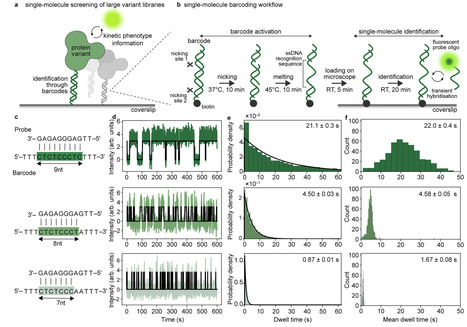
Single-molecule techniques provide exceptional resolution of biomolecular dynamics but are limited by low throughput. Here, we present a DNA barcoding strategy that enables parallel kinetic profiling of multiple protein variants in a single experiment. Each protein is covalently linked to a unique DNA barcode, decoded through transient hybridisation of fluorescent probes distinguished by color and binding duration. Applied to a library of 16 ClpS variants, this approach revealed ~5-fold variation in dissociation kinetics and uncovered previously unrecognised bimodal binding behavior arising from distinct structural subpopulations. By enabling scalable, multiplexed functional characterization at the single-molecule level, this platform provides a general framework for protein engineering, directed evolution and the development of next-generation single-molecule technologies. Single-molecule methods typically analyse only a few protein variants at a time, limiting high-throughput screening. Here, authors develop a DNA barcoding strategy that enables parallel identification and kinetic profiling of protein variants in a single experiment.
|
|
Scooped by
mhryu@live.com
Today, 12:50 AM
|
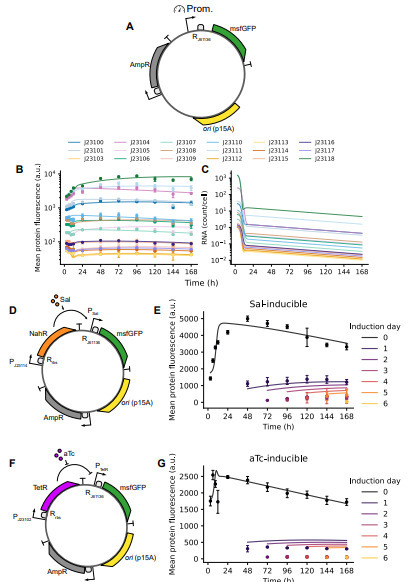
The development of biological engineering tools have improved the ability to embed novel functions into living organisms. Concurrently, our understanding of the interface between synthetic genetic circuits and their host has accelerated in the past decade, enabling the development of context-aware predictive models. However, long-term circuit function remains difficult to predict when designs operate in field-relevant conditions. Specifically, while synthetic genetic circuits are typically characterized during exponential growth, these must operate for extended periods of time in nutrient-limited conditions and where bacteria enter stationary growth phase. In this work, we construct a mathematical model that captures the dynamics of a genetic circuit as cells transition into stationary growth phase. To achieve this, we construct synthetic genetic circuits with fluorescent reporter output and measure plasmid DNA copy number, mRNA level, protein level, and live cell count over the course of one week in stationary growth phase. We find that transcription rates plummet shortly after entering stationary phase but settle at a basal value that depends on both the promoter and ribosome binding site. Translation rates also decline in stationary phase, but protein accumulation due to lack of cell division can increase protein levels well beyond exponential phase. Our model recapitulates these findings and is capable of predicting the output of new genetic circuits. This model can serve as a tool to determine how a genetic circuit design may change on longer time scales where cells enter stationary growth phase.
|
|
Scooped by
mhryu@live.com
Today, 12:02 AM
|
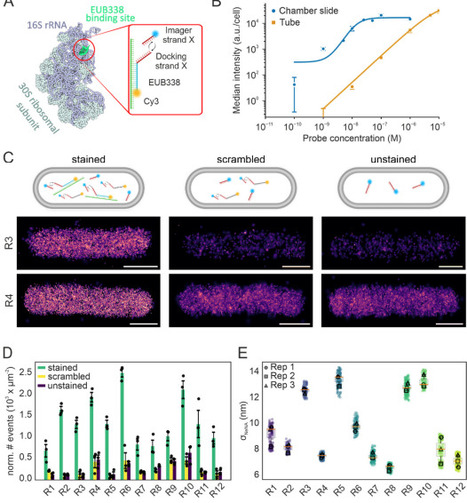
DNA-PAINT enables super-resolution imaging with high multiplexing capacity, yet it is rarely used in nanoscale bacteriology. A likely reason is the lack of straightforward protocols and of systematic characterization of imager-docking strand pairs inside intact bacterial cells, whose envelope and dense cytoplasm differ markedly from both the DNA origami in vitro systems used to develop them, and eukaryotic cells. In this work, we establish a screening platform based on RNA-FISH, in which we extend the 16S rRNA-directed EUB338 probe with docking sequences of choice. This allows imager-docking pairs to be benchmarked directly inside Escherichia coli cells and characterized for parameters such as specificity, binding kinetics, and localization precision. We screened 12 different DNA-PAINT sequences and used an optimized set to perform four-target 3D Exchange-PAINT in single E. coli cells. We further applied our strategy to image three effector mRNAs in the Gram-negative pathogen Yersinia enterocolitica and quantified RNA clusters and their 3D distribution. Our work provides a framework and practical guidelines for high-quality 3D DNA-PAINT imaging in Gram-negative bacteria and should facilitate its broader adoption in nanoscale bacteriology.
|
|
Scooped by
mhryu@live.com
October 12, 11:28 PM
|
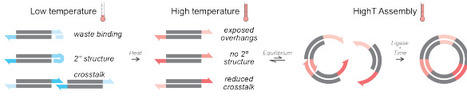
Our ability to efficiently construct synthetic DNA products is essential to studying and engineering biology. There is an abundance of widely adopted DNA assembly technologies suitable for generating synthetic constructs from diverse DNA inputs, but these techniques suffer from low specificity of connection during assembly, which decreases the accuracy, efficiency, and throughput of construction. Here we propose a broadly applicable paradigm for DNA assembly, High Temperature (HighT) assembly, that lowers misconnection rates by ligating complementary single strand DNA overhangs at reaction temperatures significantly higher than their predicted melting temperatures. By expanding the concept of melting temperature to demarcate smaller association fractions of DNA duplexes, we characterize HighT and demonstrate 40 percentage points increase in accuracy, and 4 orders of magnitude increase in yield of transformants when applying the technique to conventional assembly technologies. HighT is then applied to develop cloning pipelines for the development of efficient assembly-to-integration protocols, the construction of specific low-abundance isoforms of medically relevant proteins from human gDNA and oligos, and the de novo construction of a 10 kb, GC rich genomic region from the functionally extinct Northern White Rhinoceros created entirely in vitro.
|
|
Scooped by
mhryu@live.com
October 12, 11:08 PM
|
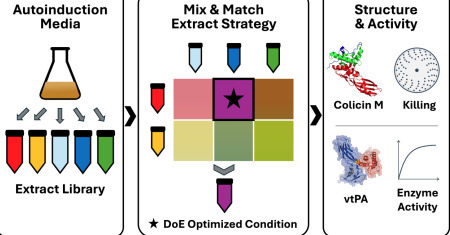
Cell-free protein synthesis (CFPS) is a powerful platform for rapid protein prototyping and biomanufacturing, but expression of complex proteins remains limited by labor-intensive extract preparation as well as the inability of conventional E. coli extracts to efficiently support disulfide bond formation and prevent protein aggregation. We previously developed a Cell-Free Autoinduction (CFAI) workflow that simplifies extract preparation, however, CFAI-derived extracts retain the folding limitations of standard E. coli systems for producing traditionally difficult proteins. Here, we address these challenges by utilizing extracts enriched with molecular chaperones or Erv1p-based oxidative folding catalysts and combining them through a modular extract mixing strategy to enable independent tuning of the cell-free folding environment. This workflow supplies folding factors through enriched extracts, avoiding recurring purchases of purified supplements and enabling a modeled reagent-cost advantage. To evaluate real-world applications and utility of lysate mixing for protein production, we demonstrate a 10-fold increase in solubility of the aggregation-prone bacterial toxin Colicin M, achieving >95% soluble protein while retaining antimicrobial activity. We further used a Design of Experiments (DoE) framework to optimize combinations of chaperone-enriched and Erv1p-based oxidative folding extracts containing either protein disulfide isomerase (PDI) or DsbC. The optimized compositions produced >95% soluble truncated human tissue plasminogen activator (vtPA), comprising the kringle 2 and protease domains, while preserving enzymatic activity. Together, these results demonstrate that CFAI-derived modular extract mixing provides a tunable, high-throughput strategy with low modeled materials costs for tailoring cell-free biochemical environments for difficult-to-express proteins, expanding CFPS utility for protein engineering and biomanufacturing.
|
|
Scooped by
mhryu@live.com
October 12, 10:27 PM
|
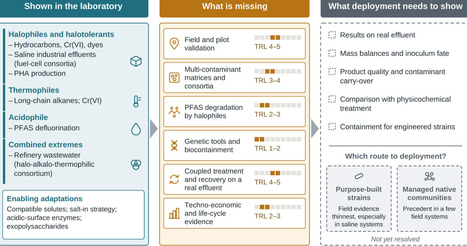
Extremophiles are a recurring answer to a recurring problem in environmental biotechnology: many waste streams most in need of treatment are too saline, hot, acidic, or alkaline for conventional microorganisms to treat effectively. Organisms that not only tolerate but require those conditions can, in principle, act on such streams directly, and their extreme niche doubles as a barrier against contamination, the premise for open, non-sterile processing. The literature cataloging which extremophile degrades which pollutant is now large and, in places, mature. Far less settled is whether any of it works outside the laboratory. This review surveys the demonstrated degradative capabilities of extremophiles and then concentrates on the translational gap separating a capable strain from a deployable process. Six problems recur: the scarcity of field and pilot validation, especially for halophilic and engineered systems; performance on the multi-contaminant, multi-stressor matrices real waste presents, and the open question of whether managed or designed consortia outperform single isolates; activity against recalcitrant contaminants such as per- and polyfluoroalkyl substances (PFAS), where we identified no halophilic reports; immature genetic toolkits that constrain engineering and biocontainment; the little-explored combination of treatment with resource recovery; and the scarcity of techno-economic and life-cycle evidence. For each, we identify the experiments and analyses that would close it, and we distinguish, throughout, between what is genuinely absent from the literature and what may simply be underreported.
|
|
Scooped by
mhryu@live.com
October 12, 5:47 PM
|
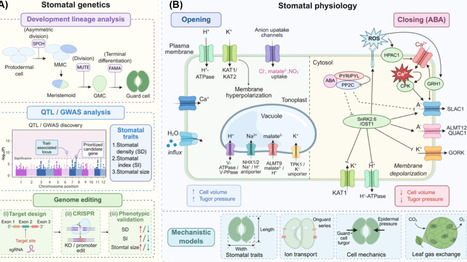
Stomata regulate plant growth and environmental responses through their control of gas exchange and transpiration. However, high-throughput stomatal phenotyping and the integration of phenotypic, genetic, and multiomics data remain major challenges for biological discovery and for understanding stomatal function in plants. Here, we review emerging imaging technologies and foundation models for stomatal biology and discuss how advances in AI could transform plant stomatal research. The rapid accumulation of large-scale phenotypic, genetic, and omics datasets requires systematic integration of heterogeneous data and their interpretation to uncover mechanisms of stomatal regulation within a unified reasoning framework. Therefore, we propose a stomatal phenotyping and analysis agent framework that connects these pipelines to accelerate hypothesis generation, phenotype–genotype analysis, discovery of biological function, and crop improvement.
|
|
Scooped by
mhryu@live.com
October 12, 5:10 PM
|
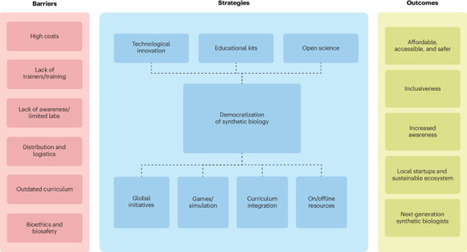
Democratizing synthetic biology requires reducing costs, improving logistics and distribution, developing local expertise, and motivating educators and students.
|
|
Scooped by
mhryu@live.com
October 12, 4:59 PM
|
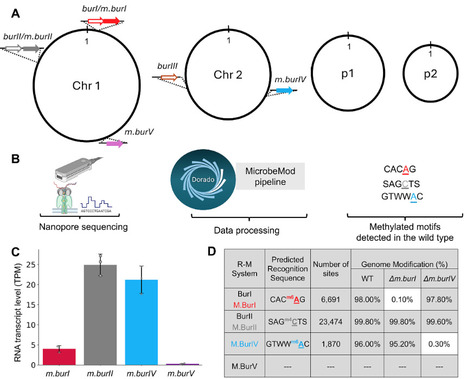
Heterologous expression—the expression of genes from one organism into another—is an important approach to produce value-added chemicals such as proteins and metabolites. The main challenge, however, is achieving high production yields that are commercially viable. Approaches used to improve productivity rely on editing the DNA sequence, including promoters, ribosome binding sites, and codon usage. Epigenetics, in the form of DNA methylation, may offer an additional layer of control to improve production yields but remains unexplored. Moreover, the choice of the host organism is crucial. We have been interested in developing the alternative bacterial host Burkholderia sp. FERM BP-3421. Four DNA methyltransferases were predicted to be encoded in the genome of this strain, one of which was silent under our growth conditions. After performing gene deletions or overexpression, we experimentally assigned the recognition motif of each DNA methyltransferase, one of which was shown to be essential. As expected, modulation of DNA methylation had major impacts on the transcriptome and metabolome of the host, varying depending on which DNA methyltransferase was modified. Two of the methyltransferases that methylate adenine had overlapping profiles, whereas the one methylating cytosine differed. Finally, we probed the role of DNA methylation during heterologous expression using green fluorescence protein and three different promoters. Expression levels varied in a context-dependent manner with mechanisms, in some cases, involving the presence of methylation motifs within promoter regions but also based on global host effects. This work establishes epigenetics as an important design variable to help improve heterologous expression yields.
|
|
Scooped by
mhryu@live.com
October 11, 11:57 PM
|
Microbial communities assemble in heterogeneous habitats, where quorum sensing (QS) influences interactions beyond signalling populations. Yet QS studies are commonly organized by signal type, circuit, or phenotype, obscuring the routes by which a QS event reaches neighboring populations and why they prevail in particular settings. This Review synthesizes evidence from host-associated, terrestrial, marine, and aquatic systems to develop a two-dimensional framework for QS-mediated ecological effects. The framework distinguishes three relay architectures by which QS activity in one population affects another: direct perception of the source signal, exposure to a QS-regulated chemical effector, or response to a QS-associated change in a shared host or environment. It then identifies the ecological strategies that these architectures can support, including shared signal accessibility, reciprocal coordination, asymmetric cue responsiveness, resource monopolization, and competitive or community restructuring. Across habitats, spatial structure, resource accessibility, host-associated conditions, and temporal variability shape which relay architectures are feasible and the ecological consequences they generate. The framework positions QS as a context-dependent process through which population-state sensing is translated into neighbor responses, changes in habitat conditions, and community assembly. It establishes testable expectations for predicting which QS-mediated interactions arise in a habitat and for designing interventions that steer microbiome function.
|
|
Scooped by
mhryu@live.com
October 11, 11:39 AM
|
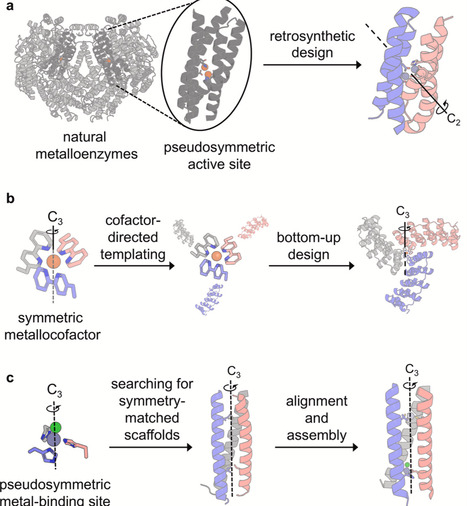
Metalloprotein design has progressed from minimalist strategies that recapitulate only primary coordination spheres to approaches that construct secondary coordination spheres or nonbiological metallocofactors within entirely new metalloprotein scaffolds. In numerous natural systems, active sites often exhibit intrinsic pseudosymmetry or are located at protein–protein interfaces within symmetric assemblies. Inspired by these features, metalloprotein design efforts leverage the inherent molecular symmetry of target metallocofactor-binding sites or homooligomeric protein architectures to achieve precise control over coordination geometry while simplifying the design process and expanding accessible structural and functional complexity. In this Review, we highlight recent advances in artificial metalloproteins that harness molecular symmetry as a central principle to program metalloprotein structure and function, grouped into three distinct strategies.
|
|
Scooped by
mhryu@live.com
October 11, 11:28 AM
|
Gram-positive bacteria use secreted peptides and peptide-responsive transcription factors for quorum sensing. Here, we demonstrate that intracellular expression of these peptide effectors with their cognate transcription factors leads to regulation of gene expression in both in vitro and in vivo systems. Because both effector and regulatory parts can be readily expressed, complex circuits, including auto-activation schemes, can be developed, with switch-like behaviors. Moreover, the peptide effectors can be fused to proteins, enabling a direct intracellular readout of translation and potentially allowing any protein to encode regulatory interactions in cells. Our results support a foundation for regulatory circuits that extend beyond canonical components such as LacI and TetR.
|
|
Scooped by
mhryu@live.com
October 11, 11:06 AM
|
RNA splicing is frequently disrupted by genetic variation, contributing to a wide range of human diseases. Identifying the variants responsible for altered splicing is therefore crucial but has long been challenging. Deep learning models that predict splicing from genomic sequence have substantially advanced their detection, but accurately resolving their quantitative effects on splicing and the resulting transcripts remains an unmet need. Here we introduce SpliceAI2, a deep learning model trained end-to-end on splice site, splice junction, and transcript usage across multiple mammalian species. SpliceAI2 reconstructs complete transcripts directly from genomic sequence and considerably improves identification of splice-altering variants and quantification of their effects in diverse benchmarks spanning cryptic splicing, splicing quantitative trait loci, and massively parallel reporter assays. Human population datasets provide independent validation of these predicted functional effects through evidence of natural selection and associated changes in plasma protein abundance. Application to a rare disease cohort reveals that predicted splice-altering variants are highly enriched in disease-associated genes and account for 15% of the excess genetic burden, with approximately half residing in deep intronic regions likely missed by exome sequencing. Together, these findings establish SpliceAI2 as a major step forward in interpreting splice-altering variants across the human genome.
|
|
|
Scooped by
mhryu@live.com
Today, 12:54 AM
|
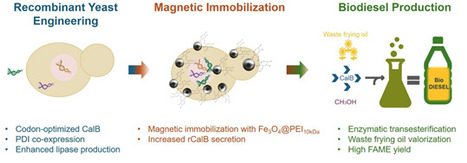
Conventional bio-diesel synthesis is both chemical- and energy-intensive, whereas lipase-catalyzed transesterification provides a more sustainable alternative. Nevertheless, the industrial application of native Candida antarctica lipase B (CalB) is limited by its low catalytic activity and high production costs. To overcome these challenges, we developed a recombinant Komagataella phaffii expression platform to efficiently secrete recombinant CalB (rCalB). To the best of our knowledge, this study demonstrates a proof-of-concept platform that integrates CalB secretion through a dual-promoter expression system regulated by AOX1/GAP in PDI-assisted and magnetically immobilized K. phaffii cells for biodiesel production. This integrated platform enabled extracellular production of rCalB and magnetic recovery of the engineered yeast cells. The maximum biodiesel yield was reached after 96 h using a methanol-to-oil ratio of 4:1 and a catalyst amount of 8 mL (2.4 EU) at 30 °C. The Gas Chromatography Flame Ionization Detector analysis results indicated that the produced biodiesel had higher amounts of C16 and C18 fatty acid methyl esters. These results highlight the potential to produce biodiesel via transesterification catalyzed by rCalB secreted from magnetically immobilized yeast cells.
|
|
Scooped by
mhryu@live.com
Today, 12:31 AM
|
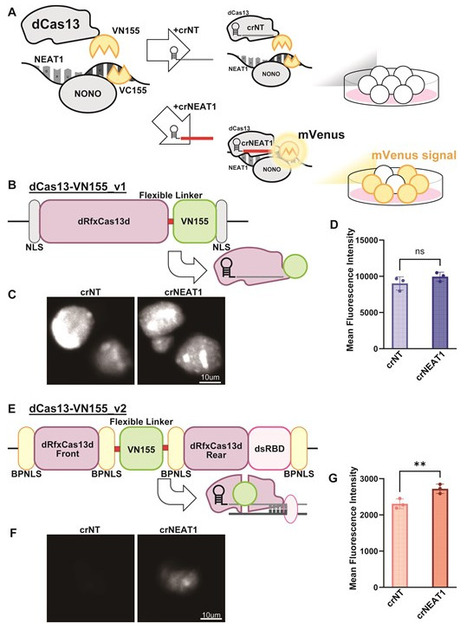
RNA–protein interactions (RPIs) are as important as protein–protein interactions (PPI) for the formation of membraneless organelles (MLOs) and play vital roles in diverse biological processes. Despite remarkable advances in PPI analysis technologies, the development of tools for RPI analysis has lagged behind. To address this challenge, we integrated three established PPI technologies—bimolecular fluorescence complementation (BiFC), NanoBiT, and split-TurboID—with RNA-targeting CRISPR/dCas13. We applied these platforms to paraspeckles, a representative MLO formed through interactions between the long non-coding RNA NEAT1 and the RNA-binding protein NONO. BiFC-dCas13 functions as a fluorescence-based recorder that enables quantitative detection of NEAT1–NONO interaction events. NanoBiT-dCas13 precisely monitors dynamic changes in the NEAT1–NONO interaction through a reversible luminescence readout. Split-TurboID-dCas13 induces proximity-dependent biotinylation of proteins surrounding paraspeckles, identifying the N6-methyladenosine reader YTHDC1 as a paraspeckle-associated protein. Furthermore, BiFC-dCas13 was readily reconfigured to detect additional RPI pairs, demonstrating the modularity of the platform. Together, these complementary systems provide versatile approaches for recording, monitoring, and discovering RPI-associated biology and molecular environments.
|
|
Scooped by
mhryu@live.com
October 12, 11:38 PM
|
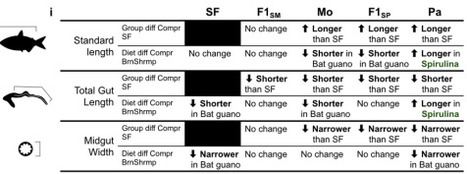
Animals colonizing food-limited environments need to overcome growth constraints by adapting to low, inconsistent nutritional inputs. Comparative studies of surface and cave populations of the Mexican tetra fish species Astyanax mexicanus provide a powerful system to explore evolution to food scarcity. In nutrient-scarce caves, evolved traits such as eye loss and increased fat storage have been shown to conserve energy in cavefish. However, the role of microbiota-mediated metabolism in sustaining growth and survival under food limitation remains poorly understood. Here, we demonstrate that surface and cave populations distinctly modulate their gut microbiota, with cavefish recruiting microbes whose predicted metabolites specifically promote growth under nutrient-limited conditions. Using microbiota data from three distinct dietary regimes and a fasting treatment, integrated topological data analysis and sparse modeling identify sugar and fatty acid degradation pathways coupled with growth in cavefish. Notably, the metabolites of these pathways are beneficial only for cavefish growth, and not for surface fish. Fasting in cavefish led to the recruitment of gut microbes capable of metabolizing aromatic compounds inaccessible to the host, whereas it recruited few microbial associates in surface fish. Our findings indicate that cavefish evolved novel host-microbiota coupling to sustain growth and resilience in their nutrient-scarce niche. We anticipate that our findings will broadly inform studies of evolution under extreme nutritional conditions and provide insights into the role of host-microbiota interactions in resilience to food scarcity at varied time scales.
|
|
Scooped by
mhryu@live.com
October 12, 11:16 PM
|
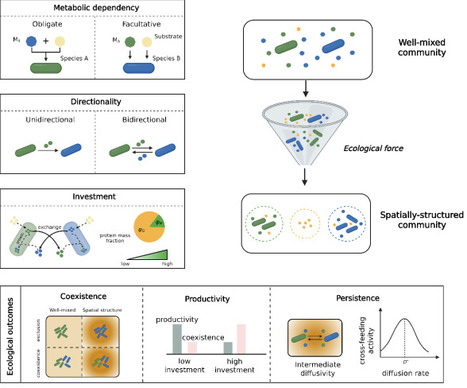
Metabolic cross-feeding is central to microbial life. Theory predicts that spatial structure favors cross-feeding by affording cells preferential access to the exchanged metabolites. Yet recent evidence shows that spatial structure can, in some contexts, disfavor cross-feeding. Here, we resolve this contradiction by structuring cross-feeding interactions into three dimensions: (i) directionality, (ii) investment, and (iii) metabolic dependency. We then investigated their combined effects using a spatially explicit individual-based model. We find that the effect of spatial structure on cross-feeding is determined not by physical proximity alone, but by how microbial growth depends on exchanged metabolites. Metabolic dependence shapes the spatial organization of cells and metabolite fluxes, and this emergent organization, in turn, reshapes the ecological outcome of cross-feeding. Our results reconcile previously conflicting observations and provide a general framework for predicting and engineering metabolically interdependent microbial communities.
|
|
Scooped by
mhryu@live.com
October 12, 11:01 PM
|
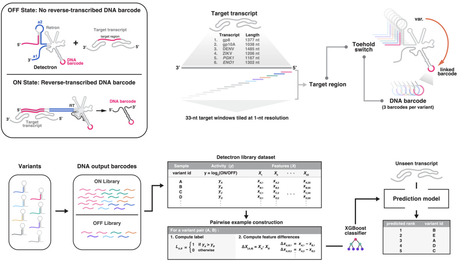
Programmable RNA sensors enable sequence-specific detection of RNA inputs for diagnostics, genetic circuit control, and multiplexed molecular readouts. Although readily programmable, their performance varies substantially with the target site selected within a transcript, making target-site selection a major challenge. Here, we report DeSTAR (Detectron Sensor TARget-site ranker), a machine-learning-assisted target-site ranking model for programmable RNA sensors. To train this model, we generated transcript-wide, single-nucleotide-resolution tiling sensor libraries across six diverse RNA targets, enabling generalization to be tested across transcripts rather than within a single RNA. In leave-one-transcript-out evaluation, DeSTAR's top-ranked sites were enriched for high-performing sensors in held-out transcripts, driven predominantly by interpretable sequence grammar in the sensor stem rather than transcript-specific patterns. Prospectively, on an unseen SARS-CoV-2 transcript, the model's top-ranked sites yielded working sensors roughly five-fold more often than random selection. These results support DeSTAR as a generalizable strategy for target-site selection in RNA sensors across transcripts.
|
|
Scooped by
mhryu@live.com
October 12, 10:22 PM
|
tRNA are short, ~76 nucleotide-long, modification-rich molecules that play an important role in protein translation. Nanopore sequencing is the only platform capable of directly sequencing full-length, native tRNA molecules. This capability is enabled by splinted ligation of tRNA-specific adapters. As a result, the measured ionic current signal reflects a composition of both adapter and tRNA sequence features. Despite these advantages, analysis of nanopore tRNA sequencing data poses distinct computational challenges. Existing ionic current-based signal-to-sequence decoding (basecalling) models are optimized for mRNA and perform suboptimally on short, modification-dense RNA such as tRNA. Furthermore, alignment algorithms for reference-guided analysis of short-length reads are not optimized for nanopore reads with lower accuracy than Next-generation sequencing reads. To overcome these limitations, domain-specific computational approaches are required. We present tRNAZAP, a nanopore ionic current signal analysis toolkit designed to enable precise reference-guided sequence alignment. tRNAZAP operates directly on raw ionic current signals and decomposes the analysis into two complementary tasks: 1) segmentation of adapter and tRNA regions, and 2) tRNA classification, both implemented using transformer-based models. The segmentation component isolates the tRNA signal portion and extracts the corresponding nucleotide sequence as the alignment query, while the classification component identifies the tRNA type as the alignment reference without requiring sequence-level information. Together, these outputs allow direct optimal pairwise alignment between the tRNA subsequence of the full query and reference sequences. Trained on in vitro transcribed RNA data and evaluated on yeast tRNA, these models achieved ~98% classification accuracy and intersection-over-union of ~0.98 for segmentation.
|
|
Scooped by
mhryu@live.com
October 12, 5:23 PM
|
From subcellular to population levels and beyond, living systems continuously sense and robustly interpret a diverse, ever-changing collection of signaling inputs and produce a near-limitless set of functional outputs. This process, referred to as biocomputation, combines information sensing, transfer and response algorithmically, using modular biological circuitry such as cells, proteins, nucleic acids and small molecules. By hijacking, evolving and repurposing these processes, biologists, chemists and engineers have exploited biocomputational frameworks in a growing number of sectors, including advanced chemical processing, additive manufacturing and tissue engineering. Here we examine the methods by which live cell and engineered biomaterial functions can now be (re)programmed with increased complexity and multiplexability. We categorize approaches based on the type of circuit used, and highlight the resulting advances in synthetic biology and stimuli-responsive materials. We also explore how these fields have evolved independently but with similar underlying methods and goals, and discuss the exciting opportunities that are emerging from their convergence. Circuitry is increasingly being engineered into both living systems and biomaterials. This Review highlights shared biocomputational design principles across synthetic, nucleic acid and protein platforms, then explores how their convergence may enable truly living materials.
|
|
Scooped by
mhryu@live.com
October 12, 5:03 PM
|
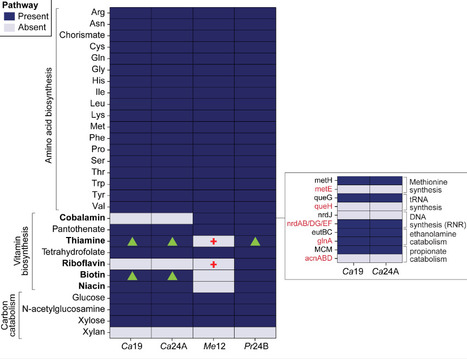
Interactions between microbes shape the structure and function of microbial communities. While studying interactions is key to understanding microbial communities as a whole, gaining a detailed mechanistic view is challenging due to the number of co-occurring interactions. Here, we focus on a single class of shared nutrients, the cobalamin (vitamin B12) family of enzyme cofactors known as cobamides, to study nutrient interactions in laboratory consortia of increasing complexity. Measuring cobamide-dependent growth of two soil Caulobacter isolates in monoculture revealed that each grows faster within a distinct range of cobamide concentrations. Co-culturing the two isolates demonstrated that the cobamide concentration predictably determines which isolate predominates. These results suggest that, although the two organisms appear functionally redundant, with identical metabolic capabilities predicted in their genomes, they may occupy distinct niches in their environment based on cobamide concentration. We further examined the ability of cobamide-producing Mesorhizobium and Priestia isolates to share cobamides and found that both support the cobamide-dependent growth of the two Caulobacter isolates. The Caulobacter isolates could coexist in tri-cultures with each producer following serial passaging, indicating the producers can support the growth of multiple cobamide-dependent organisms. We analyzed the metabolic capacity encoded in the genomes of the four isolates and found that cobamides are likely the main shared nutrient in our co- and tri-cultures. These results highlight the utility of cobamides as a model nutrient to characterize and predict interactions in bacterial consortia of increasing complexity.
|
|
Scooped by
mhryu@live.com
October 12, 12:06 AM
|
Efficient ammonium uptake is essential for plant growth and nitrogen-use efficiency, yet the structural basis of ammonium transport and regulation in plant AMTs remains unclear. Here, we determined multiple cryo-electron microscopy structures of the Arabidopsis thaliana ammonium transporter AMT1;1 in apo, ammonium-bound, methylammonium-bound, low-pH and phosphomimetic states. These structures reveal a conserved ammonium conduction pathway comprising an aromatic recruitment vestibule, a Phe-gate/Twin-His-containing pore, and a polar intracellular exit region. We further identified a conserved extracellular N-terminal disulfide bond required for oligomer stability and transport activity, suggesting potential redox-dependent regulation. On the cytoplasmic side, phosphorylation modulates C-terminal interactions with intracellular loops, revealing an allosteric regulatory mechanism. Comparison with the bacterial ammonium-sensing protein Sd-Amt1 uncovers a conserved ammonium-recognition region in AtAMT1;1 that contributes to transport activity but lacks the signaling module and ligand-dependent conformational switching observed in Sd-Amt1. Together, these findings provide structural insight into ammonium transport and coordinated regulation in plant AMT transporters. He et al. determine multiple cryo-EM structures of Arabidopsis thaliana AMT1;1, revealing a conserved ammonium transport pathway and distinct regulatory mechanisms. An extracellular N-terminal disulfide bond contributes to oligomeric stability, while C-terminal phosphomimetic mutation remodels cytoplasmic regulatory interactions. These findings provide a structural framework for ammonium transport and regulation in plants.
|
|
Scooped by
mhryu@live.com
October 11, 1:05 PM
|
Metagenomic databases hold vast quantities of unexplored genetic material that can seed tools for biotechnology and medicine, but discovery is limited by our ability to examine sequence data at scale. Here, we show that large language models (LLMs) in an autonomous harness can alleviate this bottleneck and surface novel molecular systems. We deployed Claude Code instances to survey reverse transcriptase (RT) loci across 1.9 billion protein clusters. Among the top candidates were array-associated RTs (ART), a novel family of jumbo-phage RTs coupled with an array of ~200-nucleotide units and a dedicated partner gene. Session transcripts show that Claude identified the ART family by directly examining its DNA sequences and recognizing the atypical repeats, a behavior attributable to specific Mythos 5 internal signals that respond to repeated DNA. ART arrays are highly expressed and appear as discrete units during Staphylococcus phage infection, suggesting an RT system directed by a repertoire of distinct RNAs. These findings indicate that LLMs can autonomously detect anomalies and drive analyses to initiate biological discoveries.
|
|
Scooped by
mhryu@live.com
October 11, 11:36 AM
|
Protein structural complexity confers responsiveness and modularity, allowing proteins to act as control modules in biomolecular circuitry. Protein engineering that commandeers native cell signaling and central dogma functions has led to the development of cell therapies, specialized biosensors, and a deeper understanding of cellular mechanisms. In this review, we examine how protein control modules command circuit with therapeutic functionality across cellular spatial levels. Extracellularly, signal proteins such as antibodies and cytokines can provide either binary or gradient-sensitive detection of environmental features. Extracellular proteins also serve as inputs to synthetic receptors that transmit signals across membranes, rapidly linking environmental cues to intracellular action. Inside the cell, protein control modules are engineered from central dogma components to bind nucleic acids, creating gene circuits that influence transcription, translation, and nucleic acid processing, and ultimately regulate protein expression. This review covers circuitry platforms and immunoengineering applications across spatial levels, focusing on innovation from 2016 to 2026. With continued development, synthetic biocircuits can serve as a platform for creating next-generation “smart” therapeutics and ultimately for engineering immunity.
|
|
Scooped by
mhryu@live.com
October 11, 11:15 AM
|
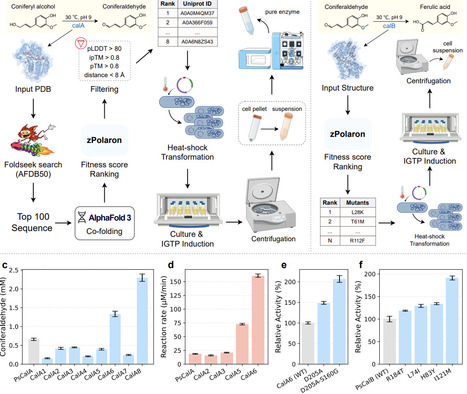
Protein inverse folding, which infers compatible amino acid sequences from a given backbone structure, is central to rational protein design. Current methods rely largely on sequence recovery rate as the evaluation metric, emphasizing structural compatibility but seldom addressing function. Yet functional activity depends on the proper network of non-covalent interactions-protein-ligand contacts being a prime example. We argue that function-oriented protein design is governed by three complementary constraints: structural, interaction, and evolutionary, none of which are handled in a unified manner by existing pretrained models. To bridge this gap, we introduce zPolaron, a graph neural network built on protein-ligand complexes for functional protein design. zPolaron represents residues and ligand atoms as a heterogeneous graph and jointly encodes structural, interaction, and evolutionary information by fusing physical-interaction-enhanced graph representations with ESM-2 embeddings. Across multiple fitness prediction benchmarks, zPolaron outperforms all baselines, with gains evident across structural, interaction, and evolutionary dimensions. Wet-lab experiments further confirm its utility in functional enzyme screening and design: the optimized CalA6-D205A-S160G mutant achieves a 17.84-fold improvement in activity, while the CalB-I121M mutant yields a 1.91-fold increase. Together, these results show that integrating interaction and evolutionary information fills the missing puzzle of inverse folding, enhancing protein fitness prediction beyond structural compatibility. zPolaron is available at https://github.com/zelixirSH/zPolaron.
|