

Microbial communities assemble in heterogeneous habitats, where quorum sensing (QS) influences interactions beyond signalling populations. Yet QS studies are commonly organized by signal type, circuit, or phenotype, obscuring the routes by which a QS event reaches neighboring populations and why they prevail in particular settings. This Review synthesizes evidence from host-associated, terrestrial, marine, and aquatic systems to develop a two-dimensional framework for QS-mediated ecological effects. The framework distinguishes three relay architectures by which QS activity in one population affects another: direct perception of the source signal, exposure to a QS-regulated chemical effector, or response to a QS-associated change in a shared host or environment. It then identifies the ecological strategies that these architectures can support, including shared signal accessibility, reciprocal coordination, asymmetric cue responsiveness, resource monopolization, and competitive or community restructuring. Across habitats, spatial structure, resource accessibility, host-associated conditions, and temporal variability shape which relay architectures are feasible and the ecological consequences they generate. The framework positions QS as a context-dependent process through which population-state sensing is translated into neighbor responses, changes in habitat conditions, and community assembly. It establishes testable expectations for predicting which QS-mediated interactions arise in a habitat and for designing interventions that steer microbiome function.

RMH
96.9K views |
+118 today

 Your new post is loading... Your new post is loading...
 Scoop.it!
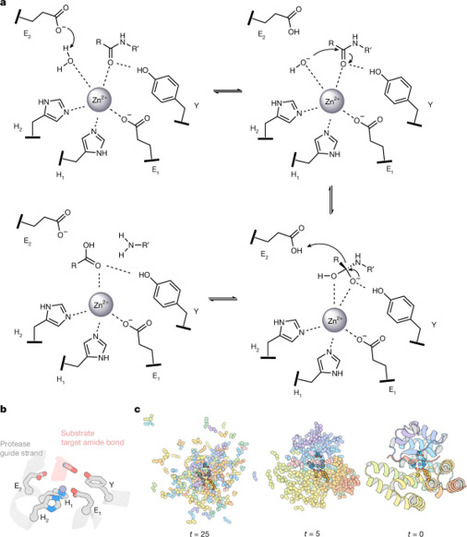
De novo design of enzymes that cleave amide bonds represents a major challenge. Here we use RFdiffusion methods to de novo design proteins with water-activating zinc-based active sites adjacent to a peptide substrate binding pocket. Of 135 designs tested, 36% catalyse cleavage of their cognate peptide substrates at the targeted scissile bond. The best design accelerates peptide-bond hydrolysis by more than 108-fold relative to the uncatalysed reaction; four substitutions increase this acceleration to more than 1010-fold by improving active-site preorganization. We use this approach to design metalloproteases that selectively cleave the human disease-associated proteins TDP-43, amyloid-β and serum amyloid A, with rate enhancements of up to 109-fold. We further design caged cytokines and receptor antagonists that are selectively activated by the designed proteases, enabling bioorthogonal control of cell state. Thus, de novo design can yield highly active, programmable proteases with applications in therapeutics, biotechnology and bioremediation. RFdiffusion methods are used to de novo design proteins with water-activating zinc-based active sites adjacent to a peptide substrate binding pocket, yielding highly active, programmable proteases with potential applications in therapeutics, biotechnology and bioremediation.
mhryu@live.com's insight:
baker d 
Scoop.it!

Rapid advances in protein structure design have not translated to intrinsically disordered regions (IDRs). This is largely due to our incomplete understanding of how IDR sequence encodes function. Here, we use stem cell differentiation as a model to map functional sequence features in the IDR of transcription factor RUNX2. We show that RUNX2 requires its C-terminal IDR to bind chromatin and regulate gene expression during osteogenesis. Surprisingly, linear IDR sequence is dispensable, and instead features of the conformational ensemble predict function. We develop an algorithm for rational IDR design based on biophysical principles, and use it to generate functional IDRs de novo. Together, these results illustrate the central role for TF IDRs in chromatin binding and extend generative protein design beyond the folded proteome.
Scoop.it!
From
academic

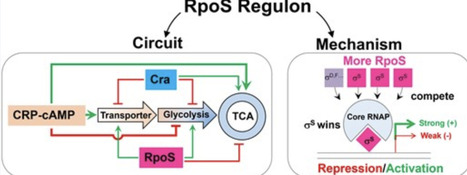
The alternative sigma factor RpoS (σS) governs stress adaptation in many bacterial clades, yet how it coordinates stress responses with metabolic demands remains poorly understood. Thus, by integrating RNA-seq, ChIP-seq, and physiological and molecular assays, we redefined the RpoS regulon in E. coli, expanding it to 667 genes and demonstrating that metabolic genes unexpectedly predominate over stress-response targets. RpoS directly drives a massive metabolic reprogramming event: it activates glycolytic and sugar transport genes while simultaneously repressing the trichloroacetic acid TCA cycle and oxidative phosphorylation. This metabolic pivot is finely tuned by a novel RpoS-CRP-cAMP-Cra tripartite circuit to balance energy efficiency with survival during stationary phase. Furthermore, we provide a mechanistic framework for RpoS-mediated bidirectional regulation rooted in σS-factor competition, where transcriptional efficiency in the absence of RpoS dictates the regulatory mode: highly efficient promoters are repressed by RpoS displacement, whereas weak promoters are activated. This study advances our understanding of transcriptional precision during bacterial adaptation and offers an architectural blueprint for synthetic metabolic engineering.
Scoop.it!

From
academic
By mapping ribosome-protected fragments genome-wide, ribosome profiling (Ribo-seq) has uncovered extensive translation beyond conventional coding sequences, revealing non-canonical ORFs (ncORFs) with roles in diverse biological processes. However, robust ncORF identification remains challenging when Ribo-seq datasets exhibit attenuated periodicity. Protocol-induced biases during library construction is an important contributor to this loss, yet most ORF callers do not explicitly model these distortions. Here, we present RiboBA, a bias-aware probabilistic framework for robust ORF identification from Ribo-seq data. RiboBA combines a generative module that jointly infers protocol-induced biases and codon-level ribosome occupancy with a supervised module that identifies translated ORFs and initiation sites from the bias-adjusted profiles. In simulations with known P-site positions, RiboBA improved exact nucleotide- and codon-level P-site assignment relative to a conventional fixed-offset approach. Across simulations and diverse empirical Ribo-seq datasets, together with orthogonal immunopeptidomics evidence, RiboBA accurately recovers protocol-induced parameters and improves ncORF identification, with pronounced advantages for RNase I libraries with attenuated periodicity, and for MNase and nuclease P1 datasets, while maintaining competitive runtimes. In a Drosophila case study, RiboBA identified candidate ncORFs with coding potential, including recurrent upstream translation in ThrRS and Mettl2, linking ncORF translation to threonine-related translational regulation.
Scoop.it!
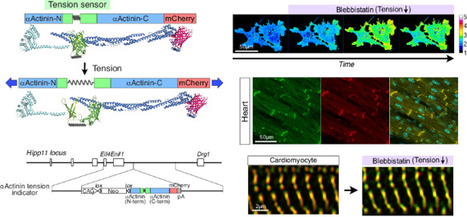
Since the emergence of molecular tension sensors, the understanding of mechanical forces has advanced substantially. However, visualizing molecular tension in mammalian tissues has remained challenging owing to the technical constraints of the Förster resonance energy transfer (FRET)-based molecular tension sensors. Here, we develop a molecular tension sensor based on circularly permuted EGFP with an elastic linker, which is inserted into either αActinin or αCatenin and then fused with mCherry at the C-terminus to simultaneously visualize tension and the amount of sensor protein. This single-fluorophore tension indicator enables subtle tension changes to be visualized simply from color tone under superresolution microscopy. We further generate H11 knock-in mice expressing these indicators, revealing a molecular-specific regulation of mechanical load within tissues. Thus, our molecular tension indicators provide a powerful approach for probing the complex and heterogeneous regulation of mechanical forces in vivo mammalian systems. FRET-free molecular tension indicators enable high-resolution visualization of tension in vivo, revealing that the regulation of mechanical forces is unexpectedly complex, molecule-specific and heterogeneous in live mouse organs.
Scoop.it!
From
pubs
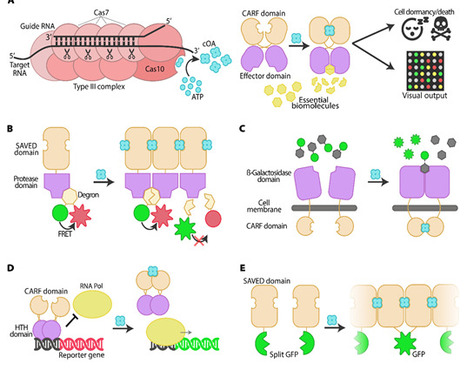
Over the past decade, CRISPR-Cas based biosensors have emerged as sensitive, specific and programmable platforms for nucleic acid detection, with applications ranging from diagnostic tools, environmental monitoring and various applications in fundamental research. The vast majority of these biosensors are currently limited to in vitro applications, highlighting the need for cellular platforms. Here, we provide a perspective on the potential of type III CRISPR-Cas systems as a platform for real-time RNA biosensing in living cells. We discuss the unique properties that distinguish type III from other CRISPR-Cas types, including their intrinsic cyclic oligoadenylate (cOA) signal amplification cascade, PAM-free RNA targeting and the extensive biochemical diversity of their downstream CARF and SAVED effector proteins. We outline the fundamental design principles of a genetically encoded type III cellular biosensor, comprising a programmable guide RNA, a multi-subunit sensing complex and a cOA-sensing effector protein capable of generating optical or electrochemical readout signals. A remaining challenge for type III cellular biosensors is the inherent cytotoxicity of canonical cOA-activated effectors. We propose several strategies to re-engineer these outputs towards non-cytotoxic reporter systems. While cellular biosensors present a natural route toward in vivo sensing, they face many challenges beyond the choice of the output signal and hardware strategy. We conclude that type III CRISPR-Cas is a promising platform for programmable real-time RNA sensing in living cells, utilizing its diverse modular effector outputs, representing a significant expansion of the CRISPR biosensor toolkit, while emphasizing appropriate deployment scenarios that enables full potential of these biosensors.
Scoop.it!
Microbial N₂O reduction in acid soils became a conundrum when NosZ maturation was found to be impaired at pH ≤6 in both model organisms and soil communities. Yet, evolution appears to have repeatedly circumvented this constraint. Examples include the identification of two small proteins that enable maturation of canonical NosZ at low pH, as well as the Schinkia sp. isolated by G. He, M. E. Davin, S. Kolodney, E. Stutzman, et al. (Appl Environ Microbiol 92:e00069-26, 2026, https://doi.org/10.1128/aem.00069-26), which carries a unique repertoire of nosZ genes and grows by N2O respiration across pH 4.4–8.5. These discoveries help resolve the conundrum and may provide new options for mitigating N2O emissions.
mhryu@live.com's insight:
A novel Schinkia sp. respires nitrous oxide over a broad pH range
Scoop.it!
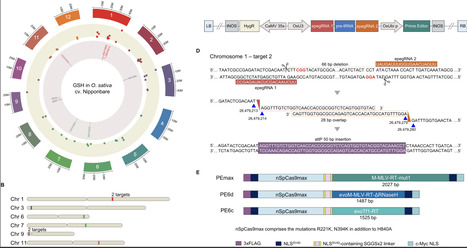
Precise, site-specific integration of large DNA sequences into plant genomes is a long-standing goal of crop biotechnology and synthetic biology, yet remains constrained by random insertion, inefficient homologous recombination, and gene targeting. Here, we present PrimeStack, a DSB-independent platform that integrates PE with the unidirectional large serine integrase Bxb1, leveraging evolved variants for enhanced activity, to achieve the programmable insertion of multigene, multikilobase cargos at predefined genomic safe harbors (GSH) in rice (Oryza sativa). Optimized prime editors first install attP landing sites with high fidelity and heritability followed by Bxb1-mediated recombination that generates irreversible integration of genetic information. PrimeStack enabled targeted large-cargo integration in regenerated rice plants with efficiencies of up to 45%, as determined by junction-specific PCR analyses. No obvious morphological differences from WT plants were observed at 5 weeks after transfer to soil under the evaluated conditions. We validate its utility by achieving targeted insertion of a carotenoid cassette at an experimentally confirmed genomic safe harbor. PrimeStack delivers a modular, site-specific gene stacking platform that enables predictable, multigene trait pyramiding and pathway construction at GSH, thereby accelerating the development of improved and resilient crop varieties, as well as scalable plant-based biomanufacturing and a powerful chassis for synthetic biology.
Scoop.it!

Rhizosphere microbiomes are central to plant nutrition, pathogen suppression, and rhizosphere health, yet their functions remain difficult to predict from taxonomic composition alone. We argue that microbial siderophores offer a chemically explicit route from taxonomic associations to trait-based rhizosphere ecology. These structurally diverse iron-chelating metabolites link iron mobilization to ecological interactions across microbial, plant, and soil-fauna interfaces. In microbe–microbe systems, siderophore structure–receptor compatibility provides a well-established mechanism underlying resource sharing, competitive exclusion, and pathogen suppression. At plant and nematode interfaces, siderophore functions are increasingly evident, although recognition mechanisms remain less resolved. A siderophore-centered perspective can help move rhizosphere microbiome research from descriptive associations toward predictive, testable, and context-specific ecological engineering.
Scoop.it!

The ability of plants to reprogram their metabolism in response to fluctuating environments, referred to as metabolic plasticity, is a key feature that enables sessile organisms to maintain growth, survival, and reproduction under changing conditions. As a mechanistic component of phenotypic plasticity, metabolic plasticity can buffer environmental perturbations and confer adaptive advantages. However, despite growing evidence for extensive metabolic remodeling under stress, the genetic and regulatory basis of this plasticity remains incompletely understood. Here, we review metabolic plasticity across major metabolic domains in plants, with emphasis on carbon, nitrogen, photorespiratory, and lipid metabolism, emphasizing how environmental cues and genetic regulation jointly shape metabolic responses. We conclude that, although metabolic plasticity is widespread in plants, its mechanistic and genetic basis remains incompletely understood; population-scale studies and mathematical modeling offer promising avenues to resolve this gap and extend current insights from model systems to crops.
mhryu@live.com's insight:
plant nitrogen metabolism system under different environments.
Scoop.it!
Enzyme-reaction retrieval prioritizes candidate biocatalysts for experimental follow-up, where recommendations should indicate catalytic compatibility and suitable pH and temperature conditions. Existing retrieval models optimize matching scores, whereas catalytic optima predictors are typically enzyme-level regressors because condition annotations are sparse. This separation leaves ranked pairs unevaluated for condition suitability and optima predictions without reaction context. We present GERO, a multimodal fusion framework integrating enzyme sequence semantics, sequence-derived pocket geometry, and molecular reaction representations through feature-gated fusion for condition-aware retrieval and catalytic optima estimation. We define the tolerance-restricted hit rate (Hit@k-TR), which requires both correct top-k retrieval and condition predictions within predefined tolerances. Across enzyme- and reaction-similarity splits, GERO improves Hit@k-TR over two-stage baselines under the primary tolerances. Benchmark examples and an iodinin biosynthesis case study illustrate candidate ranking and assay-condition estimation for experimental prioritizatio
mhryu@live.com's insight:
retrieval tool for biocatalyst discovery. Given an enzyme, it ranks candidate reactions; given a reaction, it ranks candidate enzymes from a fixed pool. For each ranked pair it also outputs predicted optimal pH and temperature, so a candidate comes with suggested assay conditions. It fuses three inputs: ESM-2 sequence embeddings, a binding-pocket graph built from AF structures with P2Rank-predicted pocket sites, and Uni-Mol encodings of reactants and products. A gating module combines these into one joint representation feeding three heads: match score, pH, temperature. The contribution is unifying two tasks that were previously separate pipelines, retrieval and condition prediction, plus a metric (Hit@k-TR) that counts a hit only if ranking and both condition estimates fall within tolerance. It is a prioritization and shortlisting tool, not an enzyme engineering or optimization tool.
Scoop.it!

Plant-associated bacteria can enhance plant tolerance to abiotic stresses such as drought, salinity, nutrient limitation and heavy metal contamination. Although bacterial genes involved in plant abiotic-stress alleviation have been experimentally characterized in individual studies, the corresponding sequences and evidence remain dispersed across publications and general-purpose repositories, limiting their systematic reuse for the annotation of new microbial datasets. Here, we present microSTRESSdb, a curated database of genes experimentally tested for their roles in plant abiotic stress alleviation. Version 1.0 of this database contains 72 protein sequences spanning four abiotic stress categories, with metadata on gene product, source organism and accompanying literature. To detect homologues of these stress-associated genes in bacterial genomes and plasmids, we also provide the pipeline and web interface microSTRESS. This pipeline performs BLAST-based screening of input proteomes, integrates hit-level metadata, evaluates pathway completeness and generates interactive HTML reports summarising stress-category coverage, gene functions and a Stress Potential Index (SPI). As use cases, we applied microSTRESS to 3,028 genomes across Pseudomonas and Bacillus and showed that the genomes of the soil- and plant-associated strains contained homologues of several stress-associated genes. Next, we evaluated whether microSTRESS could transfer existing gene-level evidence to the prioritization of previously uncharacterized bacteria. In an Arabidopsis thaliana drought bioassay with 29 rhizosphere strains, higher drought-specific SPI values were associated with improved maintenance of plant biomass under water limitation, with this association being significant for Flavobacterium but not reaching significance for Pseudomonas. Together, microSTRESSdb and microSTRESS convert experimentally supported gene–phenotype evidence into a standardized and reusable framework for stress-oriented annotation, comparative analysis and genome-guided prioritization of candidate bacteria.
Scoop.it!

Archaea play essential roles in global biogeochemical cycles, yet their diversity in environmental samples remains understudied. Limited coverage of universal primers towards archaea, their very low abundance relative to bacteria in the studied samples, inefficient cell lysis and the incompleteness of reference databases complicate archaeal 16S rRNA gene sequencing. Furthermore, standardization lacks due to the absence of commercially available mock communities. Here, we developed a mock community composed of mixtures of DNA from six archaeal and four bacterial strains with known genome sizes and 16S rRNA gene copy numbers. Five mock compositions with different archaeal–bacterial abundance ratios were used to evaluate two universal primer pairs and eight archaea-specific methods. The universal primer pairs detected all taxa but consistently overestimated bacterial abundance, indicating to be less suitable for environments where archaea are more dominant. Archaeal specific primer pairs showed variable specificity, with some exhibiting substantial bacterial co-amplification under certain conditions. The Arch349F–A806R primer pair demonstrated the highest archaeal specificity, the least technical variability, the most consistent agreement with expected mock compositions, and minimal artefactual amplification when applied to a complex bacterial mock community. To show its applicability on environmental samples, this method was applied on Boom Clay pore water samples, which indicated a much higher archaeal diversity than previously shown with a standard commercial method. Overall, this study showed the necessity of primer validation through mock communities and identified Arch349F–A806R as a promising primer pair for archaeal 16S rRNA gene sequencing, especially in samples containing methanogenic archaea.
mhryu@live.com's insight:
methods
|
Scoop.it!

DNA offers a promising medium for long-term archival data storage, but the high cost of synthesizing data-specific sequences remains a major barrier to its adoption. Here we introduce SPAN (Synthesis-free Proximity-graph Archiving in Nucleic acids), a synthesis-independent storage architecture in which digital information is written as a physical pattern and encoded in the spatial relationships of randomly barcoded DNA molecules. Barcodes are deposited onto a patterned surface, and an enzymatic reaction records pairs of neighboring molecules. Sequencing these pairs produces a proximity graph from which the original information can be reconstructed. We demonstrate this principle experimentally by writing a 136-bit pattern using photolithography and correctly recovering 114 bits. Simulations further establish the physical parameters governing reconstruction accuracy. Our cost analysis shows that the demonstrated system already has lower estimated writing costs than existing DNA synthesis-based methods, and projects a further five-order-of-magnitude reduction using established optical writing technologies. Although SPAN requires more expensive readout, this trade-off makes it a promising candidate for deep archival storage, where information is written once and rarely, if ever, retrieved.
Scoop.it!

Restoring endangered ecosystems has become a pressing issue as the effects of global warming continue to harm existing communities. During the last decade, several studies have suggested the use of synthetic biology as a tool to protect these biodiverse communities by increasing their functionality. A critical example concerns soil microbiome communities in drylands, where increasing water retention by some of the constituent species could effectively protect the ecosystem from abrupt degradation. However, how to effectively deploy a functional synthetic construct that can scale its impact to the community level remains an open question. Recent experimental research has designed recombinant gene plasmids with the capacity to horizontally transfer across soil microbial communities. Here, we explore the impacts of synthetic horizontal gene transfer in models of ecological consortia. We define a consumer-resource model in which species can share an engineered plasmid that reduces resource loss, effectively coupling multispecies dynamics and gene spreading. By doing so, we identify a wide range of parameters and the optimal gene transfer conditions for which the intervention promotes biodiversity and biomass gains, while regulating gene propagation and the spread of engineered organisms. Our work provides a first step toward understanding the mechanisms and opportunities of engineered plasmid transfer in multispecies ecological communities.
mhryu@live.com's insight:
sole r, lorenzo, 1str
Scoop.it!

From
academic
The number of internal repeat modules remains a major limiting factor in the construction and functional exploration of long repeat proteins. As a solution, we present High-Utility Recursive Directional Ligation for Extended Repeat proteins (HURDLER)—a modular cloning strategy combining codon optimization, seamless insertion of restriction sites, and modified recursive directional ligation. It presents a very robust technique to clone DNA for large repeat proteins, which may also contain non-repetitive parts, with high fidelity requiring a minimal number of individual cloning steps. Using HURDLER, we cloned designed armadillo repeat proteins with up to 85 internal modules, corresponding to >3700 residues. The method also generates intermediate variants with defined numbers of internal repeats, enabling systematic investigation of how the number of modules influences protein structure and function. HURDLER thereby provides a reliable solution to overcome restrictions in the overall number of internal modules used in the construction of very long repeat proteins. Such proteins are increasingly utilized as building blocks in macromolecular protein assemblies with defined structures.
Scoop.it!

From
academic
Accurate metagenomic binning is essential for reconstructing microbial genomes, thereby facilitating the discovery of novel taxa, the identification of pathogens, and the characterization of antimicrobial resistance genes. Most existing methods are designed for assembled contigs and cannot be directly applied to raw long reads. Although a few dedicated long-read binning methods have emerged, challenges remain in bin-number estimation and representation learning. Here, we propose Deep Embedded Clustering for Long-read Binning (DecBin), an adaptive method for directly binning raw long reads through integrating a variational autoencoder (VAE), Bayesian optimization, and deep embedded clustering within a unified framework. Computational experiments on large-scale simulated and mock-community datasets demonstrate that DecBin outperforms state-of-the-art methods in both long-read binning and metagenome-assembled genome recovery, while also achieving strain-level resolution in a low-complexity natural microbiome. Further analysis shows that the advantage of DecBin is partly attributable to its Davies–Bouldin index-guided Bayesian optimization, which explicitly evaluates candidate cluster numbers using a global cluster-validity criterion, thereby improving bin-number estimation across communities of varying complexity. Meanwhile, joint fine-tuning of the VAE encoder and clustering layer enables clustering feedback to refine the latent space, yielding representations better aligned with genome partitions. These findings highlight the potential of adaptive deep clustering for metagenomic binning directly from raw long reads without prior assembly. The source code of DecBin is freely available at https://github.com/LorMeBioAI/DecBin.
Scoop.it!

From
pubs
Enzymes are indispensable biocatalysts in industrial processes, but their application is often restricted by narrow pH optima. Exposure to acidic or alkaline conditions alters the protonation states of ionizable residues, disrupts catalytic microenvironments and stabilizing interactions, and ultimately reduces activity, catalytic efficiency, or structural integrity. This limitation is particularly important in industrial sectors such as detergents, textiles, biorefineries, and therapeutic formulations, where operation under non-native pH conditions is frequently required. Conventional sequence-dependent strategies, including rational design, directed evolution, mutagenesis, truncation, fusion, and circularization, have improved enzyme pH tolerance in many cases, but they often require extensive screening, depend on detailed structural knowledge, or involve trade-offs between stability and catalytic performance. By contrast, sequence-independent stabilization strategies aim to preserve the enzyme performance without altering the primary catalytic sequence. Among these, co-expression with stabilizing partners and protein additive approaches represent promising molecular shielding concepts that may protect enzyme function under acidic or alkaline stress while offering practical advantages in simplicity, scalability, and process compatibility. This review critically examines these emerging sequence-independent approaches alongside established sequence-dependent methods and highlights their potential to enable broad pH tolerance and more robust industrial biocatalysis.
mhryu@live.com's insight:
1str, Computational Tools for Enzyme pH Stability Design, Including pKa Predictors and Constant-pH MD,
Scoop.it!
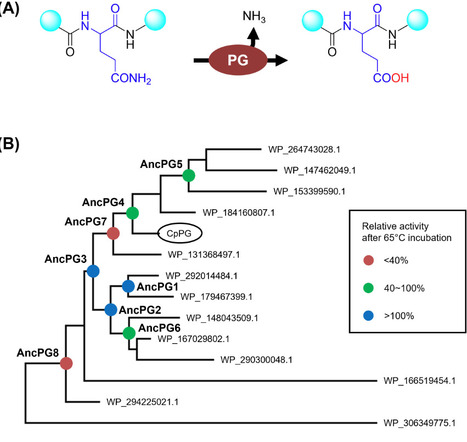
Protein-glutaminase (PG) from Chryseobacterium proteolyticum is an industrially valuable enzyme for protein deamidation; however, its application is limited because of insufficient thermal stability. Previous rational design studies have enhanced the thermostability of PG but often required labor-intensive, stepwise optimization. In this study, ancestral sequence reconstruction (ASR) was used to engineer thermostable PG variants in a single design step. Eight ancestral PGs were constructed, all of which exhibited enhanced thermal stability compared with that of the wild type. The most stable variant, AncPG1, had a melting temperature of 76.2°C, 13.6°C higher than that of the wild type. Mutational dissection identified five substitutions, N148G, N154D, L156Y, L168S, and D179S, that individually enhanced thermal stability and showed cumulative stabilizing effects when combined. These substitutions were predominantly located in surface-associated loop regions. Notably, although the ancestral variants showed reduced catalytic efficiency toward the small synthetic substrate Cbz-Gln-Gly, they retained reactivity toward macromolecular protein substrates when compared at equal activity units. Furthermore, AncPG1 showed greater absolute protein-substrate reactivity than WT CpPG under elevated temperature conditions. These findings provide further support for ASR as a strategy for generating thermostable enzyme variants with improved functional performance under elevated-temperature conditions.
mhryu@live.com's insight:
fastML: give it a multiple sequence alignment and a phylogenetic tree. It returns the inferred sequence at every internal node of that tree, that is, the ancestors.
Scoop.it!

Episomal plasmids are widely used in yeast metabolic engineering for their flexibility and high transformation efficiency. However, their application in Yarrowia lipolytica is often limited by low copy number and insufficient genetic stability. In this study, a robust episomal plasmid that balanced genetic stability and protein expression capacity was developed in Y. lipolytica. The autonomously replicating sequence (ARS) elements were selected, and ARS1 was identified as a favorable element that balanced genetic stability and gene expression capacity. To improve plasmid copy number, different ubiquitin degrons were used to tune selection marker abundance, and Ubi-R-Δk-mediated marker resulted in an approximately fourfold increase in plasmid copy number (from ∼1 to ∼5 copies per cell). The copy number of the engineered plasmid was one of the highest‑copy episomal systems in Y. lipolytica. To further evaluate the engineered plasmid, we applied it to β‑carotene biosynthesis. The results showed that the β‑carotene titer was 3.43‑fold higher than that of the non‑optimized plasmid. Collectively, this work expands the episomal plasmid toolbox for Y. lipolytica and establishes a generalizable framework for robust protein expression plasmid engineering in non-conventional yeasts.
Scoop.it!

Long-term fertilization alters nitrous oxide (N2O) emissions from paddy soils, but its effects on the ecological roles of distinct N2O-reducing clades remain unclear. Here, we investigated Clade I and Clade II N2O reducers using a 20-year field experiment with unfertilized control (CK), chemical fertilizer (NPK), and organic fertilizer (OF) treatments. Clade II dominated the community, accounting for 72.4% of nosZ reads and 83.3% of recovered nosZ-containing draft metagenome-assembled genomes (MAGs), and was enriched in carbohydrate-active enzyme (CAZy) genes. However, Clade I abundance explained more variation in soil N2O reduction potential than Clade II (R2 = 0.38 vs. 0.28). Structural equation modelling showed that fertilization enhanced soil carbon and nitrogen status, which strongly promoted Clade I abundance (β = 0.90). Clade I fully mediated fertilisation effects on N2O reduction potential, whereas Clade II showed only partial mediation. The two clades also exhibited contrasting vertical distributions: Clade I was relatively uniform throughout the soil profile, while Clade II displayed niche stratification, with different taxa dominating surface, middle, and deep layers. These results suggest distinct ecological strategies of the two N2O-reducing clades and long-term fertilisation differentially influences their distribution and contribution to the N2O sink function of rice paddy soils during the period examined.
Scoop.it!
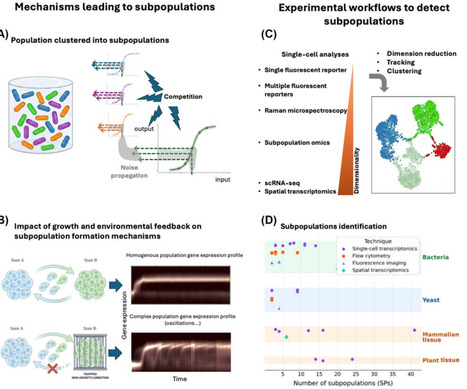
Cell populations underpin applications ranging from bioproduction and biotherapeutics to microbiome engineering and biocomputing. However, treating them as bulk quantities rather than as structured systems limits our understanding of population-level stability, productivity, and robustness. Cellular populations self-organize into coexisting subpopulations (SPs) representing phenotypically distinct states that emerge from the interplay of biological noise and selective pressures. We propose that networks of interacting SPs constitute a fundamental organizational layer for engineering stable cell population dynamics. Surveying published single-cell studies across bacterial, yeast, and mammalian systems, we show that populations consistently self-organize into a limited number of SPs. This dimensional reduction can be captured experimentally by clustering single-cell data and gives rise to scaling laws that link population structure to collective performance.
Scoop.it!
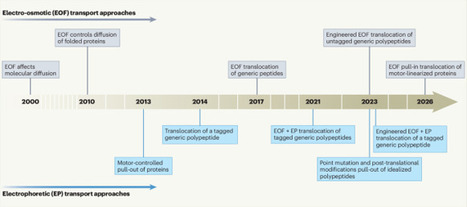
Nanopore protein sequencing has advanced from a theoretical ambition to a practical technology, overcoming major challenges in protein unfolding, transport and signal detection to achieve single-amino-acid and post-translational modification sensitivity. With both full-length and peptide-based approaches progressing towards commercialization, the field is now focused on scaling throughput and refining analysis tools to unlock a new generation of single-molecule proteomics.
Scoop.it!
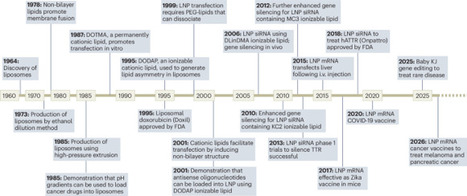
Curiosity-driven studies of lipid organization and lipid asymmetry in biological membranes led to scalable methods for making liposomes, efficient loading of drugs and ionizable cationic lipids. In turn, these advances led to lipid nanoparticles enabling the RNA medicine Onpattro and the COVID-19 mRNA vaccines, and they are now facilitating gene therapies that can potentially treat most human diseases. lnp
Scoop.it!
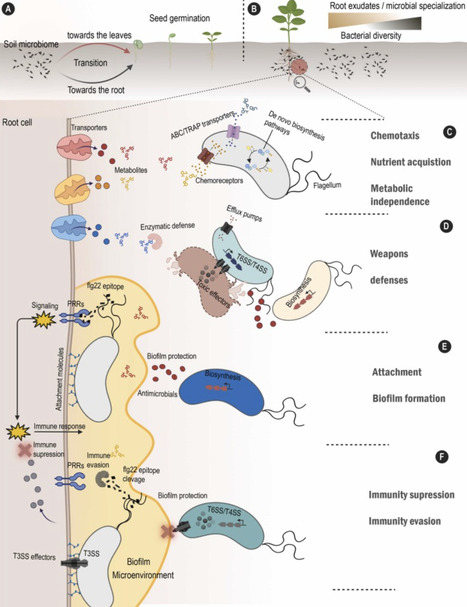
Plant-associated bacteria offer a sustainable alternative to chemical inputs in agriculture, yet the field performance of microbial inoculants remains inconsistent. A central but frequently overlooked cause is that bioprospecting pipelines still select strains on the basis of plant-growth-promoting activities, while the bacterial genetic traits that determine whether a strain can reach, colonize and persist in a given root compartment are rarely assessed. Previous reviews have largely catalogued growth-promoting functions or described root microbiome assembly from the plant's perspective, here we take the bacterium's. We trace the journey of a bacterium from bulk soil to its final niche and, at each stage, identify the genes and pathways (genetic determinants) that encode key bacterial traits involved, such as chemotaxis and motility, nutrient acquisition and metabolic independence, competitive and defensive arsenals, attachment and biofilm formation, evasion of plant immunity, and endophytic entry and persistence. Throughout, we use evidence from comparative genomics and metagenomics, (meta)transcriptomics, targeted mutagenesis and genome-wide screens such as Tn-seq, obtained in systems ranging from binary interactions to synthetic communities and natural soils. For each stage we examine the current state of knowledge, identify critical gaps, and propose avenues to deepen our mechanistic understanding of the bacterial traits involved in plant colonization. We argue that this mechanistic understanding is the missing foundation for developing inoculants with more consistent and robust performance across diverse agroecosystems.
|




