Your new post is loading...

|
Scooped by
mhryu@live.com
Today, 5:47 PM
|
Stomata regulate plant growth and environmental responses through their control of gas exchange and transpiration. However, high-throughput stomatal phenotyping and the integration of phenotypic, genetic, and multiomics data remain major challenges for biological discovery and for understanding stomatal function in plants. Here, we review emerging imaging technologies and foundation models for stomatal biology and discuss how advances in AI could transform plant stomatal research. The rapid accumulation of large-scale phenotypic, genetic, and omics datasets requires systematic integration of heterogeneous data and their interpretation to uncover mechanisms of stomatal regulation within a unified reasoning framework. Therefore, we propose a stomatal phenotyping and analysis agent framework that connects these pipelines to accelerate hypothesis generation, phenotype–genotype analysis, discovery of biological function, and crop improvement.
|
|
Scooped by
mhryu@live.com
Today, 5:10 PM
|
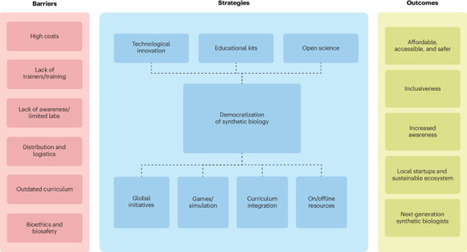
Democratizing synthetic biology requires reducing costs, improving logistics and distribution, developing local expertise, and motivating educators and students.
|
|
Scooped by
mhryu@live.com
Today, 4:59 PM
|
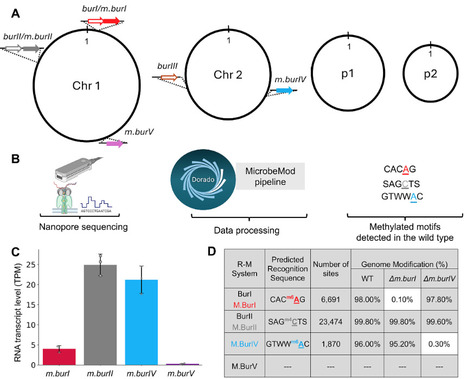
Heterologous expression—the expression of genes from one organism into another—is an important approach to produce value-added chemicals such as proteins and metabolites. The main challenge, however, is achieving high production yields that are commercially viable. Approaches used to improve productivity rely on editing the DNA sequence, including promoters, ribosome binding sites, and codon usage. Epigenetics, in the form of DNA methylation, may offer an additional layer of control to improve production yields but remains unexplored. Moreover, the choice of the host organism is crucial. We have been interested in developing the alternative bacterial host Burkholderia sp. FERM BP-3421. Four DNA methyltransferases were predicted to be encoded in the genome of this strain, one of which was silent under our growth conditions. After performing gene deletions or overexpression, we experimentally assigned the recognition motif of each DNA methyltransferase, one of which was shown to be essential. As expected, modulation of DNA methylation had major impacts on the transcriptome and metabolome of the host, varying depending on which DNA methyltransferase was modified. Two of the methyltransferases that methylate adenine had overlapping profiles, whereas the one methylating cytosine differed. Finally, we probed the role of DNA methylation during heterologous expression using green fluorescence protein and three different promoters. Expression levels varied in a context-dependent manner with mechanisms, in some cases, involving the presence of methylation motifs within promoter regions but also based on global host effects. This work establishes epigenetics as an important design variable to help improve heterologous expression yields.
|
|
Scooped by
mhryu@live.com
October 11, 11:57 PM
|
Microbial communities assemble in heterogeneous habitats, where quorum sensing (QS) influences interactions beyond signalling populations. Yet QS studies are commonly organized by signal type, circuit, or phenotype, obscuring the routes by which a QS event reaches neighboring populations and why they prevail in particular settings. This Review synthesizes evidence from host-associated, terrestrial, marine, and aquatic systems to develop a two-dimensional framework for QS-mediated ecological effects. The framework distinguishes three relay architectures by which QS activity in one population affects another: direct perception of the source signal, exposure to a QS-regulated chemical effector, or response to a QS-associated change in a shared host or environment. It then identifies the ecological strategies that these architectures can support, including shared signal accessibility, reciprocal coordination, asymmetric cue responsiveness, resource monopolization, and competitive or community restructuring. Across habitats, spatial structure, resource accessibility, host-associated conditions, and temporal variability shape which relay architectures are feasible and the ecological consequences they generate. The framework positions QS as a context-dependent process through which population-state sensing is translated into neighbor responses, changes in habitat conditions, and community assembly. It establishes testable expectations for predicting which QS-mediated interactions arise in a habitat and for designing interventions that steer microbiome function.
|
|
Scooped by
mhryu@live.com
October 11, 11:39 AM
|
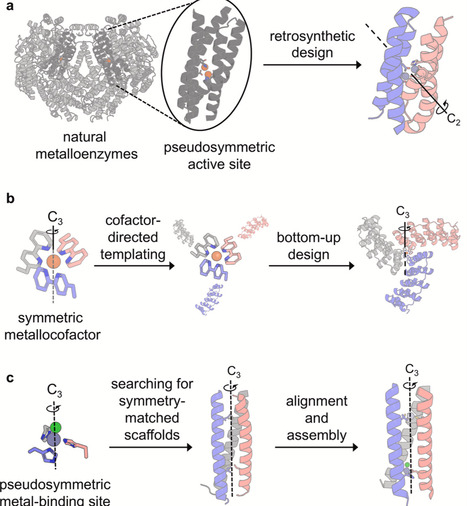
Metalloprotein design has progressed from minimalist strategies that recapitulate only primary coordination spheres to approaches that construct secondary coordination spheres or nonbiological metallocofactors within entirely new metalloprotein scaffolds. In numerous natural systems, active sites often exhibit intrinsic pseudosymmetry or are located at protein–protein interfaces within symmetric assemblies. Inspired by these features, metalloprotein design efforts leverage the inherent molecular symmetry of target metallocofactor-binding sites or homooligomeric protein architectures to achieve precise control over coordination geometry while simplifying the design process and expanding accessible structural and functional complexity. In this Review, we highlight recent advances in artificial metalloproteins that harness molecular symmetry as a central principle to program metalloprotein structure and function, grouped into three distinct strategies.
|
|
Scooped by
mhryu@live.com
October 11, 11:28 AM
|
Gram-positive bacteria use secreted peptides and peptide-responsive transcription factors for quorum sensing. Here, we demonstrate that intracellular expression of these peptide effectors with their cognate transcription factors leads to regulation of gene expression in both in vitro and in vivo systems. Because both effector and regulatory parts can be readily expressed, complex circuits, including auto-activation schemes, can be developed, with switch-like behaviors. Moreover, the peptide effectors can be fused to proteins, enabling a direct intracellular readout of translation and potentially allowing any protein to encode regulatory interactions in cells. Our results support a foundation for regulatory circuits that extend beyond canonical components such as LacI and TetR.
|
|
Scooped by
mhryu@live.com
October 11, 11:06 AM
|
RNA splicing is frequently disrupted by genetic variation, contributing to a wide range of human diseases. Identifying the variants responsible for altered splicing is therefore crucial but has long been challenging. Deep learning models that predict splicing from genomic sequence have substantially advanced their detection, but accurately resolving their quantitative effects on splicing and the resulting transcripts remains an unmet need. Here we introduce SpliceAI2, a deep learning model trained end-to-end on splice site, splice junction, and transcript usage across multiple mammalian species. SpliceAI2 reconstructs complete transcripts directly from genomic sequence and considerably improves identification of splice-altering variants and quantification of their effects in diverse benchmarks spanning cryptic splicing, splicing quantitative trait loci, and massively parallel reporter assays. Human population datasets provide independent validation of these predicted functional effects through evidence of natural selection and associated changes in plasma protein abundance. Application to a rare disease cohort reveals that predicted splice-altering variants are highly enriched in disease-associated genes and account for 15% of the excess genetic burden, with approximately half residing in deep intronic regions likely missed by exome sequencing. Together, these findings establish SpliceAI2 as a major step forward in interpreting splice-altering variants across the human genome.
|
|
Scooped by
mhryu@live.com
October 11, 10:45 AM
|
Salmonella enterica, a major global pathogen, has evolved a distinctive pathogenesis that differs from related enteric pathogens. A central regulator of Salmonella-specific virulence gene expression is the broadly conserved PhoP/PhoQ (PhoPQ) two-component system. PhoPQ serves a distinct role in Salmonella compared to other species, suggesting a need to adapt its function for its unique and expanded role in this species. In this study, we identify a novel, Salmonella-specific component of the PhoPQ signaling system, a small putative lipoprotein we name PalA. We show that PalA localizes to the cytoplasmic membrane, where it interacts with PhoQ, leading to PhoP activation and a corresponding reprogramming of the PhoP regulon. PalA’s transcriptomic impact is entirely PhoPQ-dependent, indicating strict specificity. Upon cationic antimicrobial peptide exposure, palA expression is induced, and it strongly activates PhoPQ, but palA shows low expression and has a minimal effect under low pH or low Mg2+ conditions, indicating its impact on PhoPQ is signal-specific. Notably, PalA does not stimulate PhoPQ systems from closely related species, indicating that Salmonella PhoPQ has adapted to promote its activation by PalA. Collectively, this study unveils an evolutionary adaptation by Salmonella that enhances its virulence gene expression in response to cationic antimicrobial peptide exposure.
|
|
Scooped by
mhryu@live.com
October 10, 7:55 PM
|
All genes must ultimately have arisen de novo from non-coding sequences, but to what extent is this process an ongoing contributor to the contents of contemporary genomes? Based on the expansive pangenome of Escherichia coli, genes created de novo are short-lived and have made virtually no contribution to the set of longer, conserved genes that form the bulk of the canonical gene repertoire. Due to the generality of bacterial genome dynamics, this trend likely applies across taxa, suggesting that the vast majority of truly novel genes were created in the deep evolutionary past, thereby consigning the role of the newly invented genes to transient adaptive challenges.
|
|
Scooped by
mhryu@live.com
October 10, 7:50 PM
|
Multimodal protein language models (PLMs) deliver strong performance on mutation-effect prediction, but training such models from scratch demands substantial computational resources. In this paper, we propose a fine-tuning framework called InstructPLM-mu and investigate the question: Can a pretrained sequence-only PLM, augmented with structural information during fine-tuning, match the performance of end-to-end trained multimodal models? Surprisingly, our experiments show that fine-tuning ESM2 with structural inputs can reach performance comparable to ESM3. To understand how this is achieved, we systematically compare three different feature-fusion designs and fine-tuning recipes. Our results reveal that both the fusion method and the tuning strategy strongly affect final accuracy, indicating that the fine-tuning process is not trivial. We hope this work offers practical guidance for injecting structure into pretrained PLMs and motivates further research on better fusion mechanisms and fine-tuning protocols.
|
|
Scooped by
mhryu@live.com
October 10, 6:59 PM
|
Accurate species-level profiling of shotgun metagenomes becomes difficult when an organism is represented by only sparse sequence coverage. Per-read k-mer classifiers can retain sensitivity under these conditions, but short reads from conserved or shared genomic regions can generate false-positive calls among closely related references. More conservative marker-gene and genome-containment approaches generally provide stronger species-level specificity but may lose sensitivity as genomic sampling becomes sparse. We present winnow-tax, a two-stage taxonomic profiling pipeline that separates sensitive candidate nomination from genome-level confirmation. Candidate species are nominated using Sylph, Kraken2, and a branch-rescue procedure, then reads are competitively recruited to a sample-specific reference set. Species presence is evaluated using read support, observed genome breadth, and a Lander-Waterman-based breadth ratio that compares observed breadth with the breadth expected at the measured mean depth. In a controlled synthetic community of 82 genomes with human DNA background, winnow-tax maintained a stronger precision-sensitivity balance than Kraken2/Bracken, Sylph, and MetaPhlAn 4 as genome coverage decreased, with its advantage concentrated near the low-coverage detection boundary. In the CAMI III Toy Longitudinal Human Gut benchmark, winnow-tax had higher sensitivity than Sylph (0.803 versus 0.672), lower precision (0.923 versus 0.970), and a modestly but significantly higher F1 score (0.858 versus 0.793). In a clinical enteric stool cohort with culture/PCR reference testing, winnow-tax achieved the best composite performance for Salmonella, detecting 37 of 48 composite-positive samples with one false-positive call. Together, these results support a profiling strategy in which weak taxonomic signals are retained during candidate generation but require genomic evidence distributed as broadly as expected for their sequencing depth before species presence is accepted.
|
|
Scooped by
mhryu@live.com
October 10, 6:34 PM
|
In diverse natural communities, cells and phages interact with many potential partners, but the impacts of pairwise coevolution on the overall structure of phage-bacteria interaction networks (PBINs) is not fully understood. Here, we conducted multiple pairwise coevolution experiments and examined how coevolution with one partner could simultaneously influence interactions with other partners. We then analyzed the underlying genetic changes that alter interactions in a large cross-experiment PBIN. The results reveal that interactions at the cell surface as well as intracellular interactions can alter patterns across the PBIN. When phages utilized the same set of host cell-surface receptor genes, pairwise coevolution with one partner did alter interactions with other partners. In contrast, if different sets of host cell-surface receptor genes were used, modular patterns in the cross-experiment PBIN were generally observed. On the phage side, resistance-breaking mutations arose in many putative receptor-binding proteins, and these changes could alter interactions with other hosts. However, in both the hosts and phages, over half of the mutated genes were not associated with cell-surface interactions. Host mutations likely altering intracellular phage-host interactions, including translation, protein stability, and DNA replication often led to broad resistance across the PBIN. In phages, mutations occurring in genes encoding endolysins, DNA methylases, oxygenases, transcriptional regulators, and tRNAs were observed potentially also influencing intracellular interactions. Based on these results, we propose a model to illustrate how these two different types of genetic signatures (i.e. extracellular cell-surface interactions verses intracellular interactions) can impact the structure of PBINs.
|
|
Scooped by
mhryu@live.com
October 10, 1:35 PM
|
Fucoidan is the second most abundant polysaccharide in brown macroalgae, contributing up to 50% of the dissolved organic matter released daily from these algae into the ocean, substantially influencing the marine carbon cycle. Due to its complex chemical structure, fucoidan is highly resistant to microbial degradation and accumulates on the surface of macroalgae, where it contributes to regulating their microbiome. Here, we used a range of microfluidic assays to quantify the chemotactic and physiological responses of marine bacteria to fucoidan. Our results reveal that all the strains tested (14 out of 14) are attracted to fucoidan produced by two different species of brown macroalgae. Attraction occurred only at high fucoidan concentrations (0.1 to 1 mg/mL), such as those expected in the immediate vicinity of algal surfaces, whereas low concentrations elicited no response or modest chemorepulsion. Although fucoidan did not support bacterial growth under our experimental conditions, it did not impair the utilization of other carbon sources. Together, these findings suggest that fucoidan gradients can act as chemical cues guiding marine bacteria toward the nutrient-rich microenvironment of macroalgal surfaces, pointing to a potential ecological role of fucoidan in shaping macroalgal microbiota, bacterial behavior, and ultimately carbon cycling in the ocean.
|
|
|
Scooped by
mhryu@live.com
Today, 5:23 PM
|
From subcellular to population levels and beyond, living systems continuously sense and robustly interpret a diverse, ever-changing collection of signaling inputs and produce a near-limitless set of functional outputs. This process, referred to as biocomputation, combines information sensing, transfer and response algorithmically, using modular biological circuitry such as cells, proteins, nucleic acids and small molecules. By hijacking, evolving and repurposing these processes, biologists, chemists and engineers have exploited biocomputational frameworks in a growing number of sectors, including advanced chemical processing, additive manufacturing and tissue engineering. Here we examine the methods by which live cell and engineered biomaterial functions can now be (re)programmed with increased complexity and multiplexability. We categorize approaches based on the type of circuit used, and highlight the resulting advances in synthetic biology and stimuli-responsive materials. We also explore how these fields have evolved independently but with similar underlying methods and goals, and discuss the exciting opportunities that are emerging from their convergence. Circuitry is increasingly being engineered into both living systems and biomaterials. This Review highlights shared biocomputational design principles across synthetic, nucleic acid and protein platforms, then explores how their convergence may enable truly living materials.
|
|
Scooped by
mhryu@live.com
Today, 5:03 PM
|
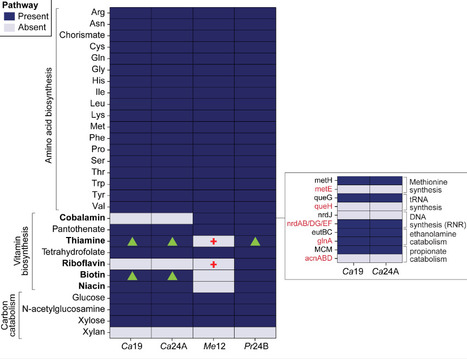
Interactions between microbes shape the structure and function of microbial communities. While studying interactions is key to understanding microbial communities as a whole, gaining a detailed mechanistic view is challenging due to the number of co-occurring interactions. Here, we focus on a single class of shared nutrients, the cobalamin (vitamin B12) family of enzyme cofactors known as cobamides, to study nutrient interactions in laboratory consortia of increasing complexity. Measuring cobamide-dependent growth of two soil Caulobacter isolates in monoculture revealed that each grows faster within a distinct range of cobamide concentrations. Co-culturing the two isolates demonstrated that the cobamide concentration predictably determines which isolate predominates. These results suggest that, although the two organisms appear functionally redundant, with identical metabolic capabilities predicted in their genomes, they may occupy distinct niches in their environment based on cobamide concentration. We further examined the ability of cobamide-producing Mesorhizobium and Priestia isolates to share cobamides and found that both support the cobamide-dependent growth of the two Caulobacter isolates. The Caulobacter isolates could coexist in tri-cultures with each producer following serial passaging, indicating the producers can support the growth of multiple cobamide-dependent organisms. We analyzed the metabolic capacity encoded in the genomes of the four isolates and found that cobamides are likely the main shared nutrient in our co- and tri-cultures. These results highlight the utility of cobamides as a model nutrient to characterize and predict interactions in bacterial consortia of increasing complexity.
|
|
Scooped by
mhryu@live.com
Today, 12:06 AM
|
Efficient ammonium uptake is essential for plant growth and nitrogen-use efficiency, yet the structural basis of ammonium transport and regulation in plant AMTs remains unclear. Here, we determined multiple cryo-electron microscopy structures of the Arabidopsis thaliana ammonium transporter AMT1;1 in apo, ammonium-bound, methylammonium-bound, low-pH and phosphomimetic states. These structures reveal a conserved ammonium conduction pathway comprising an aromatic recruitment vestibule, a Phe-gate/Twin-His-containing pore, and a polar intracellular exit region. We further identified a conserved extracellular N-terminal disulfide bond required for oligomer stability and transport activity, suggesting potential redox-dependent regulation. On the cytoplasmic side, phosphorylation modulates C-terminal interactions with intracellular loops, revealing an allosteric regulatory mechanism. Comparison with the bacterial ammonium-sensing protein Sd-Amt1 uncovers a conserved ammonium-recognition region in AtAMT1;1 that contributes to transport activity but lacks the signaling module and ligand-dependent conformational switching observed in Sd-Amt1. Together, these findings provide structural insight into ammonium transport and coordinated regulation in plant AMT transporters. He et al. determine multiple cryo-EM structures of Arabidopsis thaliana AMT1;1, revealing a conserved ammonium transport pathway and distinct regulatory mechanisms. An extracellular N-terminal disulfide bond contributes to oligomeric stability, while C-terminal phosphomimetic mutation remodels cytoplasmic regulatory interactions. These findings provide a structural framework for ammonium transport and regulation in plants.
|
|
Scooped by
mhryu@live.com
October 11, 1:05 PM
|
Metagenomic databases hold vast quantities of unexplored genetic material that can seed tools for biotechnology and medicine, but discovery is limited by our ability to examine sequence data at scale. Here, we show that large language models (LLMs) in an autonomous harness can alleviate this bottleneck and surface novel molecular systems. We deployed Claude Code instances to survey reverse transcriptase (RT) loci across 1.9 billion protein clusters. Among the top candidates were array-associated RTs (ART), a novel family of jumbo-phage RTs coupled with an array of ~200-nucleotide units and a dedicated partner gene. Session transcripts show that Claude identified the ART family by directly examining its DNA sequences and recognizing the atypical repeats, a behavior attributable to specific Mythos 5 internal signals that respond to repeated DNA. ART arrays are highly expressed and appear as discrete units during Staphylococcus phage infection, suggesting an RT system directed by a repertoire of distinct RNAs. These findings indicate that LLMs can autonomously detect anomalies and drive analyses to initiate biological discoveries.
|
|
Scooped by
mhryu@live.com
October 11, 11:36 AM
|
Protein structural complexity confers responsiveness and modularity, allowing proteins to act as control modules in biomolecular circuitry. Protein engineering that commandeers native cell signaling and central dogma functions has led to the development of cell therapies, specialized biosensors, and a deeper understanding of cellular mechanisms. In this review, we examine how protein control modules command circuit with therapeutic functionality across cellular spatial levels. Extracellularly, signal proteins such as antibodies and cytokines can provide either binary or gradient-sensitive detection of environmental features. Extracellular proteins also serve as inputs to synthetic receptors that transmit signals across membranes, rapidly linking environmental cues to intracellular action. Inside the cell, protein control modules are engineered from central dogma components to bind nucleic acids, creating gene circuits that influence transcription, translation, and nucleic acid processing, and ultimately regulate protein expression. This review covers circuitry platforms and immunoengineering applications across spatial levels, focusing on innovation from 2016 to 2026. With continued development, synthetic biocircuits can serve as a platform for creating next-generation “smart” therapeutics and ultimately for engineering immunity.
|
|
Scooped by
mhryu@live.com
October 11, 11:15 AM
|
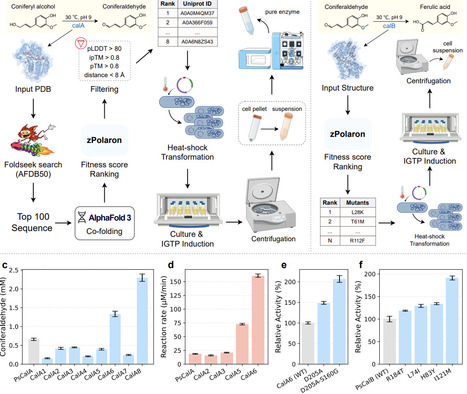
Protein inverse folding, which infers compatible amino acid sequences from a given backbone structure, is central to rational protein design. Current methods rely largely on sequence recovery rate as the evaluation metric, emphasizing structural compatibility but seldom addressing function. Yet functional activity depends on the proper network of non-covalent interactions-protein-ligand contacts being a prime example. We argue that function-oriented protein design is governed by three complementary constraints: structural, interaction, and evolutionary, none of which are handled in a unified manner by existing pretrained models. To bridge this gap, we introduce zPolaron, a graph neural network built on protein-ligand complexes for functional protein design. zPolaron represents residues and ligand atoms as a heterogeneous graph and jointly encodes structural, interaction, and evolutionary information by fusing physical-interaction-enhanced graph representations with ESM-2 embeddings. Across multiple fitness prediction benchmarks, zPolaron outperforms all baselines, with gains evident across structural, interaction, and evolutionary dimensions. Wet-lab experiments further confirm its utility in functional enzyme screening and design: the optimized CalA6-D205A-S160G mutant achieves a 17.84-fold improvement in activity, while the CalB-I121M mutant yields a 1.91-fold increase. Together, these results show that integrating interaction and evolutionary information fills the missing puzzle of inverse folding, enhancing protein fitness prediction beyond structural compatibility. zPolaron is available at https://github.com/zelixirSH/zPolaron.
|
|
Scooped by
mhryu@live.com
October 11, 10:55 AM
|
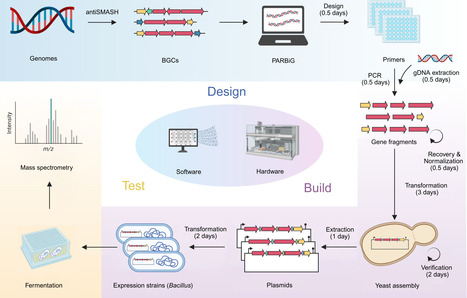
Microbial genomes encode numerous biosynthetic gene clusters, yet most remain experimentally uncharacterized, particularly large non-ribosomal peptide synthetase (NRPS) clusters that resist conventional cloning. Existing refactoring approaches are labor-intensive, depend on de novo DNA synthesis and are difficult to scale. Here we show that OSAR (One-Step Assembly and Refactoring)—an automated platform integrating algorithmic primer design with yeast homologous-recombination cloning—directly assembles and refactors NRPS clusters without custom DNA synthesis. We apply OSAR to 34 low- to medium-GC bacterial NRPS clusters (7–78 kb) and successfully assemble 31. Expression in Bacillus subtilis yields 29 peptides from 10 clusters. Several products arose from cryptic biosynthetic behaviors such as potential module skipping and premature release. OSAR provides a practical workflow for assembly and refactoring of NRPS clusters and may facilitate the translation of sequence information into natural products. Existing approaches for biosynthetic gene cluster (BGC) discovery are labor-intensive, depend on de novo DNA synthesis and are difficult to scale. Here we show that an automated platform for one-step assembly and refactoring of BGCs facilitates facile novel product discovery.
|
|
Scooped by
mhryu@live.com
October 11, 10:41 AM
|
Synthetic biology enables the installation of programable genetic functions in microorganisms, positioning them as versatile platforms for therapeutic applications. However, clinical translation requires chassis organisms that integrate safety, genetic stability, and precise control over the activity. Here, we present an innovative engineering framework for the probiotic E. coli Nissle (EcN) that transforms EcN into a safe, efficient, and non-proliferative chassis for therapeutic production. The native EcN plasmids pM1 and pM2 were cured and repurposed to encode two functional modules: a CRISPR-Cas12 chromosome-shredding device that prevents bacterial propagation and a programable circuit for payload expression, thereby generating a non-proliferative therapeutic-producing system. To broaden the range of therapeutic payloads, we developed an artificial-intelligence-guided bioinformatic pipeline to predict anticancer cell-penetrating peptides (ACCPPs). As a proof of concept, a candidate identified through this workflow was produced in the engineered EcN chassis and evaluated in human cell culture for anticancer activity. Collectively, this strategy established a modular platform that integrates computational therapeutic discovery with engineered probiotic production, paving the way for the future development of safer microbial therapies and their clinical applications.
|
|
Scooped by
mhryu@live.com
October 10, 7:53 PM
|
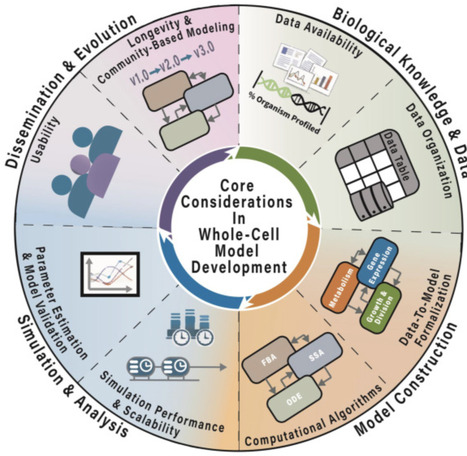
Whole-cell models aim to predict cellular phenotypes from genotype and environment by integrating mechanistic, genome-scale information about biochemical processes into a single computational framework. Despite their conceptual promise and demonstrated utility in exposing knowledge gaps, guiding experiments, and enabling mechanistic insight, progress has been arguably slow, with only a few published models to date. One major reason is efficiency—substantial computational and software-related challenges that grow with biological scale and complexity. In this review, we examine the current landscape of whole-cell modeling through the lens of computational efficiency, organizing challenges and recent advances across four interconnected areas: biological data/knowledge organization, model construction, simulation and analysis, and dissemination/long-term model evolution. We discuss issues surrounding data availability, interoperability, and aggregation; limitations of existing model construction workflows and formats; algorithmic and performance bottlenecks in hybrid, multi-scale simulation; and persistent difficulties in parameter estimation, validation, and reproducibility. We highlight emerging solutions, including software-agnostic model formats, rule-based and database-driven model generation, compiled and parallel simulation engines, and standardized frameworks for model–data comparison. Finally, we discuss challenges in usability, sustainability, and community-based development, emphasizing the need for professional software engineering practices and collaborative infrastructures to support long-lived, extensible whole-cell models, gleaning lessons from other similar efforts. These analyses suggest actionable directions for developing scalable, reusable, and community-driven computational frameworks to advance whole-cell modeling towards broad basic and translational impact.
|
|
Scooped by
mhryu@live.com
October 10, 7:22 PM
|
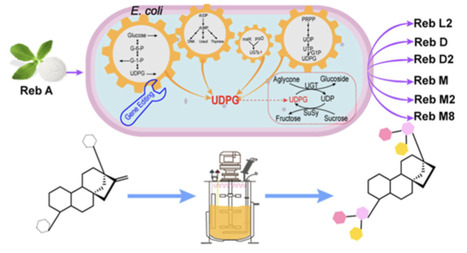
Rare steviol glycosides (SGs), characterized by superior sensory profiles and promising bioactivities, are high-intensity sweeteners derived from Stevia rebaudiana. Their intrinsically low abundance limits extraction yields, while in vitro bioconversion is limited by the availability of UDP-glucose (UDPG). Here, an E. coli chassis was reprogrammed to achieve an intracellular UDPG content of 11.72 μmol/g CDW, 2.19-fold that of BL21(DE3), by enhancing pyrimidine nucleotide synthesis, blocking competing pathways, redirecting carbon flux, and optimizing the expression of key genes. Coupled with a UGT−SuSy system, the platform enabled in vitro conversion of Reb A into rare derivatives Reb L2, Reb D, Reb D2, Reb M, Reb M2, and Reb M8 without exogenous UDPG, with 1.6- to 129-fold higher conversion efficiencies than the wild type. Cultured in a 5 L bioreactor, harvested cells yielded 108.57 g/L Reb L2 and 111.99 g/L Reb D via in vitro whole-cell biotransformation. This platform provides a route for rare SG production and a versatile foundation for the glycodiversification of natural products.
|
|
Scooped by
mhryu@live.com
October 10, 6:46 PM
|
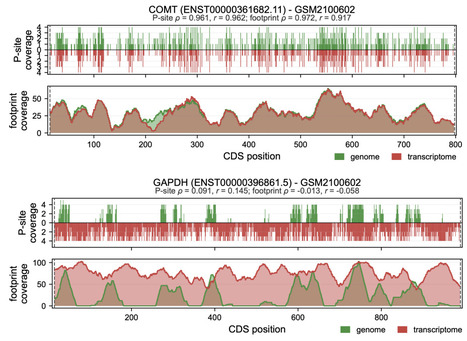
Ribosome profiling experiments capture a snapshot of translation by sequencing ribosome-protected fragments (RPFs). Alignment to a well-curated transcriptome captures most RPF signal, but can miss ribosome activity when expressed exons are absent from the reference. Genome alignment of RPFs expands the detectable sequence space, but can expose ambiguity between homologous loci. Existing workflows often couple reference choice with the handling of ambiguously mapped reads, making it difficult to isolate the effects of either decision on downstream analyses. Here, we developed RiboFlow v2 by adding genome alignment and configurable handling of multimapping reads to the existing transcriptome workflow. Using 24 human ribosome profiling libraries and their matched RNA-seq data, we found that nucleotide-level coverage at matched coding-sequence positions and translation efficiency (TE) were broadly concordant between alignment strategies under stringent alignment filters. Even under these conditions, individual genes showed substantial differences in coverage and TE estimates. These differences included coverage in alternative exons absent from selected transcripts and ambiguous alignments between protein-coding genes and processed pseudogenes. Clustering genes by read-assignment patterns identified groups associated with pseudogene prevalence and highlighted shared exonic sequence among reference transcripts as a source of alignment discrepancies. RiboFlow v2 extends the analysis beyond selected reference transcripts and enables identification of genes whose ribosome coverage and abundance estimates depend on reference composition and how ambiguously mapped reads are handled.
|
|
Scooped by
mhryu@live.com
October 10, 6:17 PM
|
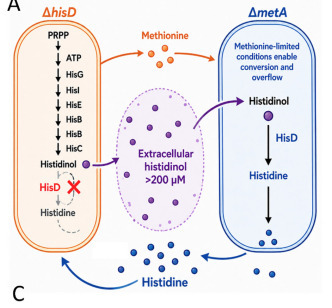
A large fraction of microbes in natural environments are auxotrophs that rely on metabolite exchange for growth. The Black Queen hypothesis and related frameworks explain gene loss and reliance on shared metabolites. Yet it is not fully understood how metabolite cross-feeding emerges and gives rise to experimentally observable community performance. Here, we propose that exchange of biosynthetic pathway intermediates provides a mechanistic route for the emergence of metabolite cross-feeding. Building on prior work demonstrating intermediate exchange in E. coli auxotrophs, we investigated co-cultures between a methionine auxotroph (ΔmetA) and a panel of histidine auxotrophs. Among these, only ΔhisD exhibited efficient co-culture growth with ΔmetA, suggesting a unique role for the final step of histidine biosynthesis, which converts histidinol to histidine. We found that ΔmetA-ΔhisD co-cultures accumulated high levels of extracellular histidinol (>200 μM), suggesting a mechanism for metabolite exchange. Spent media from these co-cultures supported growth of all histidine auxotrophs except ΔhisD, confirming that histidinol, rather than histidine, was the dominant exchanged metabolite. Furthermore, we observed that ΔmetA efficiently converted histidinol to histidine only under methionine-limited conditions, suggesting that nutrient limitation promoted overflow of converted histidine to the extracellular environment. To quantitatively assess whether histidinol exchange could account for the observed co-culture behavior, we constructed a mechanistic model that links extracellular histidinol dynamics to co-culture growth through independently measured conversion capacity of the ΔmetA strain. Rather than fitting growth empirically, we used experimentally derived parameters to predict co-culture growth from the measured histidinol-to-histidine conversion flux. The model accurately recapitulated the timing and magnitude of growth and population dynamics, supporting the idea that accumulation of histidinol enabled the conversion-driven supply of histidine that sustained ΔhisD, while coupling growth between the two strains. Taken together, these results suggest that metabolite cross-feeding in syntrophic co-cultures can emerge from the accumulation of pathway intermediates and their conditional conversion under nutrient limitation, providing a plausible mechanism for the rapid establishment of mutualistic interactions.
|