Over time, languages naturally change. In the past, cultural collisions caused by slavery, exploration, and war have pushed them even further, says Columbia University linguist John McWhorter. Today, new forces are at play. Languages are transformed by technological advances that transcend borders and redefine how we communicate—and with whom. In his own words: Today there are six or seven thousand languages worldwide. Over the course of the next century, there are going to be only about six or seven hundred. The more-common languages will eat up the ones that are geographically isolated or spoken by only a few people. Technology and globalization play a big role in this shake-up. The amount of media that we can listen to and watch nowadays was unthinkable 50 years ago. Increasingly, instead of attempting to learn foreign languages from guidebooks or asking strangers for help, we’ll use instant-translation apps. We’ll talk into devices that spit out translations to listeners. But technology goes only so far. People will want to communicate more spontaneously than any machine is ever going to be capable of. “English is not going to eat up all the world’s languages, but it will have the status of lingua franca.” When we do converse, the universal language won’t be an artificial one like Esperanto. And it won’t be Chinese. It’s going to be this weird language that originated from tribes drinking blood out of skulls somewhere in Denmark a very long time ago. That’s what we’re speaking now. The Chinese will be running the world, but they’ll be doing it in English, simply because English “called it.” It got there first and circled the globe with the Internet. English already infiltrates texting with shorthand like “LOL.” And that brings up another point: Simplified versions of language are inevitably going to arise on smartphones. You’re tempted to leave out a lot when you’re writing with your thumbs. I think emoji, with those cute little faces, are fun. They make the way people write with their fingers richer. In the future, language is going to be less formal—more loose-limbed and creative. That’s not necessarily a bad thing. All language changes all the time, like in a game of telephone. It can’t help it." 820: Number of living languages in Papua New Guinea, the most of any country This article was originally published in the December 2015 issue of Popular Science, under the title, "John McWhorter On The Future Of Language".
Or there could be more bilinguals in the world as more people use English (or a new version of it) as lingua franca communicating through technology and their own native language in real life. This is what I hope, at least.
Census Bureau lists Hawaiian Pidgin among island languages Census Bureau lists Hawaiian Pidgin among island languages Story Comments Print
Font Size: Default font size Larger font size
Posted: Sunday, November 15, 2015 6:39 am | Updated: 8:34 am, Sun Nov 15, 2015. 0 comments HILO, Hawaii (AP) — Pidgin and Hawaiian Pidgin are included among the U.S. Census Bureau's list of over 100 island languages. The Hawaii Tribune-Herald reports (http://bit.ly/1H3dLHg) about 1,600 island residents who were surveyed said they spoke Pidgin or Hawaiian Pidgin, also known as American Creole English. Pidgin emerged as a common language among the ethnically diverse population of sugar plantation workers. The language has continued to be spoken in Hawaii for over a century. The Census released the language listing earlier this month.
GILLETTE — The group of men and women sit at tables in front of a chalkboard, writing feverishly and trying to understand the concept scrawled out on the board.
They say the words out loud, pronouncing each syllable with the precision of a computer. After a while, the concept begins to sink in.
To most people living in Gillette, the concept on the board is simple, a no-brainer even.
The words on the board include "often," ''rarely," ''always," ''never" and "sometimes." These are words we've heard most of our lives and their meaning and usage are ingrained into our vocabulary.
That is, they are if English is your native language.
The students
For this group of students that gathers every Thursday night at St. Matthew's Catholic Church in Gillette, English is a challenge. They try to learn to speak and understand the language of the country they now call home.
The range of ages and origins of the students is impressive, from 11-year-old Guadalupe Hurtado to grandmothers and grandfathers in their 50s and 60s. They come from Mexico, El Salvador and Guatemala, but now all are in Gillette with their largest obstacle being basic human communication.
"It's hard because you don't know how to communicate," Elisabet Martínez said in Spanish. "I didn't know a word of English when I came. I got here two years ago and suffered a lot. I got sick and had to go to the hospital, but they didn't know what was wrong and I couldn't tell them."
Martínez and her husband Manuel Robles moved to Gillette from Sonora in the very northwest corner of Mexico to be closer to their son, Manuel. When communication isn't there, even the most basic tasks can become frightening to accomplish. Having to explain a medical issue is just the tip of the iceberg. Daily tasks that many of us consider part of a normal day fill some of the students with dread.
It's difficult to communicate with a cashier at a grocery store, going to the bank to discuss a loan or even going to work every day where few, if any, coworkers speak Spanish.
Lupita Molina understands that issue well. Originally from Chihuahua, Mexico, she now works at Qdoba. It's a Mexican restaurant, but she is the only fluent Spanish-speaking employee there. When working the counter, she has to ask what customers want to eat and what sort of toppings they want.
That human interaction scares her the most and is what the English teachers want to help with.
The teachers
José Rivas and his cousin Jessica Díaz understand firsthand how difficult it can be to live in a country where both the language and the culture are foreign.
They arrived in Gillette in 1999, and when their parents needed to go somewhere, the kids came along to translate. Rivas said while language is a barrier, the culture also is hard to learn.
"It's really a little bit of both," Rivas said. "Sometimes they come in with paperwork and don't know how to fill it out or what it means. We're trying to close the gap."
Rivas graduated from the University of Wyoming last year and has plans to go back for a graduate degree in counseling. He and Díaz became the only members of their extended family to even graduate from high school, let alone college. An importance on education from the parents' perspective is critical in their eyes.
"We want to help close that gap between the teachers, the parents and the kids," Rivas said. "We want to get to a point where we can go get coffee, go to the library and check out books, go to the courthouse. If they need our help, we are there."
The other instructors are Nathan Waldner, who studied Spanish in college, and Connie Morlock, who teaches English as a Second Language to students at Rawhide Elementary and is the main teacher at the English classes. Morlock said the dedication of the men and women has been inspirational.
"It's been great. They've been so dedicated. They buy their own books, and if they had their way, it (the class) would be every night," Morlock said. "There are tons of hugs and kisses and they say 'thank you so much.' They are so appreciative."
The class
It all started when members of the local Catholic Church saw Hispanic people trying to worship with English-speaking parishioners. The church instituted a Spanish worship service, and then several decided to take it one step further.
"There's a large Latino community here," Díaz said. "So many were reaching out and they asked if I wanted to be a part of it. I said yes, but I wasn't sure it was going to happen. Then one day they call me and tell me I'm doing it."
The class isn't exclusive to members of the church, however. Anyone is welcome and the goal for the teachers is to expand it into a nonprofit organization that can receive funding.
But the church first brought the group together and religion represents a universal language to those who are Catholic.
"When I first got here, the first thing I asked was, 'Where is the church?'" Martínez said. "The church is very important to me."
The sense of community is apparent when someone comes through the doors. Even though they may have seen each other on Sunday, they greet each other with hugs and smiles as if it had been several years since the last reunion.
The only obstacle in the class seems to be pride. It's human nature to not want to appear ignorant or misunderstanding. After Morlock asks a question in English, there are some nods and a lot of silence when no one wants to be the first to acknowledge they didn't understand.
Morlock points at the sentence on the board the class came up with. It says, "The restaurant is ___ Charles Street." Off to the side are the words "at," ''in" and "on."
"Someone repeat it to me," Morlock commands in Spanish.
After a momentary silence, Elisandro Flores takes the first leap.
"The restaurant is ... on ... Charles Street," Flores tries.
"Yes. On. Good. OK, repeat it with me."
"The restaurant is on Charles Street," the class recites slowly.
Flores is from El Salvador. He said it's difficult to work in a job when he can't communicate with his American co-workers.
"It's really hard when you don't know how to explain yourself or when you have to present something," he said in Spanish. "People come to another country, another community and there are a lot of unemployed people because they can't get anything."
The students, huddled around both tables, number about 12. Each has filled out his or her workbook and is trying to pronounce and understand the sentence they have just written.
"How often do you drive a car?" Flores slowly reads. "I always drive a car."
It's a struggle to learn a new language and a new culture. But Flores and Martínez, 11-year-old Guadalupe and all of the other students look around at what they've already learned and how far they've come from knowing barely a word.
"Vale la pena," they say, which translates to, "It's worth it."
American Sign Language is the bridge that connects deaf and hard-of-hearing people, in large part, to the world of traditional interpersonal communications. But how to communicate with ASL when a partner in a given conversation cannot interpret the visually-based language?
Seeking to close that kind of communications gap, work is underway at Texas A&M University. Roozbeh Jafari, associate professor and principal investigator with the school’s Department of Biomedical Engineering — and researcher at its Centre for Remote Health Technologies and Systems — is developing a newly sophisticated tool to make ASL understandable to everyone.
SEE ALSO: Green innovation: This company is growing the future of automated agriculture
The results of Jafari’s project, and the long-term implications that stem from it, could change the way we approach interfacing with each other — and even with technology — all based on our hands, muscles and movements.
Vision Quest: Recent Challenges for ASL Translation The ASL translation system doesn’t have an official name, yet, but what it’s doing — and what it stands to do — is concrete and apparent. The goal is to translate ASL for all participants in a way that proves more accurate, more portable and more reliable than ever before.
“There have been a few systems for translating American Sign Language automatically,” said Jafari, regarding devices that precede the new technology he is working to refine. “The most prominent among them have been based on cameras and vision … you would basically stand in front of a camera and the camera would track hand motion.”
It is a system of turning visually tracked movement into words. But the cameras that facilitate it, only work well when the specific ASL gestures tracked are precise enough for the computer on the other end of the equation to recognise. Failure to hit the mark precisely, however, can mean the conversation between an ASL user and the non-ASL-using participant becomes difficult. Words get lost. Communications break down. Add in challenges around where a camera can be placed in a room full of ASL-using participants. Further add that users have to carry around a motion-tracking camera everywhere.
In all of these factors, Jafari saw the need for a different ASL-interpreting tool.
Beyond Vision: Jafari’s Motion- and Muscle-Tracking Approach to ASL Translation In Jafari’s project, the camera is out of the picture. Instead, his technology applies an external motion sensor and a wearable muscle-tracking sensor to create a new version of ASL translation.
“The sensor is based on EMG, or electromyogram technology,” Jafari said, referring to sensors the Mayo Clinic describes as measuring electrical signals — ones that our motor neurons transmit to muscles, causing them to contract. EMGs turn can these signals into numerical values computers and specialists are able to interpret.
“Combined with the external motion sensors, which show us the overall hand movement, the EMG allows us to discriminate between gestures,” he said. “A fine-grain of interpretation … motion sensors give us the overall sense and muscle activities give us information about the fine-grained intent.”
Next Steps: Focusing on the Details of New ASL Tech The team has produced an operational proof-of-concept model, when it comes to the ASL-interpreting technology underway at Texas A&M. The next step is to refine the sensitivity and accuracy of the devices.
Currently, every wearer of the EMG sensor, every time they don the device, must be careful to position the wearable tech in a precise way, otherwise the system must be “retrained” to register the ASL vocabulary the user employs. Jafari also stated that they’re working on ways to “make the system smarter, in a sense … to reduce or eliminate training time.”
At present, Jafari’s system recognises individual words, but requires a pause between them. As the team develops their work further, the goal is for the translation engine to combine the input it receives into whole phrases and sentences — more akin to the way humans naturally communicate.
The third prong of development is to increase the vocabulary of the technology, overall.
When all of Jafari’s developing tech is operating at the advanced level he describes, ASL users and their conversation partners will clearly benefit. But the applications of the sensor-based system extend beyond sign language and translation alone.
“When you think about it, you can use this for many other applications,” he said. “Think about your house … you might have a smart house, but right now to turn on and off all your devices you need to go to your mobile phone, each app, and then use them. What if you could control your house with hand gestures, communicating with each of your devices?”
For Jafari, starting with the mission to further facilitate ASL among all participants — and then extending into the home and future applications — the conversation is just getting underway.
Search engines have come a long way since the mid 1990s, from Altavista’s meta-based criteria to Google’s link based algorithm. Launched in 1998, Google’s algorithm has gone from strength to strength ever since. So where do we go from here?
We can’t see into the future, but we can predict it by understanding the challenges that search engines face today. Thanks to the advances in cloud computing and mathematics, search engines are able to apply these to finding better ways of helping users foreshorten their search for an answer.
Radically personal
The data scientists working on search engines like Google are already working on algorithms that enable them to predict the kind of search engine results users wish to see. People will no longer search for the same thing. Before long, the search engines will show unique results based on what different users want, even though the keyword they’re searching for is the same.
For example, user A and user B may both be searching for holidays in Greece. The only difference being that Google will infer from artificial intelligence that user A shops in Harrods and wears Burberry. As a result, the results will include the websites of luxury tour operators. For user B, who shops most frequently in Tesco, Google may infer that search results should be prioritised towards the more mass-market brands like First Choice Holidays.
This will be made possible thanks to the data collected by search engines - particularly Google. The fact that Google’s Chrome website browser enjoys a 65% market share (W3Schools) and many users of their services like Gmail are signed in enables Google to collect a lot of information about a user’s website preferences. This information allows Google to put together a reliable dataset and make predictions about what results the user will want to see to satisfy their search.
On another level, a user searching for articles could be shown articles that their peers, friends or family have liked or shared on Twitter or other social media. Search engines will statistically infer that these articles are likely to be relevant to the user.
Getting sentimental
Social media signals already play a major part in explaining why some content outranks others, despite links playing an important role (i.e. the more links from authoritative websites like the BBC, the more credible your site’s content). If that wasn’t enough, search engines already use sentiment analysis to further qualify inbound links to your website.
Sentiment analysis is a relatively new way to help computers understand the attitude of content towards a topic. For example, “that was an amazing holiday” would likely score positive due to the words ‘holiday’ and ‘amazing’ being predicted as a positive sentiment.
In the next five years, search engines will go further to evaluate the sentiment of all kinds of things including tweets, images, and mobile app content about sites and brands. This analysis will give search engines a better sense of what is being publicly discussed about sites on social media and mobile apps. For example, if there are many negative tweets about a luxury furniture retailer then, despite the volume of attention the site or brand is getting, these may not show up in the user’s search for a hand-made bed. The company is relevant to the user’s demographic, but a more qualitative assessment has changed the ranking.
In effect, using sentiments could not only help the future search engine improve the search experience in terms of relevancy, but also turn search engines into artificially intelligent advisors.
Contextual image classification
If search engines think a picture tells a thousand words, we are also likely to see sentiment analysis of images and videos. Today, there are approximately just over 2,000 machine learning experts specialising in computer vision, which is already furthering the search engines capability to understand images.
These computer vision experts are helping search engines like Blippar and Yossarian Lives to classify images in the way the everyday person would. Visual search engines can already recognise everyday objects such as an apple by scanning a live image on a mobile phone, or typing in a metaphor to generate image suggestions.
So the progress being made will likely see search engines being able to add much more context of the images in terms of their sentiment, the types of objects in the image and so forth. This will give search engines much more information to go on in terms of serving users the best and most original content.
In five years...
Many of these advances are likely to achieved not just because of the advances in technology but also because of the imagination of users and marketers that find new ways of searching and communicating respectively. The next ten years will become even more exciting as more information becomes available for collection and analysis by wearable technology. This will no doubt present challenges for search engines and SEOs alike.
UNIVERSITY lecturer and Italian journalist Stefano Girola spent the past couple of years pondering the words of New Norcia founder Rosendo Salvado. He earned praise for his English translation of Salvado’s 1883 Italian report to Rome on New Norcia from fellow academic and leading historian John Molony. “No words of mine can repay the debt I owe to Rosendo Salvado,” Professor Molony said in the foreword to Dr Girola’s translation. “He taught me the true meaning of perseverance no matter the odds. This book, so splendidly translated by Stefano Girola and so well presented by Salvado’s sons in Christ at New Norcia, is a worthy tribute to their great founder.” The Weekender asked Dr Girola if translating the 1883 report to Rome on New Norcia changed his opinion of Salvado? It reinforced some impressions of him I had developed from my previous research. I believe that what emerges from these pages is first of all a true ‘Renaissance man’. He was a gifted musician who mastered Latin, Italian and English. He was highly educated and certainly interested in the arts. At the same time, he became an expert and astute farmer, very knowledgeable about land legislation, crops, climate, agricultural machines, animals, plants, stones, diseases, poisonous weeds and telegraphy. He was a missionary dominated by a grand vision, that is, the creation of a Christian village in the Australian bush based on the medieval rule of St Benedict, where Noongar families and Benedictines could live together a fruitful life from the material and spiritual point of view; at the same time he was a very down-to-earth man, with exceptional organisational and administrative skills. Was Salvado holding back what was really happening in any way or was that his strength – that he told it how it was? Unlike the historical memoirs published by Salvado in Rome, the 1883 report was not meant for publication. It was a document of a private nature for internal use by Vatican officials. This means that Salvado was much franker and blunter in his criticism, for example, of the Perth Catholic bishops and of some Italian Church figures than he would have been in his public writings. Salvado was convinced that other powerful Church members did not care enough for the plight of the Noongars and for the work carried out by the Benedictines at New Norcia. He argued that much of the support received by the Benedictines was rhetorical in nature and not corroborated by generous deeds. Missionary published literature is often a fundraising exercise and it tends to hide certain unpleasant aspects. In this report, instead, not only does Salvado highlight important achievements, but also the difficulties and setbacks caused by ecclesiastical politics.
Almost from its inception, one of the most notable features of Noam Chomsky’s “revolution in linguistics” has been his insistence that linguistics, or at least the most interesting and important aspects of linguistics, must be understood as a part of
The U.S. was ranked third for capital investment in African countries in 2014 begetting the argument that more Americans should learn African languages.
Africa is open for business but localization to local language and culture is crucial if businesses want to succeed in the continent. African translation services are key.
Lecturer (Translation Studies) University of Glasgow - School of Modern Languages & Cultures Location: Glasgow Salary: £41,225 to £47,801 per annum Hours: Full Time Contract Type: Permanent Placed on: 12th November 2015 Closes: 13th December 2015 Job Ref: 011659
Click here to view our Employer Video Job Purpose
To undertake high-quality research and research supervision, to make an active and high level contribution to teaching and administration at undergraduate and postgraduate level in Translation Studies on behalf of the School of Modern Languages and Cultures, as requested by the Head of School. You will be required to play a leading role in the delivery of PGT teaching at Nankai University (Tianjin, China) as part of the University of Glasgow-Nankai University joint Graduate School Programme. This will involve approximately 10 weeks working in China throughout each academic year.
Standard Terms & Conditions
The successful applicant will be eligible to join the Universities' Superannuation Scheme. Further information regarding the scheme is available from the Superannuation Officer, who is also prepared to advise on questions relating to the transfer of Superannuation benefits.
All research and related activities, including grants, donations, clinical trials, contract research, consultancy and commercialisation are required to be managed through the University's relevant processes (e.g. contractual and financial), in accordance with the University Court's policies. Relocation assistance will be provided where appropriate.
New entrants to the University will be required to serve a probationary period of 6 months.
The successful applicant of this post will be enrolled onto the University’s Early Career Development Programme (ECDP). This will provide for you as an early career academic staff member to be developed and supported over a specified timeframe to facilitate the advancement of your academic career.
If You Are a Professional Translator You Know that Translating Joomla Websites Using standard CAT Software is virtually IMPOSSIBLE! JoomCAT lets you export ALL the Joomla text contents to a file that can be imported into ANY CAT software (including Trados, Memo-Q, DejaVu, Idiom and many... http://freebonusdownload.net/blog/joomcat-translation-addon-for-joomla-websites-free-download/
A Glossary of Literary Terms ebook go here http://bitly.com/1l8JDjq Authors M.H. Abrams First published over fifty years ago, A GLOSSARY OF LITERARY ...
Challenges of building localization from the ground up for a cloud-based software product: through the eyes of a customer and localization service providers.
How to localize an app, I contrast UICulture from Culture. For a simple example of localization download and inspect the "VS Release Shortcutter". For language ...
Same product for everyone doesn't work well in the international markets. Localization is the process of adopting the local language, customs and culture.
Sajan's innovative translation management system, Transplicity, makes the job of managing translation initiatives a breeze. Find out what you are missing out on if your vendor doesn't offer translation management technology to you.
WorldStage Newsonline-- The Freedom of Information Unit of Nigeria’s Federal Ministry of Justice (FMOJ) has sought collaboration with the National Orientation Agency (NOA) to enhance implementation of the Freedom of Information Act by public institutions in the country.
Director General of NOA, Mike Omeri disclosed this when the Deputy Director FOI Unit of the Ministry of Justice, Mrs. Stella Anukam visited him in Abuja to fine tune areas of partnership between the two organizations, said the agency had translated the FOI Act in twenty-eight Nigerian languages and has distributed same to various Ministries, Departments and Agencies.
The DG NOA urged the FOI Unit of FMOJ to step up efforts in making the implementation a reality by encouraging the disclosure of information and educating the MDAs on the type of information to be disclosed, adding that 3,000 personnel of the Agency have been deployed in continuous public sensitization about the act using the various platforms
He said: "The FOI act is timely, the right to know is a fundamental right of every citizen and the Act could be used to fight the ills of the society."
Earlier, the Director, FOIA Unit of Ministry of Justice, Mrs Stella Anukam said the unit was concerned about the implementation of the FOIA and that public servant should not be afraid to disclose information when necessary.
Anukam said the FOIA is about transparency and accountability in running the affairs of government, keeping records properly for the development of the country and is not a witch hunting effort.
She solicited the Agency's support for nationwide sensitization using its platforms.
To get content containing either thought or leadership enter:
To get content containing both thought and leadership enter:
To get content containing the expression thought leadership enter:
You can enter several keywords and you can refine them whenever you want. Our suggestion engine uses more signals but entering a few keywords here will rapidly give you great content to curate.


 Your new post is loading...


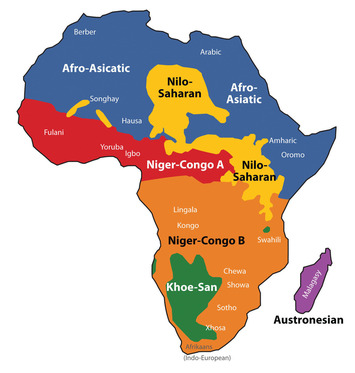














Or there could be more bilinguals in the world as more people use English (or a new version of it) as lingua franca communicating through technology and their own native language in real life. This is what I hope, at least.