 Your new post is loading...

|
Scooped by
Quezil Language Services
August 12, 2016 1:13 AM
|
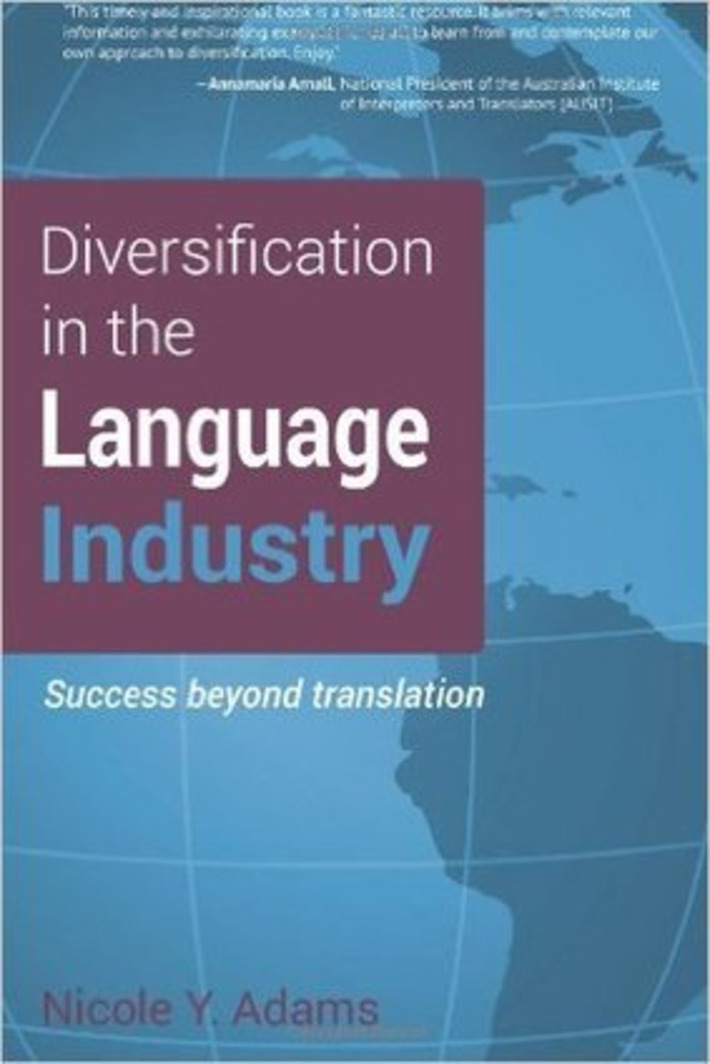
Treating MTPE as just a brief manual revision of the automatically generated translation before the end user delivery would never let us achieve the results mentioned by eBay’s Senior Director of Machine Translation and Geo Expansion, Hassan Sawaf:...
On 13 June 2016, Walker Books presented imaginative adventure story 'The Book of Pearl' at Free Word Centre. Missed it? Catch up with an audio recording We welcomed internationally acclaimed author of The Book of Pearl,Timothée de Fombelle, who was in conversation with his translators Sarah Ardizzone and Sam Gordon to discuss his journey in creating the story, and theirs in bringing it to life in English. This event was chaired by Joy Court. You can read an extract from The Book of Pearl by clicking here.
Speakers at this event included: Sarah Ardizzone is one of the most sought-after translators working today. She is twice recipient of the Marsh Award for Children’s Literature in Translation, for Eye of the Wolf by Daniel Pennac (2005) and Toby Alone by Timothée de Fombelle (2009). Sarah appears regularly on the book festival circuit and curates programmes around translation for all ages – includingTranslation Nation and Translators in Schools. Joy Court is the Chair of the CILIP Carnegie & Kate Greenaway Children’s Book Awards Working Party. Self-confessed ‘reading addict’, Joy chairs the Working Party that manages the awards and the accompanying shadowing scheme. She is an active member of CILIP’s Youth Libraries Group, she created the Coventry Inspiration Book Awards, has twice been a Carnegie & Kate Greenaway judge, until recently was Head of the Schools Library and Resource Service in Coventry and is currently Reviews Editor of The School Librarian journal. She also edited Read to Succeed, a title by Facet Publishing that covers strategies to engage children and young people in reading for pleasure. Timothée de Fombelle is a much-admired French playwright, as well as the author of award-winning fiction. His first series, Toby Alone and Toby Alone and the Secrets of the Tree has been printed in 27 languages and has won numerous awards, including France’s prestigious Prix Sorcières and the Marsh Award. Timothée’s adventure series, Vango, Book One: Between Sky and Earth and Vango, Book Two: A Prince Without a Kingdomreceived huge critical acclaim, and Book One was granted an English Pen award for translation. Timothée also contributed to the acclaimed collection The Great War: an Anthology of Stories Inspired by Objects from the First World War. Sam Gordon is a London-based translator of Arab Jazz by Karim Miské, which won a 2014 English PEN award and was shortlisted for a CWA International Dagger in 2015. Sam also translatedCaptain Rosalie, a short story by Timothée de Fombelle, which appeared in the Walker Books anthology The Great War: Stories Inspired by Objects from the First World War. This event was part of Wanderlust: Great Literature from Around the World, a monthly event series at Free Word. Join us on the second Monday of each month to celebrate the best fiction in translation. We record each Wanderlust so that if you can’t make an event, you can catch up and enjoy the conversation via an online audio recording. These recordings are available on our SoundCloud and also on our blog within a week or two of the live event at Free Word Centre.
Via Charles Tiayon
|
|
Scooped by
Quezil Language Services
July 26, 2016 9:20 PM
|
How foreign fiction is booming in the UK, and the secrets of some of the world’s best translators
Pourquoi et jusqu’où traduire les textes dans un musée et une exposition ?Why and to what point should texts be translated in a museum or an exhibition ? Françoise Rigat p. 34-39 RésumésÀ partir d’un constat sévère de l’état tant quantitatif que qualitatif de la traduction des documents d’accompagnement à la visite dans les musées français, l’auteur montre comment une traduction réalisée à partir d’un regard critique sur le texte original et en étroite collaboration entre le traducteur et le médiateur culturel ne peut, en définitive, que contribuer au rayonnement de l’institution muséale. Haut de page Texte intégral1En France, mais cela est sans doute vrai pour l’ensemble de l’Europe, on constate une situation pour le moins paradoxale : alors que les responsables des institutions du patrimoine ne cessent de proclamer leur volonté d’instaurer un dialogue avec le public le plus large, de diversifier leur offre de supports de visite pour mettre les savoirs à la portée du plus grand nombre, la traduction et la conception de documents d’accompagnement pour le public étranger ne retiennent guère leur attention. - 1 Parmi les différents publics, les enquêtes et les études portent sur le grand public ou sur certain (...)
2De même, les enquêtes et les études dans les institutions et les universités s’attardent peu sur le public étranger, par rapport aux autres catégories de publics 1, et la mesure de l’impact d’une offre d’activités de médiation spécifique en direction d’un public étranger reste donc encore à démontrer. 3Or la question de la traduction des textes informatifs dans un musée ou une exposition n’est pas aussi anodine qu’on le croit. Pour les visiteurs étrangers, en effet, la communication passe d’abord – nécessairement – par la traduction des informations en langue étrangère. Dans la mesure où les supports traduits sont pour cette catégorie de public à la fois vecteur d’information, accueil des personnes, accès privilégié à l’institution, la traduction au sein de l’institution muséale doit être envisagée non pas comme une fin en soi, mais comme une activité de médiation à part entière. La traduction des textes informatifs : un triste constat- 2 Blanchet, J. À l’heure de l’ouverture des frontières : musées et multilinguisme, la Lettre de l’OCI (...)
4Où en est-on aujourd’hui en France sur la question pratique de la traduction des documents d’accompagnement de la visite ? Depuis l’article de Johanne Blanchet qui s’interrogeait sur les musées et le multilinguisme dans cette même revue, il y a 16 ans, il faut admettre que si de nombreux efforts ont été faits dans ce domaine et si bien des musées proposent désormais aux visiteurs des traductions de leurs textes informatifs, beaucoup reste à faire 2. 5Les traductions des aides à la visite demeurent, en effet, l’apanage des musées touristiques à vocation internationale, pour la plupart situés dans la capitale : si les musées nationaux, les institutions prestigieuses ou encore les expositions d’envergure qui sont fréquentées par les étrangers éditent régulièrement des guides et des catalogues en plusieurs langues, très peu traduisent les textes affichés (y compris Le Louvre). Quant aux petites institutions, on observe des situations très inégales mais, en général, les attentes de médiation des visiteurs étrangers, de plus en plus nombreux et dont l’appétence en information est indéniable, sont rarement comblées. - 3 Comme le souligne Sophie Deshayes, « l’introduction de l’audioguide dans le musée demeure généralem (...)
6Globalement, on remarque que les aides à la visite destinées au public étranger se présentent davantage sous la forme de visites commentées (payantes la plupart du temps), d’audioguides (eux aussi payants le plus souvent), 3 de livrets en vente dans les boutiques des musées que sous la forme d’aides remises au visiteur à l’entrée (feuillets, petits journaux ou dépliants papier), affichées sur les cimaises ou disposées tout au long du parcours (bornes interactives). 7En ce qui concerne la langue traduite, c’est l’anglais qui se taille – sans surprise – la part du lion. Cependant, ce constat ne laisse pas de surprendre lorsqu’on observe que certains musées frontaliers, comme ceux de la Côte d’Azur par exemple, dont les visiteurs sont à 75 % d’origine américaine et italienne, offrent bien des traductions en anglais, mais pas en italien... Si le choix de l’anglais – censé constituer la lingua franca de la communication internationale – répond au souci louable d’attirer le plus grand nombre de visiteurs, le fait que ces mêmes musées misent sur une langue plutôt qu’une autre (le japonais au détriment de l’italien par exemple) sous-tend qu’il existe un public mineur ou du moins, qu’une catégorie de public est privilégiée. Or, du point de vue du visiteur, établir une hiérarchie entre les langues peut signifier, aussi, établir une hiérarchie entre les publics... - 4 Pour la clarté de l’exposition, nous avons choisi un texte traduit en français, mais il va de soi q (...)
8Enfin, force est de constater que les traductions sont assez médiocres et de mauvaise qualité. On assiste parfois à un bricolage linguistique, pas loin du charabia, qui a beaucoup plus d’impact qu’on ne le croit, témoin ce texte francisé tiré du site officiel du musée dédié à la Bataille de Cassino 4 : « Dans une petite ville italien, plus’ d’il y a 60 années… 15 nations ont été luttée pour 4 mois… 250.000 combattants… 50.000 morts et blessé… une Abbaye séculière a réduit dans chute… une ville a annulé… ». 9Non seulement le texte heurte la sensibilité linguistique, mais il se montre fort décourageant pour celui qui, souhaitant se rendre sur ce lieu de mémoire, avait d’abord cliqué sur le site pour planifier sa visite. L’émotion, le tragique, l’horreur que déclenche cet événement dramatique cèdent la place à l’hilarité et finalement, met à mal le type de relation que le musée souhaite instaurer avec son public. Ce en quoi la traduction n’est pas seulement la transmission d’un contenu informatif ; elle influence de façon décisive l’image du musée. Dans ce cas, elle nuit même au sérieux et à la crédibilité de l’institution auprès du touriste bien intentionné. Mieux vaut par conséquent ne pas traduire, plutôt que mal traduire. 10Certes, les coûts élevés des traductions pour les petits musées représentent un frein incontestable, d’autant que les attentes des visiteurs étrangers sont hétérogènes, et leurs origines potentiellement très variées. Néanmoins, on ne peut que déplorer d’une part, l’idée que certaines institutions proposent des aides à la visite traduites sans trop d’enthousiasme, parce qu’il faut bien le faire et, d’autre part, un manque cruel de moyens humains et de professionnalisme. D’où sans doute le fait qu’elles aient recours à des traducteurs non professionnels ou encore à la traduction automatique dont on peut mesurer les ravages dans l’exemple évoqué plus haut. Pourquoi traduire ?11L’accueil et la traduction des textes informatifs en une langue cible dépendent, bien évidemment, des visiteurs étrangers qui fréquentent le musée. Certaines institutions sont très sollicitées par les Allemands, d’autres par les Espagnols... Fondamentalement, ce sont les stratégies de conquête et de satisfaction des touristes qui légitiment la mise à disposition d’informations et d’explications traduites. 12Il est clair que la traduction est pertinente selon le lieu géographique et culturel de l’institution muséale. On peut imaginer qu’elle prendra surtout en compte le public de proximité, les jumelages... À ce sujet, il est souhaitable de passer par le canal des offices de tourisme, des syndicats d’initiative ou tout autre lieu qui informe et renseigne les touristes étrangers de passage dans la ville : une promotion ordinaire de base en langue étrangère peut jouer le rôle d’une accroche, d’un plus dans la motivation à la visite. 13Car la traduction peut jouer un rôle attractif notable vers l’institution, comme en témoigne le petit musée du Tire-bouchon, situé à Barolo, un village du Piémont. Ce musée, qui présente une belle collection d’objets exposés dans une ambiance feutrée, servie par un design muséographique contemporain, prouve que les panneaux trilingues courts, d’un grand confort visuel, mis en valeur par un éclairage dirigé, peuvent représenter une sorte de valeur ajoutée de l’objet et l’entourer d’un halo de prestige. 14Après quoi, les Français, les Américains ou les Allemands qui franchissent le seuil du petit musée et sont accueillis dans leurs langues ressentent une véritable satisfaction. Incontestablement, parler la langue de l’autre favorise l’interaction et le rapprochement des visiteurs avec l’institution. D’ailleurs, le conservateur a édité une version française des textes, sous la forme de feuillets mobiles remis aux visiteurs à l’entrée des salles et qu’ils rendent à leur sortie, pour satisfaire la demande croissante du public francophone. Dans la mesure où les textes traduits permettent au musée de lancer son message au-delà du territoire régional, de conférer un caractère international à l’institution et d’augmenter son audience, ils contribuent incontestablement à son rayonnement. 15Mais les avantages de la traduction vont plus loin : l’espace de dialogue qu’offre le musée aux étrangers est un atout de développement. Il permet en effet aux touristes de passage d’appréhender, avec convivialité, le grand secteur d’activité de la région et l’un des plus célèbres vins italiens, le Barolo. Grâce à cette ouverture sur le monde, le musée se révèle une excellente vitrine de promotion et de soutien du développement touristique et économique. Qu’est-ce que traduire un texte d’accompagnement à la visite ?16Pour traiter la problématique qui nous intéresse, à savoir comment traduire les aides à la visite, on s’appuiera sur les réflexions avancées par de récentes études traductologiques. 17Il est admis aujourd’hui que la traduction limpide, transparente, mécaniste d’un texte d’une « langue de départ » vers une « langue d’arrivée » n’existe pas. Le lien indissociable existant entre les langues et les cultures ne peut en effet réduire l’activité de traduction à « une simple recherche d’équivalences entre les mots de langues différentes » (De Carlo, 2006) ; dans la mesure où la langue est le véhicule de la culture, la traduction ne consiste pas en « une juxtaposition – d’un côté la langue, de l’autre la culture – mais [en] une imbrication, une interpénétration à tous les niveaux de l’une dans l’autre » (Fourment Bernini-Canani, 2002). Le traducteur doit donc être attentif à la traduction des manifestations culturelles dans la langue : c’est le cas, par exemple, de certaines façons de dire typiques, des proverbes et des dictons populaires qui, s’ils sont stimulants pour prendre conscience des spécificités culturelles, n’en restent pas moins difficilement transposables dans une autre langue. Lorsqu’une telle difficulté se pose, le traducteur peut signaler explicitement qu’une traduction est délicate, par exemple par une formule du type « comme on dit ici ». 18Par ailleurs, la traduction doit respecter une certaine rhétorique du texte et, plus largement, l’intertexte (c’est-à-dire le rapport à un genre de textes). On peut citer, par exemple, les textes informatifs écrits sur les cimaises des musées d’art moderne qui sont dotés d’une dimension esthétique et d’une force poétique auxquels les visiteurs sont très sensibles (Poli, 2008) : le traducteur devra donc en tenir compte. Autre exemple : les documents d’accompagnement italiens tutoient souvent le visiteur, alors que les textes français le vouvoient. Une traduction mot à mot serait bien fâcheuse, dans un cas comme dans l’autre : pour le visiteur français, qui jugerait cette familiarité hors de propos, pour le visiteur italien, à qui cette distance formelle déplairait. Comme l’a parfaitement résumé Daniel Jacobi, il ne suffit pas de traduire un texte affiché dans une exposition pour que la communication s’établisse (2000) : le traducteur doit aussi respecter des usages, des habitudes communicationnelles qui sont susceptibles de varier d’une institution à l’autre, d’un pays à l’autre. - 5 Fabre et l’Italie : un peintre néoclassique entre Turin, Florence et Rome, Montpellier, musée Fabre(...)
19Enfin, il importe que la traduction prenne en compte la situation du discours, c’est-à-dire les conditions de production du texte, en particulier dans les textes d’expositions itinérantes. Pour illustrer ce cas, nous avons choisi un dépliant bilingue (italien/anglais) distribué à l’entrée d’une exposition temporaire consacrée à l’artiste François-Xavier Fabre. Conçue à Montpellier par le conservateur du musée Fabre, elle a ensuite été proposée à Turin à la galerie d’Art moderne 5. 20Soit le premier exemple : tout naturellement, le texte introductif français passe sous silence le fait que le peintre, collectionneur et fondateur du musée, soit né à Montpellier, une information qui apparaît cependant indispensable pour les visiteurs de l’exposition turinoise. Le traducteur anglais a donc rectifié le texte de départ et ajouté cette information, comme le montrent les versions italienne et anglaise en regard : “ Nasce il I aprile 1766, da Joseph Fabre, pittore e da Catherine Flory. / François-Xavier Fabre, son of Joseph Fabre, a painter, and Catherine Flory, was born in Montpellier “. 21Le second exemple a trait à la traduction de certains verbes de déplacement, de rapprochement et d’éloignement qui s’effectuent selon le sujet de l’énonciation, tels que partir/venir/aller. Dans notre cas, le sujet de l’énonciation ne se trouve plus à Montpellier, mais bien à Turin. Par conséquent, si côté français, l’artiste « part » en Italie, côté italien, celui-ci « arrive » en Italie ou « quitte la France pour l’Italie », comme l’a judicieusement proposé le texte anglais : “ In autunno, Fabre parte per l’Italia / In the autumn, Fabre thus left for Italy ”. 22Ces réflexions et ces exemples suffisent à montrer que la traduction ne saurait être littérale, fidèle à la lettre : elle se fait en contexte, selon la situation énonciative de production (qui parle) et de réception (à qui elle s’adresse). En d’autres termes, la traduction d’un document d’accompagnement nécessite le regard critique du traducteur sur le texte de départ. La traduction : un outil de compréhension de l’identité culturelle23La traduction des documents d’accompagnement doit amener le visiteur étranger à comprendre la culture d’accueil, à se « confronter à l’altérité » (De Carlo, 2006). 24Or, les aides à la visite offrent divers contenus culturels supposés connus par l’ensemble des membres de la culture d’accueil, mais qui peuvent constituer un obstacle dans la compréhension et l’appropriation par le public étranger qui ignore leur existence ou ne sait pas à quoi ils renvoient (Gambier, 2008). Nombre de textes mêlent ainsi des références politiques, historiques, culturelles liées à un territoire national (les noms de personnalités, les réalités institutionnelles, les toponymes, les titres de films, les récompenses et les prix...) dont la dimension symbolique risque d’échapper. Les visiteurs étrangers ne peuvent en effet éviter de projeter leurs propres grilles d’interprétation, de faire appel à des références portugaises, espagnoles, allemandes pour comprendre l’héritage culturel auquel ils sont confrontés. On peut citer le cas de l’Académie française, dont on connaît la singularité dans le contexte culturel français : cette institution ne passe pas les frontières avec la même aura, elle ne déclenche pas le même imaginaire dans d’autres pays. - 6 Ottocento. Da Canova al Quarto Stato, Rome, Scuderie del Quirinale, du 29 février au 10 juin 2008.
25Comment faire pour que ces références soient pleinement comprises par le public étranger ? Tout simplement, le traducteur peut mettre en œuvre des stratégies du discours qui sortent du cadre strict de la langue, telles que la paraphrase, la définition ou encore l’explicitation, mais qui vont permettre d’orienter les références plus opaques et en favoriser la compréhension. Par exemple, nos visites d’exposition en Italie nous ont amenées à noter que le mot « Risorgimento », c’est-à-dire la période de la conquête de l’unité italienne qui n’a, de fait, aucune correspondance dans les autres langues, est difficilement interprétable par le public étranger. Le traducteur pourrait donc proposer, en guise d’équivalent, une glose explicative qu’il peut mettre entre parenthèses, introduire par un c’est-à-dire ou encore par la conjonction de coordination ou. Voici, à titre illustratif, la définition proposée par la version anglaise du dépliant d’une exposition à Rome consacrée à l’art italien du XVIIIe siècle : « the Risorgimento or national reawakening 6 ». 26Cette explicitation, superflue pour le public italien, peut servir de point d’ancrage pour les visiteurs anglophones à partir duquel ils pourront faire des liens et construire de nouveaux savoirs. Ce n’est pas un exercice de reformulation d’un texte savant vers un lectorat moins instruit : il crée seulement les conditions d’un dialogue entre les références culturelles du musée et celles des visiteurs. - 7 « On traverse le Palais de Venaria en moins de 5 minutes, en courant à perdre haleine, comme le fo (...)
27Inversement, certaines informations peuvent être passées sous silence. Comme l’écrit Yves Gambier, « l’omission délibérée de certaines références n’est pas nécessairement « perte » si celles-ci ne remplissent pas une fonction précise, si elles évoquent un détail considéré comme secondaire ou si elles sont intégrées plus loin dans le texte, avec une autre référence quasi similaire » (2008). Ainsi, dans l’exemple suivant tiré du dépliant distribué à l’entrée du musée de Venaria Reale, la traduction en français de la citation du film italien pourrait être omise car sa seule fonction semble être celle d’introduire une comparaison (élogieuse) entre Venaria et Le Louvre : « La Reggia di Venaria si può attraversare, correndo a perdifiato, in meno di 10 minuti, come fanno al Louvre I sognatori di Bernardo Bertolucci 7 ». 28Qu’il s’agisse d’étoffer des contenus, ou au contraire de les évincer, le traducteur choisit la meilleure stratégie pour permettre au visiteur de construire une interprétation dans laquelle la référence n’est pas un obstacle. On peut en effet emprunter des chemins divers pour arriver au même but, c’est-à-dire adapter le texte à la culture du visiteur ciblé par la version traduite. Bien sûr, l’emploi d’une stratégie plutôt qu’une autre dépend fortement des objectifs que le médiateur assigne au texte. Dans tous les cas, il s’agit de « négocier », comme dirait Umberto Éco (2007), entre les références culturelles de l’Autre afin de concilier les systèmes de représentations du conservateur/médiateur et du visiteur. Conclusion29Comme le dit très bien Yves Gambier, les éléments linguistiques et/ou culturels ne doivent pas être considérés en eux-mêmes, mais comme pouvant prendre un sens dans un texte et un contexte donnés (2008). La traduction des aides à la visite n’est donc pas à considérer dans l’absolu, mais d’après les conventions communicationnelles, les contraintes situationnelles et institutionnelles qui pèsent sur le texte. Concrètement, cela signifie que la traduction des textes informatifs ne peut se concevoir comme un travail de service fourni par un traducteur, livré à lui-même, et dont le rôle serait réduit à transférer des mots d’une langue à l’autre. 30Par conséquent, on aurait grand avantage à développer une collaboration entre le médiateur culturel et le traducteur avant d’entreprendre toute activité de traduction au sein du musée. En effet, le médiateur culturel, qui a une connaissance approfondie des objets et des savoirs qui leur sont associés, des objectifs des supports élaborés, pourrait clarifier les tenants et les aboutissants du texte à traduire en fournissant au traducteur les lignes directrices des informations importantes qu’il souhaite diffuser et valoriser. De son côté, le traducteur qui a une connaissance intime de la langue et de la culture d’arrivée, pourrait repérer, identifier les références culturelles qui feront défaut au visiteur et proposer ensuite au médiateur des ajustements. 31À bien y penser, cette collaboration serait profitable au traducteur, qui connaîtrait mieux les enjeux de son travail et fournirait donc une meilleure prestation, au conservateur, qui pourrait mieux faire face aux attentes du public étranger concernant sa visite et instaurer avec lui un véritable dialogue, à l’institution enfin, qui bénéficierait d’une audience et d’un rayonnement accrus. BibliographieL’auteur tient à remercier tout particulièrement l’Associazione Forte di Bard, le service culturel du Museo Civico d’Arte Antica e Palazzo Madama, la Fondazione Torino Musei pour leur disponibilité ainsi que la direction du Museo dei Cavatappi pour son accueil très chaleureux. Blanchet, J. À l’heure de l’ouverture des frontières : musées et multilinguisme,la Lettre de l’OCIM, n° 28, juillet-août 1993, pp. 8-12. De Carlo, M. Présentation, Études de linguistique appliquée, n° 141, 2006, pp. 5-8. Deshayes, S. Une nouvelle génération d’audioguide, la Lettre de l’OCIM, n° 92, mars-avril 2004, pp. 17-23. Éco, U. Dire presque la même chose. Expériences de traduction. Paris : Grasset, 2007. Fourment Bernini-Canani, M. Les informations culturelles dans un dictionnaire bilingue d’apprentissage, Études de linguistique appliquée, n° 128, 2002, pp. 467-479. Gambier, Y. Traduire l’autre. Une subversion, Études de linguistique appliquée, n° 150, 2008, pp. 177-194. Jacobi, D. L’exposition entre langues et cultures, in Gellereau, M. (dir.) Médiation des cultures, Travaux & recherches, université de Lille 3, 2000, pp. 117-126. Poli, M.-S. L’effet didactique des textes poétiques dans une exposition de peinture, Synergies Espagne, n° 1, 2008, pp. 163-172. Notes1 Parmi les différents publics, les enquêtes et les études portent sur le grand public ou sur certaines catégories de visiteurs (handicapés, captifs, scolaires et jeunes publics), (Chaumier, 2005). Seules quelques grandes institutions emblématiques, tel que le Louvre, visité par 65 % d’étrangers, réalise des enquêtes sur la perception de l’offre culturelle et pédagogique par le public étranger. 2 Blanchet, J. À l’heure de l’ouverture des frontières : musées et multilinguisme,la Lettre de l’OCIM, n° 28, juillet-août 1993, pp. 8-12. 3 Comme le souligne Sophie Deshayes, « l’introduction de l’audioguide dans le musée demeure généralement motivée par le souci d’accessibilité au public étranger, avec fonction de traduction » (2004). 4 Pour la clarté de l’exposition, nous avons choisi un texte traduit en français, mais il va de soi que nous aurions parfaitement pu choisir un dépliant français traduit en langue étrangère... 5 Fabre et l’Italie : un peintre néoclassique entre Turin, Florence et Rome, Montpellier, musée Fabre, du 27 mai 2007 au 5 janvier 2008 ; Fabre e l’Italia. Fortuna e gusto di un pittore neoclassico, Turin, Galleria d’Arte Moderna, du 11 mars au 2 juin 2009. 6 Ottocento. Da Canova al Quarto Stato, Rome, Scuderie del Quirinale, du 29 février au 10 juin 2008. 7 « On traverse le Palais de Venaria en moins de 5 minutes, en courant à perdre haleine, comme le font les Innocents de Bernardo Bertolucci » (notre traduction). Haut de page Pour citer cet articleRéférence papier Françoise Rigat, « Pourquoi et jusqu’où traduire les textes dans un musée et une exposition ? », La Lettre de l’OCIM, 132 | 2010, 34-39. Référence électronique Françoise Rigat, « Pourquoi et jusqu’où traduire les textes dans un musée et une exposition ? », La Lettre de l’OCIM [En ligne], 132 | 2010, mis en ligne le 01 novembre 2012, consulté le 24 juillet 2016. URL : http://ocim.revues.org/389 ; DOI : 10.4000/ocim.389 Haut de page Droits d’auteurTous droits réservés
Via Charles Tiayon
Books
Lost in translation: The peculiar case of a popular French author
Arthur B. Evans notes that literary scholars agree that Verne's early English translations "often bear little resemblance" to their originals.
IANS| Sunday, July 24, 2016 - 10:14
By Vikas Datta
English speakers have long had an advantage for there are few classics from other literary traditions which are not available in the language. Translations of Homer, Rumi, Cervantes, Goethe, Pushkin, Dumas, Tolstoy, Kafka, and many others are so prevalent that it is easy to forget that these originally come from different languages. But translators may not always do a good job - one 19th century French author has suffered much at their hands.
With his "Vingt Mille Lieues sous les mers" ("Twenty Thousand Leagues Under the Sea" for us), "Le Tour du monde en quatre-vingts jours" ("Around the World in Eighty Days"), "Voyage au centre de la Terre" ("Journey to the Centre of the Earth"), "De la Terre a la Lune" ("From the Earth to the Moon"), Jules Gabriel Verne (1828-1905) is one of the world's most familiar -- and most translated -- authors.
An inspiration to a galaxy of aviation and rocket scientists, astronomers, astronauts/cosmonauts and explorers, Verne is deemed a father of science fiction with his "fantastic" tales of exploration and credited with "inventing" submarines, helicopters, space flight as well as many other discoveries including computers (his "compteurs" is even close to the name).
"Voyages extraordinaires" ("The Extraordinary Voyages"), on which his reputation is built, comprise 54 novels published between 1863 and 1905, and when he died, he left more incomplete manuscripts. His son Michel would subsequently publish them over the next two decades, though adapting or even rewriting some of them. One book, written in 1863 but locked away in a safe and forgotten after his publisher deemed it too fantastic and pessimistic, was finally published in 1994.
But leave alone, for some other time, the question of how far it is correct to consider him a seer of scientific progress, or a progenitor of science fiction, it is more fitting to deal with how Verne's popularity and prodigious output paradoxically saw his reputation as an author suffer - both in his own land and the world outside.
While in his own land, many contemporary critics held his commercial popularity meant he was only a mere genre-based storyteller than a serious author (though this would soon change), Verne, in the English-speaking world, was only deemed a writer for children and a naive proponent of science and technology - for which translators and publishers were solely responsible.
US academician Arthur B. Evans notes that literary scholars agree that Verne's early English translations were "extremely shoddy" and "often bear little resemblance" to their originals.
"In a rush to bring his most popular (and profitable) stories to market, British and American translators repeatedly watered them down and abridged them by chopping out most of the science and the longer descriptive passages (often 20 to 40 per cent of the original); they committed thousands of basic translating errors, mistakes that an average high-school student of French would have managed correctly; they censored Verne's texts by either removing or diluting references that might be construed as anti-British or anti-American; and, in several instances, they totally rewrote Verne's narratives to suit their own tastes (changing the names of the characters, adding new scenes, deleting others, relabeling the chapters, and so on)," he says in "Jules Verne's English Translations", journal 'Science Fiction Studies' , 2005.
Two examples are telling.
Take Verne's playful use of Newtonian laws for a lovelorn woman: "These scientists appeared worthy of her admiration and fully justified a woman's feeling attracted to them proportionally to their mass and in inverse ratio to the square of their distance. And indeed J.T. Maston was corpulent enough to exercise on her an irresistible attraction...." , disappears in one American translation: ".. these wise people seemed to her worthy of all admiration and support. She felt herself drawn strongly towards them. And J.T. Maston was exactly that kind of man and one she adored...."
In "The Mysterious Island", where we learn the truth about Captain Nemo and his Indian origins, Evans translates the original as: "The British yoke had weighed perhaps too heavily on the Hindu population. Prince Dakkar became the spokesman for the malcontents. He instilled in them all the hatred that he felt for the foreigners...."
However one English translation goes: "Instigated by princes equally ambitious and less sagacious and more unscrupulous than he was, the people of India were persuaded that they might successfully rise against their English rulers who had brought them out of a state of anarchy and constant warfare and misery, and had established peace and prosperity in their country. Their ignorance and gross superstition made them the facile tools of their designing chiefs.."
It is such translations that we have read, and are also available online, that form our views of Verne, while obscuring his universalism and ambivalence about progress and technology. Corrective action is under way but many are even not aware anything was wrong.
(Vikas Datta is an Associate Editor at IANS. The views expressed are personal. He can be contacted at vikas.d@ians.in )
Rajinikanth
A hero and beloved clown of semi-literates: A rebuttal to Manu Joseph’s post on Rajinikanth
Manu Joseph writes a stinging, whiplash of a take on Rajinikanth the phenomena, as eloquently and evocatively as only he can and with a self appointed sense of intellectual hubris that only he can afford
Monday, July 25, 2016 - 17:02
Journalist Manu Joseph’s Facebook post calling Tamil superstar Rajinikanth, “the hero of semi-literates” and a “beloved clown” who “has no talent” has, as expected, outraged fans and film lovers. A Hyderabad-based marketing branding professional, Rajesh Balasubramanian’s line-by-line rebuttal trashes the senior journalist’s argument. Incidentally, Rajesh is no fan of the superstar.
Read Rajesh's full post here:
Manu Joseph writes a stinging, whiplash of a take on Rajinikanth the phenomena, as eloquently and evocatively as only he can and with a self appointed sense of intellectual hubris that only he can afford.
Now, let me try and articulate my take to his take, bit by bit. Am sorry for using the word Rajinikanth and Manu Joseph excessively in this note. I tried my best to limit it with pronouns but just couldn’t.
------------------------------------------------------
'There is no reason why Rajinikanth exists', says Manu Joseph.
-- He is right. Just as there is no reason why Coca Cola exists either. Just as there is no reason why Haldiram's Moong Dal exists. Just as there is no reason why Ramesh Sippy’s Sholay exists. Just as there is no reason why Pokemon go exists. The truth is that they do and that we need to live with it. We have every right to turn down the offer that is thrown at us. There is no point cursing the drink while sipping it. Its a stupid waste of time. It is the consumers who create legends and not the other way around. If you dont want to consume something, just dont.
I've been trying to warn Rajini for a long time -- don't take them seriously, you're not pan-anything, you're the hero of semi-literates, says Manu Joseph
-- I still remember being riveted to a Norman Mailer novel, when I had to close the damn book and rush to the theater. The reason was to watch Rajnikanth's Baasha. I didn’t feel anything amiss then. I dont feel anything amiss now. I dont think my desire to watch a Rajini film was reeking of reverse intellectualism or phony rationalism. I wanted to watch his movie on screen, thats all. It was the same pair of eyes that watched Rajini’s ‘Baasha' that night, It was the same pair of eyes that read ‘The Fall’ by Albert Camus, the week after and it was the same pair of eyes that had watched ‘The Full Metal Jacket’ by Kubrick a month before. There was nothing beguiling or hypocritical in any of these three unique experiences. That the mind wrenching monologues of Jean-Baptiste Clamence have stayed imprinted far longer than the harebrained dialogues of Manik Baashha is another story. It just means, the mind filters what it thinks is revolutionary and discards the rest. This doesn’t take anything away from that month in my life, when three philosophically incongruous products were consumed by me with relative ease and without much anguish.
'The fake urbane fans of Rajinikanth have finally completely destroyed him’, says Manu Joseph
-- Apart from the literary finesse in that sentence there is nothing much to it. I dont think anybody has destroyed anybody. I believe, Rajinikanth does what he feels is right just as most of us do what we think is right. I believe Rajinikanth to be a reasonably intelligent man and has enough working neurons to make personal and career decisions. I am sure he cannot mathematically explain the inertial frame of reference of Enstein. Just as Manu Joseph will also not be able to and just as most of us will not be able to. Which means we (Rajinikanth, Manu Joseph and most of us) are not the highly advanced, precociously intelligent people who deal with matters that matter to none. So while this select few are trying to interpret the language of the gods and signals from the universe, we the rest of us ( incl Manu Joseph) deploy our naturally provided or consciously honed material or skill, which the world consumes and with which we trade our existence; Rajinikanth with his cigarette tossing and tailor-made dialogues, Manu with his awe-inspiring language and captivating columns and I with my ability to insert squares and circles in MS powerpoint.
'He is the very end of analysis’ , says Manu Joseph.
-- I think there are too many of them whose journey begins where the road to analysis ends; From Arnold Schwarzenegger to Deepak Chopra to McDonald’s burgers. According to me, he is an analysis waiting to happen. There must be something affirming and real in the product called Rajinikanth that simply works. We need to find out, what that is. He is a product that is consumed far more than others and has has gone on to attain an impossible, incomprehensible cult hood that doesn’t render itself well to critical enquiry nor fit into rational boundaries. It is spooky, no doubt.
'He has no talent...When he puts his right elbow on his left palm and the left elbow on the right palm, he demands that everyone accepts it as dance. And his ability to toss a cigarette in the air and grab it with his mouth is attainable even to my mother’, says Manu Joseph.
-- He is right here. But there are enough examples and instances of talentless people and things become ultra successful and achieving inexplicable iconolatry. But we need to understand that when it comes to contemporary commercial art forms like movies, we are generally a tasteless and talentless people. We are quite addicted to lack of talent. We ooze talentlessness through every creative pore available. Making talentless people into nebulous icons is the evening hobby of our nation anyway. We are so bereft of talent availability, that we even anointed Aamir Khan as the passionate crusader and intellectual custodian of good films. To me he is an above average actor who tries too hard and a below average intellectual who tries too hard. But yes, he tries too hard and I’ll give that to him. His desperate effort to appear above par is felt even by his shadow that follows him and sometimes by the stool that he sits on. Therefore Manu Joseph's attempt at contrasting Rajinikanth's axiomatic mediocrity with Aamir Khan's ostensible superiority is a bad idea. Its like choosing between the American Onion and Spanish Tomato flavours of Lays. Both are pathetic calories.
Its just that, we dont need to specifically target Rajinikanth for lack of talent. Out here, Rajinikant is not an exception to non-talent. He is part of the ever growing club of super successful non-talented people. However, there is only one thing that differentiates him from the others when it comes to being non-talented. Unlike others, he endorses his talentlessness wholeheartedly and admits to it publicly. He admits to it without a shard of wanting to attain reverse glory. He believes his success to be miraculous and without reason. I think he has rationalized with his life journey far better than many of those cigar smoking, green tea drinking snobs, who still read Derrida and Jon Paul Sartre by the night to feel intellectually secure. Watch any of those videos on youtube. You will understand what I am saying. Manu Joseph cannot get celebratory pom-poms for having said that Rajinikanth has no talent. There is some one who beat him to it and his name is Rajinikanth.
'Tamil Brahmins preferred Kamal Haasan, who was more talented than a bride—he could sing, he could dance, he could laugh and cry at the same time. Naturally, they had an innate contempt for Rajnikanth, but in time discovered the fake charm of appreciating him. There was something intellectual in calibrating the folly of the dark masses and renaming it phenomenon', says Manu Joseph.
-- There is an obvious over generalizing and unauthorized representation happening here, but lets consider for a mayflyish second that its true. So to this temporarily assumed truth, my take is that there is something called an acquired taste; A product that you do not like initially, but grow to like/love over a period of time (like sushi). So, It is not called a fake charm as Manu Joseph says. It could just be newly found tastebud.
I am not a Rajini fan though I have grown up watching his films. I have enjoyed the pulsating numinous experience called Rajini the same way I enjoy the night festivities around Charminar during Ramzan. His movies are trite, tedious and boring though the cultural fever and irrational passions he generates every single time there is a release, is an unimaginable occurrence. I like watching him off screen in award functions and interviews. Out there, He seems real, reasonable, just like most of us. He does endear himself to me at some levels, but never as an actor or a star. I dont think the world has become any the culturally better, cerebrally richer or philosophically more profound because of his presence or contribution. But that I think of most people including Manu Joseph and myself. He cannot be the sole owner of the Dark Ages. There are too many pallbearers of impact less existence and non performance out there and writers are not excluded from that irrelevant assemblage, just because they can write.
This post was first published on Rajesh Balasubramanian’s Facebook page.
Note: The views expressed here are the personal opinion of the author
Health
Teenage pain often dismissed as 'growing pains', but it can impact their lives
Worryingly, there is evidence that persistent pain symptoms in adolescence predict chronic pain problems in adulthood.
Monday, July 25, 2016 - 16:29
Image for representation - Yann/Wikimedia Commons
Christopher Williams, University of Newcastle and Steve Kamper, University of Sydney
This is part of our series on kids' health. Read the other articles in our series here.
Most of us know someone who has “a bad back”. Research tells us up to 70% of people will experience back pain at some stage during their lives. But what about when a child or teenager complains of musculoskeletal pain such as back or neck pain?
The most common type of musculoskeletal pain is spinal (back or neck pain), and many more adolescents complain of pain than is commonly recognised. Between one-third and half of all adolescents aged 13 and over report back pain about every month or more often. In fact, the prevalence of these conditions rises so sharply in early adolescence the rates approach adult levels by 18 years.
It’s becoming increasingly clear so-called non-specific “musculoskeletal conditions”, the leading causes of disability worldwide, are significant health issues in children. By non-specific conditions we mean pain that cannot be attributed to a defined and diagnosable anatomical cause. In adults, these conditions are recognised as complex disease states that have biological, psychological and socio-environmental underpinning.
Aren’t they just growing pains?
In the absence of an identifiable injury such as a sprain or fracture, we often disregard childhood and adolescent spinal and musculoskeletal pain. A common belief is that pain in kids will just go away or be forgotten when life takes over.
However, for a significant proportion of adolescents, non-specific pain has extensive impacts on health and quality of life. For example, in a study in Western Australia, about 20% of 17-year-olds reported either missing school, seeking health care, taking medication, interference with normal activities, or interference with physical/sporting activities due to back pain.
Worryingly, there is evidence persistent pain symptoms in adolescence predict chronic pain problems in adulthood.
The blame for pain in kids is often directed at school bags, computer and small-screen device usage, posture, or other biomechanical targets. It is also sometimes believed (permanent) damage is being done to the spine, with lifelong consequences.
However, there is little evidence this is true. Studies show socioeconomic, lifestyle, cognitive and psychological factors are just as strongly, or even more strongly, related to pain, particularly chronic pain, as physical factors.
These societal beliefs about physical causes of pain may be not only incorrect, but detrimental if they cause worry about the spine being fragile and discourage children from physical activity.
Back pain and health
Health issues such as excess weight and obesity, diabetes, substance use and poor mental health among children are causes for concern, and the targets of national public health campaigns.
Recent evidence has shown these general risk factors for poor health and chronic disease cluster in children with spinal pain. At this point, it is not possible to say whether pain precedes poorer general health or vice-versa. Relationships between them are likely to be complex.
However, given the high rates of musculoskeletal pain across the population, and in particular in kids with other health risks, a case can be made for considering the influence of pain in the effectiveness of lifestyle-related public health campaigns. For instance, pain could be an important barrier to participation in physical activity.
Addressing health behavioural risk factors, such as inactivity, weight gain, diet and even substance use, when treating young patients with pain is likely to be important. This will be important whether these behavioural risks are (partially) responsible for the pain itself or develop in response to painful symptoms.
Unfortunately, to date we don’t really understand the complex interaction between painful events, the growing body and broader health influences, and other social or environmental influences from family, health care providers and schooling. In particular, we know very little about what brings on the initial episodes of painful conditions and whether this underpins the link with future chronic pain.
Given wide recognition that early life events are critical in shaping health as people grow older, understanding the context of common painful conditions in early life is critical to inform future health.
Overdiagnosis and overtreatment
It is important we provide effective treatment to those at risk of developing persistent pain. It is also important we don’t create medical problems out of transient aches and pains. We definitely don’t want to be sending every child who complains of back or neck pain off for diagnostic tests and intensive treatments. A problem currently is we don’t have sufficient quality evidence to enable us to decide who we should be concerned about, and who can be reassured and sent on their way.
While we don’t have good evidence about what specific treatments are effective for childhood and adolescent spinal pain, it is possible to engage the community in better conversation about what causes “non-specific” musculoskeletal conditions.
The role of social influences needs closer examination, and pain must be considered within the broader context of chronic disease and long-term health risk factors. A shift away from the narrow and outdated focus on school bags, posture and damaged spines is a must. Efforts to update the narrative around pain are as important for children as for adults.
Via Charles Tiayon
Dans les théories de la traduction, les langues et les communautés sont perçues comme des îles isolées, enfermées dans leurs univers culturels respectifs et n’entrant en relation que par l’entremise de la traduction. Mais cette vision insulaire des langues est contredite par la réalité sociolinguistique des langues internationales telles que le français. Langue mélangée à d’autres langues en raison de la colonisation, le français met en relation des îlots de locuteurs qui s’expriment dans des variétés de langue plus ou moins différentes. Autrement dit, l’espace francophone est habité, entre autres, par plusieurs sous-groupes d’« étrangers du dedans » (Berman 1984 :64). Dans les textes produits par ces « étrangers du dedans », le français s’accouple à d’autres langues et se différencie, affronte d’autres langues et se métisse (Berman : 1984). Comment ce paysage sociolinguistique influence-t-il les pratiques traduisantes ? Cette session se propose de répondre à cette question en examinant, entre autres, les points suivants :
Le Propre et l’Autre au sein de la francophonie ; Le statut de l’étranger du dedans dans la francophonie; Les résistances que les différents types de textes (littéraires, pragmatiques, techniques, etc.) écrits par les étrangers du dedans opposent à la traduction; Les stratégies utilisées pour traduire les textes écrits par les étrangers du dedans; Les contributions linguistico-culturelles des étrangers du dedans à la francophonie; Les questions éthiques entourant la traduisibilité et/ou la traductibilité des étrangers du dedans.
Toutes les personnes intéressées par cette session sont invitées à envoyer un résumé de 150 à 200 mots à mbou@uwindsor.ca avant le 2 septembre 2016.
Longueur des communications, 20 minutes suivies de 5 minutes pour les questions.
Langue du congrès : Le français.
Membres du comité scientifique
Jean-Guy Mboudjeke, Université de Windsor, Ontario, Canada mbou@uwindsor.ca
Anne Malena, Université d’Alberta, Alberta, Canada, amalena@ualberta.ca
Marie-Annick Montout, Université d’Angers, Angers, France, marie-annick.montout@univ-angers.fr
Denise Merkle. Université de Moncton, Nouveau-Brunswick, Canada. denise.merkle@umoncton.ca
Moses Nyongwa, Université de Saint-Boniface, Manitoba, Canada mnyongwa@ustboniface.ca
Référence.
Berman, Antoine. L’épreuve de l’étranger. Paris : Galimard, 1984.
Liens utiles :
Site du CIEF. https://secure.cief.org/wp/?page_id=913
Pour devenir membre du CIEF; https://secure.cief.org/wp/?page_id=75
Pour s’inscrire au Congrès : https://secure.cief.org/wp/?page_id=79
Dates et échéances importantes : https://secure.cief.org/wp/?page_id=916
RESPONSABLE : JEAN-GUY MBOUDJEKE
URL DE RÉFÉRENCEhttps://secure.cief.org/wp/?page_id=913
ADRESSEMartinique
les plus partagés
autres appels
"Biographie et fiction" (revue Itinéraires. Littérature, textes, cultures)
La francophonie à l'épreuve de l'étranger du dedans (Congrès CIEF)
La figure de l'enseignant dans les
Via Charles Tiayon
Avec plusieurs parlementaires de la majorité, Eric Elkouby, député de Strasbourg (PS) cosigne une proposition de loi « relative à la promotion de
Via Charles Tiayon
|
|
Scooped by
Quezil Language Services
July 20, 2016 4:16 PM
|
Automatic online translation of an English text into French generally produces acceptable results. The situation is very different when it comes to more complex languages such as Czech, Finnish or even German.
|
|
Scooped by
Quezil Language Services
July 20, 2016 4:15 PM
|
Interactive visualization uses translation data to explore connections among world languages
By Lee Han-soo
The Korean judiciary has opened an interpreter and translation center to help asylum seekers who are on trial.
The center is at the Seoul Administrative Court in southern Seoul.
It has one full-time interpreter/translator and 27 volunteers fluent in English or French. The center will expand its pool of volunteers and the number of languages.
The center opened in response to a sharp increase in the number of cases involving foreigners seeking asylum in Korea.
The administrative court handed nearly 1,000 refugee cases last year, up from 400 in 2014. At this pace, the court expects to handle about 2,000 cases this year.
"We are hoping that the center will provide systematic translation support," said a court official. "The center will allow foreigners who are on trial to have a fast and fair trial."
corea022@ktimes.com
Via Charles Tiayon
Now in its 10th year of existence, Google Translate is used by some 500 million people to translate 100 billion words every day. Just to give you an idea of how huge this volume is: The Oxford English Dictionary contains over 2 billion words. And, if we add to Google Translate’s volume also the volumes machine-translated by Microsoft, Baidu, Yandex and all the other free, corporate and governmental machine translation services, is it too bold to say that over 90% of the whole translation volume is done by machines? Take a closer look at the Google Store or Apple Store: You’ll discover that until now the Google Translate app is unbeaten with its 103 (and counting) language pairs, a camera to translate signs and an option for translation of spoken text. In addition to all this, since a couple of weeks, Google also offers a “Tap to Translate” option to translate messages within WhatsApp. But the popularity of the Google Translate app has also encouraged the development of hundreds of other translation apps. Standing on Google’s shoulders, the new apps aim to distinguish themselves with a stack of cute and useful features, either proposing the same technology in a new jacket or suggesting new uses for it. The translation might not be perfect, sometimes disappointing, but it is mostly good enough to find your way in the maze of foreign messages and among the landmarks of a foreign country. Translation in a barcodeDeveloped by a team from the Kwansei Gakuin University in Japan, QR Translator can translate signs and print-outs. The client simply inputs the source text and selects the target languages and the location where the translation will be used. QR Translator offers two translation options: Human translation with a per-word rate or free online machine translation in 36 languages. Once all the options in the ordering form are checked, the user receives a QRT code in the form of a 2D barcode. All that is left to do is adding the QRT code to signs, menus, packages, documents, etc. With their smartphones users will be able to read the QR code and retrieve the translation in their own language. Keep in mind: One QR code can display up to 15 languages, which means you can save a lot of space on your printed matter. Talk to the megaphoneAt the Narita airport in Tokyo, Panasonic has installed a megaphone that can translate in real time from Japanese into Chinese, Korean and English. The new device – based on speech translation technology – has been named Megaphonyaku, a portmanteau of the Japanese words for “megaphone” and “translation” (= honyaku). The device looks like a normal megaphone, but the sentences that you utter into the megaphone are translated from Japanese into one of the pre-programmed languages, in real time and without any need for internet connection. The idea of creating a “megaphone interpreter” was born immediately after the floods that hit Tokyo’s airport in 2014. The airport staff was having a difficult time trying to inform foreign passengers about changes in the flight schedule. The Megaphonyaku will undergo a final test during the 2020 Olympic Games, but we can already imagine other situations in which this product of speech translation technology could prove its usefulness. An interpreter in your deviceWith the SayHi Translate app you can speak into the microphone of your mobile device and your voice is instantly translated, which means: The app connects to the internet and translates your text, and then your device “speaks the translation”back to you in the chosen target language. You do need an internet connection and you must keep into account some delay. SayHi Translate currently offers up to 43 languages and dialects. The sentences can be saved in a list of favorites to be reused and shared through the social media channels. Wear your translatorIn 2013 the website Makeuseof.com declared SayHi Translate “quite possibly the closest thing to Star Trek’s Universal Translator.” It seems this title is now up for grabs. The first contender is Ili, a wearable translation device (you can, for example, wear it around your neck) developed by the Japanese company Logbar and already honored with the CES 2016 Innovation Award. Ili’s first version can translate between English, Japanese and Chinese. Six other languages (French, Thai, Korean, Spanish, Italian and Arabic) are in the pipeline. You can simply speak a sentence into the Ili’s microphone and the device will reply with a translation by using an integrated travel glossary. Unlike SayHi Translate, Ili doesn’t require an internet connection or a Wi-Fi network. The second contender is Waverly Labs. In recent weeks this small company of three people has been at the center of the Internet’s attention with the promise of a small earpiece that provides instant translation. As we write this, little is still known about the wearable translation earpiece: Apart from the fancy detail that it’s going to be available in three colors the company has not even disclosed yet whether they are going to use a proprietary technology or implement an existing one. Many are already queuing up to pre-order, although the Pilot – this is the name of the earpiece - will be available sometime in 2017. In the meantime you can follow how the crowdfunding is going onIndiegogo. Going neuralThese apps and devices are one more piece of evidence of what TAUS has been talking about: The Convergence Era of the translation technology industry. And with the combination of machine translation and Internet of Things, deep learning is going to have a much wider playing field. There is also a lot of creative busyness in both the technology and the design fields. Last April two undergraduates of the University of Washington presented SignAloud, a glove that can translate American Sign Language into speech or text. Do we need to remind ourselves that there isn’t just one sign language? No doubt very soon one form or another of translation technology - whether the conventional machine translation or speech-to-speech translation - will be integrated in other everyday objects. Keeping in mind that all these translation options are almost exclusively designed with tourists and travelers in mind, the burning question is: Will this use of translation technologies in the long run make language learning a pointless activity? Will it refrain us from opening ourselves to new cultures and views? Will it make us lazy?
Via Charles Tiayon
|
|
Scooped by
Quezil Language Services
July 3, 2016 12:52 AM
|
English could be banned as an official language of the EU after Brexit despite being the most spoken in Europe, an official has admitted.
L’idée de bouter l’anglais hors des langues officielles de l’UE séduit certains politiques après le Brexit. En toile de fond, la perspective de regagner en crédibilité taraude les Français.
L’anglais peut-il rester langue officielle de l’UE après le départ des Britanniques ? « La question se pose » a assuré Alain Lamassoure, le chef de la délégation LR au Parlement européen, relançant un débat récurrent au sein des politiques français.
Le repli de la langue française dans les institutions européennes en fait enrager plus d’un, à commencer par les élus Front national. La veille, le maire de Béziers, Robert Ménard, avait estimé que la langue anglaise n’avait plus de légitimité à Bruxelles. Jean-Luc Mélenchon, eurodéputé et candidat à la présidentiel pour la gauche radicale, a aussi estimé que l’anglais ne peut plus être la troisième langue de travail de l’UE.
>>Lire : L’anglais se confirme comme la lingua franca de l’Europe
Les langues officielles de l’Union européenne sont en théorie le français, l’anglais et l’allemand. Mais l’anglais a peu à peu pris le pas sur les autres langues, notamment au sein des agences européennes installées un peu partout en Europe : l’anglais y est la seule langue de travail, y compris à la Banque centrale européenne, ou à l’Agence Spatiale Européenne pourtant installée en France.
La tendance semble difficilement réversible, dans la mesure où comme l’a souligné l’élu britannique conservateur Charles Tannock, dans un email envoyé à ses collègues en français, la majeure partie des Européens parle anglais. « L ‘Anglais restera la “lingua franca” ou mieux “lingua anglia” comme la langue de travail de l’UE, même post Brexit sans les citoyens du Royaume Uni » a-t-il assuré, soulignant que 97 % des jeunes écoliers de l’UE apprennent l’anglais.
Une fois le Royaume-Uni sorti de l’UE, l’anglais ne sera plus langue officielle d’aucun pays de l’UE, puisque l’Irlande a choisi le gaëlique, comme le rappelait dès le 24 juin Jean Quatremer sur son blog.
Au Parlement européen, mardi 28 juin, le président de la Commission a néanmoins innové en parlant exclusivement en français et en allemand. Reste à savoir si la tendance se répandra, ce que certains redoutent, comme le belge Marc Tarabella. « L’anglais, qu’on le veuille ou non, est la langue à travers laquelle les gens se comprennent le mieux et arrivent à communiquer entre eux » a-t-il assuré à ses collègues.
>>Lire : L’anglais restera bel et bien une langue officielle de l’UE
Une crédibilité économique à restaurer
Derrière la langue, c’est aussi l’influence française à Bruxelles, actuellement au plus bas, qui pourrait évoluer. Avec le départ, en mai, d’Alain Le Roy, qui était numéro deux du service européen pour l’action extérieure, la présence française au sein de la Commission Juncker a été réduite à peau de chagrin.
Il avait succédé à Pierre Vimont, entretenant une présence française de haut niveau dans la politique étrangère de l’UE. Du moins en théorie. En pratique, le diplomate s’est fortement opposé à l’italienne Federica Mogherini, qui a largement noyauté le bras diplomatique de l’UE en nommant successivement des Italiens à des postes clé de ce « ministère » de 1200 personnes. Avant de décider de le remplacer par une Allemande, Helga Schmidt, secrétaire générale adjointe du ministère. Laquelle aurait du être remplacée par un Britannique, dont la nomination est désormais peu envisageable. Si ce poste a désormais plus de chances d’échouer à la France, il n’en est pas forcément de même des futures opportunités ouvertes par le départ des Britanniques.
>> Lire : La Commission affirme ne pas favoriser la langue anglaise
La France souffre en effet d’un déficit de crédibilité qui pénalise sa capacité d’influence. « La France vient d’obtenir un troisième report pour voir son budget rentrer dans les clous. Et la loi El Khomri qui n’en finit pas d’être contestée donne une image délétère du pays, ce n’est pas un modèle pour les autres » constate Charles de Marcilly, directeur de la Fondation Schuman à Bruxelles.
La dégradation de l’influence française n’est certes pas nouvelle. Les députés français Christophe Caresche et Pierre Lequiller ont souligné que l’élargissement à l’Est de l’Europe avait eu un effet politique négatif sur le poids de la France, mais que les mauvaises performances économiques et budgétaires de la France étaient principalement responsables de cette situation. Enfin, la présence de 23 eurodéputés FN, qui « amputent de facto la délégation d’un tiers de ses membres » selon les élus, a agravé la situation.
Des Français qui pèsent peu au « parle-allemand européen »
Dans leur analyse, les élus conseillaient que la position du ministre des affaires européennes soit renforcé, en s’émancipant de la tutelle du Quai d’Orsay, pour que la voix de la France soit mieux représentée. Surtout, ils soulignaient le faible nombre de Français à des postes de chefs de cabinet au sein de la Commission : actuellement, la France n’en a que deux, dont l’un est binational, et l’autre est chef de cabinet du commissaire français. Ce qui est inquiétant pour le futur : selon les députés, ces postes sont des « importants accélérateurs de carrière, fortement recommandés pour obtenir par la suite un poste de direction au sein de la Commission européenne ».
>>Lire : Peut-on ranimer l’influence française à Bruxelles ?
Or, faute d’influence politique de la France, les commissaires recrutent plutôt des Allemands qui pourront les aider dans leurs relations avec le Parlement européen, surnommé le « parle-allemand européen » par les initiés. Ils sont actuellement largement majoritaires à des postes de responsabilité en cabinet, comme les Britanniques, dont le profil risque d’être moins en vogue dans le futur. Encore faudra-t-il que des Français, de préférence germanophones, tentent alors leur chance pour que la France regagne quelque crédibilité, dans un premier temps.
Via Charles Tiayon
|
|
Rescooped by
Quezil Language Services
from Translator Tools
April 27, 2016 3:47 AM
|
Can translators translate 1,000 words per hour? According to Lilt.com it is possible. Read this opinion article by Pieter Beens.
Via Stanislav Okhvat
|
|
Scooped by
Quezil Language Services
April 15, 2016 8:19 AM
|
By Catherine Christaki From time to time, in the translation industry (I'm guessing in many other industries as well), there are trending topics and buzzwords that become hot topics for a period of time.
|
|
Scooped by
Quezil Language Services
April 12, 2016 7:05 AM
|
RT @Level20EastGuy: I'm digging this article by @ZackDavisson on translation from Japanese. https://t.co/FK0ijb2zJD (To be clear, I'm not a…
|
|
Scooped by
Quezil Language Services
April 12, 2016 7:03 AM
|
Google today announced a new machine learning platform for developers at its NEXT Google Cloud Platform user conference in San Francisco. As Google chairman..
|
|
Scooped by
Quezil Language Services
April 12, 2016 7:02 AM
|
Microsoft updated its Translator app to support offline translation on Android back in February, and it's just added the same feature to the iOS version. Lik
CHRONIQUE - De nombreux mots d'usage sont empruntés à la langue anglaise. Un "avilissement" pour l'historien Michel Winock
« N’y aurait-il pas quelque enseignement à tirer du fait qu’u
Via Charles Tiayon
CHRONIQUE - De nombreux mots d'usage sont empruntés à la langue anglaise. Un "avilissement" pour l'historien Michel Winock
« N’y aurait-il pas quelque enseignement à tirer du fait qu’u
Via Charles Tiayon
Several years ago, I obtained a copy of birth, marriage and death information that had been recorded by my paternal ancestors who lived in Prussia previous to the 1880s.
Via Charles Tiayon
L’arabe est en train de devenir la seconde langue la plus parlée de Suède, devant le finnois, qui était la langue la plus parlée après le suédois, et ce depuis plus de 1 000 ans. C’est bien entendu le résultat de la politique de porte ouverte aux arabo-musulmans et africains, explique une étude très sérieuse comme s’il […]
Via Charles Tiayon
Les détracteurs du bilinguisme se plaignent souvent de ce qu’il coûte à l’État. Il faut dépenser pour traduire, mettre en place des politiques d’embauche particulières et prévoir des interprètes au Parlement. Et puis l’argent des contribuables sert à payer des chiens de garde comme les commissaires aux langues officielles, etc.
Via Charles Tiayon
|
|
Scooped by
Quezil Language Services
April 11, 2016 6:08 AM
|
We all love tools that help us be more organised, productive and creative. And if they are also free, even better. Here are 15 of our favourite ones.
|

Curated by Quezil Language Services
Agence de traduction basée au Cameroun I Cameroon-based translation agency - Contact: (+237) 243 298 177 - Website: www.quezil.com - E-mail: contact@quezil.com - WhatsApp: https://wa.me/message/BN5XLM5GWNPWL1
|









Is Machine Translation Post-Editing really Editing?