Your new post is loading...
Pathogens evolve in concert with their hosts. When a pathogen infects a new host species—an event known as a “host jump”—the pathogen must evolve to enhance infection and transmission. These evolutionary processes can involve both the gain and loss of genes, as well as dynamic changes in protein function. Here, we describe an example of a pathogen protein that lost a key functional domain following a host jump, a salient example of “regressive evolution.” Specifically, we show that an effector protein from the plant pathogen Phytopthora mirabilis, a host-specific lineage closely related to the Irish potato famine pathogen Phytopthora infestans, has a new (derived) amino acid change that results in a loss of interaction with a specific host component. Thus, just like terrestrial birds that have lost the capacity to fly or cave-dwelling animals that have lost their eyesight, this effector protein has become non-functional for this particular trait.
Via The Sainsbury Lab
Engineering the plant immune system offers genetic solutions to mitigate crop diseases caused by diverse agriculturally significant pathogens and pests. Modification of intracellular plant immune receptors of the nucleotide-binding leucine rich repeat (NLRs) superfamily for expanded recognition of pathogen virulence proteins (effectors) is a promising approach for engineering novel disease resistance. However, engineering can cause NLR autoactivation, resulting in constitutive defence responses that are deleterious to the plant. This may be due to plant NLRs associating in highly complex signalling networks that co-evolve together, and changes through breeding or genetic modification can generate incompatible combinations, resulting in autoimmune phenotypes. We have previously shown how alleles of the rice NLR pair Pik have differentially co-evolved, and how sensor/helper mismatching between non-co-evolved alleles triggers constitutive activation and cell death (De la Concepcion et al., 2021b). Here, we dissect incompatibility determinants in the Pik pair and found that HMA domains integrated in Pik-1 not only evolved to bind pathogen effectors but also likely co-evolved with other NLR domains to maintain immune homeostasis. This explains why changes in integrated domains can lead to autoactivation. We then used this knowledge to facilitate engineering of new effector recognition specificities overcoming initial autoimmune penalties. We show that by mismatching alleles of the rice sensor and helper NLRs Pik-1 and Pik-2, we can enable the integration of synthetic HMA domains with novel and enhanced recognition of an effector from the rice blast fungus. Taken together, our results reveal a new strategy for engineering NLRs, which has the potential to allow an expanded set of integrations and therefore new disease resistance specificities in plants.
Via The Sainsbury Lab
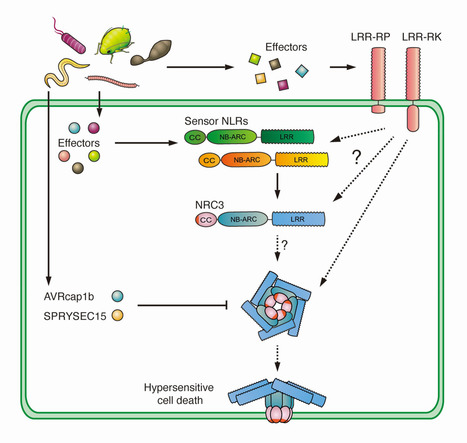
Just like humans, plants get sick. They get infected by parasites as diverse as fungi, bacteria, viruses, nematodes and insects. And just like humans, plants have an immune system that helps them defend against these parasites. Their first line of defence are disease resistance genes. When a resistance gene in the plant matches a gene in the parasite, the plant immune system is activated and the parasite invasion is restricted. Here, we show that one type of disease resistance gene that functions as a sensor on the cell surface requires other components inside the cell to execute the immune response. Pathogens evolved to suppress this type of immune networks by targeting the hub that connects different types of immune pathways.
Via The Sainsbury Lab

|
Scooped by
Kamoun Lab @ TSL
August 18, 2022 2:10 PM
|
The Ukraine–Russia war will impact global food security over months if not years. In the wake of COVID-19 and in the face of increasing climate change, we propose responses to a multi-layered global food crisis that mitigate near-term food security risks, stabilize wheat supplies and transition towards long-term agri-food system resilience.
Species of the genus Phytophthora - the plant killer - cause disease and reduce yields in many crop plants. Although many Resistance to Phytophthora infestans (Rpi) genes effective against potato late blight have been cloned, few have been cloned against other Phytophthora species. Most Rpi genes encode nucleotide-binding, leucine-rich repeat- containing (NLR) immune receptor proteins, that recognize RXLR effectors. However, whether NLR proteins can recognize RXLR effectors from multiple Phytophthora species has rarely been investigated. Here, we identified a new RXLR-WY effector AVRamr3 from P. infestans that is recognized by Rpi-amr3 from a wild Solanaceae species Solanum americanum. Rpi-amr3 associates with AVRamr3 in planta. AVRamr3 is broadly conserved in many different Phytophthora species, and the recognition of AVRamr3 homologs by Rpi-amr3 activates resistance against multiple Phytophthora pathogens, including the tobacco black shank disease and cacao black pod disease pathogens P. parasitica and P. palmivora. Rpi-amr3 is thus the first characterized resistance gene that acts against P. parasitica or P. palmivora. These findings suggest a novel path to redeploy known R genes against different important plant pathogens.
Via The Sainsbury Lab
Throughout their evolution, plant nucleotide-binding leucine-rich-repeat receptors (NLRs) have acquired widely divergent unconventional integrated domains that enhance their ability to detect pathogen effectors. However, the functional dynamics that drive the evolution of NLRs with integrated domains (NLR-IDs) remain poorly understood. Here, we reconstructed the evolutionary history of an NLR locus prone to unconventional domain integration and experimentally tested hypotheses about the evolution of NLR-IDs. We show that the rice (Oryza sativa) NLR Pias recognizes the effector AVR-Pias of the blast fungal pathogen Magnaporthe oryzae. Pias consists of a functionally specialized NLR pair, the helper Pias-1 and the sensor Pias-2, that is allelic to the previously characterized Pia pair of NLRs: the helper RGA4 and the sensor RGA5. Remarkably, Pias-2 carries a C-terminal DUF761 domain at a similar position to the heavy metal-associated (HMA) domain of RGA5. Phylogenomic analysis showed that Pias-2/RGA5 sensor NLRs have undergone recurrent genomic recombination within the genus Oryza, resulting in up to six sequence-divergent domain integrations. Allelic NLRs with divergent functions have been maintained transspecies in different Oryza lineages to detect sequence-divergent pathogen effectors. By contrast, Pias-1 has retained its NLR helper activity throughout evolution and is capable of functioning together with the divergent sensor-NLR RGA5 to respond to AVR-Pia. These results suggest that opposite selective forces have driven the evolution of paired NLRs: highly dynamic domain integration events maintained by balancing selection for sensor NLRs, in sharp contrast to purifying selection and functional conservation of immune signaling for helper NLRs.
Via The Sainsbury Lab
A subset of plant intracellular NLR immune receptors detect effector proteins, secreted by phytopathogens to promote infection, through unconventional integrated domains which resemble the effector's host targets. Direct binding of effectors to these integrated domains activates plant defences. The rice NLR receptor Pik-1 binds the Magnaporthe oryzae effector AVR-Pik through an integrated heavy metal-associated (HMA) domain. However, the stealthy alleles AVR-PikC and AVR-PikF avoid interaction with Pik-HMA and evade host defences. Here, we exploited knowledge of the biochemical interactions between AVR-Pik and its host target, OsHIPP19, to engineer novel Pik-1 variants that respond to AVR-PikC/F. First, we exchanged the HMA domain of Pikp-1 for OsHIPP19-HMA, demonstrating that effector targets can be incorporated into NLR receptors to provide novel recognition profiles. Second, we used the structure of OsHIPP19-HMA to guide mutagenesis of Pikp-HMA to expand its recognition profile. We demonstrate that the extended recognition profiles of engineered Pikp-1 variants correlate with effector binding in planta and in vitro, and with the gain of new contacts across the effector/HMA interface. Crucially, transgenic rice producing the engineered Pikp-1 variants were resistant to blast fungus isolates carrying AVR-PikC or AVR-PikF. These results demonstrate that effector target-guided engineering of NLR receptors can provide new-to-nature disease resistance in crops.
Via The Sainsbury Lab
Abstract. Nucleotide-binding and leucine-rich repeat receptors (NLRs) are intracellular plant immune receptors that recognize pathogen effectors secreted into the plant cell. Canonical NLRs typically contain three conserved domains including a central nucleotide binding (NB-ARC) domain, C-terminal leucine-rich repeats (LRRs) and an N-terminal domain. A subfamily of plant NLRs contain additional noncanonical domain(s) that have potentially evolved from the integration of the effector targets in the canonical NLR structure. These NLRs with extra domains are thus referred to as NLRs with integrated domains (NLR-IDs). Here, we first summarize our current understanding of NLR-ID activation upon effector binding, focusing on the NLR pairs Pik-1/Pik-2, RGA4/RGA5, and RRS1/RPS4. We speculate on their potential oligomerization into resistosomes as it was recently shown for certain canonical plant NLRs. Furthermore, we discuss how our growing understanding of the mode of action of NLR-ID continuously informs engineering approaches to design new resistance specificities in the context of rapidly evolving pathogens.
Via The Sainsbury Lab
Secondary loss of photosynthesis is observed across almost all plastid-bearing branches of the eukaryotic tree of life. However, genome-based insights into the transition from a phototroph into a secondary heterotroph have so far only been revealed for parasitic species. Free-living organisms can yield unique insights into the evolutionary consequence of the loss of photosynthesis, as the parasitic lifestyle requires specific adaptations to host environments. Here, we report on the diploid genome of the free-living diatom Nitzschia putrida (35 Mbp), a nonphotosynthetic osmotroph whose photosynthetic relatives contribute ca. 40% of net oceanic primary production. Comparative analyses with photosynthetic diatoms and heterotrophic algae with parasitic lifestyle revealed that a combination of gene loss, the accumulation of genes involved in organic carbon degradation, a unique secretome, and the rapid divergence of conserved gene families involved in cell wall and extracellular metabolism appear to have facilitated the lifestyle of a free-living secondary heterotroph.
Via The Sainsbury Lab
|
|
Scooped by
Kamoun Lab @ TSL
August 18, 2022 6:03 AM
|
At what stage in the life of a research paper should you preprint it? It depends on the circumstances of the study, but there are roughly four options.
|
|
Scooped by
Kamoun Lab @ TSL
August 18, 2022 6:00 AM
|
To be a successful scientist, a balanced skill set is important. Overachievers in just one area will struggle in academia.
|
|
Scooped by
Kamoun Lab @ TSL
August 18, 2022 5:57 AM
|
Humor can help bring focus to serious topics. Controls, controls, and more controls…
|
|
Scooped by
Kamoun Lab @ TSL
August 18, 2022 5:54 AM
|
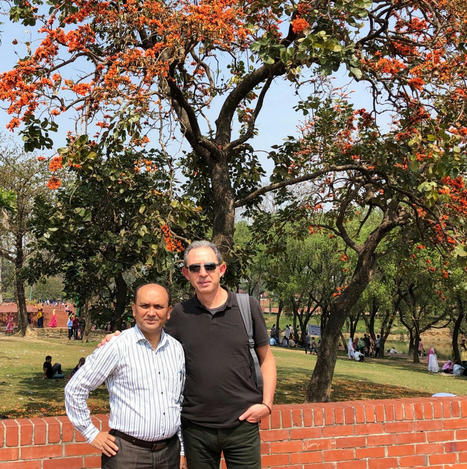
I’m deeply touched and honored to be invited to write these few words on behalf of the Institute of Biotechnology and Genetic Engineering Alumni Association (IBGEAA) to celebrate the 12 years of professional life of Prof. Md. Tofazzal Islam at Bangabandhu Sheikh Mujibur Rahman Agricultural University (BSMRAU).
|
Nucleotide-binding domain and leucine-rich repeat (NLR) proteins are a prominent class of intracellular immune receptors that are present across diverse plant lineages. However, our understanding of plant NLR structure and function is limited to the evolutionarily young flowering plant clade (angiosperms). Here, we describe an extended spectrum of NLR diversity across major plant lineages and demonstrate functional conservation of N-terminal ‘executioner’ domains that trigger immune responses. We show that broadly distributed CC (coiled-coil) and TIR (toll/interleukin-1 receptor) domains retain executioner function through trans-lineage activation of immune-related cell death in the model angiosperm Nicotiana benthamiana. Further examination of a CC subfamily specific to non-flowering lineages uncovered an essential N-terminal MAEPL motif with functional similarity to resistosome-forming CC-NLRs. Ectopic activation of the MAEPL-type CC in the divergent liverwort Marchantia polymorpha led to profound growth inhibition, defense gene activation, and signatures of cell death resembling CC activity in flowering plants. Moreover, comparative macroevolutionary transcriptomics in Marchantia and Nicotiana identified conserved CC responsive genes, providing further insight into the core aspects of CC function shared between flowering and non-flowering plants. Our findings highlight the need to understand NLR structure and function across the full spectrum of plant diversity.
Via The Sainsbury Lab
Exocytosis plays an important role in plant-microbe interactions, in both pathogenesis and symbiosis. Exo70 proteins are integral components of the exocyst, an octameric complex that mediates tethering of vesicles to membranes in eukaryotes. Although plant Exo70s are known to be targeted by pathogen effectors, the underpinning molecular mechanisms and the impact of this interaction on infection are poorly understood. Here, we show the molecular basis of the association between the effector AVR-Pii of the blast fungus Maganaporthe oryzae and rice Exo70 alleles OsExo70F2 and OsExo70F3, which is sensed by the immune receptor pair Pii via an integrated RIN4/NOI domain. The crystal structure of AVR-Pii in complex with OsExo70F2 reveals that the effector binds to a conserved hydrophobic pocket in Exo70, defining an effector/target binding interface. Structure-guided and random mutagenesis validates the importance of AVR-Pii residues at the Exo70 binding interface to sustain protein association and disease resistance in rice when challenged with fungal strains expressing effector mutants. Furthermore, the structure of AVR-Pii defines a zinc-finger effector fold (ZiF) distinct from the MAX (Magnaporthe Avrs and ToxB-like) fold previously described for a majority of characterized M. oryzae effectors. Our data suggest that blast fungus ZiF effectors bind a conserved Exo70 interface to manipulate plant exocytosis and that these effectors are also baited by plant immune receptors, pointing to new opportunities for engineering disease resistance.
Via The Sainsbury Lab
Pathogens that cause destructive crop diseases often infect wild host plants. However, surveys of major plant pathogens tend to be skewed towards cultivated crops and often neglect the wild hosts. Here, we report an emerging disease threat generated by the blast fungus Magnaporthe (Syn. Pyricularia) spp. in central Europe. We found that this notoriously devastating plant pathogen infects the wild grasses foxtail millet (Setaria spp.) and crabgrass (Digitaria spp.) in south-western Germany, a region previously deemed unfavorable for blast disease. Using phenotypic characterization and genomic analyses, we determined that the observed disease symptoms are associated with the Setaria spp.-infecting lineage of M. oryzae and its sister species Magnaporthe grisea. We showed that M. oryzae isolates can infect barley and wheat, thus highlighting the risk of pathogen spread to crops. In addition, M. oryzae isolates which co-occur in natural populations display compatible mating types and variable candidate effector gene content, which may enhance the pathogens adaptive potential. Our findings stress the risk of blast fungus infections expanding into European cereal crops through migration and host jumps. This underlines the importance for pathogen surveillance not only on cultivated crops, but also on wild host plants.
Via The Sainsbury Lab
Plants have many types of immune receptors that recognize diverse pathogen molecules and activate the innate immune system. The intracellular immune receptor family of nucleotide-binding domain leucine-rich repeat-containing proteins (NLRs) perceive translocated pathogen effector proteins and execute a robust immune response, including programmed cell death. Many plant NLRs have functionally specialized to sense pathogen effectors (sensor NLRs) or to execute immune signalling (helper NLRs). Sub-functionalized NLRs form a network-type receptor system known as the NLR network. In this review, we highlight the concept of NLR networks, discussing how they are formed, activated, and regulated. Two main types of NLR networks have been described in plants: the ADR1/NRG1 network and the NRC network. In both networks, multiple helper NLRs function as signalling hubs for sensor NLRs and cell surface-localized immune receptors. Additionally, the networks are regulated at the transcriptional and posttranscriptional levels, as well as being modulated by other host proteins to ensure proper network activation and prevent autoimmunity. Plant pathogens in turn have converged on suppressing NLR networks, thereby facilitating infection and disease. Understanding the NLR immune system at the network level could inform future breeding programs by highlighting the appropriate genetic combinations of immunoreceptors to use while avoiding deleterious autoimmunity and suppression by pathogens.
Via The Sainsbury Lab
Studies focused solely on single organisms can fail to identify the networks underlying host-pathogen gene-for-gene interactions. Here, we integrate genetic analyses of rice (Oryza sativa, host) and rice blast fungus (Magnaporthe oryzae, pathogen) and uncover a new pathogen recognition specificity of the rice nucleotide-binding domain and leucine-rich repeat protein (NLR) immune receptor Pik, which mediates resistance to M. oryzae expressing the avirulence effector gene AVR-Pik. Rice Piks-1, encoded by an allele of Pik-1, recognizes a previously unidentified effector encoded by the M. oryzae avirulence gene AVR-Mgk1, which is found on a mini-chromosome. AVR-Mgk1 has no sequence similarity to known AVR-Pik effectors, and is prone to deletion from the mini-chromosome mediated by repeated Inago2 retrotransposon sequences. AVR-Mgk1 is detected by Piks-1 and by other Pik-1 alleles known to recognize AVR-Pik effectors; recognition is mediated by AVR-Mgk1 binding to the integrated heavy metal-associated domain of Piks-1 and other Pik-1 alleles. Our findings highlight how complex gene-for-gene interaction networks can be disentangled by applying forward genetics approaches simultaneously to the host and pathogen. We demonstrate dynamic co-evolution between an NLR integrated domain and multiple families of effector proteins.
Via The Sainsbury Lab
|
|
Scooped by
Kamoun Lab @ TSL
August 18, 2022 6:23 AM
|
Exocytosis plays an important role in plant-microbe interactions, both in pathogenesis and symbiosis. Exo70 proteins are integral components of the exocyst, an octameric complex that mediates tethering of vesicles to membranes in eukaryotes. Although plant Exo70s are known to be targeted by pathogen effectors, the underpinning molecular mechanisms and the impact of this interaction on infection is poorly understood. Here, we show the molecular basis of the association between the effector AVR- Pii of the blast fungus Maganaporthe oryzae and rice Exo70 alleles OsExo70F2 and OsExo70F3, which is sensed by the immune receptor pair Pii via an integrated RIN4/NOI domain. The crystal structure of AVR-Pii in complex with OsExo70F2 reveals that the effector binds to a conserved hydrophobic pocket in Exo70, defining a new effector/target binding interface. Structure-guided and random mutagenesis validates the importance of AVR-Pii residues at the Exo70 binding interface to sustain protein association and disease resistance in rice when challenged with fungal strains expressing effector mutants. Further, the structure of AVR-Pii defines a novel Zinc- finger effector fold (ZiF) distinct from the MAX fold previously described for the majority of characterized M. oryzae effectors. Our data suggests that blast fungus ZiF effectors bind a conserved Exo70 interface to manipulate plant exocytosis and that these effectors are also baited by plant immune receptors, pointing to new opportunities for engineering disease resistance.
Wheat, the most important food crop, is threatened by a blast disease pandemic. Here, we show that a clonal lineage of the wheat blast fungus recently spread to Asia and Africa following two independent introductions from South America. Through a combination of genome analyses and laboratory experiments, we show that the decade-old blast pandemic lineage can be controlled by the Rmg8 disease resistance gene and is sensitive to strobilurin fungicides. However, we also highlight the potential of the pandemic clone to evolve fungicide-insensitive variants and sexually recombine with African lineages. This underscores the urgent need for genomic surveillance to track and mitigate the spread of wheat blast outside of South America, and to guide pre-emptive wheat breeding for blast resistance.
Via The Sainsbury Lab
To fight off diverse pathogens and pests, the plant immune system must recognize these invaders; however, as plant immune receptors evolve to recognize a pathogen, the pathogen often evolves to escape this recognition. Plant–pathogen co-evolution has led to the vast expansion of a family of intracellular immune receptors-nucleotide-binding domain and leucine-rich repeat proteins (NLRs). When an NLR receptor recognizes a pathogen ligand, it activates immune signaling and thus initiates defense responses. However, in contrast with the model of NLRs acting individually to activate resistance, an emerging paradigm holds that plants have complex receptor networks where the large repertoire of functionally specialized NLRs function together to act against the large repertoire of rapidly evolving pathogen effectors. In this article, we highlight key aspects of immune receptor networks in plant NLR biology and discuss NLR network architecture, the advantages of this receptor network system, and the evolution of the NLR network in asterid plants.
Via The Sainsbury Lab
|
|
Scooped by
Kamoun Lab @ TSL
August 18, 2022 6:09 AM
|
There is plenty of good advice on how to prepare a slide show, yet poorly crafted slides with multiple messages keep showing up. Let’s start by ditching the two-title slides once for all. Cite as…
|
|
Scooped by
Kamoun Lab @ TSL
August 18, 2022 6:01 AM
|
|
|
Scooped by
Kamoun Lab @ TSL
August 18, 2022 5:59 AM
|
The thorny politics of the global food trade are often an excuse against the application of open science principles to plant disease epidemics. But scientists have often themselves to blame for the slow release of information and data, and there are ways around some of the issues.
|
|
Scooped by
Kamoun Lab @ TSL
August 18, 2022 5:56 AM
|
…they ponder whether there are any moose in the National Park.
|