Your new post is loading...

|
Scooped by
Kamoun Lab @ TSL
July 26, 2023 12:27 PM
|
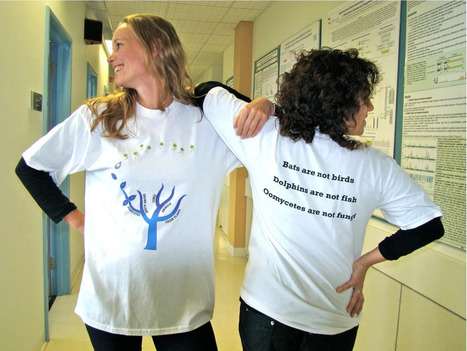
After realizing that ChatGPT has finally learned that Phytophthora and other oomycetes are not fungi, making peace with it became easier.
|
|
Scooped by
Kamoun Lab @ TSL
July 26, 2023 12:24 PM
|
A number of this blog’s posts were selected as Featured Snippets by Google and Bing, and they typically offered accurate answers to the queries. Will chatbot search engines be as good?
In eukaryotes, targeted protein degradation (TPD) typically depends on a series of interactions among ubiquitin ligases that transfer ubiquitin molecules to substrates leading to degradation by the 26S proteasome. We previously discovered that the bacterial effector protein SAP05 mediates ubiquitin-independent TPD. SAP05 forms a ternary complex via interactions with the von Willebrand Factor Type A (vWA) domain of the proteasomal ubiquitin receptor Rpn10 and the Zinc-finger (ZnF) domains of the SQUAMOSA-PROMOTER BINDING PROTEIN-LIKE (SPL) and GATA BINDING FACTOR (GATA) transcription factors (TFs). This leads to direct TPD of the TFs by the 26S proteasome. Here, we report the crystal structures of the SAP05-vWA complex at 2.17 Å resolution and of the SAP05-ZnF(SPL5) complex at 2.20 Å resolution. Structural analyses revealed that SAP05 displays a unique bimodular architecture with two distinct non-overlapping surfaces, a ‘loop surface’ with three protruding loops that form electrostatic interactions with ZnF, and a ‘sheet surface’ featuring two β-sheets, loops and ⍺-helices that establish polar interactions with vWA. SAP05 binding to ZnF TFs involves single amino acids responsible for multiple contacts, while SAP05 binding to vWA is more stable due to the necessity of multiple mutations to break the interaction. In addition, positioning of the SAP05 complex on the 26S proteasome points to a mechanism of protein degradation. Collectively, our findings demonstrate how a small bacterial bimodular protein can bypass the canonical UPS cellular proteolysis pathway, enabling ubiquitin-independent TPD in eukaryotic cells. This knowledge holds significant potential for the creation of novel TPD technologies.
Via The Sainsbury Lab
|
|
Scooped by
Kamoun Lab @ TSL
February 21, 2023 11:32 AM
|
I didn’t start the year with the energy and drive I had hoped for. I found it hard getting out of bed in the early morning darkness. Sunrises at eight in the morning are nothing new for me — I’ve lived in the UK for more than 15 years — but this year feels different.
|
|
Scooped by
Kamoun Lab @ TSL
February 21, 2023 9:04 AM
|
According to Proffunguy, a regular contributor to Urban Dictionary, a joekeis a joke told by Joe—a legendary character known for delivering ambiguous jokes with (hopefully) humorous puns. Here is a joeke straight from the Dictionary: “Do you know where the fish keep their money? In the riverbank, of course.”
|
|
Scooped by
Kamoun Lab @ TSL
February 21, 2023 6:07 AM
|
Is the collective opinion of a group of people more valuable than that of a single expert? I don’t know. What do you think?
|
|
Scooped by
Kamoun Lab @ TSL
February 21, 2023 5:33 AM
|
In academia, authorship can be a touchy subject that is all too easy to sidestep. However, it’s always simpler to have a contentious conversation prior to submission.
|
|
Scooped by
Kamoun Lab @ TSL
December 3, 2022 9:34 AM
|
Nothing — absolutely nothing — beats seeing an early career researcher blossom into a brilliant scientist and leader. This week brought to focus the successes of our lab alumni.
|
|
Scooped by
Kamoun Lab @ TSL
December 2, 2022 1:57 PM
|
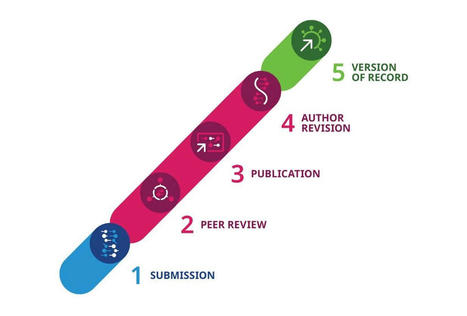
The life science publisher eLife is doing away with the accept/reject decision in a bold move to reinvent the journal as a publisher of peer-reviews. But why not publish editorial evaluations of the papers that are desk rejected to address concerns that conflicts of interest may influence editorial decisions.
Crop yield and global food security are under constant threat from plant pathogens with the potential to cause epidemics. Traditional breeding for disease resistance can be too slow to counteract these emerging threats, resulting in the need to retool the plant immune system using bioengineered made-to-order immune receptors. Efforts to engineer immune receptors have focused primarily on nucleotide-binding domain and leucine-rich repeat (NLR) immune receptors and proof-of-principles studies. Based upon a near-exhaustive literature search of previously engineered plant immune systems we distil five emerging principles in the design of bioengineered made-to-order plant NLRs and describe approaches based on other components. These emerging principles are anticipated to assist the functional understanding of plant immune receptors, as well as bioengineering novel disease resistance specificities.
Via The Sainsbury Lab
|
|
Scooped by
Kamoun Lab @ TSL
November 1, 2022 7:40 AM
|
Scientific research advances at different paces depending on the project. But sometimes, you may want to unleash your inner Ninja and fully press on the gas pedal.
|
|
Scooped by
Kamoun Lab @ TSL
November 1, 2022 7:23 AM
|
What’s the rush in starting a PhD? Why don’t you instead do a predoc before committing to doctoral studies.
|
|
Scooped by
Kamoun Lab @ TSL
November 1, 2022 7:20 AM
|
These vignettes are inspired by Mendel’s 200th anniversary and my August 2022 visit to Brno, Czech Republic. The first geneticist was a plant biologist.
|
|
|
Scooped by
Kamoun Lab @ TSL
July 26, 2023 12:26 PM
|
The Norwich Science Festival is an annual celebration of science, technology, engineering, and mathematics (STEM) that takes place in Norwich, UK. The festival aims to inspire people of all ages and backgrounds to engage with science and to learn more about the latest research and discoveries. The festival features a wide range of events, including talks, workshops, exhibitions, and interactive activities, all designed to be informative, entertaining, and engaging. This year, thanks to Dr. Emma Waters, a Postdoctoral Researcher at the Quadram Institute, the festival will cover the importance of diversity in science. Emma’s own story inspired her to develop an exhibition called “What is a scientist?” for Norwich Science Festival 2023. The exhibition showcases the diversity of scientists at our science campus and aims to inspire individuals from all backgrounds to pursue a career in science. You can read about Emma’s motivation for this project in her blog post: “Diversity in science; If you can see it, you can be it”.
|
|
Scooped by
Kamoun Lab @ TSL
July 26, 2023 12:17 PM
|
I have a special relationship with the bacterium Xanthomonas. As a grad student at UC Davis, I did my thesis research on Xanthomonas campestris pathovar campestris, a species of this genus of bacterial pathogens that causes disease on the vegetable and seed crops known as brassicas, which include plants such as cabbage, broccoli, radish, and mustard.
|
|
Scooped by
Kamoun Lab @ TSL
February 21, 2023 11:35 AM
|
These are fictional exchanges between a Professor and a student who didn’t include controls in their experiment. Which is your favorite?
|
|
Scooped by
Kamoun Lab @ TSL
February 21, 2023 11:28 AM
|
The first month of the year is when people often make resolutions to improve their life. But for academics, January is Dedlanuary: the month of deadlines.
|
|
Scooped by
Kamoun Lab @ TSL
February 21, 2023 9:02 AM
|
The limiting factor in writing a story should be the idea, not the specific writing skills. Here is a step-by-step guide to how I used ChatGPT to co-write the story “Crispin is amazing”.
|
|
Scooped by
Kamoun Lab @ TSL
February 21, 2023 5:35 AM
|
The article “Authorship — Let’s talk about it!” sparked a lot of debate. Let’s go through the following issues once more: the significance of the closer, or the person who is given the opportunity to complete the work; who should be a corresponding author; and do we require a “legal” definition of authorship.
|
|
Scooped by
Kamoun Lab @ TSL
December 3, 2022 12:08 PM
|
Managing academics is like herding cats. However, funding agencies — if they wish to — have the power to herd the academic cats and drive them to embrace open science and early sharing of research findings through preprints.
|
|
Scooped by
Kamoun Lab @ TSL
December 2, 2022 4:03 PM
|
Much chatter about Twitter after Elon Musk bought it for $44 billion. Who knows what’s next, but for now I’m sticking with the platform that serves as my diary and a grab bag for many of the things I care about.
|
|
Scooped by
Kamoun Lab @ TSL
December 2, 2022 1:30 PM
|
GetGenome is our newly formed charitable organisation that provides equitable access to genomics technology for early career researchers all over the world. GetGenome also provides training in the…
|
|
Scooped by
Kamoun Lab @ TSL
November 1, 2022 7:41 AM
|
For the first time, scientists have detected the blast fungus in Germany. The pathogen was found on diseased wild grasses and is also able to infect wheat and barley, suggesting that blast diseases pose an emerging threat to cereal production in central Europe.
|
|
Scooped by
Kamoun Lab @ TSL
November 1, 2022 7:39 AM
|
Conservation biology requires a bigger toolbox to meet the biodiversity crisis. Is there a role for CRISPR and gene editing?
|
|
Scooped by
Kamoun Lab @ TSL
November 1, 2022 7:22 AM
|
“Statistics cannot substitute for clear thinking. It can’t do the job of human inductive inference.”
|