


Publications
50.6K views |
+4 today
Updates from the group of Sophien Kamoun at The Sainsbury Lab
Curated by
Kamoun Lab @ TSL
 Your new post is loading...
 Scoop.it! 
Rust fungal pathogens of wheat (Triticum spp.) affect crop yields worldwide. The molecular mechanisms underlying the virulence of these pathogens remain elusive, due to the limited availability of suitable molecular genetic research tools. Notably, the inability to perform high-throughput analyses of candidate virulence proteins (also known as effectors) impairs progress. We previously established a pipeline for the fast-forward screens of rust fungal candidate effectors in the model plant Nicotiana benthamiana. This pipeline involves selecting candidate effectors in silico and performing cell biology and protein-protein interaction assays in planta to gain insight into the putative functions of candidate effectors. In this study, we used this pipeline to identify and characterize sixteen candidate effectors from the wheat yellow rust fungal pathogen Puccinia striiformis f sp tritici. Nine candidate effectors targeted a specific plant subcellular compartment or protein complex, providing valuable information on their putative functions in plant cells. One candidate effector, PST02549, accumulated in processing bodies (P-bodies), protein complexes involved in mRNA decapping, degradation, and storage. PST02549 also associates with the P-body-resident ENHANCER OF mRNA DECAPPING PROTEIN 4 (EDC4) from N. benthamiana and wheat. We propose that P-bodies are a novel plant cell compartment targeted by pathogen effectors. 
Scoop.it!
An introduction to the amazing world of the oomycetes, some of the most destructive plant pathogens. Guest of honour: Fifi The Oomycete. Click here for links to further reading, videos, and acknowledgements.
Scoop.it!

Plants use autophagy to safeguard against infectious diseases. However, how plant pathogens interfere with autophagy related processes is unknown. Here we show that PexRD54, an effector from the Irish potato famine pathogen Phytophthora infestans, binds host autophagy protein ATG8CL to stimulate autophagosome formation. PexRD54 depletes the autophagy cargo receptor Joka2 out of ATG8CL complexes and interferes with Joka2's positive effect on pathogen defense. Thus a plant pathogen effector has evolved to antagonize a host autophagy cargo receptor in order to counteract host defenses.
Scoop.it!

Convergence towards a similar genome architecture in phylogenetically unrelated plant pathogens. The fl anking distance between neighboring genes provides a measurement of local gene density and is displayed as a color-coded heat map based on a whole genome analysis of the fungus Leptosphaeria maculans and the oomycete Phytophthora infestans. In addition, the figure displays the distribution of Avr effector genes of L. maculans and P. infestans according to the length of their 50 and 30 flanking intergenic regions. Note how in both cases the Avr effector genes primarily occupy the gene sparse regions of the genome. (See the paper of Suomeng Dong, Sylvain Raffaele and Sophien Kamoun.)
Scoop.it!

Secreted peroxidases are well-known components of damage-induced defense responses in plants. A recent study in Nature ( Turrà et al., 2015) has revealed that these enzymes can inadvertently serve as reporters of wounded sites and constitute an “Achilles heel,” allowing adapted pathogens to track and enter host tissue. Via The Sainsbury Lab

The Sainsbury Lab's curator insight,
December 10, 2015 9:47 AM
Secreted peroxidases are well-known components of damage-induced defense responses in plants. A recent study in Nature ( Turrà et al., 2015) has revealed that these enzymes can inadvertently serve as reporters of wounded sites and constitute an “Achilles heel,” allowing adapted pathogens to track and enter host tissue.
Scoop.it!

Rust fungal pathogens of wheat (Triticum spp.) affect crop yields worldwide. The molecular mechanisms underlying the virulence of these pathogens remain elusive, due to the limited availability of suitable molecular genetic research tools. Notably, the inability to perform high-throughput analyses of candidate virulence proteins (also known as effectors) impairs progress. We previously established a pipeline for the fast-forward screens of rust fungal effectors in the model plant Nicotiana benthamiana. This pipeline involves selecting candidate effectors in silico and performing cell biology and protein-protein interaction assays in planta to gain insight into the putative functions of candidate effectors. In this study, we used this pipeline to identify and characterize sixteen candidate effectors from the wheat yellow rust fungal pathogen Puccinia striiformis f sp tritici. Nine candidate effectors targeted a specific plant subcellular compartment or protein complex, providing valuable information on their putative functions in plant cells. One candidate effector, PST02549, accumulated in processing bodies (P-bodies), protein complexes involved in mRNA decapping, degradation, and storage. PST02549 also associates with the P-body-resident ENHANCER OF mRNA DECAPPING PROTEIN 4 (EDC4) from N. benthamiana and wheat. Our work identifies P-bodies as a novel plant cell compartment targeted by pathogen effectors.
Scoop.it!
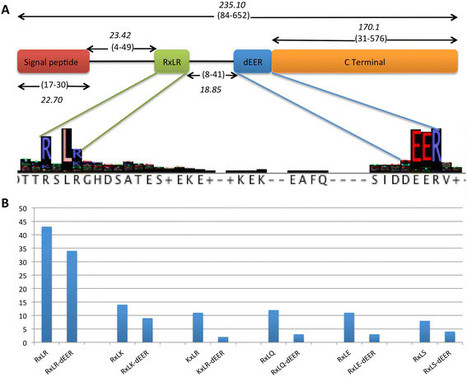
Background. Downy mildews are the most speciose group of oomycetes and affect crops of great economic importance. So far, there is only a single deeply-sequenced downy mildew genome available, from Hyaloperonospora arabidopsidis. Further genomic resources for downy mildews are required to study their evolution, including pathogenicity effector proteins, such as RxLR effectors. Plasmopara halstedii is a devastating pathogen of sunflower and a potential pathosystem model to study downy mildews, as several Avr-genes and R-genes have been predicted and unlike Arabidopsis downy mildew, large quantities of almost contamination-free material can be obtained easily. Results. Here a high-quality draft genome of Plasmopara halstedii is reported and analysed with respect to various aspects, including genome organisation, secondary metabolism, effector proteins and comparative genomics with other sequenced oomycetes. Interestingly, the present analyses revealed further variation of the RxLR motif, suggesting an important role of the conservation of the dEER-motif. Orthology analyses revealed the conservation of 28 RxLR-like core effectors among Phytophthora species. Only six putative RxLR-like effectors were shared by the two sequenced downy mildews, highlighting the fast and largely independent evolution of two of the three major downy mildew lineages. This is seemingly supported by phylogenomic results, in which downy mildews did not appear to be monophyletic. Conclusions. The genome resource will be useful for developing markers for monitoring the pathogen population and might provide the basis for new approaches to fight Phytophthora and downy mildew pathogens by targeting core pathogenicity effectors.
Scoop.it!

Parasite effector proteins target various host cell compartments to alter host processes and promote infection. How effectors cross membrane-rich interfaces to reach these compartments is a major question in effector biology. Growing evidence suggests that effectors use molecular mimicry to subvert host cell machinery for protein sorting. We recently identified CTP1 (chloroplast-targeted protein 1), a candidate effector from the poplar leaf rust fungus Melampsora larici-populina that carries a predicted transit peptide and accumulates in chloroplasts and mitochondria. Here, we show that the CTP1 transit peptide is necessary and sufficient for accumulation in the stroma of chloroplasts. CTP1 is part of a Melampsora-specific family of polymorphic secreted proteins. Two members of that family, CTP2 and CTP3, also translocate in chloroplasts in a N-terminal signal-dependent manner. CTP1, CTP2 and CTP3 are cleaved when they accumulate in chloroplasts, while they remain intact when they do not translocate into chloroplasts. Our findings reveal that fungi have evolved effector proteins that mimic plant-specific sorting signals to traffic within plant cells.
Scoop.it!

Plants and animals rely on immune receptors, known as nucleotide-binding domain and leucine-rich repeat containing proteins (NB-LRR or NLR), to defend against invading pathogens and activate immune responses. How NLR receptors respond to pathogens is inadequately understood. We previously reported single-residue mutations that expand the response of the potato immune receptor R3a to AVR3aEM, a stealthy effector from the late blight oomycete pathogen Phytophthora infestans. I2, another NLR that mediates resistance to the wilt causing fungus Fusarium oxysporum f. sp. lycopersici, is the tomato ortholog of R3a. We transferred previously identified R3a mutations to I2 to assess the degree to which the resulting I2 mutants have an altered response. We discovered that wild-type I2 protein responds weakly to AVR3a. One mutant in the N-terminal coiled-coil domain, I2I141N, appeared sensitized and displayed markedly increased response to AVR3a. Remarkably, I2I141N conferred partial resistance to P. infestans. Further, I2I141N has an expanded response spectrum to F. oxysporum f. sp. lycopersici effectors compared to the wild-type I2 protein. Our results suggest that synthetic immune receptors can be engineered to confer resistance to phylogenetically divergent pathogens and indicate that knowledge gathered for one NLR could be exploited to improve NLRs from other plant species.
Scoop.it!
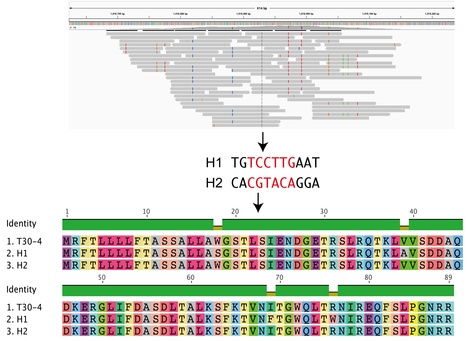
The application of DNA sequencing technology to the study of ancient DNA has enabled the reconstruction of past epidemics from genomes of historically important plant-associated microbes. Recently, the genome sequences of the potato late blight pathogen Phytophthora infestans were analyzed from 19th century herbarium specimens. These herbarium samples originated from infected potatoes collected during and after the Irish potato famine. Herbaria have therefore great potential to help elucidate past epidemics of crops, date the emergence of pathogens, and inform about past pathogen population dynamics. DNA preservation in herbarium samples was unexpectedly good, raising the possibility of a whole new research area in plant and microbial genomics. However, the recovered DNA can be extremely fragmented resulting in specific challenges in reconstructing genome sequences. Here we review some of the challenges in computational analyses of ancient DNA from herbarium samples. We also applied the recently developed linkage method to haplotype reconstruction of diploid or polyploid genomes from fragmented ancient DNA.
Scoop.it!

• Rcr3 and Pip1 are paralogous secreted tomato proteases that diverged >36 mya Rcr3 and Pip1 are paralogous secreted papain-like proteases of tomato. Both proteases are inhibited by Avr2 from the fungal pathogen Cladosporium fulvum, but only Rcr3 acts as a co-receptor for Avr2 recognition by the tomato Cf-2 immune receptor [ 1–4 ]. Here, we show that Pip1-depleted tomato plants are hyper-susceptible to fungal, bacterial, and oomycete plant pathogens, demonstrating that Pip1 is an important broad-range immune protease. By contrast, in the absence of Cf-2, Rcr3 depletion does not affect fungal and bacterial infection levels but causes increased susceptibility only to the oomycete pathogen Phytophthora infestans. Rcr3 and Pip1 reside on a genetic locus that evolved over 36 million years ago. These proteins differ in surface-exposed residues outside the substrate-binding groove, and Pip1 is 5- to 10-fold more abundant than Rcr3. We propose a model in which Rcr3 and Pip1 diverged functionally upon gene duplication, possibly driven by an arms race with pathogen-derived inhibitors or by coevolution with the Cf-2 immune receptor detecting inhibitors of Rcr3, but not of Pip1.

Davell Logan's curator insight,
August 25, 2015 2:55 AM
Reading about this topic is very educational I'm all aspects.
Scoop.it!

Inventors in the field of mechanical and electronic engineering can access multitudes of components and, thanks to standardization, parts from different manufacturers can be used in combination with each other. The introduction of BioBrick standards for the assembly of characterized DNA sequences was a landmark in microbial engineering, shaping the field of synthetic biology. Here, we describe a standard for Type IIS restriction endonuclease-mediated assembly, defining a common syntax of 12 fusion sites to enable the facile assembly of eukaryotic transcriptional units. This standard has been developed and agreed by representatives and leaders of the international plant science and synthetic biology communities, including inventors, developers and adopters of Type IIS cloning methods. Our vision is of an extensive catalogue of standardized, characterized DNA parts that will accelerate plant bioengineering.
|
Scoop.it!
Presented at Tackling emerging threats to animal health, food security and ecosystem resilience, The Royal Society, Monday 7, March 2016. Click here for notes and acknowledgements.
Scoop.it!

The cell re-entry assay is widely used to evaluate pathogen effector protein uptake into plant cells. The assay is based on the premise that effector proteins secreted out of a leaf cell would translocate back into the cytosol of the same cell via a yet unknown host-derived uptake mechanism. Here, we critically assess this assay by expressing domains of the effector proteins AvrM-A of Melampsora lini and AVR3a of Phytophthora infestans fused to a signal peptide and fluorescent proteins in Nicotiana benthamiana. We found that the secreted fusion proteins do not re-enter plant cells from the apoplast and that the assay is prone to false-positives. We therefore emit a cautionary note on the use of the cell re-entry assay for protein trafficking studies.
Scoop.it!

Plant cells secrete a wide range of proteins in extracellular spaces in response to pathogen attack. The poplar Rust-Induced Secreted Protein (RISP) is a small cationic protein of unknown function that was identified as the most induced gene in poplar leaves during immune responses to the leaf rust pathogen Melampsora larici-populina, an obligate biotrophic parasite. Here, we combined in planta and in vitro molecular biology approaches to tackle the function of RISP. Using a RISP-mCherry fusion transiently expressed in Nicotiana benthamiana leaves, we demonstrated that RISP is secreted into the apoplast. A recombinant RISP specifically binds to M. larici-populina urediniospores and inhibits their germination. It also arrests the growth of the fungus in vitro and on poplar leaves. Interestingly, RISP also triggers poplar cell culture alkalinisation and is cleaved at the C-terminus by a plant-encoded mechanism. Altogether our results indicate that RISP is an antifungal protein that has the ability to trigger cellular responses. Via The Sainsbury Lab, Kamoun Lab @ TSL
The Sainsbury Lab's curator insight,
January 25, 2016 5:17 AM
Plant cells secrete a wide range of proteins in extracellular spaces in response to pathogen attack. The poplar Rust-Induced Secreted Protein (RISP) is a small cationic protein of unknown function that was identified as the most induced gene in poplar leaves during immune responses to the leaf rust pathogen Melampsora larici-populina, an obligate biotrophic parasite. Here, we combined in planta and in vitro molecular biology approaches to tackle the function of RISP. Using a RISP-mCherry fusion transiently expressed in Nicotiana benthamiana leaves, we demonstrated that RISP is secreted into the apoplast. A recombinant RISP specifically binds to M. larici-populina urediniospores and inhibits their germination. It also arrests the growth of the fungus in vitro and on poplar leaves. Interestingly, RISP also triggers poplar cell culture alkalinisation and is cleaved at the C-terminus by a plant-encoded mechanism. Altogether our results indicate that RISP is an antifungal protein that has the ability to trigger cellular responses. 
Jim Alfano's curator insight,
January 27, 2016 8:18 AM
Is it secreted when other types of pathogens attack? That is, is it a typical PR protein?
Scoop.it!

The oomycete pathogen Phytophthora infestans causes potato late blight, and as a potato and tomato specialist pathogen, is seemingly poorly adapted to infect plants outside the Solanaceae. Here, we report the unexpected finding that P. infestans can infect Arabidopsis thaliana when another oomycete pathogen, Albugo laibachii, has colonized the host plant. The behaviour and speed of P. infestans infection in Arabidopsis pre-infected with A. laibachii resemble P. infestans infection of susceptible potato plants. Transcriptional profiling of P. infestans genes during infection revealed a significant overlap in the sets of secreted-protein genes that are induced in P. infestans upon colonisation of potato and susceptible Arabidopsis, suggesting major similarities in P. infestans gene expression dynamics on the two plant species. Furthermore, we found haustoria of A. laibachii and P. infestanswithin in the same Arabidopsis cells. This Arabidopsis - A. laibachii - P. infestanstripartite interaction opens up various possibilities to dissect the molecular mechanisms of P. infestans infection and the processes occurring in co-infected Arabidopsis cells.
Scoop.it!

The 28th Fungal Genetics Conference was held March 17−22, 2015, at the Asilomar Conference Center in Pacific Grove, California (http://www.genetics-gsa.org/fungal/2015/index.shtml). Arguably the most popular of international fungal genetics conferences, the Asilomar meeting reached its registration cap 2 days before the early bird deadline, with 910 participants from 35 countries. One striking feature of this year’s meeting was the high level of Twitter participation. On the basis of analytics from the health care social media analytics company Symplur (http://www.symplur.com/healthcare-hashtags) the hashtag #Fungal15 racked up 3456 tweets from 349 participants, and tweets were seen by more than 3 million others. As is traditional, the meeting co-organizers have been asked to summarize highlights of the conference. As is also traditional, such a summary is a nearly impossible task with 20 plenary talks, 216 concurrent talks, and 662 posters to be considered. In recognition of the high level of social media participation and to give greater coverage, scientific co-chairs Michelle Momany (University of Georgia) and Antonio Di Pietro (University of Cordoba, Spain) invited the top tweeters to join us in picking highlights of the 28th Fungal Genetics Conference. Even so, these highlights were not able to cover all the terrific science at the meeting.
Scoop.it!

Plants defend against pathogens using both cell surface and intracellular immune receptors (Dodds & Rathjen, 2010; Win et al., 2012). Plant cell surface receptors include receptor-like kinases (RLKs) and receptor-like proteins (RLPs), which respond to pathogen-derived apoplastic molecules (Boller & Felix, 2009; Thomma et al., 2011). By contrast, plant intracellular immune receptors are typically nucleotide-binding leucine-rich repeat (NB-LRR or NLR) proteins, which respond to translocated effectors from a diversity of pathogens (Eitas & Dangl, 2010; Bonardi et al., 2012). These receptors engage in microbial perception either by directly binding pathogen molecules or indirectly by sensing pathogen-induced perturbations (Win et al., 2012). However, signaling events downstream of pathogen recognition remain poorly understood.
Scoop.it!

CRISPR/Cas has recently been transferred to plants to make them resistant to geminiviruses, a damaging family of DNA viruses. We discuss the potential and the limitations of this method. Geminiviridae are a family of DNA viruses that infect a diversity of plants. These insect-transmitted viruses can cause destructive diseases in crop plants and have been described as a curse to food security. Until now, limited progress has been made with developing crop varieties resistant to geminiviruses. In the current issue of Genome Biology, Ali et al. report on a new strategy towards improving plant resistance to geminiviruses using the bacterial CRISPR/Cas system.
Scoop.it!
Presented at Norwich Research Park, October 2, 2015. Notes and acknowledgements at http://kamounlab.tumblr.com/post/130328881710/everything-you-wanted-to-know-about-research
Scoop.it!

Background - Robust statistical detection of differences in the bacterial growth rate can be challenging, particularly when dealing with small differences or noisy data. The Bayesian approach provides a consistent framework for inferring model parameters and comparing hypotheses. The method captures the full uncertainty of parameter values, whilst making effective use of prior knowledge about a given system to improve estimation. Results - We demonstrated the application of Bayesian analysis to bacterial growth curve comparison. Following extensive testing of the method, the analysis was applied to the large dataset of bacterial responses which are freely available at the web-resource, ComBase. Detection was found to be improved by using prior knowledge from clusters of previously analysed experimental results at similar environmental conditions. A comparison was also made to a more traditional statistical testing method, the F-test, and Bayesian analysis was found to perform more conclusively and to be capable of attributing significance to more subtle differences in growth rate. Conclusions - We have demonstrated that by making use of existing experimental knowledge, it is possible to significantly improve detection of differences in bacterial growth rate.
Scoop.it!

Pathogens utilize effectors to suppress basal plant defense known as PTI (Pathogen-associated molecular pattern-triggered immunity). However, our knowledge of PTI suppression by filamentous plant pathogens, i.e. fungi and oomycetes, remains fragmentary. Previous work revealed that the co-receptor BAK1/SERK3 contributes to basal immunity against the potato pathogen Phytophthora infestans. Moreover BAK1/SERK3 is required for the cell death induced by P. infestans elicitin INF1, a protein with characteristics of PAMPs. The P. infestans host-translocated RXLR-WY effector AVR3a is known to supress INF1-mediated cell death by binding the plant E3 ligase CMPG1. In contrast, AVR3aKI-Y147del, a deletion mutant of the C-terminal tyrosine of AVR3a, fails to bind CMPG1 and does not suppress INF1-mediated cell death. Here, we studied the extent to which AVR3a and its variants perturb additional BAK1/SERK3-dependent PTI responses in N. benthamiana using the elicitor/receptor pair flg22/FLS2 as a model. We found that all tested variants of AVR3a suppress defense responses triggered by flg22 and reduce internalization of activated FLS2. Moreover, we discovered that AVR3a associates with the Dynamin-Related Protein 2 (DRP2), a plant GTPase implicated in receptor-mediated endocytosis. Interestingly, silencing of DRP2 impaired ligand-induced FLS2 internalization but did not affect internalization of the growth receptor BRI1. Our results suggest that AVR3a associates with a key cellular trafficking and membrane-remodeling complex involved in immune receptor-mediated endocytosis. We conclude that AVR3a is a multifunctional effector that can suppress BAK1/SERK3-mediated immunity through at least two different pathways. Via The Sainsbury Lab, Kamoun Lab @ TSL
The Sainsbury Lab's curator insight,
September 9, 2015 7:59 AM
Pathogens utilize effectors to suppress basal plant defense known as PTI (Pathogen-associated molecular pattern-triggered immunity). However, our knowledge of PTI suppression by filamentous plant pathogens, i.e. fungi and oomycetes, remains fragmentary. Previous work revealed that the co-receptor BAK1/SERK3 contributes to basal immunity against the potato pathogen Phytophthora infestans. Moreover BAK1/SERK3 is required for the cell death induced by P. infestans elicitin INF1, a protein with characteristics of PAMPs. The P. infestans host-translocated RXLR-WY effector AVR3a is known to supress INF1-mediated cell death by binding the plant E3 ligase CMPG1. In contrast, AVR3aKI-Y147del, a deletion mutant of the C-terminal tyrosine of AVR3a, fails to bind CMPG1 and does not suppress INF1-mediated cell death. Here, we studied the extent to which AVR3a and its variants perturb additional BAK1/SERK3-dependent PTI responses in N. benthamiana using the elicitor/receptor pair flg22/FLS2 as a model. We found that all tested variants of AVR3a suppress defense responses triggered by flg22 and reduce internalization of activated FLS2. Moreover, we discovered that AVR3a associates with the Dynamin-Related Protein 2 (DRP2), a plant GTPase implicated in receptor-mediated endocytosis. Interestingly, silencing of DRP2 impaired ligand-induced FLS2 internalization but did not affect internalization of the growth receptor BRI1. Our results suggest that AVR3a associates with a key cellular trafficking and membrane-remodeling complex involved in immune receptor-mediated endocytosis. We conclude that AVR3a is a multifunctional effector that can suppress BAK1/SERK3-mediated immunity through at least two different pathways.
Scoop.it!

Plants have evolved intracellular immune receptors to detect pathogen proteins known as effectors. How these immune receptors detect effectors remains poorly understood. Here we describe the structural basis for direct recognition of AVR-Pik, an effector from the rice blast pathogen, by the rice intracellular NLR immune receptor Pik. AVR-PikD binds a dimer of the Pikp-1 HMA integrated domain with nanomolar affinity. The crystal structure of the Pikp-HMA/AVR-PikD complex enabled design of mutations to alter protein interaction in yeast and in vitro, and perturb effector-mediated response both in a rice cultivar containing Pikp and upon expression of AVR-PikD and Pikp in the model plant Nicotiana benthamiana. These data reveal the molecular details of a recognition event, mediated by a novel integrated domain in an NLR, which initiates a plant immune response and resistance to rice blast disease. Such studies underpin novel opportunities for engineering disease resistance to plant pathogens in staple food crops.
Scoop.it!
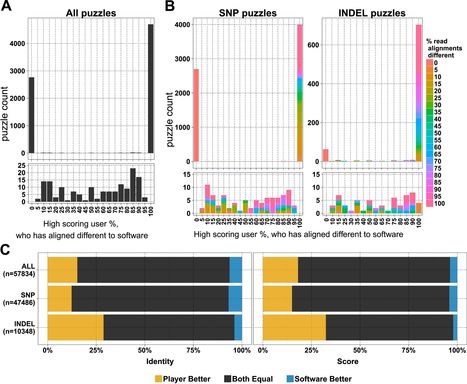
In 2013, in response to an epidemic of ash dieback disease in England the previous year, we launched a Facebook-based game called Fraxinus to enable non-scientists to contribute to genomics studies of the pathogen that causes the disease and the ash trees that are devastated by it. Over a period of 51 weeks players were able to match computational alignments of genetic sequences in 78% of cases, and to improve them in 15% of cases. We also found that most players were only transiently interested in the game, and that the majority of the work done was performed by a small group of dedicated players. Based on our experiences we have built a linear model for the length of time that contributors are likely to donate to a crowd-sourced citizen science project. This model could serve a guide for the design and implementation of future crowd-sourced citizen science initiatives. - See more at: http://elifesciences.org/content/4/e07460#.dpuf

juliasanchezprofesora@gmail.com's comment,
January 5, 8:46 AM
Fraxinus: Videojuegos y redes sociales para salvar los fresnos
Este artículo académico analiza el impacto de Fraxinus, un videojuego de ciencia ciudadana lanzado en 2013 a través de Facebook para combatir la epidemia de Chalara (muerte regresiva del fresno) en Europa. Ante la devastación causada por el hongo patógeno Hymenoscyphus fraxineus, los investigadores desarrollaron una plataforma que permitía a personas sin conocimientos científicos contribuir al análisis genómico del parásito y del árbol huésped. El estudio revela que, durante 51 semanas, los jugadores lograron igualar o mejorar los alineamientos de secuencias de ADN generados por software en el 93% de los casos, demostrando que el reconocimiento de patrones humano puede superar a los algoritmos en tareas complejas. Aunque la mayoría de los participantes mostró un interés transitorio, un pequeño grupo de usuarios dedicados realizó la mayor parte del trabajo. Basándose en estos datos, los autores proponen un modelo matemático para predecir la retención de voluntarios, ofreciendo una guía valiosa para el diseño de futuros proyectos de ciencia colaborativa en genómica. Referencias bibliográficas Rallapalli, G., Fraxinus Players, Saunders, D. G., Yoshida, K., Edwards, A., Lugo, C. A., ... & MacLean, D. (2015). Cutting Edge: Lessons from Fraxinus, a crowd-sourced citizen science game in genomics. eLife, 4, e07460. https://doi.org/10.7554/eLife.07460 |





