Plant immune responses are initiated by recognition of pathogen invasion through immune receptors. The pathogen sensing system is mainly composed of two structurally different proteins that are located on different subcellular compartments. One is the plasma membrane‐localized pattern recognition receptors (PRRs) that detect pathogen‐associated molecular patterns (PAMPs) (Boutrot & Zipfel, 2017). PRRs perceive extracellular PAMPs to activate PAMP‐triggered immunity (PTI). In turn, adapted pathogens interfere with or modulate host signalling by virulence factors (called effectors) for successful infection. The other is intracellular nucleotide‐binding domain and leucine‐rich repeat proteins (NLRs) that recognize these effectors (Jones et al., 2016). Activation of an NLR induces a robust immune response called effector‐triggered immunity (ETI), which is often accompanied by hypersensitive response (HR) cell death. Animals encode both plasma membrane and intracellular immune receptors, which share similar structures with plant PRRs and NLRs for recognition of PAMPs; but plant and animal immune receptors evolved independently (Ronald & Beutler, 2010; Jones et al., 2016). Interestingly, although PRRs and NLRs are structurally different and localize in distinct subcellular compartments, they share substantial downstream signalling, such as Ca2+, mitogen‐activated protein kinase (MAPK), reactive oxygen species (ROS), and phytohormone signalling as well as massive transcriptional reprogramming (Peng et al., 2018). However, it is not known how PRRs and NLRs activate similar signalling outputs. In this issue of New Phytologist, Kadota et al. (2019, pp. 2160–2175) investigated protein phosphorylation dynamics upon NLR activation by phosphoproteomics. By comparing with previously published phosphoproteomics data for PTI, they discovered that phosphorylation occurred in the same residues of an NADPH oxidase, RESPIRATORY BURST OXIDASE HOMOLOGUE D (RBOHD), which is activated during both PTI and ETI. Thus, Kadota et al. (2019) precisely defined a signal convergent point between PRR and NLR signalling at the molecular level.
A secreted effector from the plant pathogenic fungus Ustilago maydishas evolved to acquire a new function that contributes to the unique lifestyle of this species, highlighting the utility of using comparative genetic analyses to address current questions in plant–microorganism interactions.
Smut fungi are a diverse and ancient group of plant pathogens, comprised of nearly 1,500 species predicted to have emerged more than 250 million years ago (mya)1. This group of fungi are characterized by a biotrophic lifestyle — requiring living plant tissue to reproduce — and often spread systemically before causing disease symptoms in reproductive organs2. Smut species infect various grass hosts, including maize, wheat, barley and sugar cane2. Two smut fungi, Ustilago maydisand Sporisorium reilianum, have convergently evolved to infect maize following its domestication ~10,000 years ago, despite these two species having diverged around 20 mya (Fig. 1)3. S. reilianum has a pathogenic lifestyle typical of smut fungi, with its symptoms restricted to inflorescences, whereas U. maydis can cause symptoms in all maize vegetative tissue4. In their study, recently published in Nature Microbiology, Tanaka et al.3 compare these two smut fungi to uncover one of the molecular determinants underpinning the unique pathogenic lifestyle of U. maydis.
Unconventional integrated domains in plant intracellular immune receptors (NLRs) can directly bind translocated pathogen effector proteins to initiate an immune response. The rice immune receptor pairs Pik-1/Pik-2 and RGA5/RGA4 both use integrated heavy metal-associated (HMA) domains to bind the Magnaporthe oryzae effectors AVR-Pik and AVR-Pia, respectively. These effectors both belong to the MAX effector family and share a core structural fold, despite being divergent in sequence. How integrated domains maintain specificity of recognition, even for structurally similar effectors, has implications for understanding plant immune receptor evolution and function. Here we show that the rice NLR pair Pikp-1/Pikp-2 triggers an immune response leading to partial disease resistance towards the mis-matched effector AVR-Pia in planta, and that the Pikp-HMA domain binds AVR-Pia in vitro. The HMA domain from another Pik-1 allele, Pikm, is unable to bind AVR-Pia, and does not trigger a response in plants. The crystal structure of Pikp-HMA bound to AVR-Pia reveals a different binding interface compared to AVR-Pik effectors, suggesting plasticity in integrated domain/effector interactions. This work shows how a single NLR can bait multiple pathogen effectors via an integrated domain, and may enable engineering immune receptors with extended disease resistance profiles.
Background. Filamentous plant pathogen genomes often display a bipartite architecture with gene-sparse, repeat-rich compartments serving as a cradle for adaptive evolution. The extent to which this two-speed genome architecture is associated with genome-wide DNA modifications is unknown.
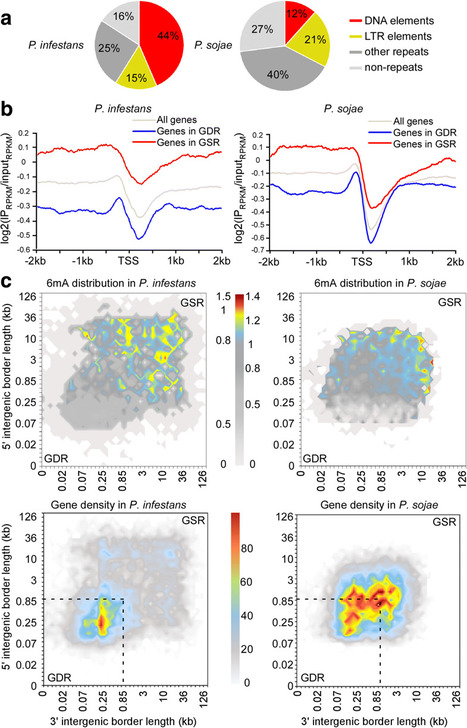
Results. We show that the oomycetes Phytophthora infestans and Phytophthora sojaepossess functional adenine N6-methylation (6mA) methyltransferases that modulate patterns of 6mA marks across the genome. In contrast, 5-methylcytosine could not be detected in these species. Methylated DNA IP sequencing (MeDIP-seq) of each species reveals 6mA is depleted around the transcription start sites (TSSs) and is associated with lowly expressed genes, particularly transposable elements. Genes occupying the gene-sparse regions have higher levels of 6mA in both genomes, possibly implicating the methylome in adaptive evolution. All six putative adenine methyltransferases from P. infestans and P. sojae, except PsDAMT2, display robust enzymatic activities. Surprisingly, single knockouts in P. sojaesignificantly reduce in vivo 6mA levels, indicating that the three enzymes are not fully redundant. MeDIP-seq of the psdamt3 mutant reveals uneven 6mA methylation reduction across genes, suggesting that PsDAMT3 may have a preference for gene body methylation after the TSS. Furthermore, transposable elements such as DNA elements are more active in the psdamt3mutant. A large number of genes, particularly those from the adaptive genomic compartment, are differentially expressed.
Conclusions. Our findings provide evidence that 6mA modification is potentially an epigenetic mark in Phytophthora genomes, and complex patterns of 6mA methylation may be associated with adaptive evolution in these important plant pathogens.
This vision describes a radically different publishing model that would reinvent the concept of a scientific journal into a live and open forum of scientific debate and analysis. This model centers on a full integration of the preprint ecosystem into the journal interface. The journal would only accept submission of articles that have been posted as preprints. All evaluations and commissioned reviews of submitted articles would be published as soon as received on the journal website and linked to the preprint version. Editors would operate as always sifting through submitted papers and seeking external reviewers when necessary. But they will also consider author-led and community crowdsourced reviews, which would be appended to the preprint. As the reviews accumulate and revisions are submitted, the journal editors would initiate a consultation process, and when satisfied with a given version promote it to a formal article. The editor’s role becomes more akin to moderator than gatekeeper. The process doesn’t have to be static. As the community further comments on the article and follow-up studies are published, editors may decide to commission synthetic review or commentary articles to address emerging issues. I would also envision that the paper is linked to related articles in a “knowledge network” database, and that article tags are revised to reflect new knowledge, e.g. “independently validated”. The journal would therefore become less of a static repository of scientific articles, and more of a moderated forum of scientific discussion.
To implement this vision of journals 2.0, the following roadmap would need to be implemented:
Funding bodies to mandate preprints for their grantees.
Integrate the preprint ecosystem into the journal.
Every submitted article receives at least an editorial evaluation.
Live peer review according to a hybrid model of editor-, author-, and community-led reviewing.
Accelerated adaptive evolution is a hallmark of plant–pathogen interactions. Plant intracellular immune receptors (NLRs) often occur as allelic series with differential pathogen specificities. The determinants of this specificity remain largely unknown. Here, we unravelled the biophysical and structural basis of expanded specificity in the allelic rice NLR Pik, which responds to the effector AVR-Pik from the rice blast pathogen Magnaporthe oryzae. Rice plants expressing the Pikm allele resist infection by blast strains expressing any of three AVR-Pik effector variants, whereas those expressing Pikp only respond to one. Unlike Pikp, the integrated heavy metal-associated (HMA) domain of Pikm binds with high affinity to each of the three recognized effector variants, and variation at binding interfaces between effectors and Pikp-HMA or Pikm-HMA domains encodes specificity. By understanding how co-evolution has shaped the response profile of an allelic NLR, we highlight how natural selection drove the emergence of new receptor specificities. This work has implications for the engineering of NLRs with improved utility in agriculture.
Outbreaks caused by asexual lineages of fungal and oomycete pathogens are a continuing threat to crops, wild animals and natural ecosystems (Fisher MC, Henk DA, Briggs CJ, Brownstein JS, Madoff LC, McCraw SL, Gurr SJ, Nature 484:186–194, 2012; Kupferschmidt K, Science 337:636–638, 2012). However, the mechanisms underlying genome evolution and phenotypic plasticity in asexual eukaryotic microbes remain poorly understood (Seidl MF, Thomma BP, BioEssays 36:335–345, 2014). Ever since the 19th century Irish famine, the oomycete Phytophthora infestans has caused recurrent outbreaks on potato and tomato crops that have been primarily caused by the successive rise and migration of pandemic asexual lineages (Goodwin SB, Cohen BA, Fry WE, Proc Natl Acad Sci USA 91:11591–11595, 1994; Yoshida K, Burbano HA, Krause J, Thines M, Weigel D, Kamoun S, PLoS Pathog 10:e1004028, 2014; Yoshida K, Schuenemann VJ, Cano LM, Pais M, Mishra B, Sharma R, Lanz C, Martin FN, Kamoun S, Krause J, et al. eLife 2:e00731, 2013; Cooke DEL, Cano LM, Raffaele S, Bain RA, Cooke LR, Etherington GJ, Deahl KL, Farrer RA, Gilroy EM, Goss EM, et al. PLoS Pathog 8:e1002940, 2012). However, the dynamics of genome evolution within these clonal lineages have not been determined. The objective of this study was to use a comparative genomics and transcriptomics approach to determine the molecular mechanisms that underpin phenotypic variation within a clonal lineage of P. infestans.
The blast fungus Magnaporthe oryzae is comprised of lineages that exhibit varying degrees of specificity on about 50 grass hosts, including rice, wheat and barley. Reliable diagnostic tools are essential given that the pathogen has a propensity to jump to new hosts and spread to new geographic regions. Of particular concern is wheat blast, which has suddenly appeared in Bangladesh in 2016 before spreading to neighboring India. In these Asian countries, wheat blast strains are now co-occurring with the destructive rice blast pathogen raising the possibility of genetic exchange between these destructive pathogens. We assessed the recently described MoT3 diagnostic assay and found that it did not distinguish between wheat and rice blast isolates from Bangladesh. The assay is based on primers matching the WB12 sequence corresponding to a fragment of the M. oryzae MGG_02337 gene annotated as a short chain dehydrogenase. These primers could not reliably distinguish between wheat and rice blast isolates from Bangladesh based on DNA amplification experiments performed in separate laboratories in Bangladesh and in the UK. In addition, comparative genomics of the WB12 sequence revealed a complex underlying genetic structure with related sequences across M. oryzae strains and in both rice and wheat blast isolates. We, therefore, caution against the indiscriminate use of this assay to identify wheat blast.
Just like humans, plants have an immune system that they use to fend off pathogens and pests. Research involving plant immunity was guided by Harold Flor’s influential “gene-for-gene” model but this model is now supplanted by a more complex view of pant immunity. Disease resistance genes appear to work together in intricate networks that enable plants to detect and resist parasites more effectively. An in-depth understanding of the immune system can help us breed disease resistant crops.
The wheat blast fungus (Triticum pathotype of Pyricularia oryzae) first arose in Brazil in 1985 and has recently spread to Asia. Resistance genes against this new pathogen are very rare in common wheat populations. We screened 520 local landraces of common wheat collected worldwide with Br48, a Triticum isolate collected in Brazil, and found a highly resistant, unique accession, GR119. When F2 seedlings derived from a cross between GR119 and Chinese Spring (CS, susceptible control) were inoculated with Br48, resistant and susceptible seedlings segregated in a 15:1 ratio, suggesting that GR119 carries two resistance genes. When the F2 seedlings were inoculated with Br48△A8 carrying a disrupted allele of AVR-Rmg8 (an avirulence gene corresponding to a previously reported resistance gene, Rmg8), however, the segregation fitted a 3:1 ratio. These results suggest that one of the two genes in GR119 was Rmg8. The other, new gene was tentatively designated as RmgGR119. GR119 was highly resistant to all Triticum isolates tested. Spikes of GR119 were highly resistant to Br48, moderately resistant to Br48△A8 and a hybrid culture carrying avr-Rmg8 (nonfunctional allele), and highly resistant to its transformant carrying AVR-Rmg8. The strong resistance of GR119 was attributed to the combined effects of Rmg8 and RmgGR119.
Plant–microbe interactions are great model systems to study co-evolutionary dynamics across multiple timescales. However, mechanistic research on plant–microbe interactions has often been conducted with little consideration of evolutionary concepts and methods. Conversely, evolutionary research has rarely integrated the range of mechanisms and models from the molecular plant–microbe interactions field. In recent years, the incipient field of evolutionary molecular plant–microbe interactions (EvoMPMI) has emerged to bridge this gap. Here, we report on some of the recent advances in EvoMPMI. In particular, we highlight new systems to study microbe interactions with early diverging land plants, and new findings from studies of adaptive evolution in pathogens and plants. By linking mechanistic and evolutionary research, EvoMPMI promises to expand our understanding of plant–microbe interactions.
Plant disease outbreaks caused by fungi are a chronic threat to global food security. A prime case is blast disease, which is caused by the ascomycete fungus Magnaporthe oryzae (syn. Pyricularia oryzae), which is infamous as the most destructive disease of the staple crop rice. However, despite its Linnaean binomial name, M. oryzae is a multihost pathogen that infects more than 50 species of grasses. A timely study by P. Gladieux and colleagues (mBio 9:e01219-17, 2018, https://doi.org/10.1128/mBio.01219-17) reports the most extensive population genomic analysis of the blast fungus thus far. M. oryzae consists of an assemblage of differentiated lineages that tend to be associated with particular host genera. Nonetheless, there is clear evidence of gene flow between lineages consistent with maintaining M. oryzae as a single species. Here, we discuss these findings with an emphasis on the ecologic and genetic mechanisms underpinning gene flow. This work also bears practical implications for diagnostics, surveillance, and management of blast diseases.
Background – Having an adequate loading control for a western blot is essential for the interpretation of the results. There are two common loading control methods for western blots of proteins from plant material: (i) using specific antibodies to detect for a reference protein, such as actin, tubulin, or GAPDH (Li et al. 2011); and (ii) treating the membrane with Ponceau or Coomassie stains to assay the levels of a constitutively expressed protein, such as Rubisco (Zhang et al. 2017; Lim et al. 2018; Zhuo et al. 2014). Comparative studies in the mammalian biology field have determined that these loading control methods—antibody detection versus staining—are roughly equivalent in their linearity (Romero-Calvo et al. 2010; Wilender and Ekblad, 2011), and thus serve as comparable quality controls. In the plant biology field, it is sometimes debated as to whether staining for Rubisco is an appropriate loading control, due to the high abundance of this protein in the cell.
Results – We undertook an experiment to determine whether the range of detection of staining for Rubisco is similar to that of antibody-based detection of a reference protein. We loaded total protein extract from Nicotiana benthamiana leaves transiently expressing GFP into a gel at a range of effective sample volumes, and the resulting western blot was treated with anti-GFP antibodies as well as stained with Coomassie Brilliant Blue (CBB) (Fig. 1a). Quantification of the GFP bands in the western blot and the Rubisco bands in the CBB stained membrane indicated that these detection methods have similar linear correlations between the loading volumes of total protein extract and the detectable band intensities (Fig. 1b). In addition, quantification of a random protein of lower abundance in the CBB stained membrane also showed similar linearity (Fig. 1b).
Conclusions – These results indicate that CBB staining for Rubisco can be an appropriate loading control for western blots from plant material. This representative experiment is consistent with results from other western blot experiments that we routinely perform in our laboratory.
In a review article published in this issue of Molecular Plant Pathology, Ceresini et al. (2019) wrongly treat the wheat blast fungus as a new species, Pyricularia graminis‐tritici (Pygt), following the proposal of Castroagudin et al. (2016). Despite the host specificity implied by the name Pygt, the proposed species concept includes isolates that cause major disease epidemics on finger millet and turf grasses (Castroagudin et al., 2016, 2017). These authors also conclude, based on little evidence, that ‘the hypothesis of grass‐specific populations for the overall Pyricularia oryzae species complex is falsified’. In addition, they stress that the rice blast fungus, which they describe as P. oryzae, ‘may not provide a suitable model for understanding the biology of Pygt’. All of these conclusions are misinformed and have serious consequences. International quarantine regulations are needed to block the movement of this fearsome seed‐borne blast fungus through the trade of seed or grain. The Pygt designation magnifies the challenge by grouping the dangerous, highly aggressive wheat pathogens from South America and Bangladesh, which are readily distinguishable from other P. oryzae lineages, with non‐wheat pathogens that are already found worldwide and are not known to be virulent on wheat or rice. Careful biological analysis of wheat blast host–pathogen interactions has clearly shown that studies of other host‐adapted forms of the fungus are relevant to an understanding of wheat blast and the development of new methods for disease control. Here, we summarize the overwhelming evidence that supports the alternative, internationally recognized designation of Pyricularia oryzae (synonym Magnaporthe oryzae; Zhang et al., 2016) as a single species divided into host‐adapted lineages with limited primary host ranges. We also delineate the errors that led Ceresini et al. (2019) to their false conclusions. The same discussion applies to a second recently published review on the same topic (Ceresini et al., 2018).
Our second OPP interview features Professor Sophien Kamoun, a senior scientist and professor of biology with the Sainsbury Laboratory, Norwich, UK. Dr. Kamoun is known for his prolific Tweeting but, more importantly, for his work with oomycetes #notafungus, effectors, genomics and evolution.
Prof. Kamoun is well recognized for his efforts to champion data sharing and other open science practices. Recently he was one of the leading scientists who founded Open Wheat Blast, an initiative with the main goal of providing genomic data and analysis related to wheat blast with open access. The collaborative efforts by several teams allowed to rapidly confirm the source of wheat blast in Bangladesh in early 2016. It is a great pleasure to have Prof. Kamoun as an OPP member and answering a few questions about open science.
OPP: You have a strong presence in social media, together with other prominent plant pathologists, advocating for more open and transparent science and data sharing. Tell us a bit about your background and when you realized that open science and data sharing were important to furthering science.
SK: I think I have always been tuned to new technologies and tools. I’m also aware of the importance of science communication and networking. Therefore, it’s perhaps no surprise that I quickly became hooked to Twitter and related social media tools such as Scoop.it. Twitter has become an integral part of my daily routine. I use it primarily to broadcast, gather new information and interact with a wide range of people beyond my immediate colleagues. I love that incessant flow of information we get through Twitter. In some ways, I’m addicted to knowledge and social interactions, and Twitter is my drug.
I think I first became aware of the open science movement with the first open access journals. It must have been the PLOS journals around year 2000. The rationale for open science, notably transparency and accountability, seemed evident given that our objective as scientists is to produce robust reproducible science and share it with others. Later, I became interested in open science as applied to genome sequencing of emerging plant pathogens. I still feel that the plant pathology community is too slow in applying the tools of genomics to new plant disease outbreaks. Too little, too late.
OPP: How do you compare the overall field of plant pathology to others in relation to the level of adoption of open science practices? Is there any kind of formal education and training that graduate schools/advisors should be more proactive to educate the new generation of scientists, or is this a matter of individual efforts?
SK: I want to start by saying that OPP is an absolutely amazing initiative that stands out from the conservative stance of many of our plant pathologist colleagues. My experience is that plant pathologists tend to be too slow in embracing the cultural changes that are sweeping the biological sciences. For example, a few months ago I participated in a workshop on response to new plant disease outbreaks and some participants argued against open science approaches. There was even opposition to the simple concept of sharing data and biomaterial with experts. Remarkably, our biomedical colleagues manage to do just fine.
Another aspect that is directly relevant to the acceptance of open science is the issue of research evaluation. Many seem reluctant to embrace preprints because they think that this would not count towards their career progression. Thus, I would encourage everyone to look at the San Francisco Declaration on Research Assessment (DORA), urge their institution to sign up and hold their colleagues to these standards of research evaluation. To sum up, yes, we need more education about open science in plant pathology. OPP fills a critical niche.
OPP: You are among several scientists who strongly voice against the current scholarly publishing practices. You have even refused to review and submit articles for some journals because of the publisher. What is your advice for young scientists who expect recognition publishing in Nature/Cell/Science (NCS) journals?
SK: Indeed, it’s well established that scientific publishing is broken at several levels. But the onus shouldn’t be on early career scientists to fix the system, although they can create momentum and enable cultural changes by lobbying for DORA principles, embracing preprints and various other open science initiatives. My advice to early career scientists is to be fully aware that publishing is important. This is our main currency in science. I’m not arguing against that. But to be a successful scientist, it is critical to have a full set of skills.
I highly recommend checking the list of competencies developed by the National Postdoc Association. If you have some weakness, such as writing, speaking, networking etc., you will struggle to have a fulfilling career unless you address them. Focusing on improving weaknesses is more important than strengths. Even in a great orchestra, you only hear the bad player. What saddens me the most is to see early career scientists become obsessed with publishing in glam mags, such as Science and Nature. It’s a total fallacy to believe that all you need is a paper in these journals for your career to be made.
Of course, a solid publication record is important but I have seen many prospective faculty candidates falter despite a publication list that includes these glamorous journals. I recall an interviewee for a faculty position who first-authored three (Yes. Three!) Science papers but couldn’t articulate a reasonable response to valid questions from the committee. Needless to say, that interviewee didn’t get the job.
My advice is spelled out here. Aim high. But be reasonable. Also, don’t lose the plot. Your job is to produce solid science that stands the test of time, not to squeeze through a wishy-washy paper through reviewers and editors. Trust me, the community knows. Flawed papers get scorned even on Twitter. Personally, I’m proud that I got my job as Senior Scientist at The Sainsbury Lab without any Science or Nature papers. At that time, I thought it said a lot about the institution and how they value their scientists. Finally, the current publishing ethos of my lab is described here.
OPP: As a part of your objections to the current publishing practices you strongly support preprints. What advice do you give for getting started with using preprints ?
SK: Preprints are central to the open science philosophy. I really wish to see more preprints in bioRxiv from the plant path community. This is a tremendous way to get your work out there and share it with others much earlier than is traditionally the case See ASAPBIO Preprint FAQ. It also relieves the stress associated with waiting for reviews and the tedious revision process. After all, the paper is already out there, so what if the final version takes a few more weeks. It’s liberating to post a preprint just when you finish writing up the paper.
My main advice is to treat the preprint like a regular paper and not to post premature, unpolished drafts. Some may think that it doesn’t matter but you will be judged, even subconsciously, by readers who are the colleagues who will formally review your papers and grants. You wouldn’t want to display a scrappy poster or give a messy talk at a conference.
To early career scientists, who may not feel confident to post a preprint, do seek input from your mentors, colleagues or even use scientific writing services to improve the draft. My sense is that the younger generation is puzzled by the traditional protracted process of science publishing and the costs associated with it. Preprints are becoming routine in the biological sciences and the growth of bioRxiv has been phenomenal. More concrete actions, such as accepting preprints in promotion packages, grant and fellowship applications are accelerating the process. All it would take now is for funding bodies to mandate preprints, which they really should if they truly believe in their open science manifesto.
OPP: What do you see as the most significant outcome from your work as a result of using open science practices?
SK: One amazing anecdote is that when we went public with the sequences from the wheat blast outbreak in Bangladesh], there was only one (ONE!) genome sequence available of a wheat blast isolate. Obviously, we couldn’t do much in interpreting the Bangladeshi sequences based on a single genome. However, it turned out that several labs had unpublished genome sequences of wheat blast isolates sitting in their computers. Within days, there was over 20 genome sequences available. That goes to show the importance of sharing data and also coming up with processes where depositing datasets is recognized as a scholarly contribution just like any other activity.
Another aspect that I found enlightening was the poorly appreciated process of live peer-review. This is what happens when you crowdsource analyses, and more than one group gets involved. You get instant validation! In the case of the wheat blast outbreak, we had two independent analyses performed by Daniel Croll in Zurich and Pierre Gladieux in Montpellier. They both reached the exact same conclusion that the Bangladeshi strains originated from South America. A great example especially given discussions about the reproducibility crisis.
OPP: Finally, the Open Plant Pathology community welcomes not only pathologists, but anyone who works in the field and wish to stay connected with other researchers to learn and share knowledge and contribute to promote open science and reproducible research. Surely, it does not fit everyone’s needs given the focus of OPP on more computational aspects and use of free open source software (FOSS). What are the areas and target audience that you think might benefit most from participating and taking leadership in this community?
SK: Open science can impact several areas of plant pathology beyond computational biology. One example would be the reporting of new disease outbreaks and the first response to these outbreaks. Think of how basic the ProMED-mail platform is. I think this is the only centralized online platform that rapidly reports new plant disease outbreaks. We should have something akin to a global extension platform with plant pathologists openly contributing advice and analyses on how to respond to these outbreaks. It’s shocking to me that the most common word on ProMED-mail is “undiagnosed”.
I also hope we can reach out more to developing countries and educate scientists about the value of open science. I recommend you interview my colleague Tofazzal Islam, who became a champion of open science following our collaboration on the Bangladeshi wheat blast outbreak. That experience was revealing to me too. It showed the power of open science to help build wide-reaching connections and networks that wouldn’t otherwise readily happen.
On a related topic, one of the challenges for scientists in developing countries is to produce full-length publications. Open science tools allow intermediate reports to be published for example through platforms like figshare, zenodo etc. These can be viewed as credited mini-publications. It’s a great opportunity for students and scientists in developing countries to communicate their science in increments without the challenge of producing a typical scientific paper.
At the end, the main challenge is education. The standard system of publication and incentives is so ingrained in the current culture that it is challenging to deliver the necessary changes. We should embrace any opportunity to educate plant pathologists about open science no matter the audience, and no matter the platform.
ATG8 is a highly-conserved ubiquitin-like protein that modulates autophagy pathways by binding autophagic membranes and numerous proteins, including cargo receptors and core autophagy components. Throughout plant evolution, ATG8 has expanded from a single protein in algae to multiple isoforms in higher plants. However, the degree to which ATG8 isoforms have functionally specialized to bind distinct proteins remains unclear. Here, we describe a comprehensive protein-protein interaction resource, obtained using in planta immunoprecipitation followed by mass spectrometry, to define the potato ATG8 interactome. We discovered that ATG8 isoforms bind distinct sets of plant proteins with varying degrees of overlap. This prompted us to define the biochemical basis of ATG8 specialization by comparing two potato ATG8 isoforms using both in vivo protein interaction assays and in vitro quantitative binding affinity analyses. These experiments revealed that the N-terminal β-strand -and, in particular, a single amino acid polymorphism- underpins binding specificity to the substrate PexRD54 by shaping the hydrophobic pocket that accommodates this protein′s ATG8 interacting motif. Additional proteomics experiments indicated that the N-terminal β-strand shapes the ATG8 interactor profiles, defining interaction specificity with about 80 plant proteins. Our findings are consistent with the view that ATG8 isoforms comprise a layer of specificity in the regulation of selective autophagy pathways in plants.
The blast fungus Magnaporthe oryzae is comprised of lineages that exhibit varying degrees of specificity on about 50 grass hosts, including rice, wheat and barley. Reliable diagnostic tools are essential given that the pathogen has a propensity to jump to new hosts and spread to new geographic regions. Of particular concern is wheat blast, which has suddenly appeared in Bangladesh in 2016 before spreading to neighboring India. In these Asian countries, wheat blast strains are now co-occurring with the destructive rice blast pathogen raising the possibility of genetic exchange between these destructive pathogens. We assessed the recently described MoT3 diagnostic assay and found that it did not distinguish between wheat and rice blast isolates from Bangladesh. The assay is based on primers matching the WB12 sequence corresponding to a fragment of the M. oryzae MGG_02337 gene annotated as a short chain dehydrogenase. These primers could not reliably distinguish between wheat and rice blast isolates from Bangladesh based on DNA amplification experiments performed in separate laboratories in Bangladesh and in the UK. Specifically, all eight rice blast isolates tested in this study produced the WB12 amplicon. In addition, comparative genomics of the WB12 nucleotide sequence revealed a complex underlying genetic structure with related sequences across M. oryzae strains and in both rice and wheat blast isolates. We, therefore, caution against the indiscriminate use of this assay to identify wheat blast and encourage further development of the assay to ensure its value in diagnosis.
Plant disease resistance is a complicated arms race between the plant and pathogens. Bacteria, viruses and fungi evolve in lock-step with plants, creating new ways to overcome new disease resistance strategies. Resistance to disease has a foundation in the gene-for-gene model, a model that hypothesizes that plants and pathogens have a molecular relationship with each other that mediates pathogenicity.
Today’s podcast features Drs. Lida Derevnina and Chih-Hang Wu, postdoctoral researchers with Sophien Kamoun (@KamounLab) at the Sainsbury Laboratory (@TheSainsburyLab) in Norwich, England. They describe the new thinking of disease resistance as a number of complex layers that integrates many gene-for-gene interactions with other mechanisms in mediating plant defense.
Genome editing by sequence-specific nucleases (SSNs) has revolutionized biology by enabling targeted modifications of genomes. Although routine plant genome editing emerged only a few years ago, we are already witnessing the first applications to improve disease resistance. In particular, CRISPR-Cas9 has democratized the use of genome editing in plants thanks to the ease and robustness of this method. Here, we review the recent developments in plant genome editing and its application to enhancing disease resistance against plant pathogens. In the future, bioedited disease resistant crops will become a standard tool in plant breeding.
We studied two different races of the Irish potato famine pathogen, and we discovered that the difference invirulence between these races could not be ascribed to a genetic difference but rather to a difference in the expression of the underlying virulence gene. This adds to our knowledge of how this important scourge on world agriculture evolves to evade plant immunity.
Why is this work important?
As our colleague Mark Gijzen tweeted, “is this a rare and unusual curiosity or another example of a widespread biological phenomenon?” Indeed, there are few other examples in related plant pathogens, including the soybean root rot pathogen that Mark studies. This finding has far reaching implications. It indicates that these pathogens can evolve even more rapidly than anticipated thus counteracting the efforts of plant breeders to deploy disease resistant crops.
Are potato varieties resistant to the pathogen available?
Yes, there are. But there are several examples of potato cultivars that were initially resistant to late blight when farmers started to grow them, but succumbed to the disease a few years later. The ability to switch on and off virulence genes such as we found in this research may partly explain why the pathogen is so effective at overcoming the plants defense barriers.
What is currently done to control the disease?
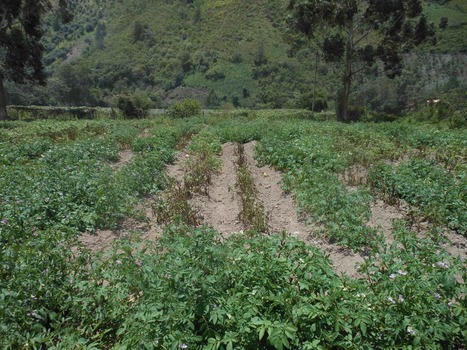
Susceptible potato cultivars must be protected by repeated applications of fungicides. If left unchecked, the disease will destroy the leaves and stems in a matter of days as in the pictured trial plot of potato varieties in the highlands of Peru.
Is chemical protection the only way to control late blight?
In nature, there are wild relatives of the cultivated potato and many of them can withstand the disease (see image of potato variety field trial). Breeders identify the genes in these plants and introduce them to cultivated potato through crosses or genetic transformation.
How did you put this project together?
We studied an Andean lineage of the Irish potato famine pathogen known as EC-1 so the project had an international flavor from day one. Ours was a wide reaching multinational collaboration bringing together scientists based in the UK, Japan, Netherlands, USA, Philippines, and Peru. It’s how science often goes on these days. Experts from all over the world team up to solve problems, make new discoveries and advance our knowledge.
Anything you would have done differently?
DNA sequencing technology develops so fast that by the time the paper gets published you wish you could apply a different method. It also takes more time to analyze the data, write up the paper etc. than to generate the sequence data. This can be frustrating.
You posted the paper in bioRxiv before submission. Why?
Why not? Posting the article on bioRxiv enabled us to share our findings with our colleagues and hear about it from the community as soon as possible. The tweet by Mark Gijzen we referred to above is an example of such feedback. Posting a preprint relieves some of the delays associated with publishing. It’s a liberating feeling to finish writing up a paper and immediately share it with anyone who’s interested.
Authors
Dr. Vivianne Vleeshouwers is assistant professor in Wageningen University & Research, the Netherlands. Her research is dedicated to understand the molecular interaction between the potato late blight pathogen Phytophthora infestans and potato, and exploit this knowledge to achieve a better and more durable disease resistance.
Dr. Hannele Lindqvist-Kreuze works as a Molecular Breeder at the International Potato Center (CIP) in Lima, Peru. Her current work focuses on the discovery and application of molecular markers in the potato and sweet potato breeding programs of CIP. She describes her work as a Haiku: Searching for Hidden Patterns, Coded in the DNA, Unknowingly selected.
Dr. Sophien Kamoun is a Senior Scientist at The Sainsbury Laboratory and a Professor of Biology at the University of East Anglia in Norwich, UK. He studies the interactions between plants and filamentous pathogens, notably the Irish potato famine pathogen and the rice and wheat blast fungus. He’s known for saying “Don’t bet against the pathogen.”
During plant cell invasion, the oomycete Phytophthora infestans remains enveloped by host-derived membranes whose functional properties are poorly understood. P. infestans secretes a myriad of effector proteins through these interfaces for plant colonization. Recently we showed that the effector protein PexRD54 reprograms host-selective autophagy by antagonising antimicrobial-autophagy receptor Joka2/NBR1 for ATG8CL binding (Dagdas, 2016). Here, we show that during infection, ATG8CL/Joka2 labelled defense-related autophagosomes are diverted toward the perimicrobial host membrane to restrict pathogen growth. PexRD54 also localizes to autophagosomes across the perimicrobial membrane, consistent with the view that the pathogen remodels host-microbe interface by co-opting the host autophagy machinery. Furthermore, we show that the host-pathogen interface is a hotspot for autophagosome biogenesis. Notably, overexpression of the early autophagosome biogenesis protein ATG9 enhances plant immunity. Our results implicate selective autophagy in polarized immune responses of plants and point to more complex functions for autophagy than the widely known degradative roles.
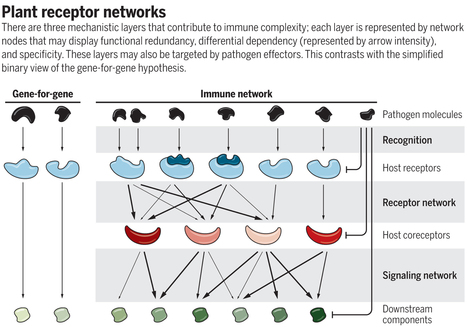
Plants are attacked by a multitude of pathogens and pests, some of which cause epidemics that threaten food security. Yet a fundamental concept in plant pathology is that most plants are actively resistant to most pathogens and pests. Plants fend off their innumerable biotic foes primarily through innate immune receptors that detect the invading pathogens and trigger a robust immune response. The conceptual basis of such interactions was elegantly articulated by Harold H. Flor, who, in 1942, proposed the hypothesis that single genes in plants and pathogens define the outcome of their interactions; that is, a plant harboring a specific gene displays resistance against a pathogen that carries an interacting virulence gene (1). This gene-for-gene model was hugely insightful and influential—it has helped to guide applied and basic research on disease resistance. However, recent findings are taking the field beyond this simplified binary view of plant-pathogen interactions. Plants carry extremely diverse and dynamic repertoires of immune receptors that are interconnected in complex ways. Conversely, plant pathogens secrete a diversity of virulence proteins and metabolites called effectors, and pathogen genomics has revealed hundreds of effector genes in many species. These effectors have evidently evolved to favor pathogen infection and spread, but a subset of them inadvertently activate plant immune receptors. The emerging paradigm is that dynamic webs of genetic and biochemical networks underpin the early stages of plant-pathogen interactions.
Accelerating international trade and climate change make pathogen spread an increasing concern. Hymenoscyphus fraxineus, the causal agent of ash dieback, is a fungal pathogen that has been moving across continents and hosts from Asian to European ash. Most European common ash trees (Fraxinus excelsior) are highly susceptible to H.fraxineus, although a minority (~5%) have partial resistance to dieback. Here, we assemble and annotate a H.fraxineus draft genome, which approaches chromosome scale. Pathogen genetic diversity across Europe and in Japan, reveals a strong bottleneck in Europe, though a signal of adaptive diversity remains in key host interaction genes. We find that the European population was founded by two divergent haploid individuals. Divergence between these haplotypes represents the ancestral polymorphism within a large source population. Subsequent introduction from this source would greatly increase adaptive potential of the pathogen. Thus, further introgression of H.fraxineus into Europe represents a potential threat and Europe-wide biological security measures are needed to manage this disease.
Intraspecific variation in ploidy occurs in a wide range of species including pathogenic and nonpathogenic eukaryotes such as yeasts and oomycetes. Ploidy can be inferred indirectly - without measuring DNA content - from experiments using next-generation sequencing (NGS). We present nQuire, a statistical framework that distinguishes between diploids, triploids and tetraploids using NGS. The command-line tool models the distribution of base frequencies at variable sites using a Gaussian Mixture Model, and uses maximum likelihood to select the most plausible ploidy model. nQuire handles large genomes at high coverage efficiently and uses standard input file formats. We demonstrate the utility of nQuire analyzing individual samples of the pathogenic oomycete Phytophthora infestans and the Baker’s yeast Saccharomyces cerevisiae. Using these organisms we show the dependence between reliability of the ploidy assignment and sequencing depth. Additionally, we employ normalized maximized log- likelihoods generated by nQuire to ascertain ploidy level in a population of samples with ploidy heterogeneity. Using these normalized values we cluster samples in three dimensions using multivariate Gaussian mixtures. The cluster assignments retrieved from a S. cerevisiae population recovered the true ploidy level in over 96% of samples. Finally, we show that nQuire can be used regionally to identify chromosomal aneuploidies. nQuire provides a statistical framework to study organisms with intraspecific variation in ploidy. nQuire is likely to be useful in epidemiological studies of pathogens, artificial selection experiments, and for historical or ancient samples where intact nuclei are not preserved. It is implemented as a stand-alone Linux command line tool in the C programming language and is available at https://github.com/clwgg/nQuire under the MIT license.
To get content containing either thought or leadership enter:
To get content containing both thought and leadership enter:
To get content containing the expression thought leadership enter:
You can enter several keywords and you can refine them whenever you want. Our suggestion engine uses more signals but entering a few keywords here will rapidly give you great content to curate.


 Your new post is loading...