Ustilago maydis is a biotrophic fungus causing corn smut disease in maize. The secreted effector protein Pit2 is an inhibitor of papain-like cysteine proteases (PLCPs) essential for virulence. Pit2 inhibitory function relies on a conserved 14 amino acids motif (PID14). Here we show that synthetic PID14 peptides act more efficiently as PLCP inhibitors than the full-length Pit2 effector. Mass spectrometry shows processing of Pit2 by maize PLCPs, which releases an inhibitory core motif from the PID14 sequence. Mutational analysis demonstrates that two conserved residues are essential for Pit2 function. We propose that the Pit2 effector functions as a substrate mimicking molecule: Pit2 is a suitable substrate for apoplastic PLCPs and its processing releases the embedded inhibitor peptide, which in turn blocks PLCPs to modulate host immunity. Remarkably, the PID14 core motif is present in several plant associated fungi and bacteria, indicating the existence of a conserved microbial inhibitor of proteases (cMIP).
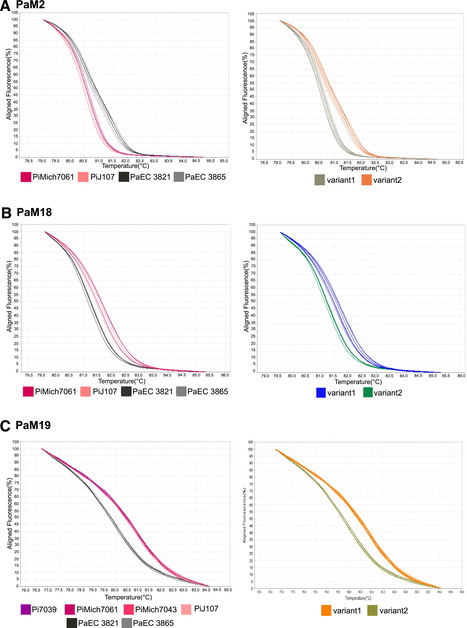
Phytophthora species hybrids have been repeatedly reported as causing damaging diseases to cultivated and wild plants. Two known hybrids, P. andina and P. × pelgrandis, are pathogens of Solanaceae and ornamentals, respectively, although the extent of their host ranges are unknown. P. andina emerged from hybridization of P. infestans and an unidentified related species, whereas P. × pelgrandis emerged from P. nicotianae and P. cactorum. Considering that hybrids and parental species can coexist in the same regions and to distinguish them usually requires cloning or whole genome sequencing, we aimed to develop a rapid tool to distinguish them. Specifically, we used high-resolution melting (HRM) assays to differentiate genotypes based on their amplicon melting profiles. We designed primers for P. × pelgrandis and parental species based on available sequences of P. nicotianae and P. cactorum nuclear genes containing polymorphisms between species. For P. andina, heterozygous sites from Illumina short reads were used for the same purpose. We identified multiple amplicons exhibiting differences in melting curves between parental species and hybrids. We propose HRM as a rapid method for differentiation of P. andinaand P. × pelgrandis hybrids from parental species that could be employed to advance research on these pathogens.
Autophagy-related protein 8 (ATG8) is a highly conserved ubiquitin-like protein that modulates autophagy pathways by binding autophagic membranes and a number of proteins, including cargo receptors and core autophagy components. Throughout plant evolution, ATG8 has expanded from a single protein in algae to multiple isoforms in higher plants. However, the degree to which ATG8 isoforms have functionally specialized to bind distinct proteins remains unclear. Here, we describe a comprehensive protein–protein interaction resource, obtained using in planta immunoprecipitation (IP) followed by mass spectrometry (MS), to define the potato ATG8 interactome. We discovered that ATG8 isoforms bind distinct sets of plant proteins with varying degrees of overlap. This prompted us to define the biochemical basis of ATG8 specialization by comparing two potato ATG8 isoforms using both in vivo protein interaction assays and in vitro quantitative binding affinity analyses. These experiments revealed that the N-terminal β-strand—and, in particular, a single amino acid polymorphism—underpins binding specificity to the substrate PexRD54 by shaping the hydrophobic pocket that accommodates this protein’s ATG8-interacting motif (AIM). Additional proteomics experiments indicated that the N-terminal β-strand shapes the broader ATG8 interactor profiles, defining interaction specificity with about 80 plant proteins. Our findings are consistent with the view that ATG8 isoforms comprise a layer of specificity in the regulation of selective autophagy pathways in plants.
A talk by Sophien Kamoun, The Sainsbury Laboratory, presented at the XVIII Congress of the International Society for Molecular Plant-Microbe Interactions
We describe a clone resource of 195 effectors of the blast fungus Magnaporthe oryzae. These clones are freely available as Golden Gate compatible entry plasmids. Our aim is to provide the community with an open source effector clone library to be used in a variety of functional studies.
Plant pathogens secrete effectors that play central roles in subjugating plants for colonization. Effectors typically have signal peptides, and occasionally carry conserved folds and motifs (Lo Presti et al.,2015; Franceschettiet al., 2017). Magnaporthe oryzae(Syn. Pyricularia oryzae) is an important plant pathogenthat is able to infect around 50 species of both wild and cultivated grasses including important cereals of the Poaceae family. M. oryzaeis mostly known to cause rice blast but can also cause disease on other crops such as barley, wheat, foxtail millet, and finger millet. The global population of Magnaporthe is composed of genetically differentiated lineages which, in some cases, still exhibit a measurable degree of gene flow (Gladieux et al.,2018). Fungal isolates from each of those lineages show a preference for a specific host and also encode distinct repertoires of effector genes (Yoshida et al.,2016).
The first genomic sequence of Magnaporthe oryzaewas released in 2005 for the lab strain 70-15 and allowed to predict a large set of secreted proteins such as enzymes involved in secondary metabolism and virulence-associated factors including putative effectors (Dean et al.,2005). Recently an increasing number of genome sequences of isolates from different lineages have become available, allowing the research community to perform comparative genomic studies (Chiapello et al.,2015; Yoshida et al.,2016).
Many of the validated effectors of M. oryzae are known as the MAX (MagnaportheAVRs and ToxB like) effectors. These effectors, while showing little primary sequence similarity, share a conserved structural fold composed of 6 β-sheets alternating in an anti-parallel manner (de Guillenet al., 2015). The MAX family has been largely expanded in Magnaportheas those effectors account for 5-10% of the effector repertoire and for 50% of the already cloned effectors of Magnaporthe(de Guillenet al., 2015). Indeed, the identification of structural motifs enables more sensitive predictions of effectors from pathogen genomes compared to sequence similarity searches (Franceschettiet al., 2017).
The aim of this project was to computationally identify a set of M. oryzaeeffectors from the main host-specific lineages and develop an open access clone resource for functional analyses.
To satisfy a growing demand for food, global agricultural production must increase by 70% by 2050. However, pests and crop diseases put global food supplies at risk. Worldwide, yield losses caused by pests and diseases are estimated to average 21.5% in wheat, 30.0% in rice, 22.6% in maize, 17.2% in potato, and 21.4% in soybean (1); these crops account for half of the global human calorie intake (2). Climate change and global trade drive the distribution, host range, and impact of plant diseases (3), many of which can spread or reemerge after having been under control (4). Though many national and regional plant protection organizations (NPPOs and RPPOs) work to monitor and contain crop disease outbreaks, many countries, particularly low-income countries (LICs), do not efficiently exchange information, delaying coordinated responses to prevent disease establishment and spread. To improve responses to unexpected crop disease spread, we propose a Global Surveillance System (GSS) that will extend and adapt established biosecurity practices and networking facilities into LICs, enabling countries and regions to quickly respond to emerging disease outbreaks to stabilize food supplies, enhancing global food protection.
NLRs are modular plant and animal proteins that are intracellular sensors of pathogen-associated molecules. Upon pathogen perception, NLRs trigger a potent broad-spectrum immune reaction known as the hypersensitive response. An emerging paradigm is that plant NLR immune receptors form networks with varying degrees of complexity. NLRs may have evolved from multifunctional singleton receptors, which combine pathogen detection (sensor activity) and immune signalling (helper or executor activity) into a single protein, to functionally specialized interconnected receptor pairs and networks. In this article, we highlight some of the recent advances in plant NLR biology by discussing models of NLR evolution, NLR complex formation, and how NLR (mis)regulation modulates immunity and autoimmunity. Multidisciplinary approaches are required to dissect the evolution, assembly, and regulation of the immune receptor circuitry of plants. With the new conceptual framework provided by the elucidation of the structure and activation mechanism of a plant NLR resistosome, this field is entering an exciting era of research.
Pathogen perception triggers a monomeric nucleotide-binding leucine-rich plant immune receptor to form a pentameric wheel-like complex termed a resistosome, with the N-terminal α helices forming a funnel-shaped structure that may perturb plasma membrane integrity to cause hypersensitive cell death.
Nucleotide-binding leucine-rich repeat (NLR) proteins are intracellular receptors that detect pathogen molecules and activate a robust immune response that includes the hypersensitive response (HR) cell death in plants1. Although plant NLRs are known to oligomerize through their N-terminal domains, such as the coiled coil (CC) domain2, the molecular mechanisms that underpin plant NLR activation and the subsequent execution of HR cell death have remained largely unknown. In two recent remarkable papers published in Science, Wang et al. have advanced our understanding of both the structural and biochemical bases of NLR activation in plants, creating a new conceptual framework. They reconstituted both the inactive and active complexes of the CC-NLR protein HOPZ-ACTIVATED RESISTANCE1 (ZAR1) with its partner receptor-like cytoplasmic kinases (RLCKs) and used cryo-electron microscopy to show that activated ZAR1 forms a structure called a resistosome — a wheel-like pentamer that can switch conformation to expose a funnel- shaped structure formed by the N-terminal α helices (α1) of the five CC domains. They propose a provocative model in which this funnel-like structure triggers HR cell death by translocating into the plasma membrane and perturbing membrane integrity, similar to pore-forming toxins.
Commentary by KamounLab on the structure and activation mechanism of NLR type plant immune receptor ZAR1 solved by teams of scientists led by Jijie Chai, Jian-Min Zhou and Hong-Wei Wang.
Bacterial speck, caused by the pathogen Pseudomonas syringae pv. tomato, is one of the most common diseases in tomato production. Together with Pto kinase, the NLR (nucleotide-binding domain leucine-rich repeat containing) protein Prf confers resistance against the bacterial speck pathogen by recognizing AvrPto and AvrPtoB, two Type III effector proteins secreted by Pseudomonas syringae pv. tomato. This Prf/Pto pathway is part of a complex NLR network in solanaceous plants that mediates resistance to diverse pathogens through the helper NLR proteins NRCs (NLR required for cell death). We previously showed that, in Nicotiana benthamiana, the hypersensitive cell death elicited by expression of AvrPto and Pto, which activate immunity through the endogenous Prf ortholog NbPrf, requires functionally redundant NRC2 and NRC3. However, whether tomato (Solanum lycopersicum) Prf(SlPrf) confers resistance to the bacterial speck pathogen through NRC2 and NRC3has not been determined. In this study, we show that SlPrf requires NRC2 and NRC3to trigger hypersensitive cell death and disease resistance in both N. benthamianaand tomato. We found that the hypersensitive cell death induced by AvrPtoB/Pto/SlPrf in N. benthamiana is compromised when NRC2 and NRC3 are silenced, indicating that SlPrf is an NRC2/3-dependent NLR. We validated this finding by showing that silencing NRC2 and NRC3 in the bacterial speck resistant tomato Rio Grande 76R compromised Prf-mediated resistance. These results indicate that the NRC network extends beyond N. benthamiana to solanaceous crops.
Outbreaks of emerging plant diseases and insect pests are increasing at an alarming rate threatening the food security needs of a booming world population. The role of plant pathologists in addressing these threats to plant health is critical. This report elaborates our personal experience with the appearance in Bangladesh of a destructive new fungal disease wheat blast. Here we recap our experience and stress the importance of open science platforms and crowdsourced community responses in tackling emerging plant diseases. Benefits of the open science approach include recruitment of multidisciplinary experts, application of cutting-edge methods and timely replication of data analyses to increase the robustness of the findings.
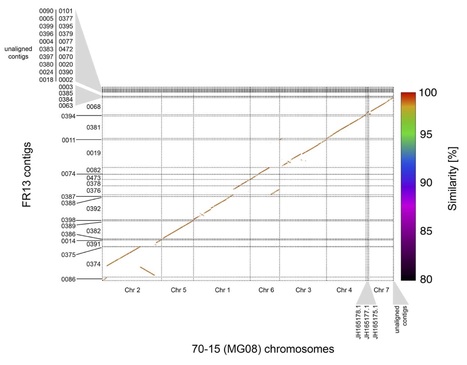
We report long-range sequencing of eight isolates of Magnaporthe oryzae(Syn. Pyricularia oryzae) from wheat, rice, foxtail millet and goosegrass using nanopore MinION. Our aim is to obtain chromosome-level genome assemblies that are freely available for public access to be scrutinized for genome rearrangements and structural variation.
Magnaporthe oryzae(Syn. Pyricularia oryzae) is a notorious fungus known for causing blast disease on rice and wheat with devastating effect on grain yield. M. oryzaehost range includes several other cereal crops such as oat, finger millet and foxtail millet as well as wild grasses. M. oryzaeis found all over the world wherever warm temperature and high humidity are common. Although lineages of M. oryzaetend to be adapted to a particular host, this pathogen can shift from one host to another when the conditions permit (Couch et al.2005). We hypothesize that structural variation contributes to adaptation to new hosts and environmental conditions following, for example, the model proposed by Chuma et al.(2011). To generate the genomics data that would enable such analyses, we sequenced eight isolates of M. oryzaefrom four different hosts using long-range nanonpore MinION with the aim of providing chromosome-level genome assemblies that are freely available for public access.
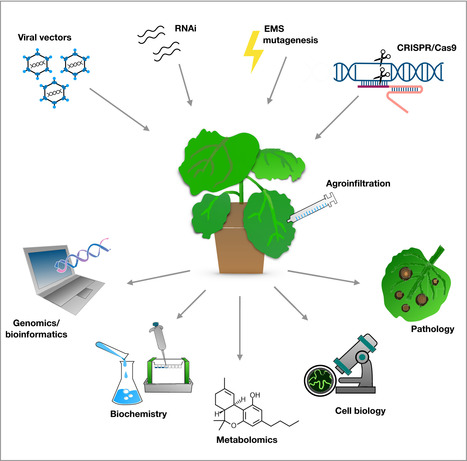
Nicotiana benthamiana, a solanaceous species native to Australia, is one of the most commonly used model plant organisms. It was initially used by the virology community because of its hyper‐susceptibility to plant viruses. Later, this feature was exploited with the development of viral vectors that can express foreign genes and the establishment of virus‐induced gene silencing (VIGS), which enabled knocking down endogenous plant genes. Benth (or Benthi), as it is colloquially known, was further popularized by the development of agroinfiltration, a method that enabled transient protein expression in plants. Agroinfiltration has been extensively used in cell biology, biochemistry, protein–protein interaction analyses and other in planta studies (Goodin et al., 2008). However, genetic analyses of N. benthamiana remained limited due to its allotetraploid nature and incomplete sequence of the 3.1 Gb genome. In this issue of New Phytologist, Schultink et al. (pp. 1001–1009) used a forward genetic screen in N. benthamiana to determine that NbZAR1, an orthologue of the Arabidopsis thaliana NLR (nucleotide‐binding domain and leucine‐rich repeat domain‐containing) ZAR1, is responsible for the perception of XopJ4 from the tomato bacterial pathogen Xanthomonas perforans. Although forward genetic screens using gene silencing have been performed in N. benthamiana, Schultink et al. are among the first to use a chemical mutagenesis‐based screen to dissect plant biological processes. Together with CRISPR genome editing and improved genomics resources, this study ushers in a new era of forward and reverse genetic analyses for this much‐cherished model plant system (Fig. 1).
Rapid (co‐)evolution at multiple timescales is a hallmark of plant–microbe interactions. The mechanistic basis for the rapid evolution largely rests on the features of the genomes of the interacting partners involved. Here, we review recent insights in genomic characteristics and mechanisms that enable rapid evolution of both plants and phytopathogens. These comprise fresh insights in allelic series of matching pairs of resistance and avirulence genes, the generation of novel pathogen effectors, the recently recognized small RNA warfare, and genomic aspects of secondary metabolite biosynthesis. In addition, we discuss the putative contributions of permissive host environments, transcriptional plasticity and the role of ploidy on the interactions. We conclude that the means underlying the rapid evolution of plant–microbe interactions are multifaceted and depend on the particular nature of each interaction.
Unconventional integrated domains in plant intracellular immune receptors of the nucleotide-binding leucine-rich repeat (NLRs) type can directly bind translocated effector proteins from pathogens and thereby initiate an immune response. The rice (Oryza sativa) immune receptor pairs Pik-1/Pik-2 and RGA5/RGA4 both use integrated heavy metal–associated (HMA) domains to bind the effectors AVR-Pik and AVR-Pia, respectively, from the rice blast fungal pathogen Magnaporthe oryzae. These effectors both belong to the MAX effector family and share a core structural fold, despite being divergent in sequence. How integrated domains in NLRs maintain specificity of effector recognition, even of structurally similar effectors, has implications for understanding plant immune receptor evolution and function. Here, using plant cell death and pathogenicity assays and protein–protein interaction analyses, we show that the rice NLR pair Pikp-1/Pikp-2 triggers an immune response leading to partial disease resistance towards the “mis-matched” effector AVR-Pia in planta, and that the Pikp-HMA domain binds AVR-Pia in vitro. We observed that the HMA domain from another Pik-1 allele, Pikm, cannot bind AVR-Pia, and does not trigger a plant response. The crystal structure of Pikp-HMA bound to AVR-Pia at 1.9 Å resolution revealed a binding interface different from those formed with AVR-Pik effectors, suggesting plasticity in integrated domain–effector interactions. The results of our work indicate that a single NLR immune receptor can bait multiple pathogen effectors via an integrated domain, insights that may enable engineering plant immune receptors with extended disease resistance profiles.
Plant NLR receptors detect pathogen effectors and initiate an immune response. Since their discovery, NLRs have been the focus of protein engineering to improve disease resistance. However, this has proven challenging, in part due to their narrow response specificity. Previously, we revealed the structural basis of pathogen recognition by the integrated HMA of the rice NLR Pikp (Maqbool, Saitoh et al. 2015). Here, we used structure-guided engineering to expand the response profile of Pikp to variants of the rice blast pathogen effector AVR-Pik. A mutation located within an effector binding interface of the integrated Pikp-HMA domain increased the binding affinity for AVR-Pik variants in vitro and in vivo. This translates to an expanded cell death response to AVR-Pik variants previously unrecognized by Pikp in planta. Structures of the engineered Pikp-HMA in complex with AVR-Pik variants revealed the mechanism of expanded recognition. These results provide a proof-of-concept that protein engineering can improve the utility of plant NLR receptors where direct interaction between effectors and NLRs is established, particularly via integrated domains.
The molecular codes underpinning the functions of plant NLR immune receptors are poorly understood. We used in vitro Mu transposition to generate a random truncation library and identify the minimal functional region of NLRs. We applied this method to NRC4, a helper NLR that functions with multiple sensor NLRs within a Solanaceae receptor network. This revealed that the NRC4 N-terminal 29 amino acids are sufficient to induce hypersensitive cell death. This region is defined by the consensus MADAxVSFxVxKLxxLLxxEx (MADA motif) that is conserved at the N-termini of NRC family proteins and ~20% of coiled-coil (CC)-type plant NLRs. The MADA motif matches the N-terminal α1 helix of Arabidopsis NLR protein ZAR1, which undergoes a conformational switch during resistosome activation. Immunoassays revealed that the MADA motif is functionally conserved across NLRs from distantly related plant species. NRC-dependent sensor NLRs lack MADA sequences indicating that this motif has degenerated in sensor NLRs over evolutionary time.
Plants are amazing organisms. They make up around 80% of all biomass on Earth, play important roles in almost all ecosystems, and support humans and other animals by providing shelter, oxygen, and food. Despite this, many people have a tendency to overlook plants, a phenomenon known as “plant blindness.” Here, we explore the reasons behind plant blindness, discuss why some people are relatively unaffected by it, and promote education around plant science to overcome this phenomenon and raise awareness of the importance of plants in the wider community.
In this Perspective article, the authors share their personal experience with the appearance in Bangladesh of a destructive new fungal disease called wheat blast and stress the importance of open science platforms and crowdsourced community responses in tackling emerging plant diseases.
Plant NLR receptors detect pathogen effectors and initiate an immune response. Since their discovery, NLRs have been the focus of protein engineering to improve disease resistance. However, this has proven challenging, in part due to their narrow response specificity. Here, we used structure-guided engineering to expand the response profile of the rice NLR Pikp to variants of the rice blast pathogen effector AVR-Pik. A mutation located within an effector binding interface of the integrated Pikp-HMA domain increased the binding affinity for AVR-Pik variants in vitro and in vivo. This translates to an expanded cell death response to AVR-Pik variants previously unrecognized by Pikp in planta. Structures of the engineered Pikp-HMA in complex with AVR-Pik variants revealed the mechanism of expanded recognition. These results provide a proof-of-concept that protein engineering can improve the utility of plant NLR receptors where direct interaction between effectors and NLRs is established, particularly via integrated domains.
Pathogen perception triggers a monomeric NLR plant immune receptor to form a pentameric wheel-like complex termed a resistosome, with the N-terminal ahelices forming a funnel-shaped structure that may perturb plasma membrane integrity to cause hypersensitive cell death.
Nucleotide-binding leucine-rich repeat (NLR) proteins are intracellular receptors that detect pathogen molecules and activate a robust immune response that includes the hypersensitive response (HR) cell death in plants. Although plant NLRs are known to oilgomerize through their N-terminal domains, such as the coiled coil (CC) domain, the molecular mechanisms that underpin plant NLR activation and the subsequent execution of HR cell death have remained largely unknown. In two recent paradigm-shifting Science papers, Wang et al. have advanced our understanding of both the structural and biochemical bases of NLR activation in plants, creating a new conceptual framework. They reconstituted both the inactive and active complexes of the CC-NLR protein HOPZ-ACTIVATED RESISTANCE1 (ZAR1) with its partner receptor-like cytoplasmic kinases (RLCKs) and used cryo-electron microscopy to show that activated ZAR1 forms a resistosome—a wheel-like pentamer that can switch conformation to expose a funnel-shaped structure formed by the very N-terminal ahelices (a1) of the CC domains. They propose a provocative model in which the five exposeda1 helices of the ZAR1 resistosome form a funnel-like structurethat triggers HR cell death by translocating into the plasma membrane and perturbing membrane integrity similar to pore-forming toxins.
First reported in South America, wheat blast, caused by the fungus Magnaporthe oryzae(Syn. Pyricularia oryzae), has recently spread to Bangladesh and is threatening neighboring South Asian countries. To date, only a few resistance genes have been identified to function against wheat blast. Whether these genes are effective against the Bangaldeshi lineage of the wheat blast fungus is unknown. Here, we found that a hexaploid common wheat line S-615 carrying the gene Rmg8is resistant to M. oryzaeBangladeshi isolate BTJP4-1 but susceptible to Brazilian isolate N06047. These findings are consistent with the observation that AvrRmg8, which encodes the avirulence effector protein recognized by Rmg8, is present in Bangladeshi isolates of the wheat blast fungus. These results indicate that Rmg8could contribute to breeding blast resistant wheat varieties adapted to South Asian conditions.
NLRs are modular plant and animal proteins that are intracellular sensors of pathogen-associated molecules that trigger a potent broad-spectrum immune reaction known as the hypersensitive response. An emerging paradigm is that plant NLRs form immune signalling networks with varying degrees of complexity. NLRs may have evolved from multifunctional singleton receptors, which combine pathogen detection (sensor activity) and immune signalling (helper or executor activity) into a single protein, to functionally specialized interconnected receptor pairs and networks. In this article, we highlight some of the recent advances in plant NLR biology by discussing models of NLR evolution, NLR complex formation, and how NLR (mis)regulation modulates immunity and autoimmunity. Multidisciplinary approaches are required to dissect the evolution, assembly and regulation of the immune receptor circuitry of plants.
To get content containing either thought or leadership enter:
To get content containing both thought and leadership enter:
To get content containing the expression thought leadership enter:
You can enter several keywords and you can refine them whenever you want. Our suggestion engine uses more signals but entering a few keywords here will rapidly give you great content to curate.


 Your new post is loading...