 Your new post is loading...

|
Scooped by
Jeff Domansky
March 15, 2016 3:35 AM
|
Back in 2011, food research consulting firm Technomic released a report claiming nearly a quarter of all vodka consumed was flavored. Manufacturers took notice, and over the ensuing half-decade, liquor store shelves exploded. What was once considered a comparatively benign liquor now encompassed a diversity of flavors ranging from fruit-based to dessert-infused to abominations such as fresh-cut grass, tobacco, and sriracha. Pinnacle Vodka now boasts more than 40 “playful” varieties, up from 30 in 2013. My own local store carries five different types of coconut vodka alone. As one would expect, this trend spilled over into other categories of booze. Though lacking the insipidness of vodka, liquor producers found creative ways to appeal to the flavor-seeking niche. Jack Daniel’s introduced honey and cinnamon whiskies, Hoxton gave us iris-imbued gin, and just recently, tequila manufacturers debuted a host of flavored varieties....
|
|
Scooped by
Jeff Domansky
March 14, 2016 6:23 PM
|
Figures released by the publication show that its social media following has grown by 44% over the last year to a total of 35.6 million. The Economist claimed this is more than any other major media brand except for The New York Times.
The Economist’s Twitter followers increased 64% to 15.7 million year-on-year between July and December 2015, while its Facebook likes grew 25% to 7.6 million and its LinkedIn group members increased by 222% to 1.4 million over the same period.
In 2015 the brand saw a 13% year-on-year rise in gross profit from its circulation business, which in part was due to culling discounted copies and attracting more subscribers who paid a premium for a bundle of print and digital editions. However, the brand’s social channels have also been a “critical component”, according to Michael Brunt, chief marketing officer and managing director of circulation at The Economist....
|
|
Scooped by
Jeff Domansky
March 14, 2016 11:10 AM
|
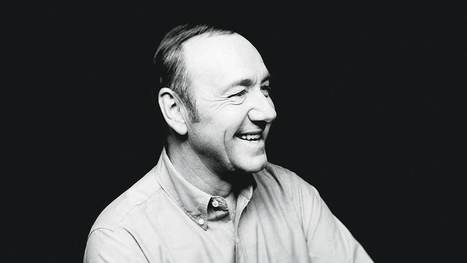
I had focused on building my career for about 10 or 12 years, and it had gone better than I could have hoped. I didn’t want to spend another 10 years pursuing the same dream. I had done what I set out to do, and I wanted to be challenged on a different level. Then, lo and behold, the Old Vic fell into my lap. The idea of returning to the theater and running a company was so engaging and exciting that I never saw it as walking away from something; I saw it as walking toward something, even though at the time a lot of people thought I was fucking out of my mind. What’s been really satisfying is that maybe I don’t look so crazy anymore. I know in my heart that if I hadn’t gone to London, hadn’t done a play or two every year, hadn’t worked with Trevor Nunn, Matthew Warchus, and Howard Davies, I would never have been ready for a role like Frank Underwood inHouse of Cards. The decade at the Old Vic made me a better actor....
|
|
Scooped by
Jeff Domansky
March 14, 2016 11:27 AM
|
Each year, HBR asks 10 stars in fields outside business — whether it’s politics, sports, the arts, or competitive chess —to offer wisdom on topics of interest to our readers. Here are the highlights from the class of 2015:
|
|
Scooped by
Jeff Domansky
March 14, 2016 10:42 AM
|
Robert J. Gordon, an economist at Northwestern University, has recently published an important new book, The Rise and Fall of American Growth, which argues that the U.S. has entered a new age of stagnation in which our hopes for an ever more prosperous future will largely evaporate. While Gordon’s argument is often characterized as being the opposite of the one I have made in my two books about the impact of advancing automation technology on the job market (most recently, Rise of the Robots), there are many areas in which I think we would agree. Gordon’s main point is that we no longer have the kind of robust, broad-based innovation that powered economic growth and rising living standards between, roughly, 1870 and 1970. Electricity, cars, planes, indoor plumbing, and all the rest completely changed the quality of our lives during this period, and we haven’t seen anything comparable in the decades since. This is certainly true. However, I think it’s clear that innovation since then has continued (and even accelerated) but has focused largely on information and communication technology. It has not had the saeconomics. The impact on median incomes and living standards, and I think one important reason why is that information technology is increasingly substituting for cognitive human labor....
|
|
Scooped by
Jeff Domansky
March 14, 2016 4:34 PM
|
Business Wire and Edelman Financial Communications & Capital Markets today announce the results of a new study supporting the use of visual storytelling in earnings reporting.
In total, 300 retail investors, more than 20 Wall Street professionals and select financial media professionals were surveyed about how earnings data is consumed, comparing traditional quantitative earnings releases with releases featuring visual, creative assets.
The conclusion was a clear consensus that using visual storytelling as a supplementary tool aids in the ultimate goals of investor relations professionals....
Google currently indexes close to 50 billion pages in its algorithm and every minute that goes by, nearly 70,000 blog posts are created and added to the intern…
Via Stefano Principato
You don't have to install software just to fill in or edit a PDF. We have compiled online solutions you can turn to for all your PDF editing needs.
Via Ana Cristina Pratas
|
|
Scooped by
Jeff Domansky
March 13, 2016 12:52 PM
|
If you are struggling to build links, if you don’t know right from wrong, this post will serve as your guide moving forward.
So, what’s next? Will you build links like the pros, eventually pushing your rankings to the top? With the following 13 SEO tools, you will get the help you need to build links, boost your rankings, and reap the rewards.
Here are the tools!
|
|
Scooped by
Jeff Domansky
March 13, 2016 11:22 AM
|
Blatt is asserting that great collaborations do not originate from just throwing equally talented individuals on a project, but rather the coming together of both talent and complementary personalities. Done right, the collective will stands to achieve more than any one individual.
Yet, when we think about those that have accomplished a great deal, be it in film, music, art, or advertising, how often do those thoughts drift to the individual rather than the group? In the U.S. especially, we’ve come to cherish rugged individualism -- the auteur director, the leader singer who sheds the boy band and becomes a best-selling solo artist, the renegade creative director (i.e., Don Draper). Teamwork doesn’t strike the same cultural cord as blazing one’s own trail, and even when we do celebrate collaborative accomplishments, we categorize the contributors as “superstars” or “role players.”
And that’s wrong. It’s time we celebrate the team, which can accomplish so much more. Below is our attempt to shed light on the best creative collaborations of all time....
|
|
Rescooped by
Jeff Domansky
from Digital Brand Marketing
March 12, 2016 2:07 AM
|
From a small business perspective, case study #2 is not feasible. Overall, though, this post features some very good examples of what you can achieve if you take the time to study the Reddit user base.
The social media platform is notorioous for being anti-self-promotion. So anyone who is able to get traction as an entrepreneur deserves some kudos.
Via Os Ishmael
|
|
Scooped by
Jeff Domansky
March 12, 2016 1:44 AM
|
There are some great apps for creating images on Twitter.In fact, there are so many that it can be difficult to know which one you should choose. That’s why I put together this list of my five favorite apps for creating images on the go!...
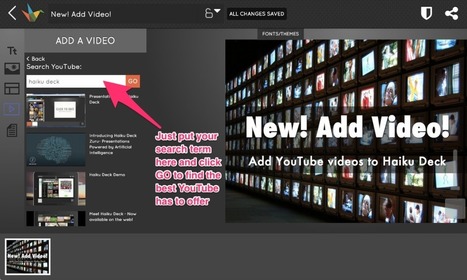
Haiku Deck lets you search for and embed YouTube video, making it faster and easier than ever before to create dynamic and creative multimedia presentations
Via Baiba Svenca
|
|
|
Scooped by
Jeff Domansky
March 15, 2016 3:01 AM
|
What’s their secret? How’d they get so many leads and how can I do things exactly the same way? Well, thank you, Internet! Turns out the majority of these secrets are sitting out there in blog posts and email newsletters and everywhere else that these generous experts in lead collecting tend to share their best stuff. I’ve collected some of the best ideas I’ve found (and a few I’ve had the chance to try, too, with great success!). Here’s a rundown of the best ways to use Facebook, Twitter, and social media to get more leads....
|
|
Scooped by
Jeff Domansky
March 14, 2016 2:55 PM
|
You want to be writing the right content, right?
I mean, if you're not getting anything out of your blog, why are you (or your content creators) spending hours researching, writing and formatting?
This article will break down the 10 most important pieces of content and how they can be used in combination to attract readers, generate leads, nurture those leads into signups and those signups into upgrades....
|
|
Scooped by
Jeff Domansky
March 14, 2016 2:22 PM
|
Wikipedia Foundation’s commercial spinoff Wikia is getting into the news reporting business, Founder Jimmy Wales said during a keynote conversation at SXSW Interactive here this morning.
Wales said ad-supported Wikia, which is now the world’s “16th most popular website,” has recruited 700 volunteers to report on its Fandom hub, which covers games, movies and TV content and experiences.
“Instead of just being an encyclopedia, we’re becoming a news source,” Wales said of Wikia’s new focus vs. Wikipedia’s encyclopedic approach to publishing....
|
|
Scooped by
Jeff Domansky
March 14, 2016 11:07 AM
|
Most retail outlets — whether conventional brick-and-mortar shops, digitally enhanced stores like Macy’s in the U.S. or Burberry in the UK, or online stores — assume a traditional three-stage consumption model. The customer experiences a need, shops to satisfy the need, and then consumes or uses the product purchased (I need shoes, I buy shoes, I wear them). TThe vocabulary of retailing reflects this model, assuming in particular that shopping is the central component of this model. Marketers will talk about shopping trips, shopping missions, shopping baskets, shopping lists, and destination trips. What’s more, current practice for the most part still rests on the idea that many decisions on which particular product to buy are made in the store — whether physical or online. Hence, brands engage in an arms race of persuasion and hard-sell tactics (prices, promos, presence) at the point-of-sale order to sway the customer when she is ready to transact. But winning in retailing today is less and less about control of the shopping experience because there is no longer a clearly defined shopping stage. The model is changing as new technologies allow people to bring the purchase of the product that satisfies their need closer to their first perception of it. And this makes the perception of the need — rather than the shop — the stage that marketers need to control. This paradigm shift — and it really is that — is apparent in three ways....
|
|
Scooped by
Jeff Domansky
March 14, 2016 4:16 AM
|
For many, social media is simply a place to post links to content they've created in hopes that thousands will see it, click through, and share with their followers. So they have profiles on every network, and every network looks exactly the same; line after line of self-promotion. This is not going to bring results. Social marketing is a lot of work, and it takes time listening and responding. It's social, and anything social takes an investment of effort and skill. Check out these 41 resources that will help you develop the skills needed to be effective on social media. You may want to bookmark this post so you can easily refer to it again later....
Content marketing content marketing 101 for small business. A business owners guide to content marketing As a business owner, I’m sure you’re bamboozled with the marketing babble that get’s thrown around. You remember the good ol’ days of paying for a…
Via massimo facchinetti
|
|
Rescooped by
Jeff Domansky
from MarketingHits
March 14, 2016 3:49 AM
|
Nice 'n practical social marketing tips.Social media marketing has taken the entire world in its hand. It’s an important part of everyone’s life today. However, businesses have identified its significance for building their strong reputation among people.
Yet, not everyone masters the art of effectively utilizing social channels.
Today, you can find a number of social media experts, providing tips and guidance to businesses on maintaining their social presence. It becomes difficult to opt among the different strategies, as which one is more effective and will work well for your business.
According to a survey on statista, it is estimated that 2016 will mark approximately 2.13 billion social media users, globally. Hence, which social media marketing tactics should be opted to reach a large number of audiences? Read on to know about the relevant answers.
Via Brian Yanish - MarketingHits.com
|
|
Scooped by
Jeff Domansky
March 14, 2016 3:27 AM
|
Are you satisfied with the amount of revenues your business is earning? What are the best ways to continue increasing revenue in digital marketing? Assuming your business already has a website, you should optimize it properly to attract as much traffic through it as possible. You can always tweak your website a bit and go for on-page SEO to boost your traffic. Besides, there are also ways to go for off-page SEO, which can surely have an equal amount of positive impact on the website traffic as well as on the revenues of your business. Here’s a quick look at some of the most popular as well as tried and tested ways of off-page SEO, which are sure to deliver great results for your business. - Build social media communities - Focus on Google’s Local SEO - Blog to get more traffic - Make relevant comments on blogs - Concentrate on directory submission and link buiding- - Share videos and images - Share press releases...
|
|
Scooped by
Jeff Domansky
March 13, 2016 11:26 AM
|
On his many failed experiments, Thomas Edison once said, "I have learned fifty thousand ways it cannot be done and therefore I am fifty thousand times nearer the final successful experiment." Elsewhere, we have dug into the data on startups that died (as well as those acquihired) and found they usually die 20 months after raising financing and after having raised about $1.3 million. So we thought it would be useful to see how startup founders and investors describe their failures. While not exactly “50,000 ways it cannot be done,” below is a compilation of startup post-mortems that describe the factors that drove a startup’s demise. Most of the failures have been told by the company’s founders, but in a few cases, we did find a couple from competitors, early employees, or investors including Roger Ehrenberg (now of IA Ventures) and Bruce Booth (Atlas Venture). They are in no particular order, and there is something to learn from each and every one of them....
|
|
Scooped by
Jeff Domansky
March 12, 2016 2:19 AM
|
As brands pivot to becoming publishers, they need to master creating valuable content and measuring their impact.
The brand newsroom is becoming more common as companies realize the value of content. 76% of brands will rely on content marketing in 2016, in order to grow and engage their audience, and build trust and credibility.
But how to keep from just spewing out drivel that no one wants to engage with? The answer is to act like a publisher.
Last time, we went over the first three vital steps in this process. Finding our core themes, testing those themes and building our Universe, and, creating an actual physical space for our content magic to happen....
|
|
Rescooped by
Jeff Domansky
from Content curation trends
March 12, 2016 1:51 AM
|
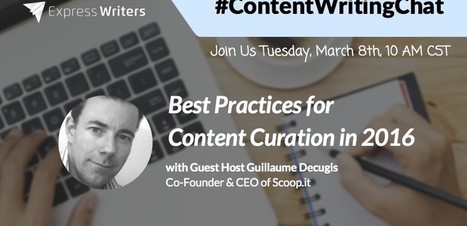
Did you miss this week's #ContentWritingChat? Check out our recap featuring guest host, Guillaume Decugis, for tips on content curation in 2016!
Via Guillaume Decugis
|
|
Scooped by
Jeff Domansky
March 12, 2016 1:36 AM
|
But while Snapchat was once solely the province of teens and early adopters, typically employed as a fun messaging tool, it has also uncovered a genuine opportunity for enterprise use in more recent years. Savvy companies are beginning to discover how messaging apps can be used as powerful marketing tools, and Snapchat has risen to the top of the heap, thanks to its unique features and sprawling reach across an audience of Millennials. Just like many other successful brands, you can put the distinctive features and benefits of Snapchat to use for your organization, allowing you to connect with a new segment of customers without having to spend an exorbitant amount on a new marketing campaign....
|


















Counting down the tastiest designed liquor bottles in the world.