The kingdom Fungi is one of the most diverse groups of organisms on Earth, and they are integral ecosystem agents that govern soil carbon cycling, plant nutrition, and pathology. Fungi are widely distributed in all terrestrial ecosystems, but the distribution of species, phyla, and functional groups has been poorly documented. On the basis of 365 global soil samples from natural ecosystems, we determined the main drivers and biogeographic patterns of fungal diversity and community composition.
Interactions between soil microbes, the physical soil environment and vegetation will determine the magnitude of the terrestrial carbon sink under climate change.
Et voilà, l'émission annoncée la semaine dernière, l'interview du Pr. Selosse sur les chimères, est en ligne sur Podcast Science: Pour vous aider à suivre, voici tout d'abord les
In arbuscular mycorrhizal (AM) plants, the plant delivers photoassimilates to the arbuscular mycorrhizal fungus (AMF), whereas the mycosymbiont contributes, in addition to other beneficial effects, to phosphate (PO43−) uptake from the soil. Thereby, the additional fungal carbon (C) sink strength in roots and improved plant PO43− nutrition may influence aboveground traits. We investigated how the foliar metabolome of Plantago major is affected along with the development of root symbiosis, whether the photosynthetic performance is affected by AM, and whether these effects are mediated by improved PO43− nutrition. Therefore, we studied PO43−-limited and PO43−-supplemented controls in comparison with mycorrhizal plants at 20, 30, and 62 days postinoculation with the AMF Rhizophagus irregularis. Foliar metabolome modifications were determined by the developmental stage of symbiosis, with changes becoming more pronounced over time. In a well-established stage of mature mutualism, about 60% of the metabolic changes and an increase in foliar CO2 assimilation were unrelated to the significantly increased foliar phosphorus (P) content. We propose a framework relating the time-dependent metabolic changes to the shifts in C costs and P benefits for the plant. Besides P-mediated effects, the strong fungal C sink activity may drive the changes in the leaf traits.
Recently, emission of volatile organic compounds (VOCs) has emerged as a mode of communication between bacteria and plants. Although some bacterial VOCs that promote plant growth have been identified, their underlying mechanism of action is unknown. Here we demonstrate that indole, which was identified using a screen for Arabidopsis growth promotion by VOCs from soil-borne bacteria, is a potent plant-growth modulator. Its prominent role in increasing the plant secondary root network is mediated by interfering with the auxin-signalling machinery. Using auxin reporter lines and classic auxin physiological and transport assays we show that the indole signal invades the plant body, reaches zones of auxin activity and acts in a polar auxin transport-dependent bimodal mechanism to trigger differential cellular auxin responses. Our results suggest that indole, beyond its importance as a bacterial signal molecule, can serve as a remote messenger to manipulate plant growth and development.
The influence of long-term chemical fertilization on soil microbial communities has been one of the frontier topics of agricultural and environmental sciences and is critical for linking soil microbial flora with soil functions. In this study, 16S rRNA gene pyrosequencing and a functional gene array, GeoChip 4.0, were used to investigate the shifts in microbial composition and functional gene structure in paddy soils with different fertilization treatments over a 22-year period. These included a control without fertilizers, chemical nitrogen fertilizer (N), N and phosphate (NP); N and potassium (NK), and N, P and K (NPK). Based on 16S rRNA gene data, both species evenness and key genera were affected by P fertilization. Functional gene array-based analysis revealed that long-term fertilization significantly changed the overall microbial functional structures. Chemical fertilization significantly increased the diversity and abundance of most genes involved in C, N, P, and S cycling, especially for the treatments NK and NPK. Significant correlations were found among functional gene structure and abundance, related soil enzymatic activities and rice yield, suggesting that a fertilizer-induced shift in the microbial community may accelerate the nutrient turnover in soil, which in turn influenced rice growth. The effect of N fertilization on soil microbial functional genes was mitigated by the addition of P fertilizer in this P-limited paddy soil, suggesting that balanced chemical fertilization is beneficial to the soil microbial community and its functions.
Aims We evaluated whether reactive oxygen species (ROS) production and the plant antioxidant system are involved in the symbiotic interaction between bradyrhizobia and legumes infected by crack entry, without intracellular infection threads (IT) formation, such as Arachis hypogaea L. (peanut). The role of bradyrhizobial Nod factors (NF) in modulating the plants’ oxidative burst was also analysed.
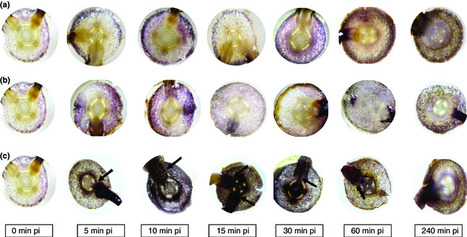
Methods and Results Histochemical and quantitative procedures were used to detect ROS levels in inoculated and in NF-treated peanut roots. Increase in root H2O2 production was determined at 10 min postinoculation with Bradyrhizobium sp. SEMIA 6144 or after NF addition. ROS production was modulated by NF. From 15 to 30 min postinoculation, the compatibility of Bradyrhizobium sp.–peanut interaction depends mostly on the H2O2 detoxification via catalase.
Conclusions We demonstrated for the first time that the early events of the symbiotic interaction in legumes invaded by crack entry trigger an increase in ROS production (represented exclusively by a higher H2O2 content) in which NADPH-oxidase seems not to be involved. NF modulate this response by enhancing the plant antioxidant machinery, contributing to the creation of adequate conditions for symbiosis development.
Significance and Impact of the Study Our data provide new insights into the mechanism involves in the symbiotic interaction that establish legumes infected by crack entry and suggest that ROS response shows differences compared with legumes invaded by IT formation.
Partner selection in the mycorrhizal symbiosis is thought to be a key factor stabilising the mutualism. Both plant hosts and mycorrhizal fungi have been shown to preferentially allocate resources to higher quality partners. This can help maintain underground cooperation, although it is likely that different plant species vary in the spatial precision with which they can select partners. Partner selection in the mycorrhizal symbiosis is presumably context-dependent and can be mediated by factors like (relative) resource abundance and resource fluctuations, competition among mycorrhizas, arrival order and cultivation history. Such factors complicate our current understanding of the importance of partner selection and its effectiveness in stimulating mutualistic cooperation.
Interactions between trees and microorganisms are tremendously complex and the multispecies networks resulting from these associations have consequences for plant growth and productivity. However, a more holistic view is needed to better understand trees as ecosystems and superorganisms, where many interacting species contribute to the overall stability of the system. While much progress has been made on microbial communities associated with individual tree niches and the molecular interactions between model symbiotic partners, there is still a lack of knowledge of the multi-component interactions necessary for holistic ecosystem-level understanding. We review recent studies in Populus to emphasize the importance of such holistic efforts across the leaf, stem and rooting zones, and discuss prospects for future research in these important ecosystems.
Time lapse of Medicago truncatula (alfalfa) seeds germinating. Two day time lapse, first day not shown. The music is a piano and violin cover of Taylor Swift...
Root hairs are single cells specialized in the absorption of water and nutrients. Growing root hairs requires intensive cell wall changes to accommodate cell expansion at the apical end by a process known as tip growth. The cell wall of plants is a very rigid structure comprised largely of polysaccharides and hydroxyproline-rich O-glycoproteins. The importance of root hairs stems from their capacity to expand the surface of interaction between the root and the environment, in search for the necessary nutrients and water to allow plant growth. Therefore, it becomes crucial to deepen our knowledge of them, particularly in the light of the applicability in agriculture by allowing the expansion of croplands. Root hair growth is an extremely fast process, reaching growth rates of up to 1 μm/min and it also is a dynamic process; there can be situations in which the final length might not be affected but the growth rate is. Consequently, in this chapter we focus on a method for studying growth dynamics and rates during a time course. This method is versatile allowing for it to be used in other plant organs such as lateral root, hypocotyl, etc., and also in various conditions.
Arbuscular mycorrhizal fungi exchange soil nutrients for carbon from plant hosts. Empirical works suggests that hosts may selectively provide resources to different fungal species, ultimately affecting fungal competition. However, fungal competition may also be mediated by colonization strategies of the fungi themselves. To test whether host quality drives fungal colonization strategies, we allowed competing fungi access to the roots of plants that varied in quality (manipulated by shading). We used quantitative PCR and microscopy to assess fungal competitive dynamics and found that shaded plants were not left as an open niche for less competitive fungi. However, while competitive fungi outcompeted less competitive fungi, the intensity of this effect depended on the quality of the host, with the strongest differences found on low-quality (shaded) hosts. Our results suggest that environmental conditions for the host aboveground play a role in the competitive interactions among fungi belowground.
Un court documentaire sur les enjeux de la mycorhization. Un film de Eric Paul pour la Mission Culture Scientifique de L’Université de Bourgogne. Sous le terme un peu barbare de mycorhize se cache une réalité très concrète. Comment les racines s'associent-elles à certains champignons dans une symbiose utile à la plante ? Racines bien développées, absorption facilitée de l'eau et des éléments nutritifs, meilleure croissance... Les mycorhizes : pourquoi, comment ?
Legumes produce root nodules as symbiotic organs where nitrogen-fixing bacteria are accommodated. Lotus japonicus NODULE INCEPTION (NIN) is an essential factor that specifically and positively regulates nodulation processes, and has been evolved from a member of NIN-like proteins, of which Arabidopsis homologs target nitrate-responsive elements (NREs), and activate gene expression in response to nitrate. It is therefore assumed that the NIN-mediated transcriptional network overlaps with those regulated by NLPs, because of their common DNA-binding RWP-RK domains. However, nodulation is inhibited in the presence of nitrate, and involvement of NIN in nitrate-responses has remained largely unknown. Here we determined a consensus of NIN-binding nucleotide sequences (NBSs) by in vitro experiments, and revealed that the sequence pattern was very similar to those of NREs. ChIP-PCR analyses showed that NIN targeted NREs in L. japonicus nitrate-inducible gene promoters, including LjNIR1, LjNRT2.1, and LjNIR2.2. Affinities of NIN-binding to the NREs were comparable to that to NBS-yB1a, a NBS on the symbiotic LjNF-YB1 promoter, indicating that NREs are potential targets of NIN. However, rhizobial infection did not activate LjNIR1, LjNRT2.1, and LjNIR2.2. NIN ectopic expression interfered with nitrate-dependent activation of these genes. Nitrate treatment followed by NIN activation downregulated expression of symbiotic NIN-target genes. Our results showed that NIN and nitrate antagonistically regulate expression of genes that are activated by nitrate and NIN, respectively. We propose that this antagonistic relationship prevents inappropriate activation of genes in response to nitrate and rhizobial infection.
The aquatic communities found within the water filled leaves of the pitcher plant, Sarracenia purpurea, have a simple trophic structure providing an ideal system to study microscale interactions between protozoan predators and their bacterial prey. In this study, replicate communities were maintained with and without the presence of the bactivorous protozoan, Colpoda steinii, to determine the effects of grazing on microbial communities. Changes in microbial (Archaea and Bacteria) community structure were assessed using iTag sequencing of 16S rRNA genes. The microbial communities were similar with and without the protozoan predator, with>1000 species. Of these species, Archaea were negligible, with Bacteria comprising 99.99% of the microbial community. The Proteobacteria and Bacteroidetes were the most dominant phyla. The addition of a protozoan predator did not have a significant effect on microbial evenness nor richness. However, the presence of the protozoan did cause a significant shift in the relative abundances of a number of bacterial species. This suggested that bactivorous protozoan may target specific bacterial species and/or that certain bacterial species have innate mechanisms by which they evade predators. These findings help to elucidate the effect that trophic structure perturbations have on predator prey interactions in microbial systems.
Symbiosis Receptor-like Kinase (SYMRK) is indispensable for the development of phosphate-acquiring arbuscular mycorrhiza (AM) as well as nitrogen-fixing root nodule symbiosis, but the mechanisms that discriminate between the two distinct symbiotic developmental fates have been enigmatic. In this study, we show that upon ectopic expression, the receptor-like kinase genes Nod Factor Receptor 1 (NFR1), NFR5, and SYMRK initiate spontaneous nodule organogenesis and nodulation-related gene expression in the absence of rhizobia. Furthermore, overexpressed NFR1 or NFR5 associated with endogenous SYMRK in roots of the legume Lotus japonicus. Epistasis tests revealed that the dominant active SYMRK allele initiates signalling independently of either the NFR1 or NFR5 gene and upstream of a set of genes required for the generation or decoding of calcium-spiking in both symbioses. Only SYMRK but not NFR overexpression triggered the expression of AM-related genes, indicating that the receptors play a key role in the decision between AM- or root nodule symbiosis-development. - See more at: http://elifesciences.org/content/3/e03891#sthash.7GMN2VZ5.dpuf
Fertilizer use in modern agriculture is highly inefficient; much of the applied fertilizer is released into the environment, causing environmental degradation. One way in which fertilizer use can be reduced without damaging plant nutrition is to enhance crop uptake of nutrients through the use of biostimulants. A broad definition of plant biostimulants, including substances sometimes categorized as biofertilizers or biopesticides, is used throughout this review: “Plant biostimulants are substances or materials, with the exception of nutrients and pesticides, which, when applied to plants, seeds, or growing substrates in specific formulations, have the capacity to modify physiological processes in plants in a way that provides potential benefits to growth, development, or stress response.” This definition includes a variety of substances, four of which will be reviewed in this article: seaweed extract, humic substances, amino acids, and plant-growth-promoting bacteria. We will concentrate on the positive effects of biostimulant application on plant nutrient uptake, and the underlying mechanisms, which include positive changes in soil structure or nutrient solubility, root morphology, plant physiology, and symbiotic relationships, will be discussed. Recommendations for future research directions include finding the most promising substances, isolating the active ingredients and clearly demonstrating the mechanisms by which they affect nutrient uptake. The beneficial effects and mechanisms must be consistently demonstrated in greenhouse and field experiments.
The aim of this study was to assess the effects of agronomic practices on the arbuscular mycorrhizal (AM) fungal community in soils from the Pampa Ondulada region (Argentina), and to compare conclusions reached when using pyrosequencing or a morphological approach. The AM fungal diversity of 3 agricultural exploitations located in the Pampa Ondulada region (Argentina) was assessed by using 454 amplicon pyrosequencing and morphological (based on spore traits) approaches. Two kinds of soil managements are found in these sites: agronomic and non-agronomic. A total of 188 molecular operational taxonomic units and 29 morphological species of AM fungi were identified. No effect of soil management on AM richness was detected. AM fungal communities were more diverse and equitable in the absence of agronomic management. In contrast, the results on β-diversity varied according to the methodology used. We concluded that agronomic management of soil has a negative effect on AM fungal community biodiversity in the Pampa Ondulada region. We also conclude that both methodologies complement each other in the study of AM fungal ecology. This study greatly improved the knowledge about AM fungi in South America where the molecular diversity of AM fungi was practically unknown.
Mycorrhizal fungi can form common mycelial networks (CMNs) that interconnect plants. Here, we provide an insight into recent findings demonstrating that CMNs can be conduits for interplant signalling, influencing defence against insect herbivores and foliar necrotrophic fungi. A likely mechanism is direct transfer of signalling molecules within hyphae. However, electrical signals, which can be induced by wounding, may also enable signalling over relatively long distances, because the biophysical constraints imposed by liquid transport in hyphae and interaction with soil are relieved. We do not yet understand the ecological, evolutionary and agronomic implications of interplant signalling via CMNs. Identifying the mechanism of interplant signalling will help to address these gaps.
GmPT7 was originally identified as an arbuscular mycorrhiza-inducible gene of soybean that encodes a member of subfamily I in the PHOSPHATE TRANSPORTER 1 family. In the present study, we established conditions under which a number of dwarf soybean plants complete their life cycles in a growth chamber. Using this system, we grew transgenic soybean with a GmPT7 promoter–β-glucuronidase fusion gene and evaluated GmPT7 expression in detail. GmPT7 was highly expressed in mature, but not in collapsed, arbuscule-containing cortical cells, suggesting its importance in the absorption of fungus-derived phosphate and/or arbuscule development. GmPT7 was also expressed in the columella cells of root caps and in the lateral root primordia of non-mycorrhizal roots. The expression of GmPT7 occurred only in the late stage of phosphorus translocation from leaves to seeds, after water evaporation from the leaves ceased, and later than the expression of GmUPS1-2, GmNRT1.7a and GmNRT1.7b, which are possibly involved in nitrogen export. GmPT7 expression was localized in a pair of tracheid elements at the tips of vein endings of senescent leaves. Transmission electron microscopy revealed that the tip tracheid elements in yellow leaves were still viable and had intact plasma membranes. Thus, we think that GmPT7 on the plasma membranes transports phosphate from the apoplast into the tip elements. GmPT7 knockdown resulted in no significant effects, the function of GmPT7 remaining to be clarified. We propose a working model in which phosphate incorporated in vein endings moves to seeds via xylem to phloem transfer.
Fungal communities in soil have significant influences on terrestrial ecosystem dynamics, yet our understanding of the drivers of fungal diversity and community structure in soil is limited. Fungal communities associated with the rhizosphere of four native perennial grassland plant species, two legumes and two grasses, grown in monoculture and polyculture in a long-term field experiment were characterized. Reference databases were developed for, and amplicon libraries sequenced from, multiple-copy rRNA and single-copy protein-coding loci. Clustering and alignment-based pipelines were utilized to evaluate differences in fungal community structure and diversity in response to plant host, plant community richness, and soil edaphics. Fungal diversity increased in the rhizosphere of plants growing in polyculture plant communities as compared to monoculture plant communities. Fungal community structure was differentiated between legumes and grasses growing in monoculture but not in polyculture. To specifically monitor fungi in the genus Fusarium in the soil, the protein-coding locus was used to increase phylogenetic resolution and enrich for this taxon. These data show that fungal community richness and structure are strongly linked with plant community dynamics and associated soil edaphic characteristics in these grassland soils.
Legumes form symbiotic relationship with root-nodule, rhizobia. The nitrogen (N2) fixed by legumes is a renewable source and of great importance to agriculture. Symbiotic nitrogen fixation (SNF) is constrained by multiple stresses and alleviating them would improve SNF contribution to agroecosystems. Genetic differences in adaptation tolerance to various stresses are known in both host plant and rhizobium. The discovery and use of promiscuous germplasm in soybean led to the release of high-yielding cultivars in Africa. High N2-fixing soybean cultivars are commercially grown in Australia and some countries in Africa and South America and those of pea in Russia. SNF is a complex trait, governed by multigenes with varying effects. Few major quantitative trait loci (QTL) and candidate genes underlying QTL are reported in grain and model legumes. Nodulating genes in model legumes are cloned and orthologs determined in grain legumes. Single nucleotide polymorphism (SNP) markers from nodulation genes are available in common bean and soybean. Genomes of chickpea, pigeonpea, and soybean; and genomes of several rhizobium species are decoded. Expression studies revealed few genes associated with SNF in model and grain legumes. Advances in host plant and rhizobium genomics are helping identify DNA markers to aid breeding of legume cultivars with high symbiotic efficiency. A paradigm shift is needed by breeding programs to simultaneously improve host plant and rhizobium to harness the strength of positive symbiotic interactions in cultivar development. Computation models based on metabolic reconstruction pathways are providing greater insights to explore genotype–phenotype relationships in SNF. Models to simulate the response of N2 fixation to a range of environmental variables and crop growth are assisting researchers to quantify SNF for efficient and sustainable agricultural production systems. Such knowledge helps identifying bottlenecks in specific legume–rhizobia systems that could be overcome by legume breeding to enhance SNF. This review discusses the recent developments to improve SNF and productivity of grain legumes.
To get content containing either thought or leadership enter:
To get content containing both thought and leadership enter:
To get content containing the expression thought leadership enter:
You can enter several keywords and you can refine them whenever you want. Our suggestion engine uses more signals but entering a few keywords here will rapidly give you great content to curate.


 Your new post is loading...