Your new post is loading...

|
Scooped by
Jean-Michel Ané
September 4, 12:22 PM
|
Arbuscular mycorrhizal (AM) symbiosis is a widespread mutualism between plant roots and Glomeromycotina fungi that enables nutrient exchange through arbuscules. Although many transcriptional regulators of AM symbiosis have been identified, the role of the INDETERMINATE DOMAIN (IDD) proteins remain unknown. We show that rice IDD7 expression is strongly induced in arbuscule-containing cells, and its loss markedly reduces fungal colonization and disrupts arbuscule development. IDD7 is required for induction of genes associated with fatty acid biosynthesis, nutrient transport, and symbiotic signaling during AM symbiosis. IDD7 interacts with the transcription factors SLENDER RICE 1 (SLR1) and PHOSPHATE STARVATION RESPONSE 2 (PHR2) through its conserved TQDFLG domain. Electrophoretic mobility shift assays show that IDD7 binds multiple promoter motifs. Together with SLR1 and PHR2, IDD7 synergistically activates the promoters of PHOSPHATE TRANSPORTER 11 (PT11) and the AM-associated transcription factors PHR2, REQUIRED FOR ARBUSCULAR MYCORRHIZATION 1 (RAM1), WRINKLED 5a (WRI5a), and CYCLOPS. Moreover, IDD7 is required for PHR2 expression in arbuscule-containing cells. Here, we show that IDD7 is a central transcriptional regulator in arbuscule-containing cells.
|
|
Scooped by
Jean-Michel Ané
September 4, 12:14 PM
|
This study reveals extensive changes in A/B chromatin compartmentalization and enhancer
promoter interactions during legume–rhizobium symbiosis through high-throughput chromosome
conformation capture. Notably, a cytokinin (CK)-responsive distal enhancer forms a
long-range chromatin loop with the promoter of NODULE INCEPTION through the CK-signaling
transcription factor type-B RESPONSE REGULATOR 3, uncovering a mechanism by which
hormonal signaling activates nodulation.
|
|
Scooped by
Jean-Michel Ané
September 1, 7:55 PM
|
Understanding the molecular mechanisms underlying plant–microbe interactions is essential for developing innovative microbe-based agrotechnologies. However, deciphering these mechanisms within the complexity of natural microbial communities remains challenging. Such challenges can be addressed by employing synthetic microbial communities (SynComs) derived from well characterized microbial culture collections. Despite their importance, plant-associated microbial collections from major agricultural crops remain scarce. To bridge this gap, we established TriMic, a taxonomically and functionally representative culture collection of wheat root–associated bacteria. Complementing this collection, we include high quality genome sequences and an overview of genes involved in plant colonization, nutrient cycling, and plant growth promotion. Furthermore, we expanded this experimental toolkit by designing a reduced complexity SynCom that enables controlled dissection of plant-microbe interactions. Together, these resources lay the groundwork for mechanistic studies of plant-microbe interactions to accelerate biostimulant development aimed at enhancing agricultural productivity and sustainability. The TriMic collection and whole genomes are publicly available at the DSMZ (https://www.dsmz.de/collection/catalogue/microorganisms/microbiota/trimic) and NCBI.
|
|
Scooped by
Jean-Michel Ané
September 1, 7:49 PM
|
This thesis explores how certain plants, such as Medicago truncatula (Medicago), form a close partnership with soil bacteria collectively called rhizobia. These rhizobia have the unique ability to convert atmospheric dinitrogen (N2) into a form that plants can use for growth. In return, the plant provides the bacteria with sugars and a protected space inside small structures on its roots known as nodules. This interaction is especially important because nitrogen is an essential nutrient for plant growth. However, plants cannot access it directly from the atmosphere, but require a reduced form, such as ammonium (NH4+), which rhizobia provide. This research focuses on how these nodules begin to form, particularly during the earliest stages. A key question is how specific root cells know when and where to change their identity and start forming a root nodule. Unsurprisingly, plant hormones play a central role in guiding this process. One of these hormones, auxin, is known to regulate plant growth. Part of this work demonstrates that auxin accumulates very early in specific root cells in the pericycle after bacterial infection, prior to the first cell divisions. From here, it is relocated towards the root cortex. This process is tightly controlled through both local production and polar transport within the root and is essential for initiating cell divisions and nodule formation. In contrast, the hormone ethylene acts as a repressor of nodulation. The detected ethylene readout clearly shifts from the inside to the outside root tissue, preventing excessive nodule initiation. Additionally, ethylene acts in positioning nodules towards the xylem of the plant. Although the role of ethylene in nodule positioning was known, our results show that the mechanism by which this occurs is more complex than was previously assumed. This demonstrates that the function of ethylene is probably more than just an inhibitor of nodulation. The examples of auxin and ethylene emphasized how important the regulation of hormones and gene expression is in time and space during nodulation. Therefore, the next step in this thesis was to generate a near cell-type specific resolution atlas of gene expression during nodule initiation and development. This was reached by developing single-cell and single-nuclei RNA sequencing (scRNA-seq and snRNA-seq) for Medicago. Using this dataset, transcription factors were identified, that showed expression in the pericycle, which was validated in planta. Although the expression of these genes correlated with nodule initiation, their direct involvement in regulating nodulation could not reproducibly be validated. This either indicates limitations of our genetic tools, more complex regulatory mechanisms, or the need for stringent candidate selection. Together, this thesis provides insights into how Medicago controls nodule formation, both in space and time. Furthermore, it contains the first, robust, single-cell atlas of the root susceptible zone during nodule initiation, and describes how to generate such high-resolution atlases, which can be applied in other, legume, species.
|
|
Scooped by
Jean-Michel Ané
August 31, 7:45 PM
|
Beneficial plant–microbe associations (BMAs) offer a valuable opportunity to reduce dependence on synthetic inputs. However, traditional breeding has rarely targeted traits that enhance beneficial interactions, and conventional agricultural practices have often degraded soil health and microbial diversity. We present a framework that combines breeding for traits that facilitate BMA with soil management practices that enrich BMA. This approach integrates advanced breeding technologies with strategies for precise production and inoculation of microbes. Strengthening these complementary plant- and microbe-centered approaches and encouraging their adoption by farmers can foster more resilient and productive agricultural systems with reduced dependence on pesticides and fertilizers.
|
|
Scooped by
Jean-Michel Ané
August 31, 7:36 PM
|
Plants preferentially absorb phosphorus (P) as orthophosphate/ inorganic Phosphate (Pi), which has low solubility and is readily fixed in soil. This generates the P limitation condition in many soils, for which plants have evolved a number of responses collectively known as the Phosphate Starvation Response (PSR). Significant advancements have been achieved in identifying PSR, and a holistic viewpoint is presented in this review to summarize responses to Pi starvation and their regulation. Plant response to Pi starvation is mediated by a plethora of players, including MYB transcription factors, strigolactone, malate, and brassinosteroids. The involvement of Arbuscular Mycorrhizal Fungi (AMF) in the process adds another dimension for enhancing PSR. Strigolactone secretion from the root increases AMF colonization and nodulation for enhancing Pi uptake. Pi uptake can be achieved directly by the plant or indirectly by the Pi transporter and AMF. Root system architecture changes according to the Pi present in the environment. Increased auxin signalling is associated with Pi starvation, playing a part in lateral root development. Overall, several unanswered questions remain in the phosphate starvation response of plants, especially from the perspective of AMF symbiosis. Research focused on enhancing PSR with symbiotic association with AMF using advanced biotechnological approaches would pave way for increasing crop productivity.
|
|
Scooped by
Jean-Michel Ané
August 31, 7:32 PM
|
Arbuscular mycorrhiza (AM) represents a key strategy for plants to overcome nutrient starvation. In legumes and rice, the development of this symbiosis requires the GRAS transcription factor DELLA, previously identified as central proteolytic target of gibberellin (GA) signaling. DELLA performs critical functions across multiple stages in AM development, including inner root cortex patterning, arbuscule initiation and degeneration, by regulating essential downstream genes driving these phenomena. Moreover, DELLA appears as a regulatory hub that integrates hormonal signals, environmental stimuli, and symbiosis formation. Here, we highlight recent advances in our understanding of DELLA-mediated regulation of AM development and provide state-of-the-art insights into how DELLA orchestrates these signaling pathways.
|
|
Scooped by
Jean-Michel Ané
August 31, 5:13 PM
|
Legumes acquire nitrogen via a symbiotic interaction with diazotrophic rhizobia bacteria. In return for getting fixed nitrogen, plants deliver high amount of photosynthate to the bacteria to support the nitrogen fixation process. Hence, biological nitrogen fixation in legume plants is a highly energy-demanding process that relies on the precise coordination of carbon allocation and metabolism between the host plant and its microbial symbiont. Although significant progress has been made in understanding carbon fluxes during nodulation, how these processes are spatially and functionally organized across different cell types and developmental stages within nodules remains poorly resolved. This limitation has hindered a comprehensive understanding of how carbon metabolism supports the establishment, maintenance, and termination of symbiosis. In this review, we explore the current understanding of carbon transport and metabolism throughout the nodulation process, from early allocation during rhizobial infection to the complex metabolic, transport, and regulatory networks in mature nitrogen-fixing and senescing nodules. We highlight key knowledge gaps, especially regarding cell-type-specific and spatial regulation of carbon metabolism. Finally, we discuss how emerging single-cell and spatial omics techniques offer powerful tools to resolve these gaps, enabling a deeper understanding of the metabolic and regulatory complexity that underpins legume–rhizobia symbiosis.
|
|
Scooped by
Jean-Michel Ané
August 31, 4:41 PM
|
Plants are found in dynamic soil ecosystems, which are highly enriched with microorganisms that have significant impacts on the health and productivity of plants. Promotion of nutrient uptake, fixation of nitrogen, and tolerance to stress by arbuscular mycorrhizal fungi (AMF) and plant growth-promoting rhizobacteria occur via complex molecular communication with plant roots. Post-transcriptional gene silencing is mediated by MicroRNAs (miRNAs)-small non-coding RNAs that control gene networks in symbiosis and stress responses. Concurrently, phytohormones (auxin, cytokinin, ethylene, jasmonates, salicylic acid, abscisic acid, strigolactones, gibberellins, and brassinosteroids) control root development, defence, and microbial recruitment. Their combined regulatory functions in the establishment of root symbiosis are yet to be fully appreciated, although the integrated regulatory functions of miRNAs and phytohormones in regulating root symbiotic assembly have increasingly been recognised. The paper is a synthesis of the existing knowledge on root-associated beneficial symbioses and a critical assessment of the new roles of plant miRNAs and phytohormonal pathways in the establishment and maintenance of nodulation and arbuscular mycorrhizal associations. We suggest that miRNAs and phytohormones are linked in a complex regulatory network in which miRNAs can regulate hormone pathways and vice versa. We have also demonstrated crucial knowledge gaps by identifying molecular crosstalk between plants and their microbiota, functional validation of miRNA-target pairs, cross-kingdom small RNA trafficking and systemic shoot–root signalling that future studies can use to harness the full potential of plant–microbe interaction for achieving sustainable agriculture.
|
|
Scooped by
Jean-Michel Ané
August 31, 3:20 PM
|
Ethylene modulates plant fitness, but its role in rhizosphere soil multifunctionality remains unclear. This study demonstrates that endogenous ethylene suppresses C- and N-cycling functions while promoting organic P mineralization in the maize rhizosphere, ultimately diminishing the overall soil multifunctionality and attenuating its phenologically driven peak at the tasseling stage. Ethylene reshaped microbial community assembly by enriching opportunistic taxa (e.g., Actinobacteria) while reducing the diversity and relative abundance of sensitive taxa. Community composition (e.g., Bacillus) and α diversity of ethylene-sensitive taxa were negatively correlated with soil multifunctionality. Inoculation with ACC deaminase-producing Bacillus pumilus and Streptomyces gardneri (opportunistic strains) significantly elevated C- and N-cycling enzyme activities and boosted maize growth. However, a direct causal link between ACC deaminase production and these effects requires further experimental validation. Collectively, these findings elucidate that ethylene drives rhizosphere biogeochemical trade-offs through the selective filtering of microbial functional guilds, providing a theoretical foundation for rhizosphere microbiome management in crop production.
|
|
Scooped by
Jean-Michel Ané
August 31, 3:13 PM
|
Nodule organogenesis is a complex developmental process which is induced post-embryonically following rhizobia infection and relies on coordinated action of a suite of transcription factors at multiple stages starting from its initiation, de novo meristem establishment and differentiation. The rewiring of nitrate-responsive NIN-LIKE PROTEIN (NLP) homolog, NODULE INCEPTION (NIN) transcription factor through genetic adaptations in the common ancestor of the nitrogen-fixing clade is crucial to the origin of nodulation trait. Moreover, nodule formation emerged through the co-option of evolutionary ancient root/lateral root developmental pathways mediated by conserved transcriptional regulators such as NF-Y, LBD16, SHR/SCR, WOX5, PLT and KNOX. Importantly, NIN has acquired functions to integrate signals from rhizobia infection and divert the existing developmental pathways towards nodule organogenesis, thereby acts as a master regulator of root nodule symbiosis. Nodule specific innovations in the existing developmental pathway genes through mechanisms like genetic adaptations in their cis-regulatory region, paralog retention, changes in spatio-temporal gene expression pattern and functional changes to the protein are crucial for imparting developmental novelty during nodule organogenesis. Here, we provide a consolidated idea on transcription factor–mediated genetic modules regulating distinct stages of nodule organogenesis with an emphasis on their nodule specific innovations. This knowledge gain is particularly important to engineer nitrogen-fixing nodules into non-nodulation crop plants which will eventually minimize the reliance on synthetic nitrogen fertilizers and thereby favors a sustainable agricultural system.
|
|
Scooped by
Jean-Michel Ané
August 25, 9:40 AM
|
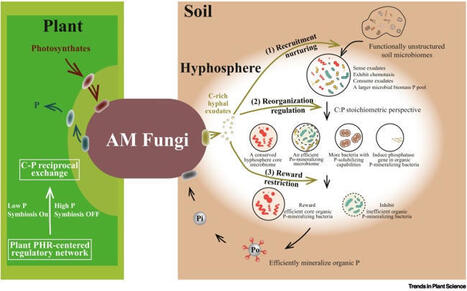
The traditional model of plant–arbuscular mycorrhizal (AM) fungal coevolution, based solely on interactions between plants and AM fungi, became obsolete with the discovery of the critical roles that belowground microbiomes play in the function of mycorrhizal symbiosis. Based on insights into hyphosphere microbiota, we expand the plant–AM fungus–bacterium continuum into a multipartite AM fungal-orchestrated holobiont (H-AMF) framework, where AM fungi integrate plant roots with soil microbiota into a cross-kingdom ecological unit. A division of labor exists among plants, AM fungi, and hyphosphere microbes in the mycocentric H-AMF perspective. We summarize mechanisms by which AM fungi sustain cooperative relationships with plants and hyphosphere microbiota and propose holobiont-scale methodologies to advance understanding of plant–fungal–microbial interactions and their ecological functions.
|
|
Scooped by
Jean-Michel Ané
July 27, 2:55 PM
|
Legume–Rhizobium symbiosis requires rhizobial entry and intracellular persistence without triggering host defense. Recent genetic and biochemical studies support an immune-gating view in which plant immunity pathways are not simply suppressed, but are dynamically regulated throughout rhizobial infection, nodule development and nodule senescence. Here, we review how LysM/LRR receptor complexes and co-receptor availability shape early discrimination of symbiotic signals and immune elicitors and how shared signaling modules (Ca2+, ROS and MAPKs) are differentially regulated to permit infection and nodule organogenesis. We then discuss rhizobial surface polysaccharides and type III-secreted effectors as modulators of these thresholds and highlight nodule-local regulators that prevent late immune reactivation and maintain bacteroid accommodation. We also discuss nodule-specific, regulator autophagy-associated processes and, in some legumes, NCR peptides that maintain bacteroids within symbiosomes while preventing plant overactivation of immunity.
|
|
|
Scooped by
Jean-Michel Ané
September 4, 12:15 PM
|
We report X-ray crystallographic structures of the Azotobacter vinelandii nitrogenase MoFe protein showing the 8Fe-7S electron-transfer P-cluster in four redox states. Using electrochemical poising of protein crystals, together with in crystallo EPR spectroscopic verification of the redox state, we obtain structures showing the P-cluster at PN, P1+, P2+, and P3+ levels. This provides a detailed structural characterization of P-cluster rearrangement between the catalytically relevant PN and P1+ levels and the first experimental confirmation that the S = 7/2 P3+ state is structurally similar to P2+. These studies pave the way for future understanding of the structure–function relationship in nitrogenase catalysis.
|
|
Scooped by
Jean-Michel Ané
September 4, 12:12 PM
|
Nod factors (NFs) are microbial signals originally identified for their key role in the nitrogen-fixing root nodule symbiosis in legumes. Beyond symbiosis, NFs also possess a conserved capacity to induce lateral-root formation across diverse plant species, including non-legumes. It is now well established that the nodule organogenesis program has co-opted several molecular mechanisms involved in root development, which raises the question of the developmental pathway controlled by NFs to trigger lateral-root formation and how it overlaps with nodule organogenesis in legumes. In Medicago truncatula, NF stimulation of lateral-root formation is independent of the cytokinin receptor CYTOKININ RESPONSE 1 (CRE1), a negative regulator of lateral-root formation. Here, we show that this stimulation is also independent of the NODULE INCEPTION (NIN) transcription factor, a major regulator of nodule organogenesis acting downstream of cytokinin perception. Instead, NFs stimulate lateral-root formation by influencing auxin biosynthesis and modulating auxin signaling, notably through Auxin/INDOLE-3-ACETIC ACID 7 (Aux/IAA7) in M. truncatula. Using reverse genetics and cross-species complementation, we show that orthologs of MtIAA7, AtIAA29 in Arabidopsis thaliana and SlIAA29 in tomato share a conserved role in lateral-root formation. MtIAA7 also interacts with AUXIN RESPONSE FACTOR (ARF) orthologs of AtARF7 and AtARF19, which are known to control lateral-root formation in Arabidopsis. Altogether, our findings show that NFs control a true lateral-root formation pathway, independent of the nodule organogenesis pathway in M. truncatula, by acting through a conserved auxin signaling module.
|
|
Scooped by
Jean-Michel Ané
September 1, 7:53 PM
|
Legumes establish mutualistic symbiosis with nitrogen (N)-fixing bacteria, which allows them to utilize atmospheric N2. Because the maintenance of symbiosis requires abundant carbon (C) sources, legumes regulate the balance between carbon consumption and nitrogen acquisition by systemically controlling the nodule number through CLAVATA1 (CLV1)-like receptors. In Lotus japonicus, the CLV1-like receptor HYPERNODULATION ABERRANT ROOT FORMATION1 (HAR1) acts in shoots to regulate root nodulation and contributes to symbiotic C/N coordination. This raises the possibility that HAR1 may also influence plant growth and nitrogen utilization beyond symbiotic nodulation. In this study, we showed that HAR1 plays a critical role in regulating nitrogen use to enhance growth under conditions of high nitrate availability, even in non-symbiotic environments. Unlike the wild-type, the har1 mutant failed to increase its growth in response to higher nitrate availability. This lack of growth response was associated with a lower rate of net biomass production per unit leaf area and a reduced capacity for biomass production per unit plant nitrogen. We further found that nitrate-responsive TCA cycle-related organic acids were higher in har1 leaves than in wild-type leaves even under low nitrate conditions. Because the HAR1 mutation did not affect photosynthetic traits, we propose that HAR1 promotes growth under non-symbiotic conditions by coordinating nitrogen utilization with primary metabolism.
|
|
Scooped by
Jean-Michel Ané
August 31, 7:52 PM
|
Every cell must decide what enters the nucleus and what stays out. The nuclear pore complex (NPC), built from proteins called nucleoporins (NUPs), spans the double membrane of the nuclear envelope and shuttles molecules between the cytoplasm and the nucleus. Most NPC components serve this universal housekeeping role, so it was striking when a handful turned out to matter specifically for symbiosis. The NUP107-160 subcomplex, which forms the outer ring of the pore (Tamura et al. 2010), was first linked to symbiosis in the model legume Lotus japonicus. Mutants in 3 of its members, NUP133, NUP85, and NENA, show impaired root nodulation and arbuscular mycorrhization. These mutants also lack the nuclear calcium spiking triggered by host perception of symbiotic microbes (Kanamori et al. 2006; Saito et al. 2007; Groth et al. 2010). This calcium spiking requires nuclear envelope-localized cation channels, CASTOR and POLLUX, in Lotus (Charpentier et al. 2008). The same pathway operates in the related model legume Medicago truncatula, where the Pollux ortholog DMI1 fills this role (Ané et al. 2004). The function of these channels likely depends on reaching the inner nuclear membrane, but how these NUPs influence symbiotic signaling has remained unclear for nearly 2 decades.
|
|
Scooped by
Jean-Michel Ané
August 31, 7:38 PM
|
Nitrogenase plays a critical role in biological nitrogen fixation. However, current methods for detecting nitrogenase activity are labor-intensive and unsuitable for large-scale applications. To address this issue, we developed a real-time visual detection system for nitrogen-fixation ability in soybean (Glycine max) nodules using reporter gene-tagged rhizobial strains. Among the four reporters tested, the LUX reporter gene provided the most promising results for deep-tissue imaging because, unlike GFP and RFP, it suffers no autofluorescence interference, and unlike GUS, it does not require exogenous substrate. Further screening identified the nitrogenase-correlative promoter pc16350, which drove LUX expression with high sensitivity at levels strongly correlated to nitrogenase activity. This system enables the rapid, non-invasive monitoring of nitrogen-fixation activity in soybean nodules.
|
|
Scooped by
Jean-Michel Ané
August 31, 7:33 PM
|
Mycorrhizal fungi form essential symbiotic relationships with plant roots, facilitating nutrient exchange and promoting plant health. Understanding their interactions can benefit from advanced imaging techniques capable of visualizing nutrient exchange and structural colonization at subcellular resolution across large sample sizes. This review explores novel imaging approaches that are revolutionizing our understanding of root–mycorrhizal fungal symbioses. Several techniques can now visualize and characterize mycorrhizal fungi and associated root structures non-destructively and in three dimensions, for example X-ray computed tomography (micro-CT), X-ray fluorescence (XRF), and X-ray absorption near edge structure (XANES) spectroscopy. Metabolic processes and nutrient exchange can be tracked through positron emission tomography (PET), fluorescent nanoparticles (FNPs), and the monitoring of electrical signalling. Artificial intelligence (AI)-powered image processing software is enabling high-throughput analysis of complex images generated from a range of sources. Mycorrhiza systems are also able to be tracked in-field at multiple scales: hyperspectral imaging can detect mycorrhizal associations at the kilometre scale, while portable MRI imagers can detect changes at the tissue scale. These converging technologies enable the direct, continuous measurement of structural and metabolic root–mycorrhizal fungi interactions, paving the way for a mechanistic understanding of these vital symbiotic partnerships and their impact on plant health and ecosystem functioning.
|
|
Scooped by
Jean-Michel Ané
August 31, 5:21 PM
|
Glomalin-related soil proteins (GRSP) are operationally defined soil fractions associated with arbuscular mycorrhizal fungi (AMF) and are widely studied for their contributions to soil structure, carbon dynamics, and ecosystem functioning. Since its discovery, GRSP has attracted considerable attention because of its association with soil aggregation, carbon stabilization, and ecosystem sustainability. Glomalin, has been associated with various soil attributes, including the stability of soil aggregates, the size of soil carbon and nitrogen reservoirs, the sequestration of heavy metals, and the mitigation of diverse plant stresses. While GRSP concentrations in soil have often been correlated with AMF biomass measured through alternative (microscopic) methods, the chemical composition of GRSP extracted from soil remains intricate and not fully understood. This complexity arises from the nonspecific nature of its extraction and purification processes, as well as the diverse array of analytical techniques employed thus far to evaluate it. Current evidence suggests that GRSP contributes to soil organic carbon stabilization primarily through its association with soil aggregates. In this review, we endeavor to synthesize and explore various facets of glomalin, encompassing its composition, production mechanisms, soil-related functions, recalcitrant properties, and its potential role in the sequestration and stabilization of soil carbon.
|
|
Scooped by
Jean-Michel Ané
August 31, 5:11 PM
|
Root nodule organogenesis requires the activation of symbiotic developmental programs within a spatially restricted region of the root. Although many regulators of nodule initiation have been identified, the mechanisms that delimit the domain of organogenic cell proliferation remain poorly understood. In this study, we show that the AP2/ERF transcription factors PUCHI1 and PUCHI2 function in spatially restricting cortical cell division during nodulation in Lotus japonicus. The loss of PUCHI function increased infection thread formation and nodule primordium initiation; however, it did not increase the number of mature nodules. Instead, puchi1 and puchi2 mutants frequently formed clustered nodules accompanied by ectopic cortical cell divisions surrounding developing primordia. Constitutive activation of CCaMK induced broadened spontaneous proliferative structures in the mutant background even in the absence of rhizobia, indicating that this phenotype was not simply a consequence of enhanced infection. PUCHI1 expression was induced during early symbiotic signalling downstream of the NODULE INCEPTION (NIN)–associated transcriptional network; both PUCHI genes were preferentially expressed in the basal region of developing primordia, corresponding to sites of ectopic proliferation in the mutant. Transcriptome and reporter analyses suggested that PUCHI regulated auxin-response patterning, potentially via STY1-, YUCCA11-, TAR2-, and Forked1-like-associated pathways. Additionally, PUCHI1 promoted NIN expression via the cytokinin-responsive CE region of the distal promoter independently of LHK1-mediated cytokinin perception. These findings indicate that PUCHI genes define the spatial domain of organogenic cell proliferation during nodulation; they coordinate auxin-related patterning with the NIN transcriptional module to ensure localised nodule formation.
|
|
Scooped by
Jean-Michel Ané
August 31, 3:59 PM
|
Intracellular plant–microbe interactions rely on host-derived interface membranes: as sites for reciprocal nutrient and signal exchange during symbiosis, or as conduits for asymmetrical nutrient acquisition and effector delivery by pathogens. Sustaining these dynamic structures places substantial metabolic and vesicular trafficking demands on host cells. This review examines how cell cycle reprogramming may help plants meet these demands. During plant–pathogen interactions, biotrophic pathogens can reprogram host cell cycle pathways to establish metabolically favorable niches, whereas plant immunity can engage cell cycle checkpoints to restrict resource allocation and reinforce physical barriers. In arbuscular mycorrhizal symbiosis, localized endoreduplication in host cells could function as a “metabolic amplification program” to boost biosynthetic output, whereas host cells may adopt a “division-restricted state” that enables extensive intracellular remodeling while preserving the transcellular infection pathway. Root nodule symbiosis and mycorrhizal symbiosis share several cellular programs for microbial accommodation and the cell cycle could be further activated during symbiotic nodule development. Thus, we speculate that interface formation—during either symbiotic or pathogenic infection—may rely on a shared cellular toolkit that is potentially governed by distinct regulatory thresholds, tentatively suggesting the possibility of engineering cell cycle programs to improve symbiotic efficiency or enhance resistance against pathogens.
|
|
Scooped by
Jean-Michel Ané
August 31, 3:15 PM
|
Legume root nodulation with nitrogen-fixing bacteria requires precise control via root-shoot-root autoregulation of nodulation (AON). Post-translationally modified root-derived CLAVATA3/Embryo Surrounding Region-Related (CLE) peptides signal through shoot acting leucine-rich repeat receptors (CLAVATAs) to regulate nodule number, and this pathway is a target to optimise nodulation. We characterise the AON system in the crop model pea (Pisum sativum L.) and address key gaps in our understanding of AON; the role of parallel signalling pathways, shoot receptor complexes and downstream targets. We use novel mutant combinations, overexpression, grafting, gene expression and careful analysis of infection and nodule organogenesis using GFP-labelled rhizobium. These studies provide evidence that, in pea, both PsCLE12 and PsCLE13 require arabinosylation via PsRDN1. Perception of PsCLE12 and PsCLE13 in the shoot to suppress the mature nodules in the root requires the pea CLAVATA1 orthologue PsNARK and PsCLV2. However, we found little evidence that PsCLE12 and PsCLE13 suppress infection thread development or that they act via PsTML1 and/or PsTML2, root acting suppressors of nodulation, indicating a role for additional CLE signals. Grafting and double mutant studies suggest that PsNARK may act together with PsCLV2, but also independently, to influence nodulation, providing in planta support for shoot receptor complexes that control AON.
|
|
Scooped by
Jean-Michel Ané
August 31, 3:11 PM
|
Root arbuscular mycorrhizal symbiosis (AMS) allows plants to thrive in nutrient-deficient environments. This symbiosis shaped land life evolution and allowed the emergence of root nodule symbiosis (RNS). Both AMS and RNS involve internalization of symbionts—mycorrhizal fungi and nitrogen-fixing bacteria, respectively—in either root ground tissue or new derived cells. This internalization relies on root cellular reprogramming, which includes ectopic cell cycle activation in AMS, or extensive cell cycle activation in RNS. Cell divisions and meristematic activity in the roots are accompanied by ribosome biogenesis and active mRNA translation. Whereas arbuscular-infected cells show enrichment in ribosomal proteins (RPs), transcripts encoding RPs accumulate at early stages of RNS. Specific components of the translational machinery, including eukaryotic initiation and elongation factors, are detected in single-cell transcriptomes of actively dividing cortical cells that will give rise to a nodule primordium. The diversity of heterogeneous ribosomes and their regulatory associated components might contribute to the translation of specific mRNA subsets in different tissues, explaining the differences between transcriptome- and polysome-associated mRNAs observed in early RNS. Features of the regulated mRNAs such as upstream ORFs may have an impact on translation initiation. Furthermore, evidence suggests that translation is modulated by small and long non-coding RNAs. We discuss the relevance of translation in association with cellular reprogramming in root symbioses.
|
|
Scooped by
Jean-Michel Ané
August 18, 9:25 AM
|
Predicting which non-native plant species will become established and where is critical for conserving and managing biodiversity. Theory suggests that the mycorrhizal strategy of non-native plants may predict their establishment success. Here we combine a global dataset of 440,788 vegetation plots with data on plant native status and mycorrhizal type to assess mycorrhizal strategy of non-native plants. The mycorrhizal strategy of non-native plants varies strongly across biomes. Across grassland and desert biomes, non-native species are more frequently non-mycorrhizal than native species, whereas in other biomes non-native species are more likely to be mycorrhizal, most commonly arbuscular-mycorrhizal. Disturbance type and intensity are key predictors of mycorrhizal strategy of non-native species, as mycorrhizal species are favoured by landscape modification and non-mycorrhizal species by natural and human-caused disturbance events. Facultatively mycorrhizal species are consistently under-represented among non-native plants compared with natives, suggesting that symbiotic flexibility does not confer an advantage for non-natives as previously expected. Our study shows that non-native mycorrhizal strategy varies across biogeographical contexts and disturbance, highlighting the need for region-specific prevention and management approaches to plant species introductions.
|