


Via Rémy TESTON


Une veille sur la santé numérique en France et à l’international : politiques publiques, données, infrastructures, IA, services et usages. Études, rapports et retours de terrain sélectionnés par Lionel Reichardt, Pharmageek, pour comprendre les transformations et éclairer les décisions.
 Your new post is loading...
 Scoop.it! 
No comment yet.
Sign up to comment
Scoop.it!

Thibaud Lopez's curator insight,
June 12, 2014 8:06 AM
La ministre de la Santé Marisol Touraine entend relancer le délicat Dossier Médical Personnel (DMP), dans sa version 2.0. Il sera « plus pragmatique » et présenté dans le futur projet de loi sur la santé.
Scoop.it!

Les cyber criminels vont vraisemblablement accroître leurs intrusions dans les systèmes informatiques et les appareillages médicaux du secteur des soins de santé. Via Philippe Marchal
Scoop.it!

Entretien avec Patrick Couvreur, pharmacien et professeur à l’Université Paris-Sud, récompensé, en 2013, par le Prix de l'inventeur européen pour ses travaux sur les nanocapsules. Via Celine Sportisse
Scoop.it!
The device, which retails for Rs 34,500 has been tested and approved for use in eight districts in Jammu and Kashmir. It is more features than products I have seen in Silicon Valley. Via Family Doctor
Scoop.it!

Tim Mustill's curator insight,
May 21, 2014 3:52 AM
US PCP data - applicable to European Drs I wonder?
Scoop.it!

Vidéothèque du Sénat français - Une vidéo de la chaîne "Travaux de commission" : Opecst: Audition publique sur 'Le numérique au service de la santé' - Propos introductif de M. Bruno SIDO (Président de l’Office parlementaire) Via EVELYNE PIERRON
Scoop.it!

SANTÉ - Le décloisonnement est lent, dans le colloque singulier comme dans les débats publics. Le mal est profond, culturel, gravé dans les subconscients, aggravé par les intérêts individuels. Via catherine cerisey
Scoop.it!
From
stwem

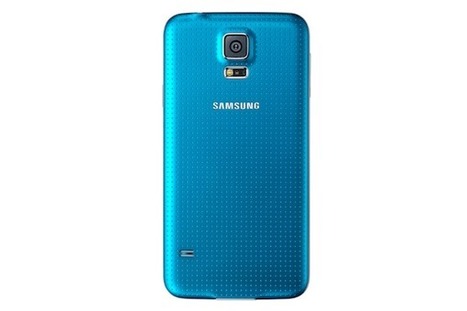
In case you haven’t heard: Samsung is now a pharmaceutical company, or at least on the point of becoming one. Subsequent to its having invested at least $2b in biopharmaceuticals, the South Korean giant will be bringing a biosimilar version of Amgen’s Enbrel to market in 2016. That’s right. In 2016, a company best known for its consumer electronics and heavily invested in mobile health is going to start producing pharmaceuticals, and will apparently begin by bringing a treatment to market which will presumably make it a dominant force overnight in the two disease areas in which Enbrel has indications, namely moderate to severe rheumatoid arthritis, and psoriatic arthritis. The implications of this for legacy pharmaceutical companies are wide-reaching and significant. Let’s consider a few of them (I anticipate updating this post over the next few months): - Samsung now has more touch points across the health ecosystem than any other pharmaceutical company. ... - Samsung’s total focus on customer experience and design makes it a credible champion of the participatory patient’s interests. ... - Hundreds of millions of people carry this pharmaceutical company’s brand with them day and night. ... - Consumers will think of Samsung as a consumer electronics company that makes pharmaceuticals. ... - Samsung will be the first consumer technology company to enter the pharmaceutical marketplace, but it will not be the last. If this thought doesn’t focus legacy pharmaceutical companies into throwing everything they have into reforming themselves as social business, nothing will. The survival of even the largest companies is far from certain when giants such as Samsung have set their sights upon entering the industry. Samsung doesn’t think like a pharmaceutical company. Pharmaceutical companies better start thinking like Samsung. Via rob halkes

rob halkes's curator insight,
May 14, 2014 12:53 PM
Great blog by Andrew Spong, keen enough to see the great potential.. very much inspiring to all of pharma ;-) Must read, and still more: must think!
Scoop.it!

La cybersanté (eHealth) regroupe tous les services électroniques de santé.
Scoop.it!

L'entreprise sud-coréenne souhaite investir plus de deux milliards de dollars dans le marché des médicaments génériques.
Scoop.it!

From
esiiblog
"Professionnels de la santé, patients, vous ne connaissez peut-être pas encore la notion de « e-santé », et pourtant elle fait partie de votre quotidien ! Selon une étude Google, 84% des patients utilisent à la fois des sources en ligne et hors ligne pour leurs recherches santé. 21% prennent rendez-vous dans les hôpitaux directement depuis leur ordinateur ou Smartphone. Autant de démarches peu classiques qui amènent à parler d’e-santé plutôt que de santé. Explications."
Scoop.it!

South Korea’s biggest company is investing at least $2 billion in biopharmaceuticals, including the growing segment of biosimilars, which are cheaper versions of brand-name biotechnology drugs that have lost patent protection.
Samsung, with $327 billion annual revenue, aims to become a major force in biotechnology, an industry expected to generate sales of more than $220 billion in five years. With the electronics market reaching saturation, billionaire chairman Lee Kun Hee has been investing in new areas that might shore up growth for the family-controlled company.
Samsung plans to sell its first biosimilar version of Amgen Inc. (AMGN)’s arthritis therapy Enbrel in 2016 in Europe and a version of Johnson & Johnson (JNJ)’s Remicade treatment for autoimmune diseases in 2017, according to Ko. A separate unit called Samsung Biologics Co. has contracts to manufacture biologic medicines for branded pharmaceutica
|
Scoop.it!
In response to The Lancet's persistent attack on economics and economists,1, 2 we offer the view that the lack of progress in addressing the global epidemic of chronic diseases is largely failure to recognise it as mainly an economic problem. We would contend that a major reason for little progress in addressing chronic illness is that not enough economics has been involved in the development of interventions and, instead, such tasks have hitherto been taken over by narrow medical and public health perspectives. Via Giuseppe Fattori
Scoop.it!

Comment introduire, au sein d'un système de santé à repenser, des technologies numériques "utiles à la santé publique, orientées vers les besoins, portées par des usages adaptés et correspondant à notre contrainte économique"? Tel était l'objet d'une audition publique organisée mi-mai par l'Office parlementaire d'évaluation des choix scientifiques et technologiques (OPECST). Via Festival Communication Santé
Scoop.it!

Although e-cigarettes are not yet licenced by the Medical and Healthcare products Regulatory Agency, researchers at University College London said new evidence showed they were extremely effective at helping smokers to quit Via Giuseppe Fattori
Scoop.it!

Healthcare and IT have become important partners in healthcare - however barriers threaten their integration. Check out this infographic to find out what's to blame. Via Marc Phippen
Scoop.it!
Professionnels de la santé, patients, vous ne connaissez peut-être pas encore la notion de « e-santé », et pourtant elle fait partie de votre quotidien ! Selon une étude Google, 84% des patients u... Via KParticulier
Scoop.it!

From
www
Pharma Manager & Geek ... #hcsmeu #hcsmeufr #health20fr
Lionel Reichardt / le Pharmageek's insight:
Merci à tous pour votre intérêt..votre fidélité..vos échanges et surtout toutes ces magnifiques rencontres depuis un peu plus de deux ans !! J'ai plus de projets que jamais.. à suivre !
Scoop.it!

L'entreprise Rhénovia a mis au point un timbre numérique permettant d'administrer jusqu'à sept médicaments simultanément ou de façon séquentielle. Programmable par des professionnels de la santé, cette innovation pourrait révolutionner la façon de soigner, notamment la maladie d'Alzheimer.
Scoop.it!

Over the past few years, we’ve seen an explosion of interest in digital health technologies, which are loosely defined as tools such as mobile apps, genetic testing and data analytics that are Via Xavier SEDES
Scoop.it!
Santé numérique : "Il faut se concentrer sur la valeur ajoutée et savoir qui va payer pour celle-ci"
Les nouveaux modèles de paiement permettent de relier le secteur médical et le grand public pour apporter de la valeur ajoutée et être rentable. Via Philippe Marchal
Scoop.it!

La France, qui s’est toujours distinguée par la qualité de ses politiques de santé, devrait plus que jamais montrer l’exemple en matière d'e-santé. Mais il n’en est rien, regrette Arnaud Gobet, président du pôle de compétitivité Medicen Paris Région et du groupe Innothera
Scoop.it!
Co-Creation and Experience Co-Creation are two terms which appear usually as puzzling to those who learn about it for the first time. They often think it is like doing or working together. Instead, it is just because of failing cooperation and collaborative work approaches that co-creation is relevant. It is highly successful in many of branches. To health care there are projects that worked with it. But in general the Health Care Business is not easily changing to these unavoidable methods to create personalised care, and an effective eco system and context to enable self management by patients. Here's the introduction. Via rob halkes
rob halkes's curator insight,
May 12, 2014 4:30 PM
Here's my take on co-creation of health care. Based on my experience with health care innovation and reform, it is the most suitable method to arrive at sustainable innovation with all stakeholders. This is an introduction. |






