

|
Scooped by
Gilbert C FAURE
onto Notebook or My Personal Learning Network September 22, 5:42 AM
|


No comment yet.
Sign up to comment

|
|
Scooped by
Gilbert C FAURE
onto Notebook or My Personal Learning Network September 22, 5:42 AM
|
 Scoop.it!

 Your new post is loading...
 Your new post is loading...
Your new post is loading...
Scoop.it!
|
|
|
Scooped by
Gilbert C FAURE
Today, 3:34 AM
|
Scoop.it!

I really enjoyed writing this article for SCIS Data Connections journal. Careful and informed curation is a skill that is sometimes overlooked but of vital importance.
|
|
Scooped by
Gilbert C FAURE
Today, 3:27 AM
|
Scoop.it!
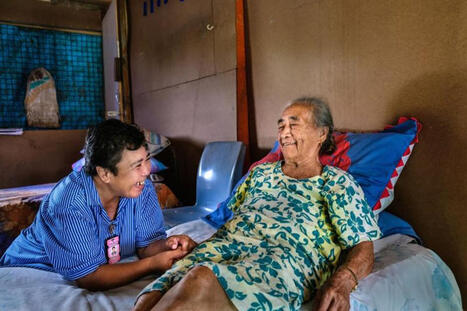
🚨 The global health workforce is growing but it is also ageing, unevenly distributed and under mounting pressure.
World Health Organization ’s latest data tell a story of genuine progress: health workforce density has increased by 52% over the past two decades, and more than 70 million health and care workers now serve communities worldwide. 🌍
However, these gains conceal a widening challenge.
Nearly 1️⃣ in 4️⃣ doctors is over the age of 55 and expected to retire within the next decade. In high-income countries, that figure rises to almost 1 in 3. Meanwhile, the global shortage of health workers is projected to reach 11.1 million by 2030, while 67 countries may lack the workforce required to meet their population’s health needs.
These workforce statistics represent longer waits for care, heavier workloads for health professionals and greater risks for communities already facing barriers to essential services. 🩺👩🏽⚕️👨🏿⚕️
I see this as both an urgent warning and a clear call to action. We must plan further ahead: expanding education and employment, improving retention, supporting the wellbeing of health workers and using stronger data to anticipate future needs. 📊🎓🤝
Investing in health and care workers is an investment in resilient health systems, global health security and sustainable development.
The future of health depends on the people who deliver it. Let us ensure they are there, supported and equipped to serve. 💙
Read the World Health Organization update: One in four doctors nearing retirement age as WHO warns of global health workforce gap
#HealthWorkforce #HealthForAll #GlobalHealth #HealthSystems #HealthSecurity #WHO #SustainableDevelopment
|
|
Scooped by
Gilbert C FAURE
September 23, 1:13 PM
|
Scoop.it!

Affect, Certainty, and Mis/Disinformation (International Journal of Communication):
https://lnkd.in/d6Jed4x4
Glimpse: According to this article, affect is an embodied, relational force that influences how people perceive certain claims as certain or convincing. It makes the case that algorithmically optimized media formats and recurring affective patterns can strengthen emotional reactions and affect later information encounters. Fact-checking and moderation are not enough because misinformation and disinformation function not only through content but also through these affective and nonrepresentational processes. Therefore, in order to improve digital literacy and combat misinformation, the authors support strategies that address the intensity, ambivalence, and embodied dimensions of affect.
---
Free articles, analyses, and multimedia documents on soft counter-extremism, against online hate, and on mis-/disinformation. Third-party content, in most cases.
Our recent LinkedIn posts on the above subjects, along with our glimpses, can be accessed via:
• https://lnkd.in/eBarZAew
Reviews available via the following three Policyinstitute.net websites:
• strategism.org
• counter-terrorism.org
• preventhate.org
Views expressed in this post are those of the original authors, not Policyinstitute.net. We manually select all material and execute diligent editorial oversight. While we carefully prepare summaries of linked articles, documents, or recordings, we are not responsible for textual errors, inaccuracies, or changing contexts. Generative AI is used strictly for rewording, with no autonomous or agentic AI employed for compilation.
#policyinstitutenet #preventradicalization #preventextremism #counterextremism #preventhate #disinformation #misinformation
|
|
Scooped by
Gilbert C FAURE
September 23, 5:08 AM
|
Scoop.it!

“In poverty, one should still hold oneself to a high standard; when prosperous, one should contribute to the well-being of all (穷则独善其身,达则兼济天下),” said the philosopher Mencius. Rooted in Confucian teachings, the tradition of giving back has a long history in China. From Fan Li, the politician-turned-businessman who shared his wealth with local communities in the fifth century BCE, to the Ming dynasty sugar merchant Li Ying, who helped relieve a plague in Zhejiang, here are some of ancient China’s greatest philanthropists. #InternationalDayofCharity
https://lnkd.in/gDfB-Bx9
|
|
Scooped by
Gilbert C FAURE
September 23, 4:52 AM
|
Scoop.it!
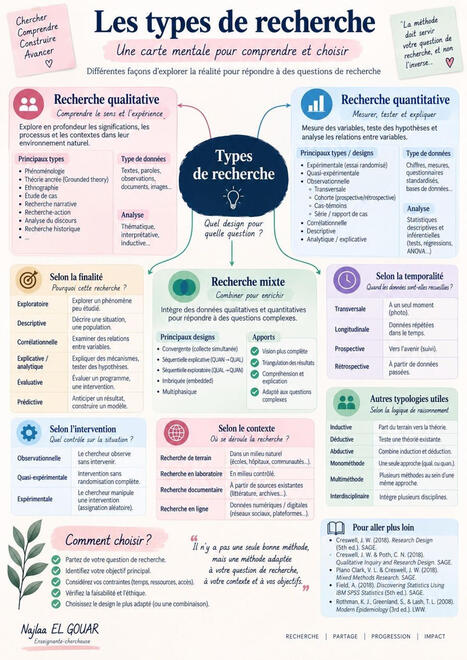
Quel type de recherche choisir pour répondre à sa question ?
Qualitative, quantitative, mixte, exploratoire, descriptive, expérimentale, transversale, longitudinale… Lorsqu’on débute en recherche, ces termes peuvent rapidement donner l’impression d’un véritable labyrinthe méthodologique.
J’ai donc essayé de les réunir dans une carte simple et visuelle, non pas pour enfermer la recherche dans des cases, mais pour aider à comprendre les grandes logiques qui orientent le choix d’un design.
Le point de départ reste toujours le même : la question de recherche.
Ce n’est pas la méthode que l’on préfère qui doit guider la question ; c’est la question qui doit guider le choix méthodologique.
Première fiche d’une série consacrée aux designs de recherche, pensée particulièrement pour les doctorants et jeunes chercheurs.
#Doctorat #RechercheScientifique #Méthodologie #PhD #Doctorants #Recherche #EnseignementSupérieur
|
|
Scooped by
Gilbert C FAURE
September 22, 7:48 AM
|
Scoop.it!

12 000 articles biomédicaux "en excès" publiés en un an ?
Ce n'est pas seulement une question de volume. C'est un risque de dilution des preuves scientifiques les plus robustes, puis de propagation de ces biais dans les modèles d'IA entraînés sur cette littérature.
📝Spick, Geifman et al. viennent de publier dans le Journal of Clinical Epidemiology (2026) une étude qui quantifie l'explosion de publications exploitant des données de santé en libre accès, et questionne sur la robustesse des résultats.
Leur méthode : comparer entre 2022 et 2025, dataset par dataset, le rythme réel de publication à la tendance attendue, ainsi que l'évolution de l'origine géographique des auteurs, et des titres de plus en plus répétitifs, calqués sur un même modèle interchangeable ("formulaic" dans l'article), caractéristique de travaux assistés par IA.
Résultat : un excédent estimé à environ 12 000 publications en 2025 par rapport à la tendance historique, concentré sur certains datasets. Important à noter : il s'agit d'une analyse de tendances à grande échelle, pas d'une relecture individuelle de chaque article, la force de la démonstration est là aussi dans le volume, pas dans l'examen au cas par cas.
Pris isolément, ces articles ne posent pas de problème. C'est leur accumulation, la répétition, qui peut donner un poids anormalement important à certains résultats et diluer les résultats fiables dans la littérature.
❗Ce qui doit, entre autres choses, retenir notre attention c'est le risque qui est pointé pour la pharmacovigilance, qui repose justement sur l'accumulation fiable de signaux.
Plus préoccupant encore : ces publications de faible qualité risquent d'être utilisées pour entraîner de futurs modèles d'IA, et donc conduire à un cercle vicieux qui s'auto-alimente.
⁉️ Le vrai enjeu n'est pas de freiner l'IA dans la recherche, mais de construire les garde-fous qui la mettent au service de la qualité plutôt que du volume.
Comment distinguer aujourd'hui l'usage de l'IA qui renforce la recherche de celui qui contribue à saturer la littérature scientifique ?
|
|
Scooped by
Gilbert C FAURE
September 22, 4:33 AM
|
Scoop.it!

Anthropic just spent billions building one of the world's most powerful AI models. And now it's built a wet lab.
That's not a sign that biology is about to become software.
It's a sign that even the most advanced AI company on Earth discovered the same thing every biologist already knows:
The bottleneck isn't intelligence. It's ground truth.
Models generate hypotheses.
Experiments generate knowledge.
Without the second, the first is just autocomplete.
For all the talk about AI replacing scientists, Anthropic's latest move tells a different story:
The closer AI gets to biology, the more it starts looking like a biotech company.
The model isn't the moat. The ground truth is.
Biology is still measured in experiments, not tokens. | 26 comments on LinkedIn
|
|
Scooped by
Gilbert C FAURE
September 21, 1:12 PM
|
Scoop.it!
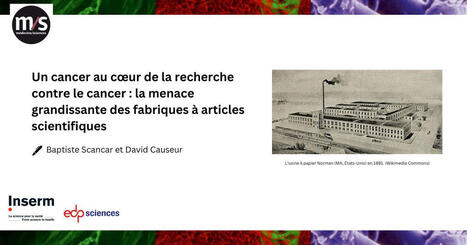
Entre 2016 et 2022, la production mondiale d’articles scientifiques a connu une croissance inédite d'environ 47 % par an, sans que le nombre de chercheurs n'augmente proportionnellement.
Dans ce contexte, où la publication est devenue un marqueur de réussite et un critère d'évaluation majeur, des organisations appelées « fabriques à articles » (research paper mills) se sont spécialisées dans la production et la vente d’articles frauduleux.
Pour mesurer l'ampleur du phénomène, Baptiste Scancar et David Causeur ont développé un modèle de détection visant à estimer la part de ces publications dans la littérature dans le domaine du cancer. Appliquée à un corpus de 2,6 millions d'articles publiés entre 1999 et 2024, leur méthode révèle une progression alarmante de la fraude, touchant de nombreux éditeurs, y compris les plus prestigieux.
Découvrez l'intégralité de leur étude dans la rubrique "Repères" de médecine/sciences.
👉 https://lnkd.in/efaNc4AJ
Université de Rennes CNRS L'Institut Agro Rennes-Angers
|
|
Scooped by
Gilbert C FAURE
September 21, 4:05 AM
|
Scoop.it!

Citations for sale. Till when are we going to pretend that number of citations is a good and trustworthy measure?
10 dollars for citation is quite a lot though. Not sure who is willing to pay such a price. It does show how much citation counts matter in academia, when they should not. | 29 comments on LinkedIn
|
|
Scooped by
Gilbert C FAURE
September 21, 3:44 AM
|
Scoop.it!

On parle souvent de l’intelligence artificielle comme d’une “boîte noire” dont personne ne comprend le fonctionnement. Mais de plus en plus de chercheurs se tournent vers des techniques de rétro-ingénierie pour l’ouvrir et regarder ses engrenages. | 15 comments on LinkedIn
|
|
Scooped by
Gilbert C FAURE
September 19, 6:07 AM
|
Scoop.it!
After successfully passing three rounds of review, with me as the #handling #editor, and receiving three #acceptances from the reviewers, I was about to accept the paper for publication. During my final checking, I became suspicious about the growing number of references during the review process, ended with almost 250. Upon randomly checking some of them, I found that many (54%) were fabricated and attributed to authors who never existed.
Acting as a voluntary associate editor without receiving payment, and with three voluntary reviewers who also received nothing for their services, this author took the time, trust, and energy of at least four voluntary workers with his #stupid #willingness to publish. Indeed, it was my fault for putting my trust in someone from the beginning and not checking the references one by one at the first stage.
It is very unlikely in my world that someone with a #doctoral-level education would have such #stupidity or such a low IQ as to make these mistakes. He didn’t bother to even check his references before submission. Mostly, the rest of the paper was written by AI.
Yeah AI make us wiser
|
|
Scooped by
Gilbert C FAURE
Today, 4:15 AM
|
Scoop.it!
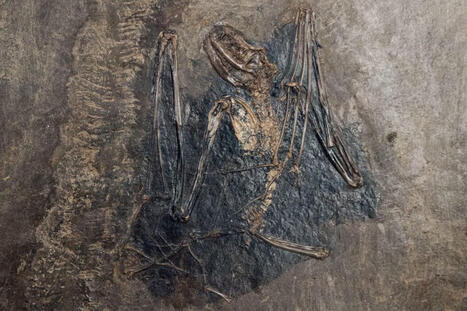
The very first bats likely emerged 65 million years ago—and now we know where.
|
|
Scooped by
Gilbert C FAURE
Today, 3:29 AM
|
Scoop.it!

A professor from UChicago wrote 200+ papers and 14 books in 9 months this year! Most academics would not have generated this level of academic output in their lifetime.
SSRN, the popular online platform used by the professor (Nicholas Polson) to share these papers, recently removed 257 of his publications out of concern.
Personally, I was shocked (not surprised) by the magnitude of research output. It raises several questions about the ethical use of AI in research. It also raises concerns about the steep increase in research submissions to journals that are not equipped to handle the sudden spike in workload. Submissions to Elsevier-published journals have climbed by about 68% since ChatGPT launched! Add to that the fact that reviewers now have every incentive to use AI to review papers, further raising the risk of degrading the quality and integrity of academic research!
https://lnkd.in/ebAFEQVZ | 39 comments on LinkedIn
|
|
Scooped by
Gilbert C FAURE
September 23, 1:16 PM
|
Scoop.it!
🤔 It’s a privilege to be able to download academic papers.
If you work or study at a well-resourced university, it feels completely normal to click on a paper and immediately get the PDF. But globally, that kind of access is far from normal. Only ~1% of the world’s population has access to the subscriptions that many of us take for granted.
And that pool gets even smaller in lower-income countries. For instance, higher-education enrollment among the typical university-age population is around 80% in Western Europe and North America, compared with roughly 9% in sub-Saharan Africa.
Meanwhile, the system is unfair not only to readers, but also to authors.
Only about 44% of the academic papers are openly accessible. And guess what? Scholars from less-resourced universities and regions are the least able to pay a ridiculously high $4000 fee for open access.
So we end up with a strange system:
- Researchers produce the knowledge.
- They or their funders have to pay thousands of dollars to make it accessible.
- Universities pay millions of dollars to get bulk access.
- Individuals not affiliated with universities may have to pay $35 just to read a single paper.
For any independent researcher or someone working at an NGO, how is this supposed to work at all?
Often, the practical consequence is not that they find another way to access the same evidence. They simply *don’t* use it and only look for papers that are open-source (e.g., on arXiv). Evidence gets ignored not because it is irrelevant, but because it is inaccessible.
AI helps a little. A $20 ChatGPT subscription can give you far more useful information than just a single paper. But AI does not magically make a paywalled paper accessible.
I’m not arguing that AI companies should automatically have unrestricted access to all human knowledge. But I do hope this wave of AI puts pressure on the academic publishing model.
It makes very little sense that the producers of knowledge often have to pay to disseminate their work, while the consumers of that knowledge also have to pay to access it.
The result is a capitalist, artificially created information privilege that disproportionately benefits scholars and institutions with more resources, even when the people within those institutions never intended to be part of such an unequal system.
AI won't solve this problem. But perhaps it can make the absurdity of the current system harder to ignore.
|
|
Scooped by
Gilbert C FAURE
September 23, 11:31 AM
|
Scoop.it!
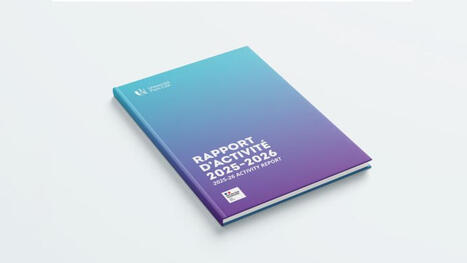
📖 Parution du rapport d’activité 2025-2026 de l'Université Paris Cité !
L'université publie son nouveau rapport d’activité, qui retrace les principaux temps forts, réalisations et avancées ayant marqué l’année universitaire.
Formation, recherche, innovation, santé, vie étudiante, rayonnement international et engagement au service de la société : cette nouvelle édition témoigne de la diversité des missions de l’université et de la mobilisation de l’ensemble de sa communauté.
Cette édition reflète l’engagement quotidien de toutes celles et ceux qui font vivre l’université et contribuent à son développement et à son rayonnement.
👉 Découvrez le rapport d’activité 2025-2026 :
https://lnkd.in/evzCaY4E
|
|
Rescooped by
Gilbert C FAURE
from Hésitations Vaccinales: Observatoire HESIVAXs
September 23, 5:04 AM
|
Scoop.it!
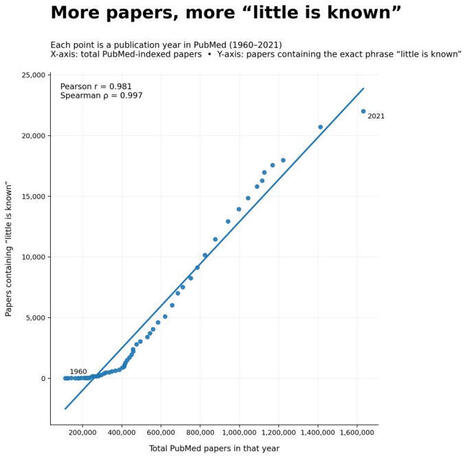
The knowledge paradox.
The more science we publish, the more often we seem to write that “little is known.”
Across PubMed publication years, the number of papers containing that exact phrase tracks the total number of papers published remarkably closely: r = .98.
I don’t think the interesting interpretation is that increasing knowledge simply reveals more unknowns.
I wonder whether this also reflects something about how we are trained to write science.
Google Scholar famously tells us to “stand on the shoulders of giants”. Yet the pressure to demonstrate novelty can push us in the opposite direction: read less deeply, compress what came before, and present the literature as if surprisingly little were already known.
“Little is known about…” is often an easier opening than: Here is what we know, here is where the evidence disagrees, and here is the precise question that remains unresolved.
Margaret Bradley made this point beautifully almost a decade ago when discussing the shift from programmatic science toward novelty-driven science (DOI: 10.1111/psyp.12608).
Maybe the real knowledge paradox is not that the more we know, the less we know.
It is that the more we publish, the more incentives we have to say that nobody knew much before us.
| 95 comments on LinkedIn
|
|
Scooped by
Gilbert C FAURE
September 23, 4:30 AM
|
Scoop.it!

Les chiffres clés des bibliothèques françaises
|
|
Scooped by
Gilbert C FAURE
September 21, 1:20 PM
|
Scoop.it!
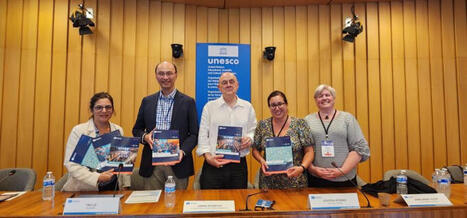
Had some time to reflect on a very productive UNESCO Digital Learning Week in Paris—and especially for the opportunity to help bring open health professions education into the broader global conversation around Open Solutions.
A highlight for me was launching our new UNESCO policy brief, “Scaling Health Education through Open Educational Resources,” (link in the comments) developed with colleagues at ScholarRx, and then having the opportunity to present our work during the well-attended workshop, “Policy into practice: Embedding openness across the knowledge lifecycle” with my outstanding co-presenters Zeynep Varoglu, Anne-Marie Scott, Javiera Atenas and Johan Rooryck.
What made the session valuable was the broader perspective: OER, Open Access, Open Data, Open Science, FOSS, open infrastructure, and emerging technologies such as AI should not be treated as separate initiatives. Together, they can form an open knowledge ecosystem that allows institutions and communities to create, adapt, localize, share, and continuously improve knowledge.
This is important for health professions education. We face a global need to educate and support a much larger health workforce, often in settings where faculty, curricula, and commercial educational resources remain limited. Open education gives us an opportunity to build high-quality learning resources collaboratively—and to make local educators and institutions active participants in that process rather than simply consumers of content.
I was grateful for the thoughtful discussion with colleagues from UNESCO, the Commonwealth of Learning, and the wider open knowledge community, and especially encouraged by the level of engagement in the workshop. It reinforced for me that there is real momentum behind moving from open resources to open systems—and from policy principles to practical implementation.
Thank you Zeynep, the UNESCO team and everyone who helped make Digital Learning Week such a productive gathering.
High-quality health professions education should be something the world builds together.
Mark West David ATCHOARENA Fawzi Baroud Glenda Cox Kathleen Kennedy
#DigitalLearningWeek #UNESCO #OpenEducation #OER #OpenSolutions #HealthProfessionsEducation #MedicalEducation #NursingEducation #AIinEducation #ScholarRx #RxOpen
|
|
Scooped by
Gilbert C FAURE
September 21, 9:42 AM
|
Scoop.it!
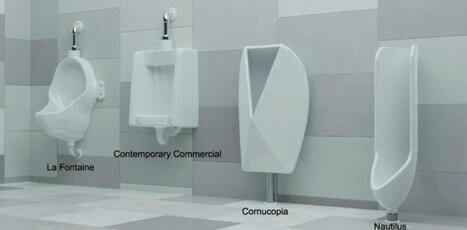
Rions un peu avec les urinoirs... :)
Oui, ça ne paraît pas très tentant mais quand on travaille sur le changement de comportement, on entend parler toutes les semaines des nudges et donc de la mouche dans les urinoirs de l'aéroport de Schipol, qui réduiraient les budgets de nettoyage de plus de 80% selon la légende (en fait plutôt 8%, ce qui est déjà notable, 80% ça serait la quantité d'éclaboussures).
Ce qui est rigolo c'est que dans cette histoire, outre l'écart entre légende et réalité, on ne règle jamais le problème, c'est juste un nudge, c'est rigolo et ça ne crée pas de prise de conscience, donc ça ne marche qu'une fois ou presque, et il faut recommencer à nettoyer le sol... Alors qu'une solution existe !!
Ca n'est pas de l'économie comportementale ou de la psychologie c'est de la physique, c'est même un des prix IgNobel de physique 2026 ! L'urinoir anti-éclaboussures ! Et sans IA s'il vous plait.
Performance, ils dépassent allègrement les 80% de réduction, 98.4 % !!
Attention, ça ne veut pas dire qu'il faut renoncer à la psychologie pour mobiliser la physique pour tous les problèmes, mais c'est vrai que déjà une conception correcte fait des miracles.
Tous les détails : https://lnkd.in/ep5dbQyY
|
|
Scooped by
Gilbert C FAURE
September 21, 4:14 AM
|
Scoop.it!
𝗛𝗲𝗮𝗿 𝗳𝗿𝗼𝗺 𝘄𝗼𝗿𝗹𝗱-𝗹𝗲𝗮𝗱𝗶𝗻𝗴 𝗲𝘅𝗽𝗲𝗿𝘁𝘀 𝗮𝘁 𝗣𝗶𝗴 𝗥𝗲𝘀𝗲𝗮𝗿𝗰𝗵 𝗦𝘂𝗺𝗺𝗶𝘁 𝟮𝟬𝟮𝟳.
From sow behaviour and welfare to health, management and lifetime performance, speakers including Emma Baxter, Alexander Grahofer, Jason Woodworth and Takele Feyera will present the latest research and practical insights shaping the future of pig production.
Explore the programme at pigresearchsummit.com
And join us in Copenhagen 10-11 February 2027 and be part of the conversation.
|
|
Scooped by
Gilbert C FAURE
September 21, 3:46 AM
|
Scoop.it!
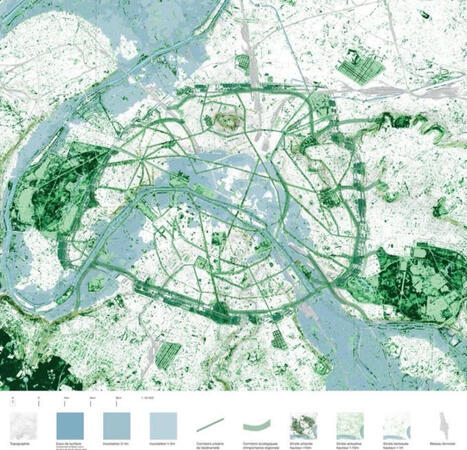
Cette carte n’est pas une carte. 🗺️
C’est le futur prix de l’immobilier à Paris.
La carte montre trois strates de végétation. la où Paris se rafraîchit… et où l’eau reprend la main.
Le marché a déjà tranché.
À Paris, un bien à moins de 5 minutes d’un parc se vend environ 8 % plus cher. Autour des Bois de Boulogne et de Vincennes, le mètre carré reste parmi les plus élevés de la capitale.
Demain, le même mécanisme s’appliquera le long de la Petite Ceinture. Une ancienne voie ferrée devient un corridor vert. Avec les canicules à répétition, on peut parier que les quartiers riverains vont changer de statut.

L’autre face de la carte est le risque lié aux inondations. 3 à 7 % de décote liée à l’assurance plus chère et aux acheteurs plus sélectifs. 
Si vous achetez, vendez ou investissez à Paris, lisez cette carte comme un outil de « due diligence. »
#immobilier #arbre #assurance #banque
Merci Damien Deville 🐆 pour la carte.
Olivier Princivalle FNAIM Loïc Cantin Bérengère Servat Stéphane FRITZ Yann JÉHANNO Frédéric CHAMINADE Guy Marty DELPHINE HERMAN Stéphane Assuline Michel Platero Philippe PETIOT Ludovic MONTAUDON Karine JULIEN-ELKAÏM Dubrac Danielle UNIS IIe-de-France et GRAND PARIS Emmanuel Grégoire Pierre Esparbes Fabienne Tiercelin Gauthier Martiny Gauthier Poppe Jules Grandin Clément Gaillard Stéphane Salord Virginie Votier Eléonore Slama Perrin Remonté Rosalie Mann L'Institut Paris Region
| 73 commentaires sur LinkedIn
|
|
Scooped by
Gilbert C FAURE
September 20, 5:51 AM
|
Scoop.it!

Quels sont les nouveaux usages d’Internet, des réseaux sociaux et de l’IA en avril 2026 ? Les réponses avec la dernière mise à jour du rapport publié par We Are Social et le cabinet Manochi.
|
|
Scooped by
Gilbert C FAURE
September 18, 11:23 AM
|
Scoop.it!

Meet GeoWhisperer. It shows the history of a place — in pictures, in words, and in a short film built from what's changed over time. Just type in an address and it will tell you what the differences are in satellite images over time.
I built it because location research means stitching together satellite archives. It's slow, and easy to get wrong when you're working fast.
GeoWhisperer will speed up that process. It won't replace verification — treat what it gives you as a lead, not a source — but it turns a blank address into a starting point in 30-60 seconds instead of an afternoon.
For journalists tracking a story, researchers reconstructing a timeline, or anyone curious what happened where they're standing.
www.geowhisperer.org #OSINT #journalism #geolocation
(The tool is inspired by a question asked by journalist Ivan Angelovski during a workshop I gave for Global Investigative Journalism Network (GIJN) | 16 comments on LinkedIn





