


In this study researchers focused on the role of a type of macrophages in the pathogenesis of Glioblastoma Multiforme, the most aggressive form of brain tumor affecting adults.


 Your new post is loading...
 Scoop.it! In this study researchers focused on the role of a type of macrophages in the pathogenesis of Glioblastoma Multiforme, the most aggressive form of brain tumor affecting adults. 
No comment yet.
Sign up to comment
Scoop.it!

Abstract Two decades of clinical experience with immunomodulatory treatments for multiple sclerosis point to distinct immunological pathways that drive disease relapses and progression. In light of this, we discuss our current understanding of multiple sclerosis immunopathology, evaluate long-standing hypotheses regarding the role of the immune system in the disease and delineate key questions that are still unanswered. Recent and anticipated advances in the field of immunology, and the increasing recognition of inflammation as an important component of neurodegeneration, are shaping our conceptualization of disease pathophysiology, and we explore the potential implications for improved healthcare provision to patients in the future. Via Krishan Maggon

Krishan Maggon 's curator insight,
August 14, 2015 7:27 AM
NATURE REVIEWS IMMUNOLOGY | REVIEW Immunopathology of multiple sclerosisCalliope A. Dendrou,Lars Fugger& Manuel A. FrieseAffiliationsCorresponding authorNature Reviews Immunology (2015) doi:10.1038/nri3871Published online 07 August 2015
Scoop.it!

Free Radic Biol Med. 2013 Dec;65:595-606. doi: 10.1016/j.freeradbiomed.2013.08.001. Epub 2013 Aug 8. Research Support, N.I.H., Extramural; Research Support, Non-U.S. Gov't
Scoop.it!

RT @britsocimm: Electron microscopic image of an isolated tissue mast cell. http://t.co/1QptzTr9Wd #immunology #cns #microglia http://t.co/…;
Scoop.it!

Learn more from this WebMD slideshow about multiple sclerosis, MS -- its cause, symptoms, diagnosis, treatment, and other facts.
Gilbert C FAURE's insight:
for laypeople, but also for MDs
Scoop.it!

by Ingvild S. Leikfoss, Pankaj K. Keshari, Marte W. Gustavsen, Anja Bjølgerud, Ina S. Brorson, Elisabeth G. Celius, Anne Spurkland, Steffan D. Bos, Hanne F.
Scoop.it!

AudioSlides presentations allow authors to explain in their own words what their paper is about. Full article on Science Direct
Scoop.it!
J Neuroimmunol. 2015 Aug 15;285:156-60. doi: 10.1016/j.jneuroim.2015.06.012. Epub 2015 Jun 25.
Scoop.it!
Round robin test on quantification of amyloid-β 1–42 in cerebrospinal fluid by mass spectrometry: Cerebrospina... http://t.co/7ntNlMCt6C
Scoop.it!

Changes in key biomarkers of Alzheimer's disease during midlife as seen in brain scans and cerebrospinal fluid of healthy adults may help identify those who will develop dementia years later.
Scoop.it!
RT @tcellbiology: Circulating Follicular Regulatory T Cells Are Defective in Multiple Sclerosis [AUTOIMMUNITY] http://t.co/IifhizBztR #jimm…
Scoop.it!

In this study, a detailed light microscopic technique was optimized for real-time observation and analysis of the motion of CPEC cilia...
|
Scoop.it!

The world of neuroscience is far removed from most of us — a world of big words and bigger ideas that occupy the minds of specialists and scientists in rooms far away from our own.
Scoop.it!

Immune and Epstein-Barr virus gene expression in cerebrospinal fluid and peripheral blood mononuclear cells from... http://t.co/sl9kaECfid
Scoop.it!

Immunology and Cell Biology focuses on the general functioning of the immune system in its broadest sense, with a particular emphasis on its cell biology.

Gilbert C FAURE's curator insight,
August 12, 2015 11:31 AM
Multiple sclerosis (MS), an incurable autoimmune disease of the central nervous system (CNS), is driven by autoreactive immune cells that demyelinate nerve cells of the CNS. MS takes on several forms, with new symptoms either occurring in isolated attacks (relapsing forms) or building up over time (progressive forms). With a cure still being sought, the prototype animal model, experimental autoimmune encephalomyelitis (EAE) continues to provide significant disease insights. The study by Eberle et al. in Immunology and Cell Biology is no exception with their surprising discovery that one member of the ceramide synthase family, ceramide synthase 6 (CerS6), suppresses the development of EAE.1
Scoop.it!
RT @SAGENeurology: Forced Exercise Preconditioning Attenuates EAN by Altering Th1 Lymphocyte Composition & Egress http://t.co/0DV0kWSkto
Scoop.it!
Brain. 2015 Jul 27. pii: awv199. [Epub ahead of print]
Scoop.it!

by Peng-Peng Jin, Li-Li Sun, Bo-Jun Ding, Na Qin, Bin Zhou, Feng Xia, Li Li, Li-Juan Liu, Xue-Dong Liu, Gang Zhao, Wen Wang, Yan-Chun Deng, Shuang-Xing Hou
Scoop.it!

Immunology: Effect of IFN β‐1b on CXCR4‐dependent chemotaxis in T cells from multiple sclerosis patients http://t.co/qFVWFRmaSE
Scoop.it!
J Neuroimmunol. 2015 Aug 15;285:68-70. doi: 10.1016/j.jneuroim.2015.05.019. Epub 2015 May 20.
Scoop.it!
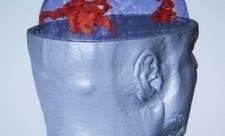
Read how Monoclonal Antibodies are A Future Therapeutic Against Neurodegenerative Diseases Via Krishan Maggon
Scoop.it!
RT @EricTopol: Cell-free tumor DNA in the cerebrospinal fluid to dx, maange #brain #cancer http://t.co/aZXSJlC2Gq @PNASNews http://t.co/bke…
Gilbert C FAURE's insight:
and for cancer metastasis? tumoral cells are also present and quantified in breast, lung, melanoma carcinoma meningitis
Scoop.it!

A drug that breaks up different types of brain plaque shows promising results in animals and could prevent Alzheimer's and Parkinson's disease
Scoop.it!

Glioblastoma can originate from terminally differentiated astrocytes and neurons, which can dedifferentiate to a stem cell-like state upon transformation. In
|




