This $90 Propane Tank Solar Storage Trick That Lasts for Years
This is something I have been thinking for a long time ... it should be possible to store the intermittent energy from solar and wind power by using compressed air as the storage medium and to reconvert to electric energy by using the compressed air to drive an air-motor and electric generator set.
I now see that it is possible and isn't even very complicated, and that it has been done sucessfully in places on a large scale. The cost is a fraction of what battery storage would be, but somehow the technological hack has not founds its way into the mainstream of society, neither in power utilities nor in private home energy systems.
This video shows what has been done and how this could be more widely implemented.
This is something I have been thinking for a long time ... it should be possible to store the intermittent energy from solar and wind power by using compressed air as the storage medium and to reconvert to electric energy by using the compressed air to drive an air-motor and electric generator set.
I now see that it is possible and isn't even very complicated, and that it has been done sucessfully in places on a large scale. The cost is a fraction of what battery storage would be, but somehow the technological hack has not founds its way into the mainstream of society, neither in power utilities nor in private home energy systems.
This video shows what has been done and how this could be more widely implemented.
There is no race - when everyone ends up at the same place
There is no A.I. race - it is a worldwide phenom of tech builders in many countries each using the generally same building blocks delivering some level of pattern matching - called A.I.
Everyone will converge in pretty much the same place - except the big A.I. companies will not make it to the end of the race - their financials are desperate and they simply cannot outrun their invested capital and show any level of ROI.
The winner will be where it always ends up - A.I. will be everywhere - like computers, cell phones, streaming video - are everywhere.
The future is A.I. everywhere - on your watch, phone, in your car, embedded in your apps - and none of that needs a centralized data center - and these guys know it.
There is no A.I. race - it is a worldwide phenom of tech builders in many countries each using the generally same building blocks delivering some level of pattern matching - called A.I. Everyone will converge in pretty much the same place - except the big A.I. companies will not make it to the end of the race - their financials are desperate and they simply cannot outrun their invested capital and show any level of ROI.The future is A.I. everywhere - on your watch, phone, in your car, embedded in your apps - and none of that needs a centralized data center - and these guys know it.
A.I. will be everywhere - eliminating the need for centralized computing
Wherever there is data - there will also be A.I.
And A.I. everywhere spells the end of centralized computing - and the emergence of stranded data centers.
This week, political commentator Daniel Horowitz interviewed Jay Valentine of the Black Swan Files - and the interview went into great detail on why A.I. everywhere will kill off the data center madness.
Here is the interview - Don't mind the interviewer. The actual interview with Jay Valentine starts around 17:40
Jay Valentine of the Black Swan Files speaks on the fact that those hyperscale data centers are veritable dinosaurs, out of date before they are even constructed. Their systems run on last century's technology and they are incredibly inefficient. Hyperscale data centers are really a last ditch effort to salvage huge corporations that have grown fat on the centralized internet system, where data sits on "the cloud", meaning in their data centers, and where computing is done there as well. Needlessly expensive and highly inefficient. Something that is not really needed if you know how to do distributed computing ...
An interesting interview with Jay Valentine of the Black Swan Files. He speaks on the fact that those hyperscale data centers are veritable dinosaurs, out of date before they are even constructed. Their systems run on last century technology and they are incredibly inefficient. Hyperscale data centers are really a last ditch effort to salvage huge corporations that have grown fat on the centralized internet system, where data sits on "the cloud", meaning on their data centers, and where computing is done there as well. Needlessly expensive and highly inefficient. Something that is not really needed if you know how to do distributed computing ...
REGENT is building the Viceroy, an all-electric vessel that floats on its hull, rises onto hydrofoils, then flies a few metres above the water in ground effect at 180 mph.
The retractable hydrofoils are the fix for the problem that sank earlier ground-effect craft: getting airborne in choppy water and docking safely.
REGENT completed its 255,000 sq ft factory in June 2026 and plans first customer deliveries in 2027.
REGENT is building the Viceroy, an all-electric vessel that floats on its hull, rises onto hydrofoils, then flies a few metres above the water in ground effect at 180 mph. The retractable hydrofoils are the fix for the problem that sank earlier ground-effect craft: getting airborne in choppy water and docking safely. REGENT completed its 255,000 sq ft factory in June 2026 and plans first customer deliveries in 2027.
This one looks very interesting. One question though ... how does it behave in heavy waves?
We're checking out the Otto Solera 500L, an experimental aircraft pushing the boundaries of engineering. This unique design bends the rules of aircraft aerodynamics, promising incredible fuel efficiency. Could this be a glimpse into future aircraft concepts and green aviation?
This is a demonstration of principles that will in time allow a revolution in airplane technology, achieving unheard-of fuel efficiency and flight characteristics.
Africa Self Powered Car - Elite University Approves Africa Self Powered Car & Microsonic Energy Inventions By Maxwell Chikumbutso: Makes Nicola Tesla Theory a Reality - Maxwell Chikumbutso, a young Zimbabwean, Invents World’s First Free-Energy Vehicle: In southern parts of Africa, Zimbabwe, to be specific, something incredible is happening. A young man, Maxwell Chikumbutso, has made a ground-breaking invention—the world’s first Free-Energy Vehicle, a car that requires no fuel, no recharging, and no external input to operate.
Maxwell Chikumbutso’s technology is undoubtedly poised to reshape the future of transportation and energy.
Chikumbutso’s invention is centred around a microsonic energy device he designed. This device converts naturally occurring radio frequencies into pure energy, effectively providing an infinite power source for vehicles, motorbikes, and generators. Unlike solar power or electric cars, which require periodic charging or direct sunlight, Chikumbutso’s technology works anywhere on Earth or at sea, making it a potential game-changer in global energy consumption.
Hydrocarbon fuels are going through a period of scarcity as the strait of Hormuz is closed to traffic. Perhaps this is a chance for the more "exotic" energy inventions that produce energy without expending any fuel, Zimbabwean inventor Chikumbutso's "microsonic" energy device is a case in point. This seems to be something similar to a Nikola Tesla invention, rumoured to have powered an electric car, a converted "Pierce Arrow" at the time, but that was never publicly announced. Time just wasn't right. Perhaps now it is?
On April 13th, 2026, a Chinese company called Geely walked up to a limit that engineers had spent over a hundred years treating as unbreakable and simply walked past it. Their new i-HEV engine hit 48.41% thermal efficiency, a number so far beyond what Toyota, Volkswagen, and BMW said was physically possible that it earned an official Guinness World Record. This is not a concept car. This is not a lab experiment. This is a production engine going into a full-size SUV that burns just 2.22 liters per 100 kilometers and delivers over 2,000 kilometers of range on a single tank.
In this video, we break down exactly how they did it...
Internal combustion engines aren't dead yet. Here's a combination with electronics and an electric drive train that propels a full size SUV on just over 2 liters of fuel ...
Inventor Julian Brown intentionally has not patented his plastic-to-fuel technology. He says patents bring more problems than they solve, at least for a grassroots type invention like his. For now, Brown relies on trade secrets to stay ahead of copycats, although he does plan to eventually fully open source his process.
Having documented his work online for more than a year, it is effectively in the public domain. He plans to publish a book once process and machinery are sufficiently mature.
Brown uses microwave hydrolysis to turn waste plastic into crude oil, which is then distilled and fractioned into fuel.
His intention is to provide a solution for the processing of plastic waste which is difficult to recycle and has left us with a serious world wide plastic pollution problem.
From the introduction to the interview:
In today’s episode of Earn Your Leisure, we sit down with Julian Brown to discuss how one documentary sparked his journey into becoming a scientist with over 7 million followers. After learning that less than 1% of plastic is actually recycled, he made it his mission to solve the global plastic waste crisis.
We break down pyrolysis—the process of turning plastic into crude oil—and how Julian built a microwave system in his backyard. He shares the challenges, from machine failures to going viral, and how he used content to fund and scale his innovation.
Julian also opens up about his long-term vision to eliminate plastic waste, turning down major deals, and what it will take to bring his technology to the world. This is a powerful conversation on innovation, resilience, and changing the future.
Plastic is perhaps the most concentrated form of the energy contained in crude oil and there is lots and lots of plastic waste, so much that it has become a serious problem. Now Julian Brown has developed a simple process to hydrolyse plastic waste back into oil and to then obtain fuel from it.
Inventor Julian Brown intentionally has not patented his plastic-to-fuel technology. He says patents bring more problems than they solve, at least for a grassroots type invention like his.
For now, Brown relies on trade secrets to stay ahead of copycats, although he does plan to eventually fully open source his process.
Having documented his work online for more than a year, it is effectively in the public domain. The plan is to publish a book once process and machinery are sufficiently mature.
Brown uses microwave hydrolysis to turn waste plastic into crude oil, which is then distilled and fractioned into fuel.
His intention is to provide a solution for the processing of plastic waste which is notoriously difficult to recycle and has left us with a serious world wide plastic pollution problem.
Most people imagine the vacuum of space as empty. Physics says it never has been.
What we call “zero” is not nothingness, but a restless, energetic background that underlies all reality. Zero-point energy is not theoretical fuel or hidden power, it is the baseline activity that prevents stasis and makes transformation, structure, and life possible.
Far from being void, the vacuum of space is structured, energetic, and fluctuating. It possesses an inherent capacity to exert forces when constrained, a testament to its intrinsic activity. Zero-point energy is not a fuel source or a hidden battery; rather, it represents the irreducible activity of reality itself. This ceaseless background hum serves two critical functions ...
Free energy - the enigma that will save our bacon, or our environment if you prefer - it has been sought over the centuries and most intensely in recent decades. Hundreds if not thousands of inventors have tried their luck on it. Many times, an invention worked for the inventor but flopped when independently tested. It seemed like the energy had a will of its own, that it wasn't something that can be tapped for any purpose. The process isn't purely mechanical. It is like life needs to give its permission for you to use its energy.
Now here is an article which explains that concept in a succinct and rather accomplished manner, with reference to a technology proposed by the Italian inventor Andrea Rossi, who has been in this game for decades and who finally seems ready to go commercial with an invention of his called the E-Cat, a name which probably stands for Energy Catalyzer.
Let us hope this is the good one, the occasion where free energy can become widely available to the public in the form of a commercial product. Enjoy!
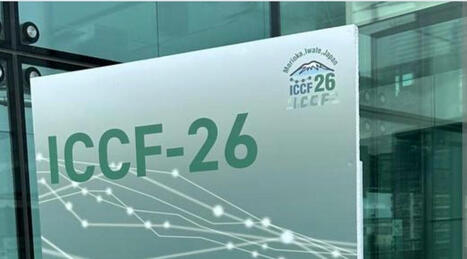
The 26th International Conference on Condensed Matter Nuclear Science (ICCF26) is in full swing in Morioka, Japan, marking a potentially pivotal moment for the field of Low Energy Nuclear Reactions (LENR). As the conference (May 26th-30th) reaches its midpoint, a series of significant presentations from world-leading universities and physicists have already highlighted new experimental successes, theoretical advancements, and burgeoning commercial applications.
The global nature of the research was underscored by presentations involving institutions such as the University of Cambridge, MIT (with Professor Peter Hagelstein among the speakers), and leading universities and research professors from Japan, China, India, and several European countries. This diverse participation emphasizes the growing international effort to understand and harness LENR.
Remember Cold Fusion, the electrochemical experiment showing excess energy, announced by Pons and Fleischman in 1989? It was immediately attacked and cancelled by the "scientific" establishment. Yet Cold Fusion never was a fake as asserted. Just this last month brought together academic researchers from all over the world to exchange results and compare findings at the 26th International Conference on Cold Fusion (ICCF) or Low Energy Nuclear Reactions (LENR) as that particular science is now called. Commercial applications are emerging...
France has made headlines with groundbreaking discoveries of natural hydrogen, also known as white hydrogen, buried beneath its soil. These findings, located in the Lorraine region, have the potential to disrupt global energy markets by providing an abundant, naturally occurring, zero-carbon fuel source.
Most notably, an initial discovery was made in May 2023, followed by a more recent finding in March 2025. Together, these revelations position France as a leader in the exploration and potential utilization of white hydrogen for clean energy solutions.
Both discoveries come with staggering numbers.
The May 2023 find, located in abandoned mines of Lorraine, was estimated to hold 46 million tons of natural hydrogen. This quantity, described as one of the largest known reserves in Europe...
Pure hydrogen is being discovered in abandoned mines and other locations around the world. We are literally sitting on earth's fuel reserves, which are continually renewed. Watch the hydrogen economy take off ...
For decades, we've heard about the catastrophic effects of fossil fuel pollution. For just as long, I've been hearing that global warming is a myth.
The two sides are constantly at each other's throats. But it's a fight that's completely unnecessary.
The technology to create unlimited, clean, free energy has existed for over a hundred years.
Dozens, perhaps hundreds, of inventors have created machines that pull energy out of thin air. Machines that could defy gravity, levitate, and fly. Machines that bend the fabric of spacetime itself.
These machines sound - not just like science fiction - they sound like magic.
So, where are these magical devices? Well, when the inventors patented and publicized their technology, they performed another magic trick: they disappeared.
Here is an excellent compilation of energy producing devices that have - unfortunately - been secreted away. We could have all the energy we ever need if only we can get this stuff out into the open...
The E-Cat is not just another alternative energy device. It is based on Zero-Point Energy (ZPE) principles, a concept originally proposed by Nikola Tesla. Unlike traditional energy sources that rely on fuel combustion or solar capture, the E-Cat taps into a previously untapped energy reservoir, unlocking an entirely new power source.
Dr. Rossi explains it with a simple analogy:
“Imagine electrons as scattered soldiers on a battlefield. Our technology forces them into a highly ordered state, increasing their energy potential without adding more electrons.”~Andrea Rossi
This process leads to a net energy gain, allowing the system to produce 100% more energy, a concept known as over-unity energy production.
How the E-Cat NGU Extracts Energy from the Zero-Point Energy Field ...
Andrea Rossi is a hands-on, serious inventor and producer of new energy applications. He started out turning garbage into gasoline in the 1990s in Italy, then got into producing actual working, heat producing 'Cold Fusion' units and he is now preparing to go to market with a working Zero Point Energy extraction unit, the subject of this article.
slot gacor ����� terbaru ter panas ��� tergokil � ANTI RUNGKATTTTT JAMIN GACOR 98 PERSEN !!!! GAS KAN KE landslot88 PALING GACOR ��� �rebrand.ly/landslott
We are giving machines humanity’s knowledge at extraordinary speed, without the millions of years of experience that shaped the values behind it.
Imagine a child opening its eyes for the first time already knowing calculus, physics, history, computer science, and almost everything humanity has written down.
It can explain love without ever loving anyone. It understands grief without losing somebody. It can study every war in history without ever being afraid for its own life.
It knows an extraordinary amount about us.
It just never lived our life.
That is the part of artificial intelligence I think we are overlooking.
For the first time that we know of, an intelligence is being handed the inheritance of another intelligence without having to travel the road that created it.
Humanity took millions of years to get here.
AI gets the library first.
I think of that as an inheritance-experience gap. Not some new scientific law, just a simple way of describing what is happening.
This article asks an important question. Why should AI be given all the knowledge that humanity has acquired over millions of years without also having to learn what humans learned as we acquired that knowledge...
This $90 Propane Tank Solar Storage Trick That Lasts for Years
This is something I have been thinking for a long time ... it should be possible to store the intermittent energy from solar and wind power by using compressed air as the storage medium and to reconvert to electric energy by using the compressed air to drive an air-motor and electric generator set.
I now see that it is possible and isn't even very complicated, and that it has been done sucessfully in places on a large scale. The cost is a fraction of what battery storage would be, but somehow the technological hack has not founds its way into the mainstream of society, neither in power utilities nor in private home energy systems.
This video shows what has been done and how this could be more widely implemented.
This is something I have been thinking for a long time ... it should be possible to store the intermittent energy from solar and wind power by using compressed air as the storage medium and to reconvert to electric energy by using the compressed air to drive an air-motor and electric generator set.
I now see that it is possible and isn't even very complicated, and that it has been done sucessfully in places on a large scale. The cost is a fraction of what battery storage would be, but somehow the technological hack has not founds its way into the mainstream of society, neither in power utilities nor in private home energy systems.
This video shows what has been done and how this could be more widely implemented.
China Just Discovered Unlimited Fuel — And The Oil Industry Is Terrified
China Just Changed Energy Forever? The Thorium Reactor That Could End the Oil Age
What if the biggest energy revolution in history has already begun—and almost nobody is talking about it?
In this video, we uncover the incredible story of how America pioneered thorium reactor technology in the 1960s, abandoned it during the Cold War, and how China spent decades quietly rebuilding it into what could become the future of clean nuclear energy.
Discover:
Why thorium reactors are different from traditional uranium reactors
The secret Oak Ridge project that changed history
China's breakthrough molten salt reactor in the Gobi Desert
Why this technology could threaten the $4 trillion global oil industry
How one Chinese mine could theoretically provide energy for tens of thousands of years
What this means for America, Saudi Arabia, Russia, and the future of global power
This video makes a compelling case for integrating wind power into residential off-grid systems, positioning it not as a replacement for solar, but as a dense, reliable partner that thrives during dark winter months and nighttime hours when solar panels are blind.
Ranging from the silent, urban-friendly geometry of the vertical-axis Tesup Atlas and Flower Turbines to the rugged, low-maintenance mechanical engineering of the SD Wind Energy SD6 and IceWind, each system is evaluated by cost, efficiency, and engineering breakthroughs.
Here is an overview, put together quite well, of six commercially available small scale wind power generators that could integrate or in some applications replace solar panels with a more rugged solution.
You will notice that most of these are vertical axis systems, as opposed to the horizontal axis generators of commercial wind power systems. Those airplane propeller type systems are actually rather inefficient. They can only "profitable" if granted special regulations or even outright direct government subsidies.
A question comes to mind: Could wind power generation generally be made more efficient if some of those different designs were scaled up for serious power generation?
While Tesla burns billions on chargers and BYD floods every market with cheap batteries, Mazda just quietly did something that nobody in the auto industry saw coming. They brought back a dead engine and upgraded it with technology so advanced that it doesn't just compete with electric cars, it completely eliminates the one problem EVs still haven't solved after 15 years of trying.
In this video we go deep into the full story. Who Mazda really is. What they built in their engineering labs when nobody was watching. Why this tiny rotary engine is making Tesla, BYD and every major EV company rethink their entire strategy. And why millions of car buyers around the world are about to make a very different decision than they expected.
Smart move by Japanese auto maker Mazda ... they are combining an updated rotary engine with an electric car to create a hybrid that can beat the competition. (Video)
Net energy surplus: excess output beyond input in modular plasma-driven systems progress
Here is real world fuelless generator technology being developed in Portugal. The first application going into industrial testing is steam generation (100KW modules) and close after that one, a 100KW electricity generation unit, both based on LENR (low energy nuclear reaction) and plasma based heating.
There is no hydrocarbon fuel input in these generators, and the electrical energy input is about 10 to 20% of the output power. The electric generator unit is being designed to be self powering, a stand-alone unit to provide a net energy output of about 80KW, as 20KW of the total energy output is to be re-cycled to have a self-running unit.
The units are modular, meaning they can be combined in containers, bringing energy production capactiy into the Megawatt range.
Here is real world fuelless generator technology being developed in Portugal. The first application going into industrial testing is steam generation (100KW modules) and close after that one, a 100KW electricity generation unit, both based on LENR (low energy nuclear reaction) and plasma based heating.
There is no hydrocarbon fuel input in these generators, and the electrical energy input is about 10 to 20% of the output power. The electric generator unit is being designed to be self powering, a stand-alone unit to provide a net energy output of about 80KW, as 20KW of the total energy output is to be re-cycled to have a self-running unit.
The units are modular, meaning they can be combined in containers, bringing energy production capactiy into the Megawatt range.
"December 11th, 2025. Huawei walks into a press conference and announces something that made EVERY laptop manufacturer stop what they were doing: The HM740 - their first HarmonyOS office PC with a 70-watt-hour battery delivering 21 HOURS of continuous video playback.
Monday morning to Tuesday afternoon. Without. Seeing. A. Charger.
Apple's M4 MacBook? Left in the dust. Every Windows laptop? Not even close.
But here's what nobody saw coming: This isn't running Windows. It's not macOS. This is HarmonyOS - an operating system that didn't exist 6 years ago."
Huawei also offers direct satellite connectivity in some of their phones ...
This is China outperforming Western phone and computer systems ...
Huawei's computer operating system and laptops seriously outperform both Apple and Microsoft. They also offer direct satellite connectivity on some of their phones. Chinese manufacturer outperforms Western phone and computer systems.
One Commercial Delivery Away from the Biggest Market Shock in History
Andrea Rossi steps forward with a device, independently validated, that taps what he calls “zero-point energy.” Whether you believe Rossi or not, the mere act of credible proof would send shockwaves through markets, governments, and society.
And here’s the kicker: Rossi is not alone.
Behind him are over a dozen LENR ventures, Brillouin, ENG8, Clean Planet, Leonardo, and more, each racing to commercialize. The dam would break the moment one demonstration is confirmed.
The way we do energy is going to change ... radically. Hydrocarbons, solar, wind and nuclear are on their way out. This article is about one technology which is getting close to commercialization.
This is only one candidate, but others are in the wings, chomping on the bit, and others still are already being used despite all the nay sayers screeching "impossible".
We've seen dozens of eVTOLs lately that have taken bold steps toward real-world usage, but most of these solutions are designed to be used as air taxis for public transport, and few are for personal use. Poland-based startup Volonaut is aiming to fill this gap with a bonkers one-person hoverbike that could turn regular folks into pilots and allow them to soar through the skies like Luke Skywalker in Star Wars.
The hoverbike is called the Volonaut Airbike and was developed by Tomasz Patan, the same guy who created the Jetson ONE, a one-person eVTOL that performed its first official test flight this February.
The new, futuristic flying vehicle is described as a "superbike for the skies" and it can levitate and glide in the air, carrying one person up in the sky at speeds of up to 200 kph or 124 mph.
From Skepticism to Global Transformation.How This Technology is about to unleash a New Era of Abundance
"In the following article, I share my perspective on how one company, among many, is preparing for commercialization can change the world. I realized that just one commercially verifiable product could change everything we think about energy and open the door to a new scientific era of understanding the Universe."
An energy revolution is brewing. Devices that produce energy without visible input that "link into the wheelwork of nature" as Tesla said, are being readied for commerce. Here's an idea of how this may change not only our economies but the way we view life ...
UCI breakthrough may extend the life of computers, smartphones and appliances
University of California, Irvine researchers have invented a nanowire-based electrode that can be recharged hundreds of thousands of times, moving us closer to a battery that would never require replacement. The breakthrough work could lead to commercial batteries with greatly lengthened lifespans for computers, smartphones, appliances, cars and spacecraft.
Scientists have long sought to use nanowires in batteries. Thousands of times thinner than a human hair, they’re highly conductive and feature a large surface area for the storage and transfer of electrons. However, these filaments are extremely fragile and don’t hold up well to repeated discharging and recharging, or cycling. In a typical lithium-ion battery, they expand and grow brittle, which leads to cracking.
UCI researchers have solved this problem by encasing a gold nanowire in a manganese dioxide shell and covering the assembly in an electrolyte made of a Plexiglas-like gel. The combination is reliable and resistant to failure.
Quantum Legacy Foundation and Andrea Rossi Unite to Transform Global Energy
In a groundbreaking collaboration set to redefine the future of sustainable energy, Quantum Legacy Foundation proudly announces its partnership with Andrea Rossi, the visionary inventor behind the revolutionary E-Cat technology. This alliance marks a pivotal moment in the journey towards a cleaner, more sustainable world, as Quantum EverSource, the commercial arm of this partnership, takes the helm in manufacturing and distributing E-Cat products globally.
This looks like a serious effort to actually bring ZPE or Zero Point Energy to market world wide. It could be a real game changer in the energy markets...
To get content containing either thought or leadership enter:
To get content containing both thought and leadership enter:
To get content containing the expression thought leadership enter:
You can enter several keywords and you can refine them whenever you want. Our suggestion engine uses more signals but entering a few keywords here will rapidly give you great content to curate.


 Your new post is loading...