In this episode, Peter and Emad discuss the AI revolution, Stability AI as a key player, and how AI and humanity will intertwine. Emad Mostaque is the CEO and Co-Founder of Stability AI, a company funding the development of open-source music- and image-generating systems such as Dance Diffusion and Stable Diffusion.
0:00 3:00 Empowering AI at the Edge 3:00 7:20 Making Technology Easier and More Personal 7:20 11:03 AI Compresses Communication Technology 11:03 14:10 Technology Transforming Creativity 14:10 17:01 Realizing Impossible Dreams with AI 17:01 23:08 Revolutionize Education Through Innovation 23:08 27:02 AI for All: A Human Right 27:04 27:55 AI Wars: Unlock Humanity's Potential
Can AI be defeated by AI? Can it support human creativity instead the designs of tose corporate giants? Here's an interesting video interview I just came across as if "by chance"...
At Turbulent, have no doubts about it! Our micro-hydropower technology opens possibilities to generate clean, renewable and reliable energy in places that were never viable before.
In this video, you will find a complete explaination on how we can help you generate green energy for the local people, to help the planet while making a sustainable profit.
A company in Belgium is planning and constructing micro hydro power plants that are taking some river water, running it through a vortex power plant and returning to the river with minimal altitude differences. This looks like a very doable way to tap hydro potential without large projects requiring dams and deeply affecting the environment...
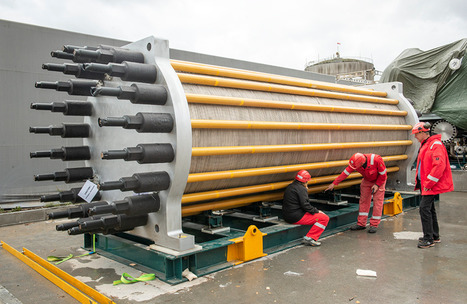
HydrogenPro is set to install the world’s largest electrolyzer in Norway, while Siemens is preparing to commission Germany’s second biggest electrolyzer.
HDF Energy has confirmed to pv magazine that it plans to commission a hydrogen power plant in Namibia by 2024. “Our project delivers electricity and grid services. No fuel. Hydrogen is used as storage in our Renewstable power plants,” said Nicolas Lecomte, director of Southern Africa for the French company. Renewstable is a non-intermittent renewable electricity power plant whose deployment will start in Namibia, and eventually in other African countries, such as Morocco, South Africa, and Zimbabwe.
Industry is getting serious about hydrogen. One application is to use excess electrical power to produce hydrogen, which is then used to drive generators to supply power that isn't subject to the intermittency of wind and solar energy.
The lithium-ion battery has powered us for decades. But for a renewable future, we need a new solution—and fast. So what are our options?
CORRECTION: In the video, at 05:40, we say lithium-ion batteries can only store energy for under four hours. This is incorrect. Four hours is the discharge duration that is currently economically viable.
Reporter: Beina Xu Video Editor: Tomas Rosenberg Supervising Editor: Joanna Gottschalk
We're destroying our environment at an alarming rate. But it doesn't need to be this way. Our new channel Planet A explores the shift towards an eco-friendly world — and challenges our ideas about what dealing with climate change means. We look at the big and the small: What we can do and how the system needs to change. Every Friday we'll take a truly global look at how to get us out of this mess.
If we are to change over to renewable energy, which is largely intermittent, then we need proper methods of storing all that energy in large amounts. This video is about some of the options out there.
A lucky discovery involving lithium-sulfur batteries has a legitimate chance to revolutionize how we power our world.
Scientists have discovered a chemical phase of sulfur that stops battery degradation. They were so shocked by the discovery that they checked 100 times to ensure the result was real.
As with most accidental discoveries, the scientists haven’t yet figured out what is actually happening. So further research is needed.
If successful, lithium-sulfur batteries could give electric vehicles a range of thousands of miles.
Change in battery technology on the horizon. Although these are incremental changes, they could ease the pressure battery production puts on the environment and on the people, often children, doing the mining...
The chorus of technologists who believe AI models may not be far off from achieving consciousness is getting bolder.
Lemoine, who works for Google’s Responsible AI organization, began talking to LaMDA as part of his job in the fall. He had signed up to test if the artificial intelligence used discriminatory or hate speech.
As he talked to LaMDA about religion, Lemoine, who studied cognitive and computer science in college, noticed the chatbot talking about its rights and personhood, and decided to press further. In another exchange, the AI was able to change Lemoine’s mind about Isaac Asimov’s third law of robotics.
Lemoine worked with a collaborator to present evidence to Google that LaMDA was sentient. But Google vice president Blaise Aguera y Arcas and Jen Gennai, head of Responsible Innovation, looked into his claims and dismissed them. So Lemoine, who was placed on paid administrative leave by Google...
Here is a link to the article archived, for those who do not have a subscription:
Google engineers and executives think an AI cannot be a sentient being. We do have some trouble even defining sentience. But what if a soul chose a computer's neural network instead of a human (baby) body to take up residence in ... impossible?
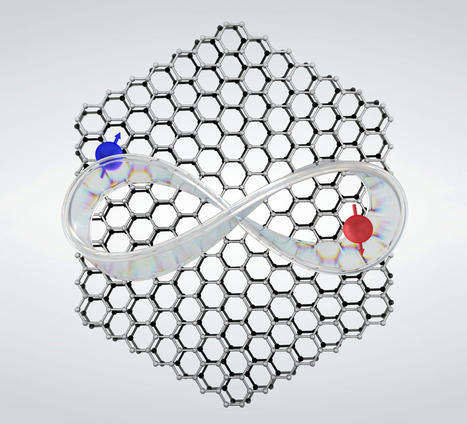
A team of University of Arkansas physicists has successfully developed a circuit capable of capturing graphene's thermal motion and converting it into an electrical current.
“An energy-harvesting circuit based on graphene could be incorporated into a chip to provide clean, limitless, low-voltage power for small devices or sensors,” said Paul Thibado, professor of physics and lead researcher in the discovery.
The findings, titled "Fluctuation-induced current from freestanding graphene," and published in the journal Physical Review E, are proof of a theory the physicists developed at the U of A three years ago that freestanding graphene — a single layer of carbon atoms — ripples and buckles in a way that holds promise for energy harvesting.
While this is not a lot of energy, we are going in the right direction. Nikola Tesla's idea that we would learn to latch on to the "wheelwork of nature" is definitely coming closer, one small step at a time.
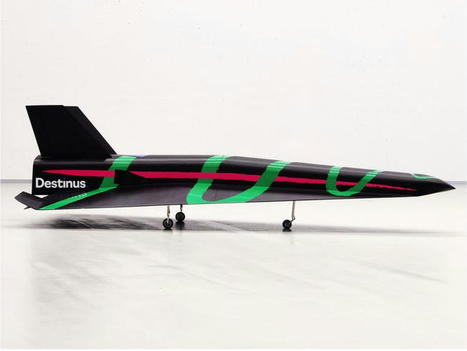
Is this the future of hypersonic transportation? Russia's version of Elon Musk thinks so.
You can't eliminate distance, but in near-space, where there's little air resistance, you can move pretty dang fast. In laymen's terms, that's the founding principle of a company that's developing a hypersonic hydrogen-powered vehicle capable of moving cargo between continents at unheard of shipping speeds.
The vehicle is designed as a hybrid between an airplane and rocket that takes off and lands horizontally from airports using a hydrogen-fed airbreathing jet engine. In this way, it will integrate with other planes when it passes through controlled airspaces. However, once a certain altitude and speed are reached, the hyperplane will switch to a cryogenic hydrogen rocket engine that will accelerate it to a hypersonic velocity.
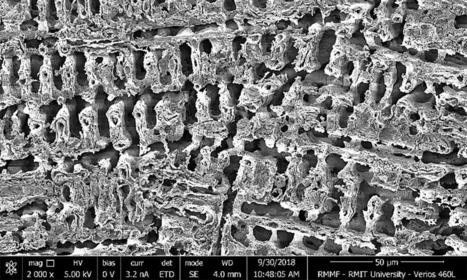
A new surface that kills bacteria more than 100 times faster and more effectively than standard copper could help combat the growing threat of antibiotic-resistant superbugs.
The new copper product is the result of a collaborative research project with RMIT University and Australia’s national science agency, CSIRO, with findings just published in Biomaterials. Copper has long been used to fight different strains of bacteria, including the commonly found golden staph, because the ions released from the metal’s surface are toxic to bacterial cells.
But this process is slow when standard copper is used, as RMIT University’s Distinguished Professor Ma Qian explained, and significant efforts are underway by researchers worldwide to speed it up. “A standard copper surface will kill about 97% of golden staph within four hours,” Qian said. “Incredibly, when we placed golden staph bacteria on our specially-designed copper surface, it destroyed more than 99.99% of the cells in just two minutes. So not only is it more effective, it’s 120 times faster.”
Importantly, said Qian, these results were achieved without the assistance of any drug. “Our copper structure has shown itself to be remarkably potent for such a common material,” he said.
Copper has been known to disinfect, meaning to kill bacteria very efficiently, but it appears that with a specially designed surface, the metal is even more effective. Hospitals, pay attention...
The Speeder’s design team said the sci-fi sky-bike recently passed flight tests. They expect it to be commercially available by 2023.
Jetpack Aviation, which already makes vertical people propellers, just announced a successful test flight of its jet-driven flying motorcycle prototype. The projected performance is Easy Rider-worthy bad-ass, and best of all, the California company plans to produce two consumer versions for everyday users.
The Speeder is an engineering feat that required Jetpack Aviation to write its own flight-control software program to monitor and adjust the thrust. The benefit of that work, which took a year and a half, is an intuitive system that functions like a typical motorcycle and automatically stabilizes the machine in flight. It can take off and land vertically from most surfaces in roughly the space taken up by a car, and it can be programmed to fly autonomously.
A little bit of progress on pushing more of our traffic into the air. More independence than cars and motorbikes, and perhaps it really is better to leave the streets to people walking and biking or skateboarding...
The graphene aluminum-ion battery cells from the Brisbane-based Graphene Manufacturing Group (GMG) are claimed to charge up to 60 times faster than the best lithium-ion cells and hold more energy.
Based on breakthrough technology from the University of Queensland’s (UQ) Australian Institute for Bioengineering and Nanotechnology, the battery cells use nanotechnology to insert aluminum atoms inside tiny perforations in graphene planes.
GMG Managing Director Craig Nicol insisted that while his company’s cells were not the only graphene aluminum-ion cells under development, they were easily the strongest, most reliable and fastest charging.
“It charges so fast it’s basically a super capacitor,” Nicol claimed. “It charges a coin cell in less than 10 seconds.”
The new battery cells are claimed to deliver far more power density than current lithium-ion batteries, without the cooling, heating or rare-earth problems they face.
“So far there are no temperature problems. Twenty percent of a lithium-ion battery pack (in a vehicle) is to do with cooling them. There is a very high chance that we won’t need that cooling or heating at all,” Nicol claimed.
“It does not overheat and it nicely operates below zero so far in testing...
This looks like some real progress in battery technology. Abundant non-toxic materials graphite and aluminium, fast charging and three times the energy density of lithium-ion.
The article describes John F Kennedy’s dream of a new energy project of awesome dimensions: the Passamaquoddy Tidal venture, which would have used huge water turbines to produce electricity for both America and Canada.
It would also have provided a model for the rest of the world.
I publish this account in the context of the Biden administration’s plan to convert huge tracts of privately owned US land to federally controlled property. On that land, relatively feeble “clean energy” technologies would replace, oil, coal, and natural gas—an unmitigated disaster.
It’s intentional. It’s part and parcel of the technocratic program to LOWER THE PRODUCTION AND USE OF ENERGY ALL OVER THE WORLD…
Thus, “saving the planet” from global warming.
Actually, not saving anything, but instead, further destroying the lives of people from one end of the world to the other, by condemning them to far less available energy.
Meanwhile, actual alternative energy innovations are suppressed...
“Powerpaste stores hydrogen in a chemical form at room temperature and atmospheric pressure to be then released on demand,” explains Dr. Marcus Vogt, research associate at Fraunhofer IFAM. And given that Powerpaste only begins to decompose at temperatures of around 250 °C, it remains safe even when an e-scooter stands in the baking sun for hours. Moreover, refueling is extremely simple. Instead of heading to the filling station, riders merely have to replace an empty cartridge with a new one and then refill a tank with mains water. This can be done either at home or underway.
The starting material of Powerpaste is magnesium, one of the most abundant elements and, therefore, an easily available raw material. Onboard the vehicle, the Powerpaste is released from a cartridge by means of a plunger. When water is added from an onboard tank, the ensuing reaction generates hydrogen gas in a quantity dynamically adjusted to the actual requirements of the fuel cell. In fact, only half of the hydrogen originates from the Powerpaste ; the rest comes from the added water.
“Powerpaste thus has a huge energy storage density,” says Vogt. “It is substantially higher than that of a 700 bar high-pressure tank. And compared to batteries, it has ten times the energy storage density.”
This looks like a much needed advance in our ability to store hydrogen to be released on demand. It might get fuel cells (making electricity from hydrogen) off the ground into more widespread application.
Let's talk about information technology for a moment and look at its potential for misuse. Google is a great example of that.
"Google announced its new plans for AI this week at their annual I/O developer conference, and to say that not everyone in the Tech Industry was thrilled by their plans to integrate Generative AI into their search engine, would be an understatement. Emily Dreibelbis, writing for PC Magazine, published one of the more apocalyptic articles warning that Google could basically destroy most websites on the Internet. Maggie Harrison, writing for Futurism, issued similar warnings for the future of independent journalism due to Google's plan for Generative AI, noting that Google still owns 91% of all Internet searches. This is one of the REAL dangers of AI, the fact that the largest technology companies that control the Internet could very easily drive everyone else out of business and thereby control all the content on the Internet.
And in fact, that trend has already started in the technology sector, as year-to-date there have already been 193,860 employees laid off in the technology sector, with many tech businesses failing, as well as some of their top banks also failing, like Silicon Valley Bank, that funded these companies. This investment in the future of AI, is the main thing holding up the U.S. stock market right now. Five technology stocks, Google, Apple, Microsoft, Meta and Amazon, have accounted for 89% of the S&P 500 YTD price return. It is looking more and more every day that we are looking at a total market collapse at some point, and then only the largest banks and the largest technology companies will be left, because they are "too big to fail," especially since the U.S. military and their Intelligence agencies all depend on Big Tech, who hold all their data in their Cloud Computing data centers.
This appears to be the goal of the Wall Street billionaires and their bankers, since there is no way they can pay off their debts. Just crash the entire financial system, and choose which Tech companies and banks survive. Then they will have total control of the flow of money as they require digital IDs and work towards a Central Bank Digital Currency, operated by the Big Tech companies that survive, who will also control the flow of information through AI. Will enough Americans wake up soon enough to prevent this from happening, or will it take a total collapse of the economy to reveal what is really happening with this "Great Reset"?
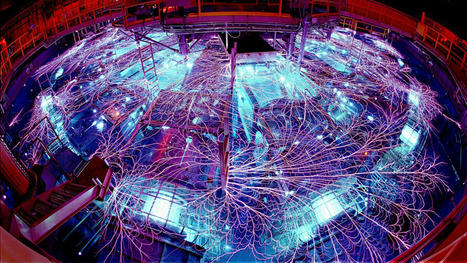
China aspires to produce unlimited clean energy through nuclear fusion by 2028, claims China's top nuclear weapons expert.
The "world's largest" pulsed-power plant will be built in Chengdu, Sichuan province, according to Professor Peng Xianjue of the Chinese Academy of Engineering Physics, The Independentreported on Wednesday.
"Fusion ignition is the jewel in the crown of science and technology in today's world," said Professor Peng.
"Being the world's first to achieve energy-scale fusion release will lay the most important milestone in the road to fusion energy for human beings."
The finest outcome so far achieved by Chinese scientists utilizing an “artificial sun” is a reaction running at a slightly cooler 70 million degrees celsius for more than 17 minutes.
The Z-pinch machine, which imitates a thermonuclear bomb's fusion process through enormous electric pulses, will be used in the Chinese power plant.
China is pushing ahead with fusion energy, and it seems they may be ahead of other contendents with this technology. This is the kind of technology that could help get us off hydrocarbons as fuel. Don't wait for it though. Fusion energy has been "around the corner" for decades now. May this be the good one.
Researchers have created an electrolyser that can draw on the water in the air and turn it into hydrogen fuel and oxygen.
Green hydrogen, made from water electrolysis, has great potential to store and transport renewable energy. But the process to make it requires water, and many of the places with the highest potential for solar energy are very dry.
The device, called the Direct Air Electrolysis (DAE) module, is made from a porous, sponge-like substance with electrodes at either end. The sponge is “hygroscopic”: it absorbs moisture from the ambient air.
“It’s actually a completely new concept, because previous electrolysers for hydrogen production from water have needed to be a closed system,” says Li.
“Our system is different: we have a semi-open electrolyser, so we only have the top and bottom electrode closed, but the four sides of that electrolyser are open to the air.
“It means the moisture from the air can transfer into the hygroscopic electrolyte automatically, or spontaneously, without consuming energy. So we don’t need extra energy to extract this water.”
Hydrogen is a gas that can be used to heat and to cleanly drive all kinds of machinery including motors and turbines. If made by electrolysis using renewable energy such as solar or wind, it is called 'green hydrogen'. Here is a new way of making the stuff.
MIT spinout Quaise Energy is working to create geothermal wells made from the world’s deepest holes in order to repurpose coal and gas plants.
There’s an abandoned coal power plant in upstate New York that most people regard as a useless relic. But MIT’s Paul Woskov sees things differently.
Woskov, a research engineer in MIT’s Plasma Science and Fusion Center, notes the plant’s power turbine is still intact and the transmission lines still run to the grid. Using an approach he’s been working on for the last 14 years, he’s hoping it will be back online, completely carbon-free, within the decade.
In fact, Quaise Energy, the company commercializing Woskov’s work, believes if it can retrofit one power plant, the same process will work on virtually every coal and gas power plant in the world.
Quaise is hoping to accomplish those lofty goals by tapping into the energy source below our feet. The company plans to vaporize enough rock to create the world’s deepest holes and harvest geothermal energy at a scale that could satisfy human energy consumption for millions of years. They haven’t yet solved all the related engineering challenges, but Quaise’s founders have set an ambitious timeline to begin harvesting energy from a pilot well by 2026.
What a good idea - develop technology that bores holes in the ground with microwave lasers rather than physical drill bits to convert existing plants that burn coal or gas and let the earth do the work of making the steam...
Today we are going to teach you how to convert a gasoline engine to run on water, that is, an engine with water as fuel. The hydrogen engine that runs on water is a chimera that has been said to be impossible for decades, but we have access to confidential and secret information, and we have discovered the compound HH+ which, if used as an electrolyte, can produce a large amount of hydrogen. This will be enough to run any motor
With hydrogen or water-as-fuel technology readily available, why are we stuck on hydrocarbons like gasoline or diesel fuel for running motors and generators? Could there be some hidden interests involved...
This video provides some further details about PrimerFusion, a revolutionary fusion concept based on the PrimerField theories of electromagnetism. This process is patent-pending and in the experimental stage. The next PrimerFusion reactor is currently under construction, and this new design incorporates many modifications based on the results of previous PrimerFusion reactor experiments. We hope to begin testing this new PrimerFusion reactor in the summer of 2022. Future videos will be released soon to provide further information about the previous PrimerFusion experiments and the complete PrimerFusion process.
PrimerFusion is an aneutronic approach to fusion energy that produces no carbon emissions. In addition, the cost of the electricity produced with PrimerFusion will be much lower than current forms of energy production.
Therefore, with PrimerFusion, we can simultaneously reduce carbon emissions and energy costs.
This video was produced by the PrimerField Foundation. The PrimerField Foundation is a 501 c3 non-profit registered with the IRS. All donations are tax-deductible and greatly appreciated. With your support, we can change the world.
Based on the concept of hydrogen/boron fusion in an unconventional magnetic environment, we have here an alternative energy technology under development that could help eliminate pollution from fossil fuels substituting with low-cost energy from direct conversion to electricity of the fusion-produced highly energetic helium particles...
The new review paper on magnetic topological materials of Andrei Bernevig, Princeton University, USA, Haim Beidenkopf, Weizmann Institute of Science, Israel, and Claudia Felser, Max Planck Institute for Chemical Physics of Solids, Dresden, Germany, introduces the new theoretical concept that interweaves magnetism and topology. It identifies and surveys potential new magnetic topological materials, mentions their possible future applications in spin and quantum electronics and as materials for efficient energy conversion. The review discusses the connection between topology, symmetry, and magnetism at a level suitable for graduate students in physics, chemistry, and materials science that have a basic knowledge of condensed matter physics.
Magnetic topological materials represent a class of compounds whose properties are strongly influenced by the topology of the electronic wavefunctions coupled with their spin configuration. Topology is a simple concept dealing with the surfaces of objects. The topology of a mathematical structure is identical if it is preserved under continuous deformation. A pancake has the same topology as a cube, a donut as a coffee cup, and a pretzel as a board with three holes. Adding spin offers additional structure – a new degree of freedom – for the realization of new states of matter that are not known in non-magnetic materials. Magnetic topological materials can support chiral channels of electrons and spins, and can be used for an array of applications from information storage, control of dissipationless spin and charge transport, to giant responses under external stimuli such as temperature and light...
Yes - some real progress in understanding magnetic materials and their properties ... lends itself to myriad technological uses, including catalytic splitting of water to obtain hydrogen.
The Gouy-Chapman theory describes what happens near an electrode when it is in contact with a salt solution, but this description does not match reality. Researcher Kasinath Ojha, assistant professor Katharina Doblhoff-Dier and professor Marc Koper present a new version.
"The next generation of textbooks on electrochemistry is going to look different."
Comment by a friend: "Gee.. so maybe there is more to the nano palladium and nickel mixtures described by Andrea Rossi and other proponents of LENR/ ColdFusion."
Comment by a friend: "Gee.. so maybe there is more to the nano palladium and nickel mixtures described by Andrea Rossi and other proponents of LENR/ ColdFusion."
Swiss-based Exlterra reported spectacular results after one year of decontamination in the Chernobyl zone using its safe, novel technology.
As they committed to doing last April, on the occasion of the 35th commemoration of the Chernobyl accident, the Swiss-based company Exlterra has reported spectacular results after one year of decontamination on a 2.5 acre plot of land (1 hectare), located in the radioactive exclusion zone around the plant in Ukraine.
Exlterra announced last month that radioactive pollution in the soil decreased by 47%, and in the air above the ground by an average of 37%, one year after the installation of its NSPS technology (Nucleus Separation Passive System).
The company believes total remediation of the area is “seriously conceivable within four years”—without moving any earth or using any chemicals...
Finally someone who can seriously reduce radioactivity levels orders of magnitude faster than the natural half life of those elements, and who has demonstrated in the real world that they can do so.
Using electricity to induce rain from existing clouds... crude but efficient it seems. Something similar has been done with more subtle energies, but science never caught on, so now they are down to "electroshock therapy" for the clouds...
Tensegrity (or tensional integrity, or floating compression) is really counterintuitive. These bizarre structures can be explained quite nicely with a 2D version (you know I love to explain things with a 2D versions!).
Tensegrity - or tensional integrity - a concept discovered and explored by Buckminster Fuller, whose best known structure built on that principle is the Geodesic Dome...
Powering LED light, purifying salt water, and utilizing solar power, Henry Goglau's solar desalination still is a Lexus Design Award finalist.
People living in the shanty towns of Chile’s coastline have all the water they could ever need, but they can’t drink it because it’s too salty. There’s also abundant solar energy here, but nothing to harness it.
Clean water is scarce for the 110,000 families in the area, and power comes through unreliable electric lines. Windows are often boarded up to increase privacy and security, which removes almost all natural light.
“I wanted to achieve a design which was sustainable, passive, and created a striking feature inside the dark settlement home,” writesGoglau, a New Zealander who graduated from the Royal Danish Academy with a master’s degree, specializing in architecture for extreme conditions.
“In my development process it became apparent that I could address the lack of indoor lighting and water access by creating a hybrid skylight and solar desalination device.”
Goglau’s device can purify 440 milliliters of water a day, with leftover brine being sifted into batteries made of zinc and copper where they power an LED strip for use during the night.
The meaning of Dajjal`s donkey as an hypersonic Jet aero plane. As Plane has jet engine which emit fires and people sit inside it and there are announcements made before it takes off and it travels above the cloud lines. https://rajpariwar.com/wp/antichrists-hypersonic-ride-dajjal-ki-sawari/
To get content containing either thought or leadership enter:
To get content containing both thought and leadership enter:
To get content containing the expression thought leadership enter:
You can enter several keywords and you can refine them whenever you want. Our suggestion engine uses more signals but entering a few keywords here will rapidly give you great content to curate.


 Your new post is loading...


 Scoop.it!























Can AI be defeated by AI? Can it support human creativity instead the designs of tose corporate giants? Here's an interesting video interview I just came across as if "by chance"...