Your new post is loading...

|
Scooped by
NatProdChem
April 20, 2012 6:36 PM
|
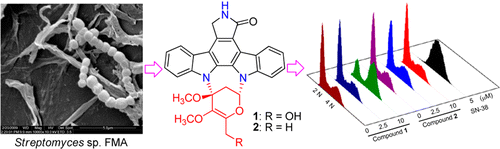
Streptocarbazoles A (1) and B (2), two novel indolocarbazoles featuring unprecedented cyclic N-glycosidic linkages between 1,3-carbon atoms of the glycosyl moiety and two indole nitrogen atoms of the indolocarbazole core, were isolated from the marine-derived actinomycetes strain Streptomyces sp. FMA. Their structures were established by spectroscopic methods, CD spectra, and ECD quantum mechanical calculations. Compound 1 was cytotoxic on HL-60 and A-549 cell lines and could arrest the cell cycle of Hela cells at the G2/M phase.
|
|
Scooped by
NatProdChem
April 19, 2012 7:50 PM
|
Framework study warns of environmental impact of widespread dam construction.
|
|
Scooped by
NatProdChem
April 19, 2012 7:40 PM
|
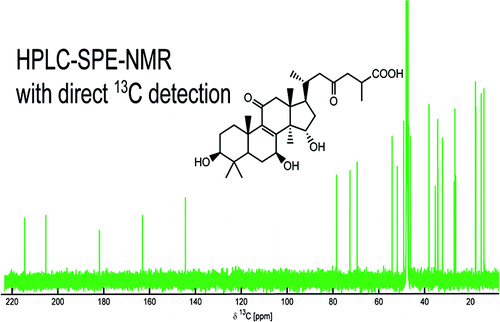
Solid phase extraction (SPE) was introduced as a crucial step in the HPLC-SPE-NMR technique to enable online analyte enrichment from which proton-detected NMR experiments on submicrogram amounts from complex mixtures were possible. However, the significance of direct-detected 13C NMR experiments is indubitable in simplifying structural elucidations. In the current study, we demonstrated direct 13C NMR detection of triterpenoids from a Ganoderma lucidum extract in hyphenation mode. The combined advantage of a cryogenically cooled probe, miniaturization, and multiple trapping enabled the first reported application of HPLC-SPE-NMR analysis using direct-detected 13C NMR spectra. HPLC column loading, accumulative SPE trappings, and the effect of different elution solvents were evaluated and optimized. A column loading of approximately 600 μg of a prefractionated triterpenoid mixture, six trappings, and an acquisition time of 13 h resulted in spectra with adequate signal-to-noise ratios to detect all C-13 signals.
|
|
Scooped by
NatProdChem
April 16, 2012 4:31 PM
|
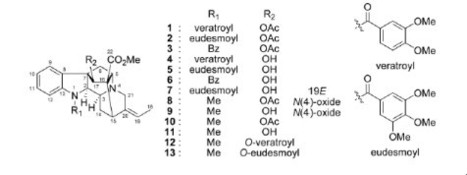
Seven new ajmaline type alkaloids, alstiphyllanines I – O (1 – 7) were isolated from the leaves of Alstonia macrophylla together with six related alkaloids (8 – 13). Structures and stereochemistry of 1 – 7 were fully elucidated and characterized by 2D NMR analysis. A series of alstiphyllanines I–O (1 – 7) as well as the known ajmaline type alkaloids (8 – 13) showed that they relaxed phenylephrine (PE)-induced contractions against rat aortic ring.
|
|
Scooped by
NatProdChem
April 15, 2012 3:13 PM
|
Over eight different families of natural products consisting of nearly 70 secondary metabolites that contain the bicyclo[2.2.2]diazaoctane ring system have been isolated from various Aspergillus, Penicillium, and Malbranchea species. Since 1968, these secondary metabolites have been the focus of numerous biogenetic, synthetic, taxonomic, and biological studies and, as such, have made a lasting impact across multiple scientific disciplines. This review covers the isolation, biosynthesis, and biological activity of these unique secondary metabolites containing the bridging bicyclo[2.2.2]diazaoctane ring system. Furthermore, the diverse fungal origin of these natural products is closely examined and, in many cases, updated to reflect the currently accepted fungal taxonomy.
|
|
Scooped by
NatProdChem
April 13, 2012 9:15 AM
|
The world's oceans are a rich source of natural products with extremely interesting chemistry. Biosynthetic pathways have been worked out for a few, and the story is being enriched with crystal structures of interesting pathway enzymes. By far, the greatest number of structural insights from marine biosynthetic pathways has originated with studies of curacin A, a poster child for interesting marine chemistry with its cyclopropane and thiazoline rings, internal cis double bond, and terminal alkene. Using the curacin A pathway as a model, structural details are now available for a novel loading enzyme with remarkable dual decarboxylase and acetyltransferase activities, an Fe2+/α-ketoglutarate-dependent halogenase that dictates substrate binding order through conformational changes, a decarboxylase that establishes regiochemistry for cyclopropane formation, and a thioesterase with specificity for β-sulfated substrates that lead to terminal alkene offloading. The four curacin A pathway dehydratases reveal an intrinsic flexibility that may accommodate bulky or stiff polyketide intermediates. In the salinosporamide A pathway, active site volume determines the halide specificity of a halogenase that catalyzes for the synthesis of a halogenated building block. Structures of a number of putative polyketide cyclases may help in understanding reaction mechanisms and substrate specificities although their substrates are presently unknown.
|
|
Scooped by
NatProdChem
April 12, 2012 6:26 PM
|
Cordifolide A (1), a novel unprecedented sulfur-containing clerodane diterpene glycoside, together with other two new diterpene glycosides, cordifolides B (2) and C (3), and four known analogues, was isolated from a methanol-soluble extract of the stems of Tinospora cordifolia. The structures of the new compounds were determined on the basis of spectroscopic data interpretation, with that of cordifolide A (1) confirmed by a single-crystal X-ray crystallographic analysis. All isolates were evaluated for their in vitro immunomodulatory activity using mouse bone marrow-derived dentritic cells (BMDCs).
|
|
Scooped by
NatProdChem
April 11, 2012 7:50 PM
|
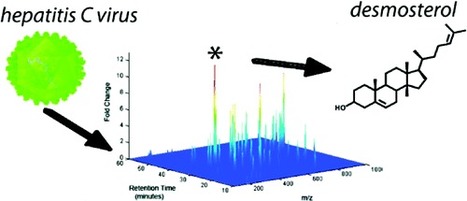
Hepatitis C virus (HCV) infection has been clinically associated with serum lipid abnormalities, yet our understanding of the effects of HCV on host lipid metabolism and conversely the function of individual lipids in HCV replication remains incomplete. Using liquid chromatography–mass spectrometry metabolite profiling of the HCV JFH1 cell culture infection model, we identified a significant steady-state accumulation of desmosterol, an immediate precursor to cholesterol. Pharmacological inhibition or RNAi-mediated depletion of DHCR7 significantly reduced steady-state HCV protein expression and viral genomic RNA. Moreover, this effect was reversed when cultures were supplemented with exogenous desmosterol. Together, these observations suggest an intimate connection between HCV replication and desmosterol homeostasis and that the enzymes responsible for synthesis of desmosterol may be novel targets for antiviral design.
|
|
Scooped by
NatProdChem
April 6, 2012 11:30 PM
|
Incarvilleatone (1), an unprecedented dimeric cyclohexylethanoid analog with a racemic nature, was isolated from the whole plant of Incarvillea younghusbandii. HPLC chiral separation of 1 gave two enantiomers (−)-incarvilleatone and (+)-incarvilleatone. The structure of 1 was established by spectroscopic methods and single crystal X-ray diffraction. The absolute configurations of enantiomers were determined by quantum mechanical calculation. (−)-Incarvilleatone exhibited a potent inhibitory effect against NO production in LPS-induced RAW264.7 macrophages.
|
|
Scooped by
NatProdChem
April 5, 2012 9:41 PM
|
Throughout its long history, and not just as the key aesthetic category for the Romantic Movement, the sublime has created the necessary link between aesthetic and moral judgment, offering the prospect of transcending the limits of measurement, even imagination. The best of science makes genuine claims to the sublime. For in science, as in art, every day brings the entirely new, the extreme, and the unrepresentable. How does one depict negative mass, for example, or the folding of a protein that is contagious? Can one capture emergent phenomena as they emerge? Science is continually faced with describing that which is beyond.
|
|
Scooped by
NatProdChem
April 5, 2012 9:29 PM
|
|
|
Scooped by
NatProdChem
April 4, 2012 4:28 PM
|
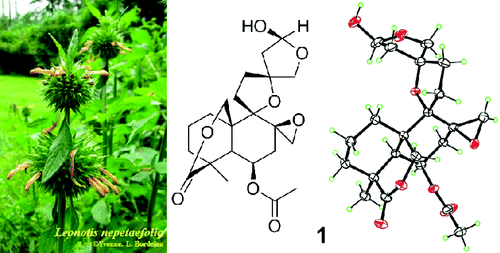
Ten new bis-spirolabdane diterpenoids, leonepetaefolins A–E (1, 3, 5, 7, 9) and 15-epi-leonepetaefolins A–E (2, 4, 6, 8, 10), together with eight known labdane diterpenoids (11–18) as well as two known flavonoids, apigenin and cirsiliol, were isolated from the leaves of Leonotis nepetaefolia. The structures of the new compounds were determined on the basis of 1D- and 2D-NMR experiments including 1H, 13C, DEPT, 1H–1H COSY, HSQC, HMBC, and NOESY. The absolute configuration of an epimeric mixture of 1 and 2 was determined by X-ray crystallographic analysis. The compounds isolated were evaluated for their binding propensity in several CNS G-protein-coupled receptor assays in vitro.
|
|
Scooped by
NatProdChem
April 3, 2012 8:42 AM
|
This Natural Products Reports review covers recent discoveries of anti-diabetic compounds. Diabetes mellitus (DM) is a complex disease affecting patients' daily life and elevating patients' risk of developing other diseases.
|
|
|
Scooped by
NatProdChem
April 19, 2012 7:56 PM
|
Five new vinylchlorine-containing metabolites, the lipoamides janthielamide A and kimbeamides A–C and the ketide-extended pyranone kimbelactone A, have been isolated from collections of marine cyanobacteria made in Curaçao and Papua New Guinea. Both janthielamide A and kimbeamide A exhibited moderate sodium channel blocking activity in murine Neuro-2a cells. Consistent with this activity, janthielamide A was also found to antagonize veratridine-induced sodium influx in murine cerebrocortical neurons. These lipoamides represent the newest additions to a relatively rare family of marine cyanobacterial-derived lipoamides and a new structural class of compounds exhibiting neuromodulatory activities from marine cyanobacteria.
|
|
Scooped by
NatProdChem
April 19, 2012 7:41 PM
|
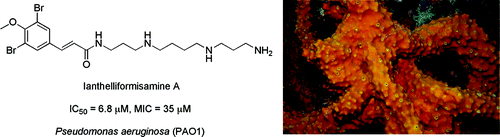
Mass-directed isolation of the CH2Cl2/CH3OH extract from S. ianthelliformis resulted in the purification of three new bromotyrosine-derived metabolites, ianthelliformisamines A–C (1–3), together with the known natural products aplysamine 1 (4) and araplysillin I (5). This is the first report of chemistry from the marine sponge S. ianthelliformis. Ianthelliformisamine A (1) showed inhibitory activity against the Gram-negative bacterium P. aeruginosa with an IC50 value of 6.8 μM (MIC = 35 μM).
|
|
Scooped by
NatProdChem
April 17, 2012 5:09 PM
|
Just like the Thesis Whisperer - but with more money...
|
|
Scooped by
NatProdChem
April 17, 2012 5:08 PM
|
Just like the horse whisperer - but with more pages...
|
|
Scooped by
NatProdChem
April 13, 2012 9:18 AM
|
Open Drug Discovery Teams (ODDT) is now available on the iTunes Store. The idea behind ODDT is that there are many rare of neglected diseases that might benefit from collaborative efforts from scientists from multiple disciplines, ODDT is an application that supports informal interactions, provides a means to explore relevant information in a flipboard like interface in particular information tagged by other scientists with similar interests. The image below gives you an idea of the topics currently discussed. A rapid presentation of the app : http://www.slideshare.net/ekinssean/oddt-open-drug-discovery-teams-for-collaboration
|
|
Scooped by
NatProdChem
April 12, 2012 9:16 PM
|
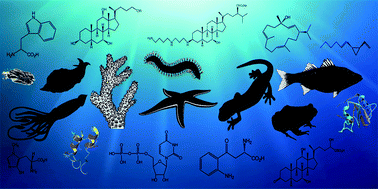
This review covers the subject of pheromones, attractants and other chemical cues of aquatic invertebrates, fishes and amphibians (including salamanders and anurans).
|
|
Scooped by
NatProdChem
April 12, 2012 10:31 AM
|
Physicists demonstrate a scalable quantum network that ought to be adaptable for long-distance quantum communication. 56 kBit MoDem is out ...
|
|
Scooped by
NatProdChem
April 11, 2012 7:42 PM
|
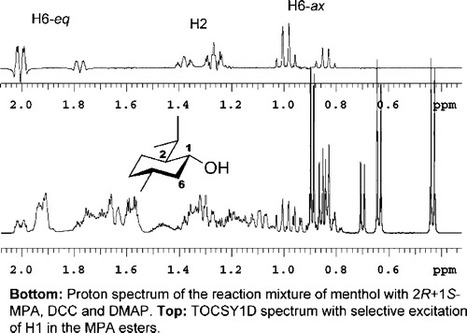
Routine selective excitation experiments, easy to set up on modern NMR spectrometers, allow for the determination of the absolute configuration of chiral secondary alcohols by double derivatization directly in the NMR tube. As a general method, TOCSY1D with selective excitation of the α proton in the MPA esters and with a short mixing time reveals only the nearby protons in the coupling network. Typically, the analysis takes less than 30 min. A longer mixing time, selective excitation of other signals, or NOESY1D experiments can be used for measuring ΔδRS of other protons.
|
|
Scooped by
NatProdChem
April 6, 2012 11:19 PM
|
Stigonemapeptin (1), a depsipeptide containing an Ahp (3-amino-6-hydroxy-2-piperidone) residue, was isolated from a bloom sample of the freshwater cyanobacterium Stigonema sp.
|
|
Scooped by
NatProdChem
April 6, 2012 11:18 PM
|
Among the foremost advantages of qHNMR is its accurate function with external calibration, the lack of any requirement for identical reference materials, a high precision and accuracy when properly validated, and an ability to quantitate multiple analytes simultaneously. As a result of the inclusion of over 170 new references, this updated review summarizes a wealth of detailed experiential evidence and newly developed methodology that supports qHNMR as a valuable and unbiased analytical tool for natural product and other areas of research.
|
|
Scooped by
NatProdChem
April 5, 2012 9:25 PM
|
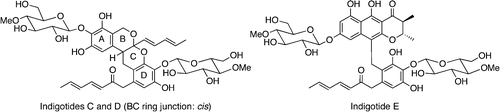
Cultivation of Cordyceps indigotica, an entomopathogenic fungus, in the presence of suberoyl bis-hydroxamic acid (an HDAC inhibitor) greatly activated its polyketide synthesis apparatus to afford six novel aromatic polyketides, indigotides C–F (1–4), 13-hydroxyindigotide A (5), and 8-O-methylindigotide B (6). The structures of these compounds were determined by NMR spectroscopic analyses. Among the compounds, indigotides C–E (1–3) possessed unprecedented dimeric polyketide frameworks possibly generated via a [4 + 2] cycloaddition or Michael type reaction.
|
|
Scooped by
NatProdChem
April 4, 2012 12:03 AM
|
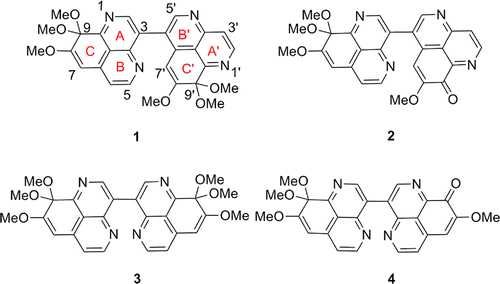
Suberitine A–D (1–4), four new bis-aaptamine alkaloids with two aaptamine skeleton units, 8,9,9-trimethoxy-9H-benzo[de][1,6]-naphthyridine and demethyl(oxy)-aaptamine, linked through a rare C-3–C-3′ or C-3–C-6′ σ-bond between the 1,6-naphthyridine rings, together with two known monomers 5 and 6, were isolated from the marine sponge Aaptos suberitoides. Their structures were elucidated using NMR spectroscopy. Compounds 2 and 4 showed potent cytotoxicity against P388 cell lines, with IC50 values of 1.8 and 3.5 μM, respectively.
|





![Fungal Origins of the Bicyclo[2.2.2]diazaoctane Ring System of Prenylated Indole Alkaloids | Natural Products Chemistry Breaking News | Scoop.it](https://img.scoop.it/RsaIvQ7fzo83_kGD35fbvzl72eJkfbmt4t8yenImKBVvK0kTmF0xjctABnaLJIm9)