Your new post is loading...

|
Scooped by
NatProdChem
March 13, 2012 12:55 PM
|
The welwitindolinones with bicyclo[4.3.1] cores are a class of natural products that have attracted tremendous interest from the synthetic community because of their fascinating structures and promising biological profiles. More than 15 research groups worldwide have reported progress toward these elusive natural products. This Minireview describes contemporary studies aimed at the total synthesis of these challenging targets, in addition to the two recently completed syntheses of welwitindolinones with bicyclo[4.3.1] cores reported by Rawal and Garg in 2011. Both of the completed efforts rely on C4-C11 bond constructions to access the congested bicyclic framework of these elusive natural products.
|
|
Scooped by
NatProdChem
March 12, 2012 9:03 PM
|
Paul Coulerie et al. reported the isolation of antiviral compounds from the leaf extract of Dacrydium balansae. The biflavonoid podocarpusflavone A (2) is shown to be the strongest known noncytotoxic non-nucleotide molecule exhibiting a specific inhibitory activity against the RNA polymerase domain of DV-NS5 and thus is promising for chemotherapy development against dengue fever.
|
|
Scooped by
NatProdChem
March 12, 2012 2:23 PM
|
Chemical investigation into the twigs and leaves of Sapium insigne afforded seven new diterpenoids, sapinsignoids A–G (1–7), together with 10 known diterpenoids. The structures of 1–7 were assigned on the basis of detailed spectroscopic analysis and chemical degradation. Compounds 1–4 exhibited significant cytotoxicity against the A-549 tumor cell line (IC50 0.2–1.8 μM), while compounds 1–3 showed moderate cytotoxicity against the HL-60 cell line (IC50 2.7–6.5 μM).
|
|
Scooped by
NatProdChem
March 9, 2012 5:47 PM
|
The advent of life from prebiotic origins remains a deep and possibly inexplicable scientific mystery. Nevertheless, the logic of living cells offers potential insights into an unknown world of autonomous minimal life forms (protocells). This Account reviews the key life criteria required for the development of protobiological systems. By adopting a systems-based perspective to delineate the notion of cellularity, we focus specific attention on core criteria, systems design, nanoscale phenomena and organizational logic.
|
|
Scooped by
NatProdChem
March 9, 2012 2:50 PM
|
A chemically prolific strain of Aspergillus was isolated from a soil sample collected near Waikiki Beach, Honolulu, Hawaii. The fungus produced several secondary metabolites, which were purified and placed in our natural products library and were later screened for substances capable of inhibiting biofilm formation by Candida albicans. It was determined that one of the secondary metabolites from the Hawaiian fungal isolate, a new complex prenylated indole alkaloid named waikialoid A (1), inhibited biofilm formation with an IC50 value of 1.4 μM.
|
|
Scooped by
NatProdChem
March 6, 2012 2:32 PM
|
A series of 73 bisphosphonium salts and 10 monophosphonium salt derivatives were synthesized and tested in vitro against several wild type and resistant lines of Trypanosoma brucei (T. b. rhodesiense STIB900, T. b. brucei strain 427, TbAT1-KO, and TbB48). More than half of the compounds tested showed a submicromolar EC50 against these parasites. The compounds did not display any cross-resistance to existing diamidine therapies, such as pentamidine. In most cases, the compounds displayed a good selectivity index versus human cell lines. None of the known T. b. brucei drug transporters were required for trypanocidal activity, although some of the bisphosphonium compounds inhibited the low affinity pentamidine transporter. It was found that phosphonium drugs act slowly to clear a trypanosome population but that only a short exposure time is needed for irreversible damage to the cells. A comparative molecular field analysis model (CoMFA) was generated to gain insights into the SAR of this class of compounds, identifying key features for trypanocidal activity.

|
Suggested by
Mélanie BOURJOT
March 4, 2012 11:32 AM
|
The Institute for Ethnomedicine searches for new cures by studying plant medicine and patterns of wellness and disease among indigenous people.
|
|
Scooped by
NatProdChem
March 2, 2012 6:58 AM
|
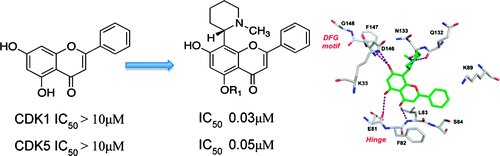
Nguyen et al. reported in J. Med. Chem. the identification of natural flavonoidal alkaloids of unknown configuration as potent inhibitors of the CDK1 and CDK5 kinases. They developed an efficient and modular synthetic strategy for their preparation and that of analogues in order to determine the absolute configuration of the active natural flavonoidal alkaloids and to provide further insights on the structure–activity relationships in this series.
|
|
Scooped by
NatProdChem
February 29, 2012 8:04 AM
|
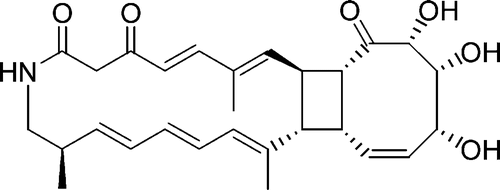
Tripartilactam, a structurally unprecedented cyclobutane-bearing tricyclic lactam metabolite, was discovered from Streptomyces sp. isolated from a brood ball of the dung beetle, Copris tripartitus. The structure of this compound was elucidated by the combination of NMR, MS, UV, and IR spectroscopy and multistep chemical derivatization. Tripartilactam was evaluated as a Na+/K+ ATPase inhibitor (IC50 = 16.6 μg/mL).
|
|
Scooped by
NatProdChem
February 29, 2012 7:18 AM
|
Seven new terpenoids, including two sesquiterpene dimers (1, 2), two norditerpenoids (3, 4), and three sesquiterpenes (5–7), along with six known sesquiterpene dimers and four known sesquiterpenes were isolated from the whole plant of Chloranthus serratus. Their structures and relative configurations were elucidated on the basis of spectroscopic data analysis. The absolute configuration of 1 was determined by the CD exciton chirality method.
|
|
Suggested by
Mélanie BOURJOT
February 29, 2012 7:04 AM
|
Sorres et al. at the ICSN reported the isolation of Pipestelides A–C (2–4). These are three new NRPS–PKS hybrid macrolides containing uncommon moieties, isolated from the Pacific marine sponge Pipestela candelabra. Their structures were elucidated on the basis of spectroscopic data. These cyclodepsipeptides appear to be biosynthetically related to jaspamide (aka jasplakinolide) (1) by chemical modification of the building blocks of the polyketide or peptide chains.
|
|
Scooped by
NatProdChem
February 15, 2012 10:03 PM
|
Life is that which evolves. Living systems are the products of evolutionary processes and can undergo further evolution. A crucial question for the origin of life is the following: when do chemical kinetics become evolutionary dynamics? In this Account, Chen & Nowak review properties of “prelife” and discuss the transition from prelife to life. OK. I got the abstract, intro and part of the conclusion but didn't understood the rest of the paper. I post ... one day maybe ... Anyway the research subject of these two seems incredibly passionating and ... fundamental. Emergence of life.
|
|
Scooped by
NatProdChem
February 15, 2012 11:47 AM
|
Chemical metrologists in Canada have made the most accurate measurement of silicon's molecular weight to date in a bid to derive a consistent and internationally acceptable figure for the Avogadro constant. The work forms a key part of the redefinition of the kilogram, agreed last year by the International Bureau of Weights and Measures.
|
|
|
Scooped by
NatProdChem
March 12, 2012 10:26 PM
|
Human African trypanosomiasis (HAT) or sleeping sickness is caused by two subspecies of Trypanosoma brucei, Trypanosoma brucei gambiense, and Trypanosoma brucei rhodesiense and is one of Africa’s old plagues. It causes a huge number of infections and cases of death per year because, apart from limited access to health services, only inefficient chemotherapy is available. Since it was reported that quinolones such as ciprofloxacin show antitrypanosomal activity, a novel quinolone-type library was synthesized and tested. The biological evaluation illustrated that 4-quinolones with a benzylamide function in position 3 and cyclic or acyclic amines in position 7 exhibit high antitrypanosomal activity. Structure–activity relationships (SAR) are established to identify essential structural elements. This analysis led to lead structure 29, which exhibits promising in vitro activity against T. b. brucei (IC50 = 47 nM) and T. b. rhodesiense (IC50 = 9 nM) combined with low cytotoxicity against macrophages J774.1.
|
|
Scooped by
NatProdChem
March 12, 2012 3:31 PM
|
In modern analytical chemistry researchers pursue novel materials to meet analytical challenges such as improvements in sensitivity, selectivity, and detection limit. Metal–organic frameworks (MOFs) are an emerging class of microporous materials, and their unusual properties such as high surface area, good thermal stability, uniform structured nanoscale cavities, and the availability of in-pore functionality and outer-surface modification are attractive for diverse analytical applications. This Account summarizes our research on the analytical applications of MOFs ranging from sampling to chromatographic separation.
|
|
Scooped by
NatProdChem
March 9, 2012 6:42 PM
|
Levrier et al. from the ICSN reported the isolation of a new 10β-hydroxy-19-nor-cardenolide, named toxicariosideM (1). It was isolated from the trunk bark of Antiaris toxicaria (Pers.) Lesch (Moraceae), along with six known cardenolides (convallatoxin (2), convallatoxol (3), convalloside (4), 3-O-ß-D-xylopyranosylstrophanthidin (5), glucostrophanthidin (6) and strophanthidin (7)). Their structures were elucidated on the basis of HR-MSn analysis, spectroscopic methods (IR, UV, 1D and 2D NMR) and by comparison with data reported in the literature. The cardenolides were evaluated for their cytotoxic activity against KB, HCT-116, SF-268, MCF-7, HL-60, PC-3 and MRC-5 cell lines.
|
|
Scooped by
NatProdChem
March 9, 2012 3:01 PM
|
WOW ! This is SF. Implantable biofuel cells have been suggested as sustainable micropower sources operating in living organisms, but such bioelectronic systems are still exotic and very challenging to design. Very few examples of abiotic and enzyme-based biofuel cells operating in animals in vivo have been reported. Implantation of biocatalytic electrodes and extraction of electrical power from small living creatures is even more difficult and has not been achieved to date. Here we report on the first implanted biofuel cell continuously operating in a snail and producing electrical power over a long period of time using physiologically produced glucose as a fuel. The “electrified” snail, being a biotechnological living “device”, was able to regenerate glucose consumed by biocatalytic electrodes, upon appropriate feeding and relaxing, and then produce a new “portion” of electrical energy. The snail with the implanted biofuel cell will be able to operate in a natural environment, producing sustainable electrical micropower for activating various bioelectronic devices.
|
|
Scooped by
NatProdChem
March 8, 2012 7:56 PM
|
A concise, protecting group-free total synthesis of (−)-fusarisetin A (1) was efficiently achieved in nine steps from commercially available (S)-(−)-citronellal. The synthetic approach was inspired by our proposed biosynthesis of 1. Key transformations of our strategy include a facile construction of the decalin moiety that is produced via a stereoselective IMDA reaction and a one-pot TEMPO-induced radical cyclization/aminolysis that forms the C ring of 1. Our route is amenable to analogue synthesis for biological evaluation
|
|
Scooped by
NatProdChem
March 5, 2012 4:52 PM
|
The absolute configuration (via degradation and Marfey’s derivatization studies) and the total synthesis of a novel antimalarial lipid-peptide isolated from Streptomyces sp. (IC50 = 0.8 μM, Plasmodium falciparum 3D7) is disclosed. To this end, versatile stereocontrolled routes to nonproteinogenic amino acids (via catalytic Mannich, Sharpless methods) and enantiomeric trans fatty acids (via Evans alkylation, Kocienski–Julia olefination) have been developed.
|
|
Scooped by
NatProdChem
March 4, 2012 7:46 AM
|
The cover picture shows the concept behind ChemistryOpen. By creating the first chemical society-owned open-access journal, ChemPubSoc Europe and Wiley-VCH have unlocked the door to all areas of chemistry, symbolized here by the periodic table. Work published in ChemistryOpen will be accessible to all, irrespective of socioeconomic or geographical considerations. With the backing of 16 continental European chemical societies and the experience of its sister journals to hand, ChemistryOpen is expected to continue the high standards and level of excellence to be expected from a ChemPubSoc Europe journal.
|
|
Scooped by
NatProdChem
February 29, 2012 12:09 PM
|
A novel marine toxin, brevisulcenal-F (KBT-F, from karenia brevisulcata toxin) was isolated from the dinoflagellate Karenia brevisulcata. Chemical investigations showed that KBT-F has the molecular formula C107H160O38 and a complex polycyclic ether nature. NMR and MS/MS analyses revealed the complete structure for KBT-F, which is characterized by a ladder-frame polyether scaffold, a 2-methylbut-2-enal terminus, and an unusual substituted dihydrofuran at the other terminus. The main section of the molecule has 17 contiguous 6- and 7-membered ether rings.
|
|
Scooped by
NatProdChem
February 29, 2012 7:57 AM
|
Jieping Zhu at EPFL in Lausanne reported a concise synthesis of trigoniliimine B, an oxidatively rearranged bisindole alkaloid originaly isolated from the genus Trigonostemon.

|
Suggested by
Mehdi
February 29, 2012 7:12 AM
|
A Modular Hierarchy-Based Theory of the Chemical Origins of Life Based on Molecular Complementarity
ROBERT ROOT-BERNSTEIN proposes that molecular complementarity is ubiquitous in living systems because it provides the physicochemical basis
for modular, hierarchical ordering and replication necessary for the evolution of the chemical systems upon which life is based. Link : http://pubs.acs.org/doi/abs/10.1021/ar200209k
|
|
Scooped by
NatProdChem
February 16, 2012 8:28 PM
|
Three unique nortriterpenoids, schilancitrilactones A–C (1–3), were isolated from the stems of Schisandra lancifolia. Compound 1 possesses a 5/5/7/5/5/5-fused hexacyclic ring system with a C29 backbone, while 2 and 3 feature a C27 skeleton with a 5/7/5/5/5-fused pentacyclic ring system. Their absolute stereochemistries were established by CD and single-crystal X-ray diffraction experiments.
|
|
Scooped by
NatProdChem
February 15, 2012 6:42 PM
|
A great idea will get applicants only so far. But there are other strategies that can add to the chances of success.
|


![Total Syntheses of the Elusive Welwitindolinones with Bicyclo[4.3.1] Cores | Natural Products Chemistry Breaking News | Scoop.it](https://img.scoop.it/GxyEZZ2MVbXp2ma-5HRqFDl72eJkfbmt4t8yenImKBVvK0kTmF0xjctABnaLJIm9)