


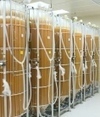
Approval of a ‘biologic’ manufactured in plant cells may pave the way for similar products.

 Your new post is loading...
 Your new post is loading...
Your new post is loading...
 Scoop.it!
Approval of a ‘biologic’ manufactured in plant cells may pave the way for similar products. 
No comment yet.
Sign up to comment
Scoop.it!

From
pubs

As part of a bioprospecting program aimed at the discovery of antiprotozoal agents from the Brazilian flora, two new sesquiterpene pyridine alkaloids, ilicifoliunines A (1) and B (2), along with the known alkaloids aquifoliunine E-I (3) and mayteine (4), were isolated from the root bark of Maytenus ilicifolia. The structures of 1 and 2 were established on the basis of spectroscopic data interpretation. Alkaloid 3 displayed potent in vitro antiprotozoal activity against Leishmania chagasi and Trypanosoma cruzi, with IC50 values of 1.4 and 41.9 μM, respectively, as well as low cytotoxicity against murine peritoneal macrophages (IC50 of 1.8 mM).
Scoop.it!
From
pubs
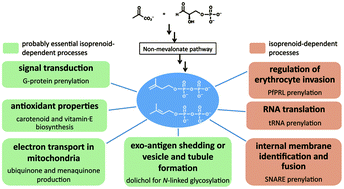
Due to the increase in resistance of Plasmodium spp. against available antimalarials, there is a need for new, effective and innovative drugs. The non-mevalonate pathway for the biosynthesis of the universal isoprenoid precursors, which is absent in humans, is suggested as an attractive source of targets for such drugs with a novel mode of action. The biological importance of this pathway to Plasmodium spp. is proven by the efficacy of the clinical candidate fosmidomycin, which inhibits the biosynthesis of isoprenoid precursors; it is, however, less clear which isoprenoid end products are essential for parasite survival. In this Highlight, we identify protein prenylation, isoprene-containing quinone production, N-linked glycosylation as well as carotenoid and vitamin-E biosynthesis as probably essential isoprenoid-dependent physiological processes in Plasmodium.
Scoop.it!
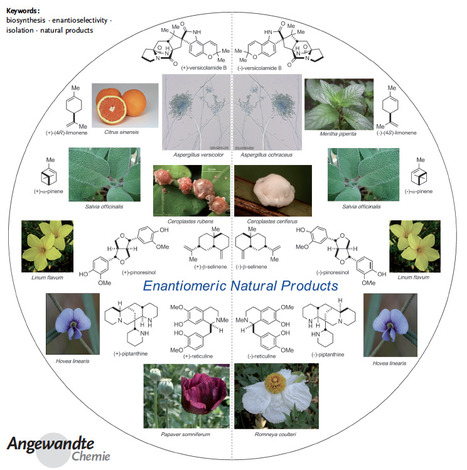
In nature, chiral natural products are usually produced in optically pure form—however, occasionally both enantiomers are formed. These enantiomeric natural products can arise from a single species or from different genera and/or species. Extensive research has been carried out over the years in an attempt to understand the biogenesis of naturally occurring enantiomers; however, many fascinating puzzles and stereochemical anomalies still remain.
Scoop.it!

From
pubs
Ten indole alkaloids were isolated from Geissospermum reticulatum, seven (1–7) from the leaves and three (8–10) from the bark. Seven were aspidospermatan-type alkaloids (1–3, 5–9), including four (5–8) with a 1-oxa-3-cyclopentene group in their molecule, which we named geissospermidine subtype. Compounds 1–3, 5–8, and 10 had not been reported previously as natural products, while 4 and 9 were the known alkaloids O-demethylaspidospermine and flavopereirine. Their structures were determined by spectroscopic techniques including 1D and 2D NMR experiments (COSY, NOESY, HSQC, HMBC). Additionally, X-ray crystallographic analyses of 1, 2, and 6 were performed. Antiparasitic activities of the ethanolic and alkaloidal extracts and of the pure alkaloids were tested against Trypanosoma cruzi and Leishmania infantum. In general, the extracts exhibited selective action and were more active against Leishmania than against Trypanosoma. Alkaloid 4 was also very active against L. infantum.
Scoop.it!

Almost every technological and medical innovation in the world has its roots in a scientific paper. Science drives much of the world’s innovation. The faster science moves, the faster the world moves.
The discussion below the original articile is as interesting as the proper article itself !
Scoop.it!

From
pubs
Trigoflavidols A (1) and B (2), tetranorditerpenoid dimers possessing a rearrangement skeleton with a spiroketal core moiety, and trigoflavidol C (3), a hexanorditerpenoid, have been isolated from Trigonostemon flavidus along with two known compounds. Compounds 1 and 2 showed moderate antimicrobial activities (MIC values: 3.12–6.25 μg/mL) against Staphylococcus aureus, 8#MRSA, and 82#MRSA, and 1, 2, and 5 showed weak activities (IC50 values: 3.75–28.99 μM) against various human tumor cell lines.
Scoop.it!

Environmentalists pin hopes on presidential veto to reduce harmful impact of weakened legislation.
Scoop.it!
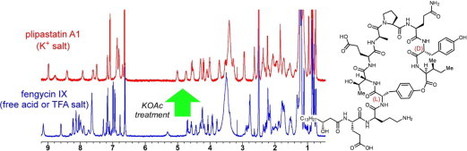
Plipastatin A1 and fengycin IX were experimentally proven to be identical compounds, while these had been considered as diastereomers due to the permutation of the enantiomeric pair of Tyr in most papers. The 1H NMR spectrum changed to become quite similar to that of plipastatin, when the sample which provided resembled spectrum of fengycin IX was treated with KOAc followed by LH-20 gel filtration. Our structural investigations disclosed that the structures of these molecules should be settled into that of plipastatin A1 by Umezawa (L-Tyr4 and D-Tyr10).
Scoop.it!
Like almost no other scientific discipline, drug discovery and drug development improved both the quality of life as well as the life expectancy over the last hundred years. This was mainly driven by medicinal chemistry which is a traditional discipline rooted in organic synthesis and concerns the discovery, development, identification and interpretation of the mode of action of biologically active compounds at the molecular and cellular level. In its modern form, medicinal chemistry finds itself sandwiched between target discovery and clinical application and also focuses on target identification and target validation. However, the complexity of drug development and successfully bringing a drug to the market, is still facing major roads blocks and plagued by high attrition rates and rising R&D costs. As a consequence, a whole industry finds itself at a crossroad.
Scoop.it!

Although isocyanides are not rare amongst terrestrial microbes and marine organisms, despite tens of thousands of natural products isolated from plants, isocyanides are still missing. Isocyalexin A is the first isocyanide of plant origin. Isocyalexin A was isolated from UV-irradiated rutabaga roots and shown to be a new cruciferous phytoalexin. Its chemical structure was proven by analysis of NMR spectroscopic data and chemical synthesis.
Scoop.it!

On the basis of the initial success of optimization of a novel series of imidazolopiperazines, a second generation of compounds involving changes in the core piperazine ring was synthesized to improve antimalarial properties. These changes were carried out to further improve the potency and metabolic stability of the compounds by leveraging the outcome of a set of in vitro metabolic identification studies. The optimized 8,8-dimethyl imidazolopiperazine analogues exhibited improved potency, in vitro metabolic stability profile and, as a result, enhanced oral exposure in vivo in mice. The optimized compounds were found to be more efficacious than the current antimalarials in a malaria mouse model. They exhibit moderate oral exposure in rat pharmacokinetic studies to achieve sufficient multiples of the oral exposure at the efficacious dose in toxicology studies.
Scoop.it!
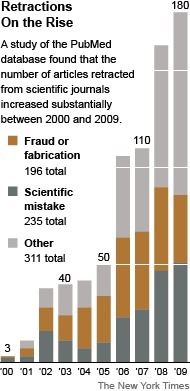
Retractions of published papers are on the rise, and some scientists fear the situation is out of control.
Several factors are at play here, scientists say. One may be that because journals are now online, bad papers are simply reaching a wider audience, making it more likely that errors will be spotted. “You can sit at your laptop and pull a lot of different papers together,” Dr. Fang said. But other forces are more pernicious. To survive professionally, scientists feel the need to publish as many papers as possible, and to get them into high-profile journals. And sometimes they cut corners or even commit misconduct to get there.
|
Scoop.it!

Thirteen diterpenoids, named radianspenes A–M (1–13), including three lactams radianspenes J (10), K (11) and L (12) and one dimer radianspene M (13), were isolated from fermentation products of the higher fungal strain Coprinus radians M65. All these compounds possessing guanacastane skeleton were evaluated for antitumor activity using MDA-MB-435 cell line. Radianspene C exhibited inhibitory activity with IC50 of 0.91 μM.
Scoop.it!
From
pubs
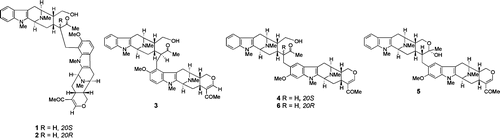
Three new bisindole alkaloids of the macroline–macroline type, perhentidines A–C (1–3), were isolated from the stem-bark extract of Alstonia macrophylla and Alstonia angustifolia. The structures of these alkaloids were established on the basis of NMR and MS analyses. The absolute configurations of perhentinine (4) and macralstonine (5) were established by X-ray diffraction analyses, which facilitated assignment of the configuration at C-20 in the regioisomeric bisindole alkaloids perhentidines A–C (1–3). A potentially useful method for the determination of the configuration at C-20 based on comparison of the NMR chemical shifts of the bisindoles and their acetate derivatives, in these and related bisindoles with similar constitution and branching of the monomeric units, is also presented.
Scoop.it!
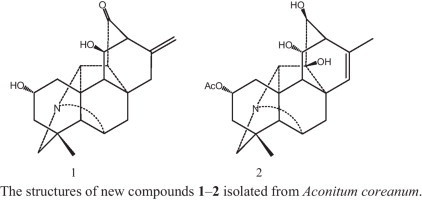
Three new hetisine-type diterpenoid alkaloids, Guan-fu base V (GFV, 1), Guan-fu base W (GFW, 2) and Guan-fu base X (GFX, 3) were isolated from the roots of Aconitum coreanum (Lèvl.) Rapaics. Their structures were established by direct interpretation of their spectral data, mainly high resolution electrospray ionization mass spectrometry (HR-ESI-MS), 1D and 2D NMR (1H–1H COSY, ROESY, HSQC and HMBC). GFX is the third N-oxygenated hetisine-type diterpenoid alkaloid isolated from A. coreanum.
Scoop.it!
From
www
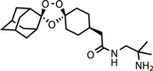
Indian pharmaceutical firm Ranbaxy has launched the drug Synriam, which it claims will prove a more efficient and simpler treatment for malaria. It is the first recently developed antimalarial that is not based on artemisinin, one of the most effective treatments for malaria, which has begun to suffer from problems with resistance in recent years. Ranbaxy has hailed Synriam as India's first domestically developed drug - although none of its active ingredients were discovered in the country.
Scoop.it!

From
pubs
Commercial preparations of the Mexican herbal drug known as “miracle tea” (Packera candidissima and P. bellidifolia) have been profiled qualitatively by HPLC and GC-MS. Eremophilanes (3–7) were the major components found in the hexane-soluble fraction, while pyrrolizidine alkaloids (PAs) were identified in the alkaloid extracts. The content of free PAs and their N-oxides was determined for a total of 22 samples, and the results showed that the amount of these hepatotoxic compounds (0.0005–0.94% free PAs; 0.0004–0.55% N-oxides), through the presence of retrorsine (1) and senesionine (2) as the main constituents, may reach toxic levels. Hexane-soluble extracts from commercial presentations (dried whole plants) of both species afforded neoadenostylone (3), 6-(2-methylbutanoyloxy)-9-oxo-1-(10)-furanoeremophilene (4), and epineoadenostylone (5), in addition to methyl-4-hydroxyphenylacetate (8) and methyl-2-(1-hydroxy-4-oxocyclohexyl)acetate (9). Also, epicacalone (6) and the new compound 2β-hydroxyneoadenostylone (7) were isolated from P. bellidifolia.
Scoop.it!

From
pubs
Genome sequencing has revealed that fungi have the ability to synthesize many more natural products (NPs) than are currently known, but methods for obtaining suitable expression of NPs have been inadequate. We have developed a successful strategy that bypasses normal regulatory mechanisms. By efficient gene targeting, we have replaced, en masse, the promoters of nonreducing polyketide synthase (NR-PKS) genes, key genes in NP biosynthetic pathways, and other genes necessary for NR-PKS product formation or release. This has allowed us to determine the products of eight NR-PKSs of Aspergillus nidulans, including seven novel compounds, as well as the NR-PKS genes required for the synthesis of the toxins alternariol (8) and cichorine (19).
Scoop.it!
From
pubs
Covering: 1966 to 2012
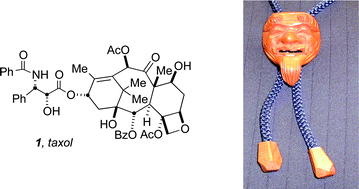
The biosynthesis of the anti-cancer drug taxol (paclitaxel) has required the collaborative efforts of several research groups to tackle the synthesis and labeling of putative biosynthetic intermediates, in concert with the identification, cloning and functional expression of the biosynthetic genes responsible for the construction of this complex natural product. Based on a combination of precursor labeling and incorporation experiments, and metabolite isolation from Taxus spp., a picture of the complex matrix of pathway oxygenation reactions following formation of the first committed intermediate, taxa-4(5),11(12)-diene, is beginning to emerge. An overview of the current state of knowledge on the early-stages of taxol biosynthesis is presented.
Scoop.it!
Aphanamixoid A, a Potent Defensive Limonoid, with a New Carbon Skeleton from Aphanamixis polystachya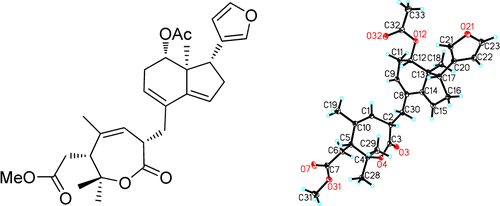
Aphanamixoid A (1), a limonoid with a new carbon skeleton, along with its biogenetically related limonoid aphanamixoid B (2), was isolated from the leaves and twigs of Aphanamixis polystachya. Their structures with the absolute stereochemistry were determined by spectroscopic analysis, X-ray crystallography and computational methods. The significant antifeedant activity of 1 against the generalist plant-feeding insect Helicoverpa armigera (EC50 = 0.015 μmol/cm2) suggested it may be a potent defensive component of A. polystachya.
Scoop.it!

To design the next generation of so-called “smart” materials, researchers will need to develop chemical systems that respond, adapt, and multitask. Because many of these features occur in living systems, we expect that such advanced artificial systems will be inspired by nature. In particular, these new materials should ultimately combine three key properties of life: metabolism, mutation, and self-replication.
This Account discusses authors endeavors toward the design of such advanced functional materials.
Scoop.it!

Michael Shermer enjoys a reminder that cutting-edge research is a step into the unknown.
A review of the book Ignorance: How it Drives Science by Stuart Firestein Oxford University Press: 2012. 256 pp.
“There are known knowns; there are things we know we know. We also know there are known unknowns; that is to say, we know there are some things we do not know. But there are also unknown unknowns, the ones we don't know we don't know.”
Scoop.it!

High-quality open-access publishing The most advanced IT publishing platform resulting in the fastest and fairest review system 3 months from article submission until acceptance Over 25,000 world-class editors Over 3 million page views per month Track the impact of your articles in real-time from your Frontiers account Browse the Frontiers A-Z journals index
Scoop.it!

La communauté scientifique n'en revient toujours pas. Un astrophysicien trop critique a été condamné après une plainte déposée par Grichka Bogdanov.
|




