This week, we are going to talk about the past unreal conditional. Past unreal conditionals are often used to express wishes about the past. They often show regret, or sad feelings about something that happened in the past.
Via David M


 Your new post is loading...
 Your new post is loading...
Your new post is loading...
 Scoop.it!
This week, we are going to talk about the past unreal conditional. Past unreal conditionals are often used to express wishes about the past. They often show regret, or sad feelings about something that happened in the past. Via David M 
No comment yet.
Sign up to comment
Scoop.it!
From
medium

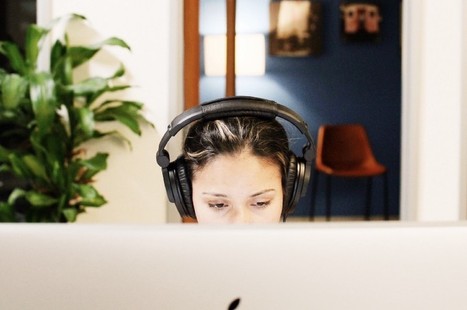
For the most part, research suggests that listening to music can improve your efficiency, creativity and happiness in terms of work-related tasks. Via Jim Lerman
Scoop.it!
The Sapir-Whorf hypothesis holds that our thoughts are shaped by our native language, and that speakers of different languages therefore think differently. This hypothesis is controversial in part because it appears to deny the possibility of a universal groundwork for human cognition, and in part because some findings taken to support it have not reliably replicated. We argue that considering this hypothesis through the lens of probabilistic inference has the potential to resolve both issues, at least with respect to certain prominent findings in the domain of color cognition. We explore a probabilistic model that is grounded in a presumed universal perceptual color space and in language-specific categories over that space. The model predicts that categories will most clearly affect color memory when perceptual information is uncertain. In line with earlier studies, we show that this model accounts for language-consistent biases in color reconstruction from memory in English speakers, modulated by uncertainty. We also show, to our knowledge for the first time, that such a model accounts for influential existing data on cross-language differences in color discrimination from memory, both within and across categories. We suggest that these ideas may help to clarify the debate over the Sapir-Whorf hypothesis. Via Ashish Umre
Scoop.it!
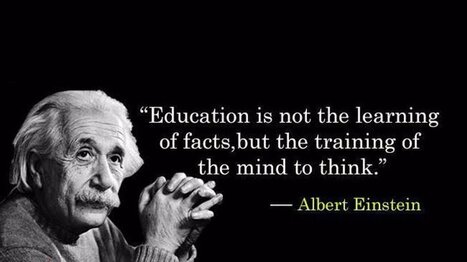
Want to know some proven techniques to enhance learner behavior using Neuroeducation? Check how Neuroeducation increases learning behavior.
Scoop.it!
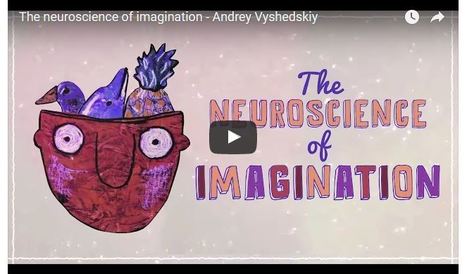
Imagination is often associated with childhood, but that doesn’t mean the process is simple. Conjuring images that one has never seen before is more complex than it seems, requiring the brain to reconfigure images it can readily identify in new ways. Via John Evans, Elke Höfler, Ines Bieler

Ruth Reynolds's curator insight,
January 1, 2017 9:44 PM
Well how about that. Childhood is actually very important in future education and thinking?? So why isn't education better resourced!
Scoop.it!
Via Kim Flintoff
Scoop.it!

Despite well-publicized efforts to promote equality, Wikipedia articles are deeply biased against women, say computer scientists who have analysed six different language versions of the online encyclopedia. Via Mila Engelberg

Mila Engelberg's curator insight,
March 8, 2015 4:39 PM
"Wagner and co say that articles about women tend to emphasize the fact that they are about women by overusing words like “woman,” “female,” or “lady” while articles about men tend not to contain words like “man,” “masculine,” or “gentleman.” Words like “married,” “divorced,” “children,” or “family” are also much more frequently used in articles about women, they say.
The team thinks this kind of bias is evidence for the practice among Wikipedia editors of considering maleness as the “null gender.” In other words, there is a tendency to assume an article is about a man unless otherwise stated. “This seems to be a plausible assumption due to the imbalance between articles about men and women,” they say."
Scoop.it!

Your devotion to unchanging grammar and spelling can be a very good and holy thing — just not in English Via Evdokia Roka
Scoop.it!
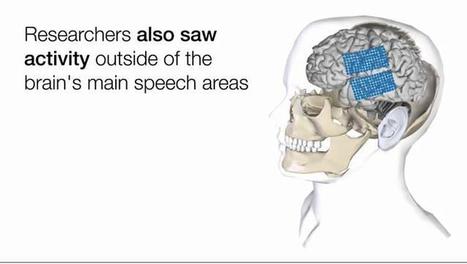
Neuroscience News has recent neuroscience research articles, brain research news, neurology studies and neuroscience resources for neuroscientists, students, and science fans and is always free to join. Our neuroscience social network has science groups, discussion forums, free books, resources, science videos and more. Via Suvi Salo, Mark E. Deschaine, PhD
Scoop.it!

E-learning is a way to let learners learn naturally through their instinctive processes. Via EDTECH@UTRGV
Scoop.it!
At a glance, you can recognize a friend's face whether they are happy or sad or even if you haven't seen them in a decade. How does the brain do this—recognize familiar faces with efficiency and ease despite extensive variatio
Via Collection of First
Scoop.it!
Sign in with your credentials to access the EBSCOhost premium information resources provided by your subscribing institution.
|
Scoop.it!
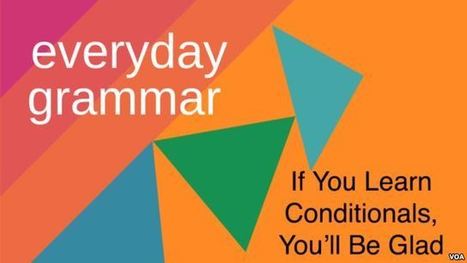
In everyday conversation, English speakers often talk about things that are not true. Or, they talk about things that only happen if something else happens. Learn how to correctly use these conditional forms in English. Via David M
Scoop.it!

Greg Downey's curator insight,
February 27, 2013 3:23 PM
"Although backers of this supposed universal alphabet claim that "it will make pronunciation easy and foster international understanding", I have doubts that SaypU (Spell As You Pronounce Universal project) constitutes a viable route to world peace." But Douglas Adams has alread warned us about the potential in The Hitchhiker's Guide: "The Babel fish, by effectively removing all barriers to communication between different cultures and races, has caused more and bloodier wars than anything else in the history of creation."
Scoop.it!

Speech therapy apps for iPad developed with certified speech language pathologists (SLPs) and teachers. Teach Speech Apps creates iPad apps to help teach prepositions, pronouns, and rhyming. Via Kathleen McClaskey

Kathleen McClaskey's curator insight,
March 18, 2015 3:50 PM
Teach Speech Apps encourages learning side-by-side with an engaged adult. Benefits of Teach Speech Apps:
Scoop.it!

BrainConnection.com, powered by BrainHQ, is dedicated to providing accessible, high-quality information about how the brain works and how people learn. Many discoveries are being made in areas that relate to the human brain, including language, memory, behavior, and aging, as well as illness and injury. Our brain experts believe that access to this information can provide practical tools for teaching and learning as well as valuable insights into almost every aspect of our daily lives. Via Jim Lerman, Miloš Bajčetić, Mark E. Deschaine, PhD
Scoop.it!
__________________________________________________________________________________ My research has shown that intermediate second language (L2) learners can understand each sentence of a text without being able to build a mental representation of the overall text. This failur e is linked to the development of L2 processing abilities. My latest study (2008) shows that a factor in poor L2 processing of written text is, counter -intuitively, an unreliable L2 phonological inventory. This suggests strongly that teaching phonology w ill help L2 learners read better.
Via Shona Whyte
Scoop.it!
Scoop.it!
Douglas Hofstadter's "Person Paper" is a tough read, but also one of the most powerful essays on language & gender: http://t.co/8JlPkEG285 Via Mila Engelberg
Mila Engelberg's curator insight,
September 24, 2014 10:10 AM
"Most of the clamor, as you certainly know by now, revolves around the age-old usage of the noun "white" and words built from it, such as chairwhite, mailwhite, repairwhite, clergywhite, middlewhite, Frenchwhite, forewhite, whitepower, whiteslaughter, oneupuwhiteship, straw white, whitehandle, and so on. The negrists claim that using the word "white," either on its own or as a component, to talk about all the members of the human species is somehow degrading to blacks and reinforces racism."
What would "All whites are created equal" sound like? Race neutral? Do read it.
Scoop.it!
Neuroscience News has recent neuroscience research articles, brain research news, neurology studies and neuroscience resources for neuroscientists, students, and science fans and is always free to join. Our neuroscience social network has science groups, discussion forums, free books, resources, science videos and more.
Via Collection of First
Scoop.it!

Neuroscience News has recent neuroscience research articles, brain research news, neurology studies and neuroscience resources for neuroscientists, students, and science fans and is always free to join. Our neuroscience social network has science groups, discussion forums, free books, resources, science videos and more.
Via Collection of First
|