Your new post is loading...

|
Scooped by
Gilbert C FAURE
December 28, 2019 4:16 AM
|
Abstract Background Bronchoalveolar lavage (BAL) is standard diagnostic procedure. Procedural recommendations have been made by pneumological societies including normal values for interpretation of...
|
|
Scooped by
Gilbert C FAURE
December 25, 2019 10:26 AM
|
PubMed comprises more than 30 million citations for biomedical literature from MEDLINE, life science journals, and online books. Citations may include links to full-text content from PubMed Central and publisher web sites.
|
|
Scooped by
Gilbert C FAURE
December 23, 2019 3:09 PM
|
Dendritic cells (DCs) in the small intestine (SI) and colon are fundamental to direct intestinal immune responses; they migrate to the mesenteric lymph nodes (MLNs) and prime T cells. We demonstrate anatomical segregation of lymphatic drainage from the intestine, specifically that DCs from the SI and colon migrate to different nodes within the MLN, here called the sMLN and cMLN. As a consequence, different frequencies of DC subsets observed in the SI and colon are reflected among the DCs in the sMLN and cMLN. Consistent with the SI’s function in absorbing food, fed antigen is presented in the sMLN, but not in the cMLN. Furthermore, the levels of expression of CCR9 and α4β7 are increased on T cells in the sMLN compared with the cMLN. DCs from the cMLN and colon are unable to metabolize vitamin A to retinoic acid (RA); thus, DCs may contribute to the differential expression of tissue homing markers observed in the sMLN and cMLN. In summary, the sMLN and cMLN, and the DCs that migrate to these LNs are anatomically and immunologically separate. This segregation allows immune responses in the SI and colon to be controlled independently.
|
|
Scooped by
Gilbert C FAURE
December 23, 2019 5:07 AM
|
Outer membrane vesicles from the commensal bacteria Bacteroides thetaiotaomicron expressing Fraction 1 (F1) and LcrV (V antigen) from Y. pestis were tested as mucosal plague vaccine deliver
|
|
Rescooped by
Gilbert C FAURE
from Immunology and Biotherapies
December 20, 2019 4:36 AM
|
Abstract
Recognizing the importance of leukocyte trafficking in inflammation led to some therapeutic breakthroughs. However, many inflammatory pathologies remain without specific therapy. This review discusses leukocytes in the context of sterile inflammation, a process caused by sterile (non-microbial) molecules, comprising damage-associated molecular patterns (DAMPs). DAMPs bind specific receptors to activate inflammation and start a highly optimized sequence of immune cell recruitment of neutrophils and monocytes to initiate effective tissue repair. When DAMPs are cleared, the recruited leukocytes change from a proinflammatory to a reparative program, a switch that is locally supervised by invariant natural killer T cells. In addition, neutrophils exit the inflammatory site and reverse transmigrate back to the bloodstream. Inflammation persists when the program switch or reverse transmigration fails, or when the coordinated leukocyte effort cannot clear the immunostimulatory molecules. The latter causes inappropriate leukocyte activation, a driver of many pathologies associated with poor lifestyle choices. We discuss lifestyle-associated inflammatory diseases and their corresponding immunostimulatory lifestyle-associated molecular patterns (LAMPs) and distinguish them from DAMPs.
Via Krishan Maggon
|
|
Scooped by
Gilbert C FAURE
December 18, 2019 3:29 PM
|
With ageing, normal human tissues experience an expansion of somatic clones that carry cancer mutations1–7. However, whether such clonal expansion exists in the non-neoplastic intestine remains unknown. Here, using whole-exome sequencing data from 76 clonal human colon organoids, we identify a unique pattern of somatic mutagenesis in the inflamed epithelium of patients with ulcerative colitis. The affected epithelium accumulates somatic mutations in multiple genes that are related to IL-17 signalling—including NFKBIZ, ZC3H12A and PIGR, which are genes that are rarely affected in colon cancer. Targeted sequencing validates the pervasive spread of mutations that are related to IL-17 signalling. Unbiased CRISPR-based knockout screening in colon organoids reveals that the mutations confer resistance to the pro-apoptotic response that is induced by IL-17A. Some of these genetic mutations are known to exacerbate experimental colitis in mice8–11, and somatic mutagenesis in human colon epithelium may be causally linked to the inflammatory process. Our findings highlight a genetic landscape that adapts to a hostile microenvironment, and demonstrate its potential contribution to the pathogenesis of ulcerative colitis. Whole-exome sequencing of colon organoids derived from patients with ulcerative colitis identifies somatic mutations in components of the IL-17 signalling pathway, which may confer a growth advantage to cells under inflammatory conditions.
|
|
Rescooped by
Gilbert C FAURE
from Maternal immune tolerance
December 18, 2019 4:56 AM
|
The success of pregnancy is contingent on the maternal immune system recognizing and accommodating a growing semi-allogeneic fetus. Specialized subsets of lymphocytes capable of negative regulation are fundamental in this process, and include the regulatory T cells (Tregs) and potentially, regulatory B cells (Bregs). Most of our current understanding of the immune regulatory role of Bregs comes from studies in the fields of autoimmunity, transplantation tolerance, and cancer biology. Bregs control autoimmune diseases and can elicit graft tolerance by inhibiting the differentiation of effector T cells and dendritic cells (DCs), and activating Tregs. Furthermore, in cancer, Bregs are hijacked by neoplastic cells to promote tumorigenesis. Pregnancy therefore represents a condition that reconciles these fields—mechanisms must be in place to ensure maternal immunological tolerance throughout gravidity to allow the semi-allogeneic fetus to grow within. Thus, the mechanisms underlying Breg activities in autoimmune diseases, transplantation tolerance, and cancer may take place during pregnancy as well. In this review, we discuss the potential role of Bregs as guardians of pregnancy and propose an endocrine-modulated feedback loop highlighting the Breg–Treg–tolerogenic DC interface essential for the induction of maternal immune tolerance.
Via Georgia MARTENSEN
|
|
Scooped by
Gilbert C FAURE
December 16, 2019 2:26 PM
|
Human intestinal tissue-resident memory CD8+ T cells comprise transcriptionally and functionally distinct subsets
|
|
Scooped by
Gilbert C FAURE
December 9, 2019 1:32 PM
|
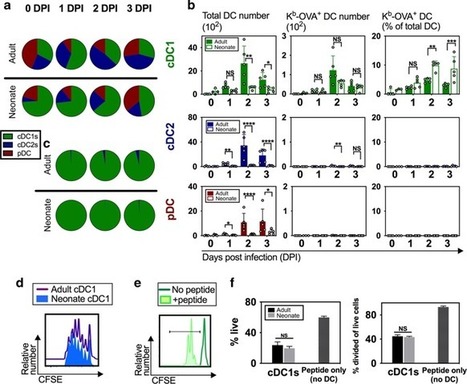
Insufficient T-cell responses contribute to the increased burden of viral respiratory disease in infancy. Neonatal dendritic cells (DCs) often provide defective activation of pathogen-specific T cells through mechanisms that are incompletely understood, which hinders vaccine design for this vulnerable age group. Enhancing our characterization of neonatal DC sub-specialization and function is therefore critical to developing their potential for immunomodulation of T-cell responses. In this study, we engineered respiratory syncytial virus (RSV) to express a model protein, ovalbumin, to track antigen-presenting DCs in vivo. We found that murine neonatal conventional DC1s (cDC1s) efficiently migrated and presented RSV-derived antigen, challenging the paradigm that neonatal DCs are globally immature. In a key observation, however, we discovered that during infection neonatal cDC1s presenting viral antigen were unable to upregulate costimulatory molecules in response to type I interferons (IFN-I), contributing to poor antiviral T-cell responses. Importantly, we showed that the deficient response to IFN-I was also exhibited by human neonatal cDC1s, independent of infection. These findings reveal a functionally distinct response to IFN-I by neonatal cDC1s that may leave young infants susceptible to viral infections, and provide a new target for exploration, in light of failed efforts to design neonatal RSV vaccines.
|
|
Scooped by
Gilbert C FAURE
December 8, 2019 7:19 AM
|
Human skin is multitalented, and the best example of that is wound healing. An interactive graphic at elements.evonik.de shows exactly how this works.
|
|
Scooped by
Gilbert C FAURE
December 7, 2019 12:17 PM
|
|
|
Scooped by
Gilbert C FAURE
December 6, 2019 1:25 PM
|
|
|
Scooped by
Gilbert C FAURE
December 5, 2019 9:03 AM
|
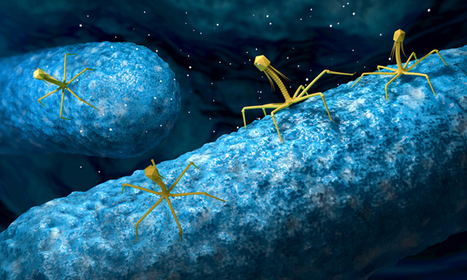
Researchers have found that, in rainbow trout, phages on mucosal surfaces infect pathogenic bacteria, providing protection to the model.
|
|
|
Scooped by
Gilbert C FAURE
December 27, 2019 6:49 AM
|
The respiratory tract is an important site of immune regulation; required to allow protective immunity against pathogens, while minimizing tissue damage and avoiding aberrant inflammatory responses to inhaled allergens. Several cell types work in concert to control pulmonary immune responses and maintain tolerance in the respiratory tract, including regulatory and effector T cells, airway and interstitial macrophages, dendritic cells and the airway epithelium. The cytokines transforming growth factor β, interleukin (IL-) 10, IL-27, and IL-35 are key coordinators of immune regulation in tissues such as the lung. Here, we discuss the role of these cytokines during respiratory infection and allergic airway disease, highlighting the critical importance of cellular source and immunological context for the effects of these cytokines in vivo.
|
|
Scooped by
Gilbert C FAURE
December 24, 2019 8:02 AM
|
<b><i>Background:</i></b> In Europe IgA nephropathy (IgAN) is detected in 20% of children with glomerular diseases diagnosed by renal biopsy.The outcome during childhood is generally good, but progre...
|
|
Scooped by
Gilbert C FAURE
December 23, 2019 6:35 AM
|
Microbes living in the gut and mouth have been implicated in the development of rheumatoid arthritis (RA) and treatments that promote the growth of healthier bacterial communities may help weaken this autoimmune disease.
|
|
Scooped by
Gilbert C FAURE
December 20, 2019 2:53 PM
|
Microbes colonize all body surfaces at birth and participate in the development of the immune system. In newborn mammals, the intestinal microbiota is…
|
|
Scooped by
Gilbert C FAURE
December 18, 2019 3:30 PM
|
Chronic inflammation is accompanied by recurring cycles of tissue destruction and repair and is associated with an increased risk of cancer1–3. However, how such cycles affect the clonal composition of tissues, particularly in terms of cancer development, remains unknown. Here we show that in patients with ulcerative colitis, the inflamed intestine undergoes widespread remodelling by pervasive clones, many of which are positively selected by acquiring mutations that commonly involve the NFKBIZ, TRAF3IP2, ZC3H12A, PIGR and HNRNPF genes and are implicated in the downregulation of IL-17 and other pro-inflammatory signals. Mutational profiles vary substantially between colitis-associated cancer and non-dysplastic tissues in ulcerative colitis, which indicates that there are distinct mechanisms of positive selection in both tissues. In particular, mutations in NFKBIZ are highly prevalent in the epithelium of patients with ulcerative colitis but rarely found in both sporadic and colitis-associated cancer, indicating that NFKBIZ-mutant cells are selected against during colorectal carcinogenesis. In further support of this negative selection, we found that tumour formation was significantly attenuated in Nfkbiz-mutant mice and cell competition was compromised by disruption of NFKBIZ in human colorectal cancer cells. Our results highlight common and discrete mechanisms of clonal selection in inflammatory tissues, which reveal unexpected cancer vulnerabilities that could potentially be exploited for therapeutics in colorectal cancer. In patients with ulcerative colitis, chronic inflammation can lead to remodelling of the colorectal epithelium through positive selection of clones with mutations in genes related to IL-17 signalling, which, however, might be negatively selected during colitis-associated carcinogenesis.
|
|
Scooped by
Gilbert C FAURE
December 18, 2019 2:29 PM
|
Key studies published in 2019 highlight novel concepts regarding the pathogenesis of inflammatory bowel disease: the emerging role of host–microorganism interactions and the regional microbiota as disease drivers, and the identification of new therapeutic targets. These findings suggest new avenues for research and define important hallmarks for clinical diagnosis and therapy.
|
|
Scooped by
Gilbert C FAURE
December 17, 2019 2:58 AM
|
Our understanding of how class-switch recombination (CSR) to IgA occurs in the gut is still incomplete. Earlier studies have indicated that Tregs are important for IgA CSR and these cells were thought to transform into follicular helper T cells (Tfh), responsible for germinal center formation in the Peyer’s patches (PP). Following adoptive transfer of T-cell receptor-transgenic (TCR-Tg) CD4 T cells into nude mice, we unexpectedly found that oral immunization did not require an adjuvant to induce strong gut IgA and systemic IgG responses, suggesting an altered regulatory environment in the PP. After sorting of splenic TCR-Tg CD4 T cells into CD25+ or CD25− cells we observed that none of these fractions supported a gut IgA response, while IgG responses were unperturbed in mice receiving the CD25− cell fraction. Hence, while Tfh functions resided in the CD25− fraction the IgA CSR function in the PP was dependent on CD25+ Foxp3+ Tregs, which were found to be Helios+ neuropilin-1+ thymus-derived Tregs. This is the first study to demonstrate that Tfh and IgA CSR functions are indeed, unique, and separate functions in the PP with the former being TCR-dependent while the latter appeared to be antigen independent.
|
|
Scooped by
Gilbert C FAURE
December 13, 2019 1:56 PM
|
Abstract Background H pylori plays a critical role in the development of stomach cancer, especially in people affected by the bacteria at an early stage of life. Th9 cells and IL‐9 play major roles...
|
|
Scooped by
Gilbert C FAURE
December 9, 2019 12:57 PM
|
The field of mucosal immunology has, for the last 10 years, been largely dominated by advances in our understanding of the commensal microbiota. Developments of novel experimental methodologies an
|
|
Scooped by
Gilbert C FAURE
December 8, 2019 3:56 AM
|
|
|
Scooped by
Gilbert C FAURE
December 6, 2019 2:26 PM
|
Extrinsic nociceptor neurons mediate protection from Salmonella infection by direct
sensing and release of CGRP, which leads to suppression of M cell density and maintenance
of SFB colonization of the ileum.
|
|
Scooped by
Gilbert C FAURE
December 5, 2019 9:14 AM
|
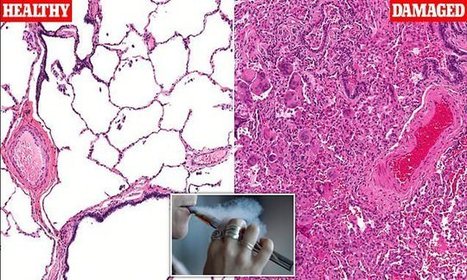
Researchers from the University of California say the disease was likely caused by fumes from the heating coils used in her devices. Her lung cells under (left) compared to healthy tissue (right).
|


 Scoop.it!