Your new post is loading...

|
Scooped by
Gilbert C FAURE
July 15, 2020 2:32 AM
|
Some experts say a vaccine puffed in the nose would be better at protecting people from infection. But nasal vaccines won’t be ready right away.
|
|
Scooped by
Gilbert C FAURE
July 10, 2020 11:04 AM
|
Decades of microbiome studies, using a combination of multiomics approaches, have revealed strong associations between microbiota and human health. The next step is to identify the causal molecular mechanisms behind this association: Which microbes, genes, and their metabolites, if any, are responsible for a host phenotype? And if these molecules do affect us, how can we modulate their concentrations in the host to promote gut health? Uncovering the causal relationship between a gut microbe and its host's biology at the level of molecular mechanisms is challenging, largely because we lack an efficient way to manipulate gut microbial genes. More than 90,000 gut bacterial metagenomes have been identified (1), and thousands of bacteria have been isolated and their genomes sequenced, but less than 5% of the species are genetically tractable. New tools are in great need for these non-model gut microbes. The gut microbiota modulates host biology in multiple ways. A substantial contribution to this regulation comes from microbiome-derived metabolites. Like a hormone released by an endocrine gland, these molecules have three notable features: They are exclusively released by the gut microbes, some are highly abundant and circulatory, and some are ligands for host receptors. My research focuses on dissecting the molecular mechanisms behind the interaction between microbiota metabolites and human health. I have a strong interest in developing new genetic tools for human gut Clostridium isolates, toggling the expression of microbiota genes and concentrations of metabolites in the host, and studying their effects on human health and diseases. My long-term goal is to understand and eventually reprogram the molecular “language” of host-microbe interactions for therapeutic applications. Previous efforts to study a microbiome-derived molecule in the host used two main strategies: introducing a compound by injection or gavage, or modulating a bacterial species that produces the target metabolite. Both approaches provide insight into the mechanism of biological function but lack a clean background or control (i.e., the physiological concentration of the target metabolite, or other biological activities of the added bacteria). In my lab, we believe the most precise format for investigating a microbiome-derived metabolite in the host is to compare two organisms that differ only in its production. Such an experiment requires knowledge of the metabolic genes responsible for the metabolite and genetic tools for a robustly producing gut microbe. However, a key technical barrier limiting the method's generalization is that many high-abundance gut-derived molecules are produced by Clostridium and its relatives, which have been notoriously resistant to genetic manipulation. In this work, we started by introducing the CRISPR-Cas9 system into a gut microbe, Clostridium sporogenes (2). C. sporogenes is a gut commensal commonly found in healthy humans that produces many fermentation metabolites entering the host's circulation. Although many CRISPR-Cas9 systems have been established in mammalian cells and in bacteria like Escherichia coli, the genetics of which are well characterized, building such a system in C. sporogenes is not at all straightforward. Clostridium and its relatives are notoriously resistant to genetic manipulation, largely because there is no efficient approach for introducing extracellular DNA and most Clostridium have a very low endogenous homologous recombination frequency, which further limits the applicability of a CRISPR-Cas9 system. After struggling for over 9 months with no viable colonies, I found that the guide RNA and Cas9 components needed to be introduced separately into C. sporogenes to promote efficient extracellular DNA uptake and homologous recombination. This allowed us to identify and mutate the metabolic genes of more than 10 C. sporogenes–fermented metabolites. By monocolonizing germ-free mice with the C. sporogenes mutants and the wild-type strain, we can modulate the amount of these metabolites in the host. Although it is well known that microbiome metabolites like propionate and butyrate are host GPCR (G protein–coupled receptor) ligands that modulate immune functions by inducing intestinal regulatory T cells (3), little is known about structurally similar branched short-chain fatty acids (BSCFAs) and their biology. The system that we developed enabled us to interrogate BSCFA biology in two groups of mice that differed only in their BSCFAs and the responsible metabolic gene. We found that BSCFAs suppress intestinal immunoglobulin A (IgA) plasma cells as well as the concentrations of IgA bound to the surface of a variety of innate immune cells, suggesting a previously unrecognized role for the BSCFAs in regulating IgA-related immune cell biology. A healthy human gut is filled with trillions of microbes, but less than 5% of them can be genetically manipulated. We plan to build a general workflow that facilitates the development of genetic tools for these previously genetically inaccessible gut microbes. Considering that many microbiome-modulated biological phenotypes require the colonization of a complex microbiota, we further aim to assemble a genetically tractable yet phylogenetically diverse gut consortium. If successful, this system will greatly expedite the characterization of the causal molecular mechanisms behind microbiota-human interaction and will also lay the basis for engineering a gut microbiome to promote human gut health and to prevent and cure diseases. http://www.sciencemag.org/about/science-licenses-journal-article-reuse This is an article distributed under the terms of the Science Journals Default License. PHOTO: COURTESY OF CHUN-JUN GUO FINALIST Chun-Jun (CJ) Guo Chun-Jun (CJ) Guo received undergraduate degrees from Fudan University and a Ph.D. from the University of Southern California. After completing his postdoctoral fellowship at the University of California, San Francisco, and Stanford University in the Fischbach group, CJ started his laboratory in the Jill Roberts Institute for Research in Inflammatory Bowel Disease at Weill Cornell Medicine in 2018. His research uses CRISPR-based microbial genetics, state-of-the-art analytical chemistry, and healthy and diseased mouse models to mechanistically dissect how microbiome-derived genes, pathways, and metabolites affect host biology. www.sciencemag.org/content/369/6500/153.2 References and Notes ↵ A. Almeida et al., Nature 568, 499 (2019).OpenUrlCrossRef ↵ C.-J. Guo et al., Science 366, eaav1282 (2019). ↵ M. G. Rooks, W. S. Garrett, Nat. Rev. Immunol. 16, 341 (2016).OpenUrlCrossRefPubMed
|
|
Scooped by
Gilbert C FAURE
July 10, 2020 6:43 AM
|
|
|
Scooped by
Gilbert C FAURE
July 9, 2020 6:40 AM
|
Even after thousands of years, tuberculosis remains a killer – but AI-assisted research into diverse populations may help
|
|
Scooped by
Gilbert C FAURE
July 8, 2020 1:17 PM
|
Mucociliary clearance (MCC) is the primary innate defense mechanism of the lung. The functional components are the protective mucous layer, the airway surface liquid layer, and the cilia on the surface of ciliated cells.
|
|
Scooped by
Gilbert C FAURE
July 5, 2020 5:34 AM
|
The importance of breastfeeding in low-income and middle-income countries is well recognised, but less consensus exists about its importance in high-income countries.
In low-income and middle-income countries, only 37% of children younger than 6 months of age are exclusively breastfed.
|
|
Scooped by
Gilbert C FAURE
June 30, 2020 1:17 PM
|
Innate-like B-1 B cells express canonical B cell receptors and originate through specialized
developmental programs. Through immunoglobulin gene sequencing of single antigen-reactive
B cells, New et al. demonstrate a significant role for environmental antigen-dependent
selection events in shaping the GAC-reactive B-1 B cell clonal repertoire.
Study results contribute to the understanding of intestinal regeneration and prevention of intestinal inflammationCredit: © CRTD The intestinal epithelium is...
Via Krishan Maggon
|
|
Scooped by
Gilbert C FAURE
June 5, 2020 9:36 AM
|
A new study has revealed that SARS-CoV-2 infects the nasal cavity to the greatest degree and infects and replicates progressively less well in cells lower in the respiratory tract. The work, including the development of key laboratory tools, has been accepted by Cell.
|
|
Scooped by
Gilbert C FAURE
June 4, 2020 6:19 AM
|
Secretory Immunoglobulin A (SIgA) is the most abundant antibody at the mucosal surface. It possesses two additional subunits besides IgA: the joining chain (J-chain) and secretory component (SC). SC is the ectodomain of the polymeric immunoglobulin receptor (pIgR), which functions to transport IgA...

|
Suggested by
LIGHTING
May 31, 2020 12:08 PM
|
A selection of the latest research on the new coronavirus.
|
|
Scooped by
Gilbert C FAURE
May 30, 2020 12:19 PM
|
Infectious diseases continue to be the number one cause of death world-wide. Nearly one third of the cases of death caused by infectious diseases are attributable to "the big three", namely AIDS, malaria and tuberculosis.
|
|
Scooped by
Gilbert C FAURE
May 29, 2020 9:08 AM
|
As we continue to struggle to contain the pandemic of our age, scientists are exploring vaccines that do not prevent initial infection but may prevent or limit viral replication and delay disease p...
|
|
|
Scooped by
Gilbert C FAURE
July 14, 2020 8:29 AM
|
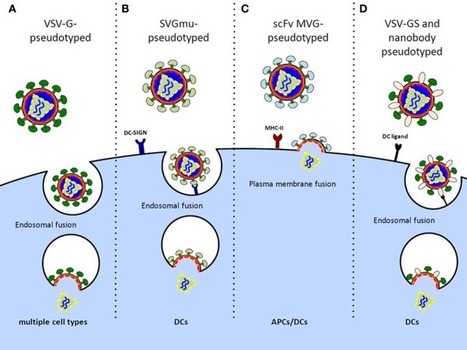
The development of an effective HIV vaccine to prevent and/or cure HIV remains a global health priority. Given their central role in the initiation of adaptive immune responses, dendritic cell (DC)-based vaccines are being increasingly explored as immunotherapeutic ...
|
|
Scooped by
Gilbert C FAURE
July 10, 2020 11:02 AM
|
Coronavirus disease 2019 (COVID-19) first emerged in late 2019 in China.At the time of writing, its causative agent SARS-CoV-2 has spread worldwide i…...
|
|
Rescooped by
Gilbert C FAURE
from Immunology
July 9, 2020 1:58 PM
|
Read the original article in full on F1000Research: Tissue-resident lymphocytes: weaponized sentinels at barrier surfaces...
|
|
Scooped by
Gilbert C FAURE
July 8, 2020 1:37 PM
|
Connections between the gut and brain monitor the intestinal tissue and its microbial and dietary content1, regulating both physiological intestinal functions such as nutrient absorption and motility2,3, and brain-wired feeding behaviour2. It is therefore plausible that circuits exist to detect gut microorganisms and relay this information to areas of the central nervous system that, in turn, regulate gut physiology4. Here we characterize the influence of the microbiota on enteric-associated neurons by combining gnotobiotic mouse models with transcriptomics, circuit-tracing methods and functional manipulations. We find that the gut microbiome modulates gut-extrinsic sympathetic neurons: microbiota depletion leads to increased expression of the neuronal transcription factor cFos, and colonization of germ-free mice with bacteria that produce short-chain fatty acids suppresses cFos expression in the gut sympathetic ganglia. Chemogenetic manipulations, translational profiling and anterograde tracing identify a subset of distal intestine-projecting vagal neurons that are positioned to have an afferent role in microbiota-mediated modulation of gut sympathetic neurons. Retrograde polysynaptic neuronal tracing from the intestinal wall identifies brainstem sensory nuclei that are activated during microbial depletion, as well as efferent sympathetic premotor glutamatergic neurons that regulate gastrointestinal transit. These results reveal microbiota-dependent control of gut-extrinsic sympathetic activation through a gut–brain circuit. A combination of gnotobiotic mouse models, transcriptomics, circuit tracing and chemogenetic manipulations identifies neuronal circuits that integrate microbial signals in the gut with regulation of the sympathetic nervous system.
|
|
Scooped by
Gilbert C FAURE
July 7, 2020 11:54 AM
|
The human body is colonized by millions of microorganisms named microbiota that interact with our tissues in a cooperative and non-pathogenic manner. These microorganisms are present in the skin, gut, nasal, oral cavities, and genital tract. In fact, it has been described that the microbiota contributes to balancing the immune system to maintain host homeostasis. The gut is a vital organ where microbiota can influence and determine the function of cells of the immune system and contributes to preserve the wellbeing of the individual. Several articles have emphasized the connection between intestinal autoimmune diseases, such as Crohn's disease with dysbiosis or an imbalance in the microbiota composition in the gut. However, little is known about the role of the microbiota in autoimmune pathologies affecting other tissues than the intestine. This article focuses on what is known about the role that gut microbiota can play in the pathogenesis of non-intestinal autoimmune diseases, such as Grave's diseases, multiple sclerosis, type-1 diabetes, systemic lupus erythematosus, psoriasis, schizophrenia, and autism spectrum disorders. Furthermore, we discuss as to how metabolites derived from bacteria could be used as potential therapies for non-intestinal autoimmune diseases.
|
|
Scooped by
Gilbert C FAURE
July 5, 2020 5:30 AM
|
Abstract Coeliac disease (CD) and noncoeliac wheat or gluten sensitivity (NCWS/NCGS) are common gluten‐related disorders. Both conditions can present with gastrointestinal and extraintestinal manif...
|
|
Scooped by
Gilbert C FAURE
June 25, 2020 2:54 AM
|
L’infection par le SARS-CoV-2 s’accompagne parfois d’une perte d’odorat. La bonne nouvelle ? Celui-ci devrait très probablement être de retour une fois l’infection terminée. Plus ou moins vite.
|
|
Scooped by
Gilbert C FAURE
June 5, 2020 2:00 PM
|
Alterations of the gut microbiota may cause dysregulated mucosal immune responses leading to the onset of inflammatory bowel diseases (IBD) in genetically susceptible hosts. Restoring immune homeostasis through the normalization of the gut microbiota is now considered a valuable therapeutic...
|
|
Scooped by
Gilbert C FAURE
June 4, 2020 6:51 AM
|
ROR-γt+ regulatory T cells (Tregs) of the colon can prevent excessive inflammation but also delay pathogen clearance. How these cells are regulated ha…
|
|
Scooped by
Gilbert C FAURE
June 1, 2020 1:41 AM
|
virus in feces and on surfaces
|
|
Scooped by
Gilbert C FAURE
May 30, 2020 12:20 PM
|
<b><i>Objectives:</i></b> IgA nephropathy (IgAN) is thought to involve an autoimmune process wherein galactose-deficient IgA1 (Gd-IgA1), recognized as autoantigen by autoantibodies, forms pathogenic i...
|
|
Scooped by
Gilbert C FAURE
May 29, 2020 9:10 AM
|
Microbiome–host interactions play significant roles in health and in various diseases including autoimmune disorders. Uncovering these inter-kingdom cross-talks propels our understanding of disease pathogenesis and provides useful leads on potential therapeutic targets.
|




 Scoop.it!