Your new post is loading...

|
Suggested by
LIGHTING
July 6, 2021 12:39 PM
|
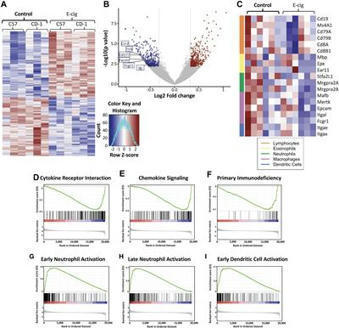
Innate lymphoid cells (ILCs) are enriched in mucosae and have been described as tissue-resident. Interestingly, ILCs are also present within lymph nodes (LNs), in the interfollicular regions, the destination for lymph-migratory cells. We have previously shown that LN ILCs are supplemented by peripheral tissue-derived ILCs. Using thoracic duct cannulations, we here enumerate the intestinal lymph ILCs that traffic from the intestine to the mesenteric LNs (MLNs). We provide, for the first time, a detailed characterisation of these lymph-migratory ILCs. We show that all ILC subsets migrate in lymph, and while global transcriptional analysis reveals a shared signature with tissue-resident ILCs, lymph ILCs express migration-associated genes including S1PRs, SELL (CD62L) and CCR7. Interestingly, we discovered that while Salmonella Typhimurium infections do not increase the numbers of migrating ILCs, infection changes their composition and cytokine profile. Infection increases the proportions of RORyt+ T-bet+ ILCs, levels of IFNγ, and IFNγ/GM-CSF co-expression. Infection-induced changes in migratory ILCs are reflected in colon-draining MLN ILCs, where RORyt+ T-bet+ ILCs accumulate and display corresponding increased cytokine expression. Thus, we reveal that ILCs respond rapidly to intestinal infection and can migrate to the MLN where they produce cytokines.

|
Scooped by
Gilbert C FAURE
June 27, 2021 11:31 AM
|
About World Microbiome Day On World Microbiome Day we celebrate all things microbial, all around the world. We introduce international microbiome researchers to the public to raise awareness of the vibrant and diverse world of microbes and invite the public and industry professionals to share their thoughts and activities with the microbiome community.Microorganisms (e.g
|
|
Scooped by
Gilbert C FAURE
June 25, 2021 12:23 PM
|
|
|
Scooped by
Gilbert C FAURE
June 19, 2021 10:32 AM
|
Using social media is one important strategy to communicate research and public health guidelines to the scientific community and general public. Empirical evidence about which communication strategies are effective around breastfeeding messaging is scarce.
|
|
Scooped by
Gilbert C FAURE
June 19, 2021 10:32 AM
|
Click on the article title to read more.
|
|
Scooped by
Gilbert C FAURE
June 17, 2021 3:27 PM
|
Sensory neurons that detect signals in the gut and relay them to the brain are an important feature of regulating food intake and metabolic responses to food. When such gut-brain signaling is impaired, overeating, weight gain, and metabolic dysfunction can occur. Borgmann et al. investigated feeding and glucose regulation by different sensory neurons that innervate the gut of mice. Their findings enabled reconstruction of peripheral and central sensory neuron projections and revealed differential innervation of the mucosal and muscular layers of the intestine and different regions of the gastrointestinal tract, likely reflecting distinct responses to specific signals in the gut. These subsets of neurons may provide targets for controlling metabolic diseases in the future. Cell Metab. 10.1016/j.cmet.2021.05.002 (2021).
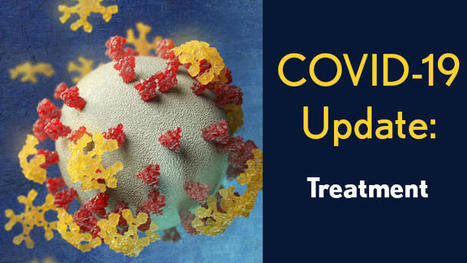
There are now several monoclonal antibodies, identical copies of a therapeutic antibody produced in large numbers, that are authorized for the treatment of COVID-19. But in the ongoing effort to beat this terrible pandemic, there’s plenty of room for continued improvements in treating infections with SARS-CoV-2, the virus that causes COVID-19.
|
|
Scooped by
Gilbert C FAURE
June 15, 2021 3:37 AM
|
A single-cell atlas of human oral mucosa connects inflammatory signatures in epithelial
and stromal cells with neutrophil infiltration in periodontitis and identifies cell-specific
expression patterns of periodontitis susceptibility genes.
|
|
Scooped by
Gilbert C FAURE
June 4, 2021 1:41 PM
|
Resistance represents a major challenge for antibody-based therapy for coronavirus disease 2019 (COVID-19)1–4. Here we engineered an immunoglobulin M (IgM) neutralizing antibody (IgM-14) to overcome the resistance encountered by IgG-based therapeutics. IgM-14 is >230-fold more potent than its parental IgG-14 in neutralizing the severe acute respiratory syndrome coronavirus 2 (SARS-CoV-2). IgM-14 potently neutralizes the resistant virus raised by its corresponding IgG-14, the newly emerged United Kingdom B.1.1.7, Brazilian P.1, and South African B.1.351 variants of concern (VOCs), and 21 other receptor-binding domain (RBD) mutants, many of which are resistant to the IgGs that have been authorized for emergency use. Although engineering IgG into IgM enhances antibody potency in general, selection of an optimal epitope is critical for identifying the most effective IgM that can overcome resistance. One single intranasal (IN) dose of 0.044 and 0.4 mg/kg IgM-14 confers prophylactic and therapeutic efficacy against SARS-CoV-2 in mice, respectively. IgM-14, but not IgG-14, also confers potent therapeutic protection against the P.1 and B.1.351 variants. IgM-14 exhibits desirable IN pharmacokinetics and safety in rodents. Our results demonstrate that IN administration of an engineered IgM can improve efficacy, reduce resistance, and simplify the prophylactic and therapeutic treatment of COVID-19.
|
|
Scooped by
Gilbert C FAURE
May 29, 2021 10:26 AM
|
Type I IFN is a key determinant of pathogenic neutrophil activity and drives tissue pathology through modulation of IL-18 levels during genital HSV infection.
|
|
Scooped by
Gilbert C FAURE
May 29, 2021 4:38 AM
|
Conventional smoking is known to both increase susceptibility to infection and drive inflammation within the lungs. Recently, smokers have been found to be at higher risk of developing severe forms of coronavirus disease 2019 (COVID-19).
|
|
Scooped by
Gilbert C FAURE
May 24, 2021 11:22 AM
|
A complete understanding of pathogenesis must consider not only how microorganisms inflict damage—the primary focus of research under the war metaphor—but also the mechanisms by which hosts discriminate among microbes and convert that information into an immune response.
|
|
Scooped by
Gilbert C FAURE
May 19, 2021 1:52 PM
|
New technologies are expected to enhance nasal vaccines industry growth as particular attention is being paid to designing delivery strategies that take into account the broad range of diseases, populations and healthcare delivery settings that will benefit from the mucosal route of delivery.
|
|
|
Suggested by
LIGHTING
June 29, 2021 2:49 PM
|
Single-cell RNA sequencing combined with spatial information on landmark genes enables reconstruction of spatially-resolved tissue cell atlases. However, such approaches are challenging for rare cell types, since their mRNA contents are diluted in the spatial transcriptomics bulk measurements used for landmark gene detection. In the small intestine, enterocytes, the most common cell type, exhibit zonated expression programs along the crypt-villus axis, but zonation patterns of rare cell types such as goblet and tuft cells remain uncharacterized. Here, we present ClumpSeq, an approach for sequencing small clumps of attached cells. By inferring the crypt-villus location of each clump from enterocyte landmark genes, we establish spatial atlases for all epithelial cell types in the small intestine. We identify elevated expression of immune-modulatory genes in villus tip goblet and tuft cells and heterogeneous migration patterns of enteroendocrine cells. ClumpSeq can be applied for reconstructing spatial atlases of rare cell types in other tissues and tumors. Combining scRNA-seq with spatial information to enable the reconstruction of spatially-resolved cell atlases is challenging for rare cell types. Here the authors present ClumpSeq, an approach for sequencing small clumps of tissue attached cells, and apply it to establish spatial atlases for all secretory cell types in the small intestine.
|
|
Suggested by
LIGHTING
June 26, 2021 11:39 AM
|
Scientists use a protein found in mucus membranes to ferry vaccines to the lymph nodes.
|
|
Scooped by
Gilbert C FAURE
June 23, 2021 3:37 AM
|
|
|
Scooped by
Gilbert C FAURE
June 19, 2021 10:32 AM
|
medRxiv - The Preprint Server for Health Sciences...
|
|
Scooped by
Gilbert C FAURE
June 19, 2021 10:31 AM
|
Pathogenesis of Nasal polyp has been primarily investigated on the basis of sinonasal mucosal immunity. Several inflammatory responses have been reported in nasal polyp pathogenesis to date. In this study the researchers have summarised new research on pathways for developing chronic nasal polyp rhinosinusitis (CRSwNP), which focuses on Th2 inflammation. The th2 inflammation may be driven by Staphylococcus aureus by the production of enterotoxins and a serine protease-like protein. Furthermore, S. aureus affected the activity of the mucosal obstruction directly and increased synthesis of Th2 cytokines by the rapid activation of endogenous epithelial cytokines. The synthesis of innate lymphoid epithelial-derived cytokines, including TSLP, IL-25, and IL-33, promotes th2 reactions. Mast cell produces IL-5, IL-13 and periostin and has a function to play in the pathogenesis of nasal polyps by orchestrating infiltration of eosinophils. The formation of extracellular eosinophil traps and Charcot-Leyden crystals is closely linked with the seriousness of disease and development of viscous mucus plugs. The role of S. aureus in innate and adaptive immunity is increasingly evident and contributes to the inflammation of Th2 in CRSwNP. Innate immunity, like epithelial cytokines, is critical in the production of CRSwNP, inducing different pathways, and must be further examined as Th2-controlled biomarkers. Neutrophilic inflammation has recently begun to be investigated but still remains uncertain. For latest news and updates By signing up, you will receive emails about Physician's Weekly products and you agree to our Terms & Conditions and Privacy Policy. Reference: https://journals.lww.com/co-allergy/Abstract/2020/02000/Th2_inflammatory_responses_in_the_development_of.2.aspx
|
|
Scooped by
Gilbert C FAURE
June 16, 2021 8:36 AM
|
|
|
Scooped by
Gilbert C FAURE
June 15, 2021 3:49 AM
|
Abstract Every year, influenza viruses spread around the world, infecting the respiratory systems of countless humans and animals, causing illness and even death. Severe influenza infection is asso...
|
|
Scooped by
Gilbert C FAURE
June 15, 2021 3:36 AM
|
Abstract Infectious diseases remain the subject of intense research. This topic reaches a new era towards the study of host-pathogen interactions mechanisms at the tissue scale. The past few years ...
|
|
Scooped by
Gilbert C FAURE
May 29, 2021 10:26 AM
|
Increased IgE is a typical feature of allergic rhinitis. Local class-switch recombination has been intimated but B cell precursors and mechanisms remain elusive. Here we describe the dynamics underlying the generation of IgE-antibody secreting cells (ASC) in human nasal polyps (NP), mucosal...
|
|
Scooped by
Gilbert C FAURE
May 29, 2021 10:21 AM
|
Rationale: Identification of the specific cell types expressing CFTR (cystic fibrosis [CF] transmembrane conductance regulator) is required for precision medicine therapies for CF. However, a full ...
|
|
Scooped by
Gilbert C FAURE
May 26, 2021 10:52 AM
|
Le professeur britannique Tim Spector a trouvé une nouvelle méthode originale pour évaluer son transit.
|
|
Scooped by
Gilbert C FAURE
May 19, 2021 1:52 PM
|
Fentanyl is a major contributor to the devastating increase in overdose deaths from substance use disorders (SUD). A vaccine targeting fentanyl could be a powerful immunotherapeutic. Here, we evaluated adjuvant and delivery strategies for conjugate antigen vaccination with fentanyl-based haptens.
|