


How do we feel about the latest wearable technology? A new show explores the possibilities in sporting our emotions quite literally on our sleeves


|
Scooped by
Richard Platt
onto Wearable Tech and the Internet of Things (Iot) August 3, 2015 12:01 AM
|
 Scoop.it!
How do we feel about the latest wearable technology? A new show explores the possibilities in sporting our emotions quite literally on our sleeves

 Your new post is loading...
Scoop.it!

The health tracker brand has unveiled several medical-minded features, like ECG and blood pressure monitoring, for its Whoop 5.0 and Whoop MG launch. Via Lionel Reichardt / le Pharmageek
Richard Platt's insight:
The health tracker brand has unveiled several medical-minded features, like ECG and blood pressure monitoring, for its Whoop 5.0 and Whoop MG launch.
Scoop.it!
In recent years, the landscape of Parkinson’s disease management has been dramatically transformed by the advent of wearable technology.A groundbreaking systematic review, led by Packer, Debelle, Bailey, and colleagues, published in npj Parkinson’s Disease, illuminates how these devices are revolutionizing... Via Emmanuel Capitaine , Lionel Reichardt / le Pharmageek
Richard Platt's insight:
In recent years, the landscape of Parkinson’s disease management has been dramatically transformed by the advent of wearable technology.A groundbreaking systematic review, led by Packer, Debelle, Bailey, and colleagues, published in npj Parkinson’s Disease, illuminates how these devices are revolutionizing...

Richard Platt's curator insight,
June 3, 2025 1:46 PM
In recent years, the landscape of Parkinson’s disease management has been dramatically transformed by the advent of wearable technology.A groundbreaking systematic review, led by Packer, Debelle, Bailey, and colleagues, published in npj Parkinson’s Disease, illuminates how these devices are revolutionizing...
Scoop.it!

medRxiv - The Preprint Server for Health Sciences... Via Emmanuel Capitaine , Lionel Reichardt / le Pharmageek
Scoop.it!

Rebranding as Hilo, the Swiss company will scale its “blood pressure intelligence” to the US this year, following expected FDA approval. Via Lionel Reichardt / le Pharmageek
Richard Platt's insight:
Rebranding as Hilo, the Swiss company will scale its “blood pressure intelligence” to the US this year, following expected FDA approval.
Scoop.it!

A new analysis that began under the Biden administration is released by the C.I.A.’s new director, John Ratcliffe, who wants the agency to get “off the sidelines” in the debate.
Richard Platt's insight:
The C.I.A. has said for years that it did not have enough information to conclude whether the Covid pandemic emerged naturally from a wet market in Wuhan, China, or an accidental leak at a research lab there. But the C.I.A. issued a new assessment this week, with analysts saying they now favor the lab theory. There is no new intelligence behind the agency’s shift, officials said. Rather it is based on the same evidence it has been chewing over for months.A new analysis that began under the Biden administration is released by the C.I.A.’s new director, John Ratcliffe, who wants the agency to get “off the sidelines” in the debate. Mr. Ratcliffe, who was the Director of National Intelligence in the 1st Trump administration, argued in an essay for Fox News in 2023 that the CIA did not want to embrace the lab leak to avoid geopolitical problems for the Biden administration. “The real problem is, the only assessment the agency could make — which is that a virus that killed over a million Americans originated in a C.C.P.-(China’s Communist Party) controlled lab whose research included work for the Chinese military — has enormous geopolitical implications that the Biden administration does not want to face head-on,” he said in the piece, which was written with Cliff Sims, a top aide. Senator Tom Cotton, (R) Arkansas and the new chairman of the Senate Intelligence Committee has long said he thought the pandemic originated in one of the Wuhan labs and praised the shift in judgment by the agency. “Now the most important thing is to make China pay for unleashing a plague on the world,”. Mr. Ratcliffe said on Thursday when he was sworn in, that a look at the origins of Covid was a “Day 1” priority. “I think our intelligence, our science, and our common sense all dictate that the origins of Covid was a leak at the Wuhan Institute of Virology,”. “But the C.I.A. has not made that assessment or at least not made that assessment publicly. So I’m going to focus on that and look at the intelligence and make sure that the public is aware that the agency is going to get off the sidelines.” Senior intelligence officials in the Biden administration defend their process and methodology. They have said that no intelligence was suppressed and insist that politics did not play into their analysis. These officials say that there are powerful logical arguments for both the lab leak and the natural causes theories, but that there simply is no decisive piece of intelligence on either side of the issue. To boost the natural origins theory, intelligence officers would like to find the animal that passed it to a human or find a bat carrying what was the likely ancestor of the coronavirus that causes COVID-19. Similarly, to seal the lab leak, the intelligence community would like to find evidence that one of the labs in Wuhan was working on a progenitor virus that directly led to the epidemic. Neither piece of evidence has been found. But Mr. Ratcliffe has promised a more aggressive C.I.A., and he may order more actions to penetrate the labs in Wuhan or the Chinese government in a search for information. It will not be an easy secret to steal. The senior ranks of the Chinese government do not know, and do not want to know, American officials have said. So if there is intelligence, it is probably hidden in a place that is hard to get to. Intelligence officials interviewed in recent weeks say such a piece of evidence may exist in a lab in China, at least in theory. But, they said, it is still more likely that the answers to questions surrounding the virus’s origins will come through a scientific breakthrough, not an intelligence revelation. Under the Biden administration, the intelligence community leaned toward the theory that the virus came from the market. But officials readily admitted it was hardly a sure thing. Five agencies, including the National Intelligence Council and the Defense Intelligence Agency, assessed that natural exposure most likely caused the epidemic. However, they said that they had only low confidence in their assessment. Until now, two agencies, the F.B.I. and the Department of Energy, thought a lab leak was more likely. But their theories are different. The F.B.I. believes the virus came from the Wuhan Institute of Virology. The Energy Department put its bet on another lab, the Wuhan Center for Disease Control. Officials would not say if the C.I.A. believes one lab or the other was the more likely source of the virus.
Scoop.it!
Richard Platt's insight:
The increasing digitization of healthcare has led to wearable devices becoming a frequent contributor to healthcare decisions. Wearable devices are a developing group of healthcare technologies that include smartwatches and fitness trackers. These technologies have a substantial number of users, with a fifth of adults in the US now using a wearable device. These devices provide objective data that can enhance the doctor-patient relationship and improve the overall quality of clinical encounters.
Scoop.it!
Richard Platt's insight:
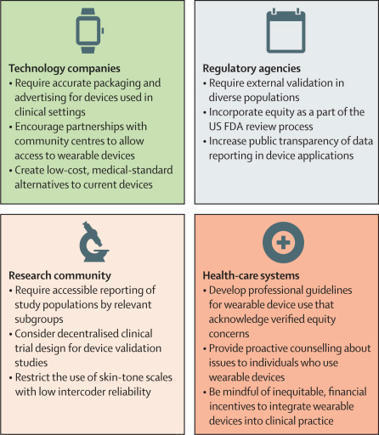
People who need wearable health devices, like smartwatches and fitness bands, may use them the least. Age, education, and income are associated with less use of wearable health devices among people with and at risk for cardiovascular disease. The study also found that more than 80% of wearable health device users at risk for cardiovascular disease, would be willing to share the health information tracked by the device with their healthcare team to improve their care, regardless of age, education, income, gender or race, and ethnicity. Increasing equitable access and promoting wearables as health devices may help improve health and decrease health disparities, according to the researchers. According to preliminary research to be presented at the American Heart Association’s Scientific Sessions 2022. The meeting is a premier global exchange of the latest scientific advancements, research, and evidence-based clinical practice updates in cardiovascular science. Wearable devices are electronic devices worn on or close to the body that monitors and tracks health or physical activity. Wearables may help to manage cardiovascular health more effectively, with features like physical activity monitoring, heart-rate tracking, heart electrical activity tracing, and more. “We may be able to use artificial intelligence with health information from wearable devices to help people reduce their risk of heart disease,” said study lead author Lovedeep S. Dhingra, M.B.B.S.
Scoop.it!
Richard Platt's insight:
Rising Taiwan-China and U.S.-China tensions have brought "more serious" challenges for the semiconductor industry, the chairman of Taiwanese chipmaker TSMC said on Wednesday. TSMC is the world's largest contract chipmaker and Asia's most valuable listed firm. Speaking at the Taiwan Semiconductor Industry Association's annual convention, TSMC Chairman Mark Liu said: "The U.S.-China trade conflict and the escalation of cross-Strait tensions have brought more serious challenges to all industries, including the semiconductor industry." Liu said he looked forward to Taiwan's industry, government and academia developing "more concrete, constructive measures" on industrial policies related to innovation, research, talent education and retention "to maintain Taiwan's most critical semiconductor industry advantages". He noted that 2022 the "industry value" of Taiwan's chip sector is expected to have risen 1/5 compared with 2021, even with the impact of Sino-U.S. trade friction and geopolitical problems. Liu did not make direct mention of the sweeping set of export controls announced by the US, aimed at slowing China's progress in advanced IC manufacturing, is expected to also impact Taiwanese chipmakers. The new rules required of U.S. companies to cease supplying Chinese chip makers with equipment to make advanced ICs. "The difficulty this time will be a very big challenge," Frank Huang, chairman of Powerchip Semiconductor Manufacturing Corp , said "We do business on both sides of the Strait. So we can't listen to the U.S. and not do any business with mainland China. Then what would everyone eat?" Huang said. "Our industry's position is to maintain our competitiveness."
Scoop.it!

Apple's headset will also scan users' legs for inclusion in virtual space.
Richard Platt's insight:
A new report in The Information revealed some new tidbits about Apple's upcoming augmented and virtual reality headset. Among other things, the report details features that differentiate Apple's headset from Meta's just-announced Quest Pro, which is likely to be the biggest competitor to Apple's device. Matching prior reports, The Information's article says that the headset will look like a pair of ski goggles. It will be made of "mesh fabrics, aluminum, and glass," and it will be thinner and weigh less than the Quest Pro. The Information's sources didn't specify a weight, but the Quest Pro weighs 722 grams. So in other words, it will be the headset's equivalent of Face ID or Touch ID, the biometric authentication methods previously seen in the iPhone, iPad, and Mac. The headset will also offer accommodations for users who wear glasses. They'll be able to "magnetically clip on prescription lenses inside the headset." That will not be the only way Apple's headset scans its wearer. It has previously been reported that the device will have 14 cameras. Two, today's report claims, will scan the wearer's legs so the positions of said legs can be accurately portrayed by a virtual avatar. By contrast, Meta's recently announced Quest Pro headset has four fewer cameras, at 10, and it lacks the leg cameras. It's common in 3D telepresence apps to see floating torsos and faces with no legs, but it seems Apple might be aiming to get away from that standard. Apple and Meta are poised for a battle over the mixed-reality space. Meta has been in the VR business for seven years, but Apple has a stronger background in AR thanks to the sensors and developer support on its iPhones and iPads. And while Meta has a significant headstart on the software side for immersive VR, it isn't nearly as experienced as Apple in developing hardware products. Meta's Quest Pro was first revealed on October 11, and it will be available for purchase for $1,499.99 starting October 25. Apple's headset has faced several delays, but it is now slated to release sometime in 2023 at a higher price.
Scoop.it!
Richard Platt's insight:
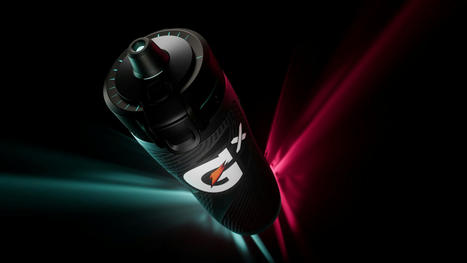
Gatorade has designed a smart water bottle to help you determine and maintain your baseline hydration level and monitor your post-workout recovery. A ring of LEDs that runs around the Smart Gx Bottle's cap should allow you to monitor you daily hydration, and gently nudge you to drink more when necessary. You can recharge the bottle using a USB cable. A Gatorade spokesperson told Engadget the bottle is dishwasher safe, but the cap is not. Naturally, your hydration levels can be tracked through Gatorade's iOS-only Gx App, which features nutrition and training programs as well as recovery recommendations. Gatorade's Sweat Patch, debuted in 2021, is a single-use wearable that can help you create a "sweat profile" in the app and help track your perspiration. You'll need to use the Sweat Patch to get a hydration report for the Smart Gx Bottle. Alternatively, you can weigh yourself before and after your workout. To that end, Gatorade sells pods that can be mixed with water to help replenish electrolytes and carbohydrates. They're compatible with the Smart Gx Bottle and regular Gx Bottle, each of which has a piercing mechanism for the pods. In addition, the company offering gummies that it claims can help with recovery and boosting your immune system. The Smart Gx Bottle is available from Gatorade's website starting today. It costs $70. Gatorade will toss in a Sweat Patch and a pack of four pods of your choice at no extra cost. In case you're interested in the gummies, those will run you $26 for one batch or $46.80 for a bundle.
Scoop.it!
Richard Platt's insight:
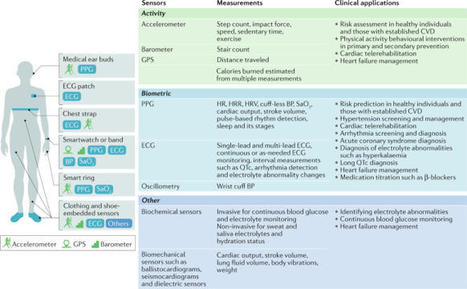
Technological innovations reach deeply into our daily lives and an emerging trend supports the use of commercial smart wearable devices to manage health. In the era of remote, decentralized and increasingly personalized patient care, catalysed by the COVID-19 pandemic, the cardiovascular community must familiarize itself with the wearable technologies on the market and their wide range of clinical applications. In this Review, we highlight the basic engineering principles of common wearable sensors and where they can be error-prone. We also examine the role of these devices in the remote screening and diagnosis of common cardiovascular diseases, such as arrhythmias, and in the management of patients with established cardiovascular conditions, for example, heart failure. To date, challenges such as device accuracy, clinical validity, a lack of standardized regulatory policies and concerns for patient privacy are still hindering the widespread adoption of smart wearable technologies in clinical practice. We present several recommendations to navigate these challenges and propose a simple and practical ‘ABCD’ guide for clinicians, personalized to their specific practice needs, to accelerate the integration of these devices into the clinical workflow for optimal patient care. In this Review, Elshazly and colleagues summarize the basic engineering principles of common wearable sensors and discuss their broad applications in cardiovascular disease prevention, diagnosis and management.
Scoop.it!
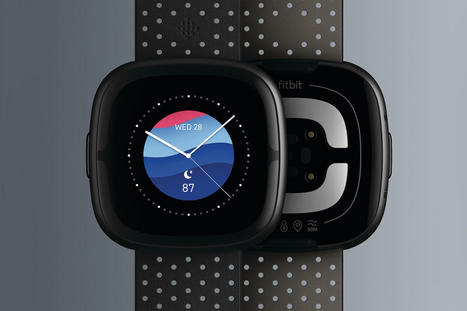
Beyond physical fitness, wearable gadgets are taking a keener interest in your mental health.
Richard Platt's insight:
Imagine your boss just dumped a load of work in your lap and instead of a “thank you,” you get an “I need this done immediately.” You’d be forgiven for needing a moment to come to grips with everything. And, if you happened to be wearing one of Fitbit’s new Sense 2 smartwatches when you got the bad news, that wearable gadget will pick up on your stress and check in with you after that moment has passed. The Sense 2 doesn't go on sale until the fall, though, it’s not yet clear how well it can actually suss out our stress levels. “It is definitely possible to infer stress using electrodermal activity and heart rate,” according to Dr. Rose Faghih, an associate professor of biomedical engineering at NYU's Tandon School of Engineering. saying she couldn’t completely vouch for Fitbit’s approach. “It really depends on the quality of the sensor,”. While certain people may benefit from a wearable that suggests ways to deal with difficult moments, some experts say those who feel routinely beset by stress should look beyond gadgets. Like counting steps and tallying calories burned, tackling stress isn’t new territory for a smartwatch. Apple’s Watch can remind you to take a mindful moment and breathe during the day, and some of Samsung’s Galaxy Watches will try to guess your current stress level by looking at the characteristics of your heartbeat. Fitbit is trying to position high-end wearables like the $299 Sense 2 as tools to help us reflect on the stress we face everyday. You can get better sleep with wearables. Just focus on the right data. The Sense 2′s approach is the reactiveness of it all — it won’t prompt you to reflect on the nature your stress unless it thinks you’ve just experienced some. And to do that, it needs to take a pretty broad look at the ways your body acts in real-time, even if you’re not fully aware of them.
Scoop.it!
Richard Platt's insight:
Researchers have developed a new kind of ultrasensitive optical sensing instrument. It combines the advantages of the two types of interferometers that are currently available, making it both compact and highly sensitive. Called a Mach Zehnder-Fabry Perot (MZ-FP) hybrid fiber interferometer, it lays out a feasible path toward reaching unprecedented levels of strain resolutions for passive fiber sensors. The UAH-developed interferometer achieves one femto-strain of resolution, meaning it can detect the change of one billionth of a micrometer (10-6 m) out of one meter. The interferometer embeds optical resonator-based interferometers into a double-path interferometer. The new hybrid interferometer is able to achieve far better signal resolutions than the regular MZIs. This allows our interferometer to possess the advantages of both types of interferometers.
|
Scoop.it!
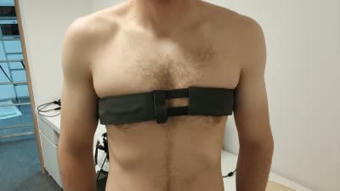
The Ultrasound Computed Tomography belt could make monitoring patients with heart and lung conditions easier.
Richard Platt's insight:
Researchers have developed a first-of-its-kind wearable device capable of continuously scanning the lungs and heart of hospital patients while they rest in bed — offering a revolutionary alternative to CT scans. The belt-like device, attached around a patient’s chest, uses ultrasound and works like a CT scanner. Rather than taking an isolated snapshot, it can produce a series of dynamic, high-resolution images of the heart, lungs and internal organs over time, giving doctors deeper insight into a patient’s condition. The device can be worn in bed and also reduces the need for repeated trips to radiology or exposure to doses of ionizing radiation. The soft, skin-conforming sensor array is placed directly on a patient's chest and uses sophisticated ultrasound computed tomography (USCT) to generate images of the heart and lungs in real time, tracking changes in organ function and structure continuously over hours or even days. Crucially, the device is designed with patient comfort in mind. Its soft, flexible materials make it suitable for long-term wear, and its wireless data transmission capabilities allow integration with hospital monitoring systems. Future iterations may even offer AI-assisted analysis for clinicians, identifying warning signs before they’re visible to the human eye. Beyond hospitals, this technology opens the door to remote monitoring in home care settings, particularly for elderly patients or those with chronic cardiopulmonary diseases. It may also reduce the healthcare burden by preventing unnecessary hospital admissions through early intervention.
Scoop.it!

Like bandaids, AI chatbots can comfort us in times of desperation. But healing a wound takes more than a comforting bandaid. Via Emmanuel Capitaine , Lionel Reichardt / le Pharmageek
Richard Platt's insight:
Like bandaids, AI chatbots can comfort us in times of desperation. But healing a wound takes more than a comforting bandaid.
Scoop.it!
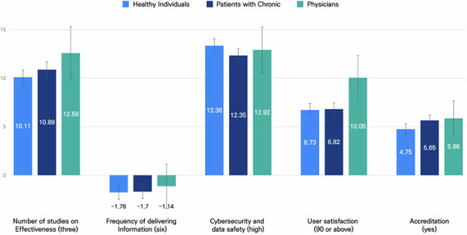
The rapid proliferation of healthcare service applications (apps) makes it challenging for consumers to determine the best one for their needs, prompting the Korean government to introduce an accreditation program to verify app safety. Via Emmanuel Capitaine , Lionel Reichardt / le Pharmageek
Richard Platt's insight:
The rapid proliferation of healthcare service applications (apps) makes it challenging for consumers to determine the best one for their needs, prompting the Korean government to introduce an accreditation program to verify app safety.
Scoop.it!

Wearable devices that measure physiological and behavioral signals have become commonplace. There is growing evidence that these devices can have a meaningful impact promoting healthy behaviors, detecting diseases, and improving the design and implementation of treatments. Via Lionel Reichardt / le Pharmageek
Richard Platt's insight:
Wearable devices that measure physiological and behavioral signals have become commonplace. There is growing evidence that these devices can have a meaningful impact promoting healthy behaviors, detecting diseases, and improving the design and implementation of treatments.
Scoop.it!

The World Health Organization regrets the announcement that the United States of America intends to withdraw from the organization.
Richard Platt's insight:
The World Health Organization regrets the announcement that the United States of America intends to withdraw from the Organization. WHO plays a crucial role in protecting the health and security of the world’s people, including Americans, by addressing the root causes of disease, building stronger health systems, and detecting, preventing, and responding to health emergencies, including disease outbreaks, often in dangerous places where others cannot go. The United States was a founding member of WHO in 1948 and has participated in shaping and governing WHO’s work ever since, alongside 193 other Member States, including through its active participation in the World Health Assembly and Executive Board. For over seven decades, WHO and the USA have saved countless lives and protected Americans and all people from health threats. Together, we ended smallpox, and together we have brought polio to the brink of eradication. American institutions have contributed to and benefited from membership of WHO. With the participation of the United States and other Member States, WHO has over the past 7 years implemented the largest set of reforms in its history, to transform our accountability, cost-effectiveness, and impact in countries. This work continues. We hope the United States will reconsider and we look forward to engaging in constructive dialogue to maintain the partnership between the USA and WHO, for the benefit of the health and well-being of millions of people around the globe.
Scoop.it!
Richard Platt's insight:
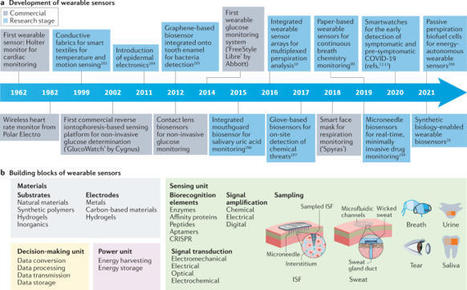
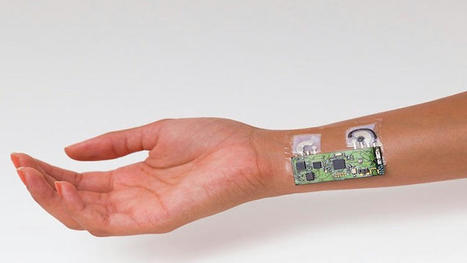
Wearable devices provide an alternative pathway to clinical diagnostics by exploiting various physical, chemical, and biological sensors to mine physiological (biophysical and/or biochemical) information in real-time (preferably, continuously) and in a non-invasive or minimally invasive manner. These sensors can be worn in the form of glasses, jewelry, face masks, wristwatches, fitness bands, tattoo-like devices, bandages or other patches, and textiles. Wearables such as smartwatches have already proved their capability for the early detection and monitoring of the progression and treatment of various diseases, such as COVID-19 and Parkinson's disease, through biophysical signals. Next-gen wearable sensors that enable the multimodal and/or multiplexed measurement of physical parameters and biochemical markers in real-time and continuously could be a transformative technology for diagnostics, allowing for the high-resolution and time-resolved historical recording of the health status of an individual. In this Review, we examine the building blocks of such wearable sensors, including the substrate materials, sensing mechanisms, power modules, and decision-making units, by reflecting on the recent developments in the materials, engineering, and data science of these components.
Scoop.it!
Richard Platt's insight:
Tactile perception is vital to the fundamental perceptual ability of human skin and is one of the primary ways in which most people obtain data from the environment. During the first several weeks after birth, a baby's eyes are not developed enough to clearly perceive the mother's face. The tactile sensing ability of an infant, on the other hand, is remarkably responsive to the mother's skin. Tactile sensing ability is incorporated into a variety of social relationships, such as handshakes and hugs. With the speedy advancement of flexible electronics, robotic technologies, and artificial intelligence (AI) in recent years, the demand for friendly and safe communication between humans and machines has grown. This new class of electronic component enables machines to interact with the environment with attendant benefits for healthcare monitoring, robotics and other applications. Tactile sensors are a new class of electronic components that enable machines to interact with their environment. Conformable flexible tactile sensors have enabled friendly interaction between machines and humans, or between machines. When designing a particular flexible tactile sensor, special attention should be paid to device construction, manufacturing costs and power consumption.
Scoop.it!
Richard Platt's insight:
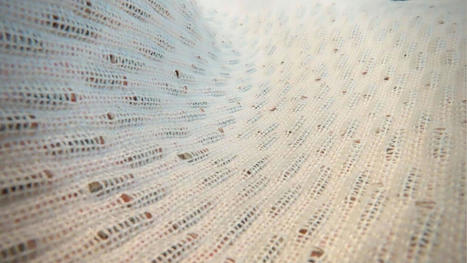
Researchers at Nottingham Trent University have invented textiles embedded with more than a thousand miniature solar cells that can charge a smart watch or mobile phone, according to a press release by the institution published on Thursday. The Nottingham School of Art & Design and has led the development of a woven textile equipped with 1,200 photovoltaic cells with a capacity to harness 400 milliwatts (mWatts) of electrical energy from the sun and can be easily incorporated into a piece of clothing such as a jacket or used as part of an accessory such as a backpack. The textiles are engineered to handle the same forces as everyday clothing and can even be washed in a machine at 40°C with other laundry without being damaged. The tiny solar cells measure a mere 5 mm in length and 1.5 mm in width. They are further embedded in a waterproof polymer resin; and they cannot be felt by the wearer, which means they are comfortable and practical to wear. “Until now very few people would have considered that their clothing or textiles products could be used for generating electricity. And the material which we have developed, for all intents and purposes, appears and behaves the same as any ordinary textile, as it can be scrunched up and washed in a machine.” “But hidden beneath the surface is a network of more than a thousand tiny photovoltaic cells which can harness the sun’s energy to charge personal devices.” “Electronic textiles really have the potential to change people’s relationship with technology, as this prototype shows how we could do away with charging many devices at the wall.”
Scoop.it!
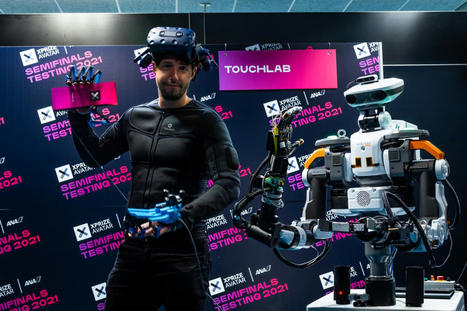
A few months after winning our robotics pitch-off, Touchlabs' CEO discusses the company's work to improve teleoperation through robotic skin.
Richard Platt's insight:
Manipulation and sensing have long been considered two key pillars for unlocking robotics’ potential. There’s a fair bit of overlap between the two, of course. As grippers have become a fundamental element of industrial robotics, these systems require the proper mechanisms for interacting with the world around them. Vision has long been a key to all of this, but companies are increasingly looking to tacticity as a method for gathering data. Among other things, it gives the robot a better sense of how much pressure to apply to a given object, be it a piece of produce or a human being. Scotland-based startup Touchlab won the pitch-off at TechCrunch Sessions: Robotics event, among some stiff competition. The judges agreed that the company’s approach to the creation of robotic skin is an important one that can help unlock fuller potential for sensing. The XPrize has thus far agreed, as well. The company is currently a finalist for the $10 million XPrize Avatar Competition. The firm is currently working with German robotics firm Schunk, which is providing the gripper for the XPrize finals. “Our mission is to make this electronic skin for robots to give machines the power of human touch,” co-founder and CEO Zaki Hussein said, speaking to TechCrunch from the company’s new office space. “There are a lot of elements going into replicating human touch. We manufacture this sensing technology. It’s thinner than human skin and it can give you the position and pressure wherever you put it on the robot. And it will also give you 3D forces at the point of contact, which allows robots to be able to do dexterous and challenging activities.”
Scoop.it!
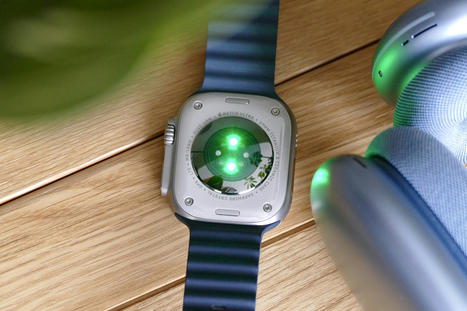
A medical breakthrough courtesy of Kennesaw State University promises a smartphone-connected device offering a noninvasive method of blood sugar analysis. Via Lionel Reichardt / le Pharmageek
Richard Platt's insight:
A medical breakthrough courtesy of Kennesaw State University promises a smartphone-connected device offering a noninvasive method of blood sugar analysis
Scoop.it!
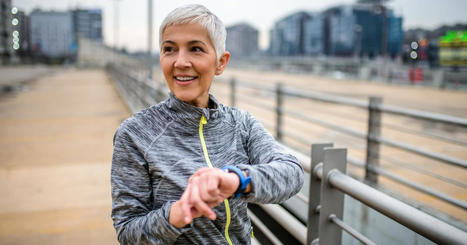
Device Connect for Fitbit aims to help healthcare and life science organizations use and analyze data from Fitbit's health-tracking wearables. Via Lionel Reichardt / le Pharmageek
Richard Platt's insight:
Device Connect for Fitbit aims to help healthcare and life science organizations use and analyze data from Fitbit's health-tracking wearables.
Scoop.it!
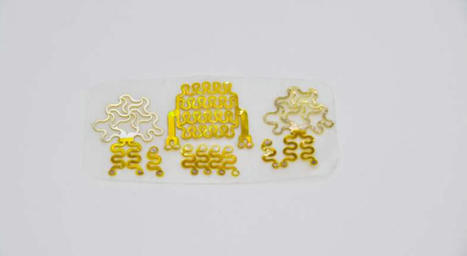
The inexpensive process for transforming old CDs into flexible biosensors involves separating a gold CD's thin metallic layer from rigid plastic and transforming it into sensors.
Richard Platt's insight:
A team of researchers from Binghamton University, State University of New York are turning old CDs into new flexible biosensors. The inexpensive process for transforming old CDs into flexible biosensors involves separating a gold CD's thin metallic layer from the rigid plastic and transforming it into sensors for monitoring electrical activity in human hearts and muscles, in addition to glucose, lactate, pH and oxygen levels. According to the developers, the sensors can communicate that data with a smartphone using Bluetooth. The fabrication process takes 20 - 30 minutes, does not release toxic chemicals. Instead, the metal layer is essentially peeled off and an off-the-shelf Cricut Cutter — which is a machine for crafters that cuts designs from assorted materials — was used to fabricate the biosensors. Once cut, the biosensors are placed on the wearer for monitoring. In all, the Binghamton team estimates that the fabrication process costs around $1.50 per device. The researchers explained: “This sustainable approach for upcycling electronic waste provides an advantageous research-based waste stream that does not require cutting-edge microfabrication facilities, expensive materials or high-caliber engineering skills." The article, Upcycling Compact Discs for Flexible and Stretchable Bioelectronic Applications, appears in the journal Nature Communications.
|







As the consumer technology industry is using fashion to sell us more technology, Making Patterns, a new exhibition from Brooklyn-based arts and tech collective Eyebeam, wants us to question our relationship with technology, interfaces, networks and the people around us by bringing together technology-infused items of clothing designed to open up discussion. Kaho Abe’s Hotaru, Prototype #1: with two gauntlets embedded with Android smartphones and a projection dome, the piece is as much a video game as a fashion statement. In a world ruined by pollution, two players must cooperate to defeat darkness. One player shoots and the other collects power, and they must hold hands to transfer light between them. Elsewhere, artists examine the future possibilities of 3D printing in creating clothes, and the unique bespoke forms and material options that presents. Billy Dang, Andrea van Hintum, and Hilary Sampliner’s Poseidon is a wearable 3D printed garment that moves with the body.
Inspired by denticles – the teeth of a shark – it is a chainmail-like, protective exoskeleton that guards the wearer from the elements. The garment is composed of hundreds of intricate, hinge-like, movable scales but, incredibly, it was printed in one piece. Cardinal, a GPS-equipped felt cowl (see above) that investigates how technology-infused clothing might enhance our sense of directional awareness and social connection. The patterns on the front, back and sides of the garment change colour depending on which way you are facing in relation to people and places connected via a distant GPS beacon, perhaps placed in your home or carried by a family member.
Heat pads facing the direction of the beacon heat up, changing the colour of the thermochromic ink so that you’re reminded of your origins, your home, or wherever is important to you while navigating your daily life, and allowing you to turn and face them at anytime.
As outlandish as the designs look at first glance, in many ways they are the most effective works on display at Making Patterns because the designs’ functionality feel like an extension or exaggeration of existing consumer technologies.