Samsung Smart TV Is Spying On You. Privacy Policy Says Voice recognition technology is always listening you and collecting sensitive information.
Via Stéphane Koch

 Your new post is loading...
 Scoop.it! Samsung Smart TV Is Spying On You. Privacy Policy Says Voice recognition technology is always listening you and collecting sensitive information. Via Stéphane Koch No comment yet.
Sign up to comment
Scoop.it!

LibreOffice, Free Office Suite, Fun Project, Fantastic People, Writer, Calc, Impress, Draw, Base, Charts, Diagrams, extensions, templates, word processor, text editor, spreadsheet, presentation, database, documents, Document Foundation Via Alfredo Calderón
Scoop.it!

Teachers and students have different preferences for note taking, but research shows notes by hand is the best method, though technology has benefits as well. Via Monica S Mcfeeters, Javier Sánchez Bolado
Scoop.it!


Pedro Tomico Espinel's curator insight,
March 28, 2016 5:08 PM
Top 100 de las Herramientas para Docentes.
Scoop.it!

Learn how to create an online course using the Moodle Learning Management System.
Scoop.it!

GAFE for Beginners( Adapted from Kelly Smith’ s presentation) Sylvia Duckworth Sylvia Duckworth|@ sylviaduckworth bit. ly/ duckworthbasics Sylvia Duckworth|@ sylviaduckworth goo. gl/ 6JmNSX If you are presently in my workshop, please Bookmark this presentation now by highlighting the URL and drag... Via Dr. Tom D'Amico (@TDOttawa) 
Lorie Callander's curator insight,
October 24, 2015 2:50 PM
I learned more about using GAFE in one hour, at the Google Summit Toronto, than I ever thought possible! Useful? Absolutely
Scoop.it!
"With the opportunity of online learning coming on,…what we talk about is shifting from this factory model system to a student-centered one that personalizes... Via Elke Höfler
Scoop.it!
This is the live tutorial for Week 4 of the Teaching with Moodle MOOC, giving an overview of more advanced Moodle activites and settings.
This is the last week of the LearnMoodle MOOC at Learn.Moodle.net. This week is titled “Taking it Further” and highlights advanced Moodle features like the Lesson, Workshop, Completion, Backing up and Restoring courses, Badges and Conditional Activities. These advanced features can really take your Moodle course to another level.
Mary Cooch and Helen Foster explain each of the advanced activities and then settings within their week 4 presentation, then in closing they tour a few participant courses as kind of a show and tell of what courses were created over the course of the MOOC.
While LearnMoodle is ending this week you can still sign up and breeze through the course with a lot of dedication this week, or stay tuned for the next time the LearnMoodle MOOC runs. Next week marks the final live session with Mary and Helen as they wrap up the 2nd running of LearnMoodle. Via Miloš Bajčetić
Scoop.it!
Scoop.it!
February 1, 2015 Via Evdokia Roka
Scoop.it!

Brilliant or Insane In this post from our series on strategies for eliminating traditional grades, we feature feedback, using Google–a sneak peek at one part of the new Assessment 3.0: How to Throw Out Your Grade Book and Inspire Learning (Corwin,... Via Yashy Tohsaku |
Scoop.it!

A great tool which explains The Flipped Classroom Concept ~ Educational Technology http://t.co/PBceLJGLtC #edtech #flippedclass #flipchat Via Big Ideas in Education, Nando Beconi 
Stephania Savva, Ph.D's curator insight,
January 20, 2015 12:34 AM
Know what Flipped classroom is all about!

Laetitia Jacob's curator insight,
February 17, 2015 1:38 PM
Une bonne vue générale concernant la classe inversée depuis son origine, le concept même de classe inversée présenté en détail et un aperçu de la recherche américaine sur le sujet.
Scoop.it!
Scoop.it!
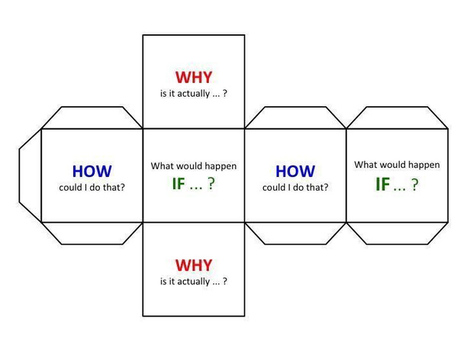
"Big idea: Teaching kids to ask smart questions on their own A four-year-old asks on average about 400 questions per day, and an adult hardly asks any. Our school system is structured around rewards for regurgitating the right answer, and not asking smart questions – in fact, it discourages asking questions. With the result that as we grow older, we stop asking questions. Yet asking good questions is essential to find and develop solutions, and an important skill in innovation, strategy, and leadership. So why do we stop asking questions – and more importantly, why don’t we train each other, and our future leaders, to ask the right questions starting from early on?"
Learn more:
- http://www.scoop.it/t/21st-century-learning-and-teaching?tag=Critical-Thinking
Via Beth Dichter, Dean J. Fusto, Suvi Salo, Juanita Jackson, Gust MEES, Marylin Alvarez 
Gust MEES's curator insight,
February 8, 2015 7:03 AM
Big idea: Teaching kids to ask smart questions on their own A four-year-old asks on average about 400 questions per day, and an adult hardly asks any. Our school system is structured around rewards for regurgitating the right answer, and not asking smart questions – in fact, it discourages asking questions. With the result that as we grow older, we stop asking questions. Yet asking good questions is essential to find and develop solutions, and an important skill in innovation, strategy, and leadership. So why do we stop asking questions – and more importantly, why don’t we train each other, and our future leaders, to ask the right questions starting from early on?"
Learn more: - http://www.scoop.it/t/21st-century-learning-and-teaching?tag=Critical-Thinking 
Jewelelelel's curator insight,
February 8, 2015 7:56 AM
I agree with the fact that recently,students have been 'trained' to give the correct and not ask smart questions.In school ,teachers usually ask us questions and if we answer that correctly, we get praised.For subjects sciences and humanities require a lot of questioning and thinking in order to understand and to learn more quickly.In my opinion, i think that teachers should give students a chance to ask questions that they have and not go through a topic blindly.If the students is shy to ask, the teacher could create a website so that the whole class can ask questions whenever they feel like and both the teachers and students themselves can answer the questions.This would enable the student to think out of the box to ask and answer questions by themselves
Scoop.it!
Scoop.it!

Si te están planteando un cambio de navegador desde el navegador de Google aquí te ofrecemos una pequeña guía de cambio de Chrome a Firefox. Via Gumersindo Fernández
Scoop.it!

Für Geschichte und Biologie sollen bis 2017 elektronische Schulbücher entwickelt werden. Das wünscht sich NRW-Ministerpräsidentin Kraft (SPD). Sie will Kinder früh an die digitale Welt heranführen. Via Andreas Hofmann, Guido Knaus
Scoop.it!
Adeline Koh beschreibt im Blog ProfHacker "A Scavenger Hunt Exercise to Teach Research Methodologies" eine gelungene Schnitzeljagd in der Bibliothek (via Subreddit "Libraries"): "Students were assi... Via Guido Knaus
Scoop.it!
|