Your new post is loading...

|
Scooped by
MED-Amin
July 25, 2016 4:35 AM
|
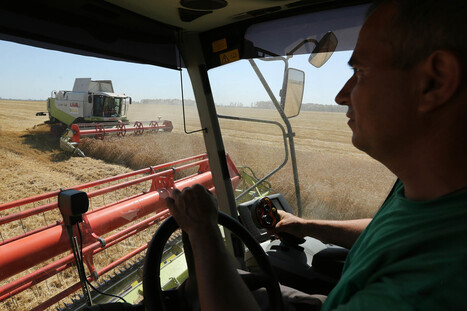
t's a wheat harvest that exceeded many expectations.
Pride AG Resources CEO, Jerald Kemmerer says farmers in western Kansas are still bringing in wheat for storage by the truckload,
"We have 15 locations and we still have two thirds of them that are still receiving grain today."
Kemmerer said the high moisture levels are just part of the reason for the 41% increase from last year's crop, but the high wheat yield means grain elevators statewide are struggling to find places to store it.
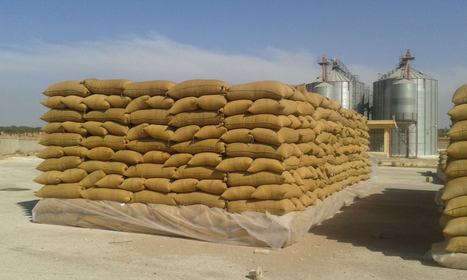
Although Kemmerer said the Pride AG elevators still have storage space, others don't, and are having to store the wheat bushels on the ground temporarily, "We were able to move grain from one location to the next to keep it from going on the ground."
With fall wheat harvest quickly approaching, Kemmerer said it's likely they'll run out of room too, "It's been a longer than normal harvest by far, and we're forty-five days away from fall harvest so there's going to be a scramble."
The grain will be stored and covered on the ground for a limited period of time, before it is moved when the space becomes available.
|
|
Scooped by
MED-Amin
July 25, 2016 4:32 AM
|
*Cereal production decreased from last year’s record harvest
*Higher cereal imports forecast in 2016/17, exports expected to remain stable
*Aggregate food price index increases
- Cereal production decreased from last year’s record harvest
Harvesting of the 2016 winter barley concluded in mid‑July, while winter wheat harvesting usually continues until early August. Cumulative precipitation has been uneven across the country. A wet October, which boosted soil moisture for winter grain planting and establishment, was followed by dry weather in November and December. Despite generous rainfall in May, some of the rainfed fields in Central Anatolia, Cukurova and Southeast remained affected by drought conditions, resulting in lower yields of wheat and barley. Area planted to maize decreased due to higher returns to other crops, such as cotton, vegetables and oilseeds.
First crop production estimates from the Turkish Statistical Institute indicate a 10 percent decline in cereal production in 2016 compared to the record breaking 2015 harvest, while it is on a par with the five‑year average. Wheat production is estimated to decrease by 9 percent to 20.5 million tonnes, barley production by 15 percent to 6.8 million tonnes, and maize production by 6 percent to 6 million tonnes.
|
|
Scooped by
MED-Amin
July 25, 2016 4:28 AM
|
"Much improved seasonal conditions" have boosted prospects for Australia's wheat harvest, US officials said – but the increased output may not be reflected in extra exports, given tough global competition.
The US Department of Agriculture bureau in Canberra lifted to 26.0m tonnes its forecast for Australia's 2016-17 wheat crop, sowings of which are just about complete, citing the boost from soil moisture levels now "above average" in many growing areas.
"The outlook for Australian winter crops in 2016-17 has improved significantly due to a turnaround in seasonal conditions which has seen improving rainfall in May and then record falls in June," the bureau said.
Furthermore, the "weather outlook for the three months to September is very positive", with Australia's Bureau of Meteorology viewing as highly likely the prospect of above-average rains in most grain-growing regions.
|
|
Scooped by
MED-Amin
July 25, 2016 4:25 AM
|
Hopes for a revival in Argentina's wheat production are falling, even as ideas for corn growing continue to mount – in part at the expense of soybeans, for which seed availability has emerged as an issue.
Argentina's wheat production will increase in 2016-17, but not by as much as had been thought, the US Department of Agriculture bureau in Buenos Aires said, cutting to 13.7m tonnes their harvest forecast.
The downgrade, to a figure 1.3m tonnes below the official USDA forecast restated last week, reflected lower expectations for sowings, which are being held up by "unusually wet conditions" in key central Argentine growing areas, the bureau said.
"Parts of Entre Rios, Santa Fe and Cordoba provinces have suffered unusually excessive rains… which have shut down part of the road network, many dirt roads, and have worsened the problem of a high water table levels in many areas."
The bureau estimated Argentina's wheat area at 4.6m hectares, 400,000 hectares below the USDA's official estimate, and cautioned that the estimate could face an additional cut if the poor seeding conditions - at time when the ideal planting window has already closed in many areas - prompt farmers to switch land to corn or soybeans instead.
|
|
Scooped by
MED-Amin
July 22, 2016 3:30 AM
|
Le président adjoint de l’Union tunisienne de l’agriculture et de la pêche (UTAP) chargé de la production végétale Chokri Rezgui a indiqué, jeudi, à Tunis, que la régression des quantités de céréales collectées en Tunisie, au cours de la saison agricole 2015-2016, à environ 6 millions de quintaux contre plus de 7 millions de quintaux au cours de la dernière saison accentuera les difficultés et la souffrance des agriculteurs.
Et d’ajouter à l’occasion d’un séminaire consacré à l’évaluation de la saison des céréales que 93% des superficies emblavées ont été récoltées dans différentes régions, soulignant la baisse de ces superficies à 750 mille hectares, alors qu’il avait été convenu de planter 1200 hectares.
Il a expliqué cette baisse par les chutes de grêle qui ont détruit des plantations au Kef ainsi que par la sécheresse et le déficit pluviométrique. .
Rezgui a attiré l’attention sur la chute des prix du quintal de blé dur à la production, lesquels ont varié entre 60 et 65 dinars au cours de l’actuelle saison contre des prix oscillant entre 65 dinars et 70 dinars le quintal la saison écoulée, les taxant de “décevants pour les agriculteurs”.
Il a fait remarquer que la rareté des ressources hydrauliques menace le secteur de l’agriculture après la baisse des stocks des eaux des barrages, affirmant que cette situation a contribué aussi à la régression des cultures des pastèques et des tomates ainsi que des grands investissements agricoles. Il a ajouté, dans ce contexte, que la rareté des eaux collectées dans le barrage de Siliana ne permettra aux agriculteurs d‘irriguer les arbres fruitiers que pour une période de trois jours chaque 10 jours.
Rezgui a appelé à l’impératif de résoudre les problèmes financiers des agriculteurs et à améliorer les services de la Banque nationale agricole (BNA), soulignant la nécesssité d’annuler la taxe de 0,3% appliquée par la banque lors du recouvrement des dettes des agriculteurs.
|
|
Scooped by
MED-Amin
July 21, 2016 3:26 AM
|
Indice phare du marché, le Baltic Dry Index est au plus haut depuis octobre 2015, après avoir touché un plus bas en février 2016.
Plus de 150 % en cinq mois : l'évolution de l'indice du coût du transport maritime des produits dits « secs » depuis février 2016 a l'allure d'une montagne russe, ou d'une fonction de courbe exponentielle. Ce dernier, le BDI (Baltic Dry Index) mesurant le prix du transport maritime des matières premières sèches comme les céréales, le fer, le charbon ou le cuivre sur 20 routes de transport, était tombé en début d'année à un plus bas historique, à 290, soit 5 % de son pic de 2008.
Ces derniers jours, il a renoué avec les niveaux d'octobre 2015. Peu connu du grand public, cet indice, le BDI, est très ion d'indicateur de coût. Il est considéré depuis trente ans comme un indicateur fiable de l'évolution du commerce international et de la croissance économique.
|
|
Scooped by
MED-Amin
July 21, 2016 3:23 AM
|
* Blumberg Grain says state company did not provide power on time
* The high-tech silos could combat fraud in local wheat buying
* Blumberg surprised supply ministry has not moved faster on second phase of project
CAIRO, July 20 (Reuters) - Blumberg Grain said on Wednesday its high-tech silos, the first phase of a wheat storage development project in Egypt, were not used to store any grain in this local harvest season despite being delivered on time.
The announcement comes as Egypt, the world's largest wheat importer, is investigating alleged fraud in its local purchases of the grain. The general prosecutor said last week that some local wheat was bought by the government in paper transactions only and not physically delivered.
"Unfortunately, operating the systems during the wheat harvest season was held up by lack of permanent electrical power," Blumberg said in a statement.
The storage systems of the grain logistics company were expected to process and monitor about a quarter of the domestic crop for the first time in the 2016 season.
But Blumberg said state-owned Holding Company for Silos and Storage, which is responsible for installing the electrical connections to the storage sites, had failed to do so.
|
|
Scooped by
MED-Amin
July 21, 2016 3:21 AM
|
bipartisan bill promoting global food security, resilience and nutrition could make hunger history, President Obama announced Wednesday during the White House Summit on Global Development.
The Global Food Security Act of 2016, which the president signed Wednesday, determined it is in the U.S. national security interest to accelerate growth that reduces poverty, hunger and malnutrition.
“Development isn’t charity,” Obama said, before revealing he had signed the bill. “It’s one of the smartest investments we can make in our shared future, in our security, in our prosperity.”
Establishing a correlation between conflict and the violation of basic human dignity, Obama said these investments would "endure well into the future." The new law allows over $7 billion to go toward initiatives that focus on agriculture, small-scale food producers and the nutrition of women and children worldwide.
The summit reinforced Obama’s efforts to help other countries improve their standards of living, mostly through programs directly targeting poverty, food security and health.
"No society can flourish, children can’t flourish if they’re going hungry," Obama said. "We can’t ask a child to feed her mind when she can barely feed her stomach."
|
|
Scooped by
MED-Amin
July 19, 2016 3:43 AM
|
Booming French and British wheat exports are drawing down stocks in both countries, as the new harvest gets underway.
UK wheat exports rose to 342,288 tonnes in May, customs data showed.
This was up some 100,000 tonnes from the previous month.
"The UK's strong May export performance was likely assisted by the growing discount for UK feed wheat versus corn," said Arthur Marshall, an analyst at AHDB.
Cumulative exports so far this season, which began on July 1 last year, are at 2.57m 38% from the previous season.
Sterling support
And UK wheat export prospects have been boosted by a tumble in sterling in the wake of the vote to leave the EU.
Sterling has recovered, a touch, as the political situation stabilises ahead of the appointment of a new Prime Minister.
"This saw UK grain prices take a slight knock – but with months of uncertainty ahead as the UK looks to start its transition out of Europe, this story is nowhere near over yet," said a European trading house.
|
|
Scooped by
MED-Amin
July 18, 2016 3:35 AM
|
Egypt, the world’s biggest wheat buyer, issued a final rejection of a cargo of U.S. grain that the government said contains ergot fungus at levels exceeding internationally acceptable standards.
The North African country initially turned away the 33,000-metric-ton shipment from Venus International on June 13, a decision that the company appealed on July 10. A re-inspection showed the cargo contained 0.096 percent ergot, almost twice the 0.05 percent level the country allows.
The Egyptian trading house will resell the shipment, though the destination isn’t known yet, Venus’s Chairman Mohamed Abdel Fadil said by phone Thursday.
“The ministry will continue to preserve its botanical wealth by rejecting imported wheat that has an ergot percentage exceeding the allowed level,” the Agriculture Ministry said in an e-mailed statement.
Egypt similarly rejected cargoes of French, Canadian and Polish wheat earlier this year because they contained traces of the naturally occurring fungus. Together with conflicting statements from the government about how much ergot was allowed in imports, the rejections roiled the wheat market and led traders to withdraw their offers or charge higher prices over the last season. Earlier this month, Egypt issued a decree confirming it would accept international standards for ergot.
As a result, the first tender for this season drew offers from 13 companies, more than double the amount from earlier this year. The country bought 180,000 tons of wheat from the Black Sea region in a tender on Tuesday.
|
|
Scooped by
MED-Amin
July 18, 2016 3:33 AM
|
In July 12, the USDA1 reported an increase in the global corn stock-to-use ratio to 20.8%—compared to 20.3% last month. The stock-to-use ratio in the agriculture industry tells us how much inventory of a particular crop is available for consumption. A higher supply of crops to its demand results in a higher stock-to-use ratio.
Ratio moves higher
The above chart shows how the global corn stock-to-use ratio in 2016 has moved compared to the past four-year period. The July 2016 global corn stock-to-use ratio was higher compared to 19.2% in July 2015. This appears to be driven by an increase in corn’s global ending inventory—it has been increasing over the years.
Inventory rises in July
To put this in perspective, the global corn inventory in July 2016 was 208 million metric tons—10% higher than the global corn inventory in July 2015 of 190 million metric tons.
A higher corn supply without changes in consumption usually leads to lower realized prices impacting farm income. These factors have an impact on corn prices. They determine the fate of fertilizer companies (XLB) such as CF Industries (CF), CVR Partners (UAN), Agrium (AGU), and Mosaic (MOS).
|
|
Scooped by
MED-Amin
July 18, 2016 3:30 AM
|
Egypt has strategic reserves of wheat capable of lasting until mid-January 2017
Egypt buys five million tons of domestic wheat, 25pct above target
Egypt purchased Tuesday its first imported wheat cargos in 2016 after the government decided to allow up to 0.05 percent ergot, a common grains fungus, in wheat shipments.
The state grain buyer, the General Authority for Supply Commodities (GASC), said on its website that it had bought 180,000 tons of wheat through a public tender on a free-on-board basis, to be shipped 10-20 August.
The GASC website gave a breakdown of the purchase as follows:
60,000 tons of Ukrainian wheat from Louis Dreyfus at $172.19 per ton.
60,000 tons of Russian wheat from Louis Dreyfus at $173.42 per ton.
60,000 tons of Russian wheat from Aston at $173.48 per ton.
Egypt's agriculture quarantine authority had previously rejected wheat shipments for containing trace levels of the ergot fungus, which made international traders lose their appetite for tenders by the world's largest buyer of wheat.
Egypt has enough strategic reserves of the commodity to last until mid-January 2017, supply minister Khaled Hanafi said last month.
Egypt has procured five million tons of domestic wheat, around 25 percent more than the targeted amount for this year.
A parliamentary commission that was formed end of June has been tasked with looking into allegations that local wheat procurement figures are inflated, which may reveal corruption.
|
|
Scooped by
MED-Amin
July 12, 2016 3:33 AM
|
« Tirons le bilan des 30 dernières années de réformes en matière agricole ! », tel pourrait être le sous-titre de l’éditorial pour la lettre économique des Chambres d’Agriculture signé par Thierry Pouch que nous reproduisons ci-après1. Tout comme la pratique de l’évaluation appelle à le faire s’agissant des politiques publiques, l’économiste appelle en effet à faire le bilan des promesses de la libéralisation des marchés, en particulier agricoles, au regard du fonctionnement réel des marchés, qui sont loin d’être aussi efficaces et efficients que les théories des livres d’économie.
Thierry Pouch revient ainsi sur le détricotage de la PAC et le processus de démantelement des politiques de régulation, mantra depuis la fin des années 1980. La croyance dans la capacité stabilisatrice des mécanismes de marché a en effet conduit à supprimer différents gardes fous … qui a provoqué la flambée des prix et la crise alimentaire de 2007/08. Aujourd’hui, toujours dans les mêmes disproportions, la correction s’opère et s’ouvre ce que Thierry Pouch appelle un « super cycle baissier » qu’aucune organisation internationale n’a su prévoir.
Ainsi que l’appelle de ses vœux Thierry Pouch, la crise agricole actuelle exige a minima un bilan de la libéralisation et des réformes de la PAC, mais surtout la réhabilitation urgente des politiques de régulation, car au vu des nombreuses défaillances qui caractérisent les marchés agricoles, ces derniers ont besoin des régulations adéquates pour mieux fonctionner. Cessons en effet d’opposer marché et régulation : les marchés ont besoin d’être organisés et encadrés pour bien fonctionner !
|
|
|
Scooped by
MED-Amin
July 25, 2016 4:34 AM
|
EU soft wheat exports have reached 852,975 tonnes in the current 2016/17 marketing year, according to newly released European Commission, down from 1.117 million tonnes at the same point last season.
Data from the Commission’s TAXUD system, which records allEU trade data directly from national customs authorities on a daily basis,shows that France has shipped 393,623t of soft wheat to third countries thisseason, followed by Germany with 146,750t.
|
|
Scooped by
MED-Amin
July 25, 2016 4:30 AM
|
The final report on wheat supplies will address five main topics, said parliamentary sources from the House of Representative’s Wheat Supplies Fact-Finding Committee.
The first topic urges the Ministry of Agriculture to inventory agricultural holdings.
The current method of inventory is “so random that it is merely an appeasement measure”, a source told Daily News Egypt on condition of anonymity, saying it is one of the reasons behind the spread of corruption across different agricultural crops, including wheat.
The second topic covered is the inventory of beneficiaries supported by farmers’ subsidies, which range between EGP 800-1,000 per tonne of wheat.
The third addressed topic is the wheat supply process and the manipulation that takes place throughout so as to fake the supply quantities and benefit from the subsidies.
The fourth topic covered in the committee’s report involves the mills and silos that suffer from “flaws and corruption”.
The fifth topic addressed by the report is the function of bakery systems and smart cards, which were recently revealed to be corrupt as well, displaying a need for improvements and amendments.
Daily News Egypt revealed on Thursday that the US Bloomberg threatened the Egyptian government with withdrawing from the development of wheat shounas and silos. Bloomberg said that it is faced with many obstacles on the part of the Egyptian Holding Company for Silos and Storage, which has been ignoring the former’s request to connect electricity to the silos that have been developed.
|
|
Scooped by
MED-Amin
July 25, 2016 4:26 AM
|
n agreement to limit grain exports, signed between the Ukrainian government, and the industry, may do little to slow the pace of shipments, US government officials warned.
The US Department of Agriculture's Kiev Bureau sees wheat stocks falling to a four-year low, as the rallying price spurs export demand.
Last week the Ukrainian Minister of Agricultural signed a memorandum of understanding (MOU) with farmers, and other representatives of the grain trade.
The non-binding MOU agrees exportable levels for major grains, and is designed to prevent too-heavy exports draining domestic stocks.
'No actual limiting effect'
The MOU has not specified export levels as of yet, but agrees that volumes for the year to July 2017 will be set in negotiations, bot be completed by September of this year.
The new MoU does not yet contain the specific export volumes. Instead it states that these will be negotiated separately before September 15, 2016.
But a note from the The US Department of Agriculture's Kiev bureau suggested that this system would do little to limit exports.
Based on the fact that exports ran nearly a million tonnes ahead of the amount specified in the 2015-16 MOU, the bureau suggested that "the conclusion could be made that last year's MOU had no actual limiting effect for grain exports".
|
|
Scooped by
MED-Amin
July 25, 2016 4:18 AM
|
Numéro spécial (juillet 2016) : faits marquants sur les marchés (Monde, Union européenne, France) en 2015/16.
Ce Panorama des marchés céréaliers a pour objectif de caractériser les faits marquants de la campagne 2015/16, qui vient tout juste de s’achever. Loin de proposer un descriptif exhaustif des marchés au cours des douze mois écoulés, il vise à mettre en lumière ce qui a fait la spécificité de cette campagne, ce que les opérateurs, observateurs et analystes garderont probablement en mémoire lorsque le détail des chiffres sera, lui, oublié.
La campagne 2015/16 a été une campagne d’abondance de l’offre de blé sur le marché mondial, après trois années successives de production record à l’échelle planétaire, et de concurrence exacerbée.
Malgré la faiblesse des prix libellés en dollars sur le marché mondial, elle a également été, pour les producteurs de certains pays, une campagne de prix très rémunérateurs en monnaie locale, en raison des évolutions du marché des changes ; pour d’autres, à l’inverse, le niveau des prix a conduit à des choix de commercialisation différée dans le temps.
L’année écoulée a également vu des changements majeurs en matière de politiques agricoles, qui, non seulement ont impacté les marchés en cours de campagne, mais dessinent également des orientations pour l’avenir. Ainsi, les mesures de libéralisation du secteur des grandes cultures prises en Argentine ont fait entrer le pays, dès cette campagne, dans une ère nouvelle en termes de position sur les marchés mondiaux, tandis que la fin de la politique de soutien à la culture du maïs en Chine a déjà commencé à produire ses effets sur le marché mondial des céréales fourragères.
|
|
Scooped by
MED-Amin
July 21, 2016 3:27 AM
|
The outlook for Australian winter crops in 2016-17 has improved significantly due to a turnaround in seasonal conditions which has seen sufficient rainfall in May and June, the U.S. Department of Agriculture’s (USDA) Foreign Agricultural Service (FAS) said in a July 15 report.
The report said the weather outlook through September is positive as soil moisture in virtually all wheat and barley cropping areas has markedly improved on the relatively dry conditions which prevailed over much of the previous year. These better seasonal conditions are also positive for Australian summer crops, with a slight decline in production forecast for sorghum while rice is expected to rebound from water-based constraints on production which were evident in 2015-16.
Production of wheat and barley in Australia in 2016-17 is forecast to reach 26 million tonnes and 9 million tonnes, respectively. These forecasts represent an upward revision on the previous forecast due to favorable seasonal conditions across major cropping areas
|
|
Scooped by
MED-Amin
July 21, 2016 3:24 AM
|
‘* Black Sea just has so much to sell,’ INTL FCStone says
* Russia to take 16% of global wheat market: UkrAgroConsult
In the race to supply wheat to the world’s biggest buyer, Russia is running away with the prize.
Russia has supplanted the U.S. as the top exporter of the grain and won the lion’s share of the wheat purchased in the first two tenders this season by Egypt, which buys huge amounts of wheat to provide citizens with cheap bread. Traders haven’t even bothered offering grain from France, which is struggling with concerns over poor quality after heavy flooding this year.
|
|
Scooped by
MED-Amin
July 21, 2016 3:22 AM
|
La mise en place d’un système national de production qui implique tous les secteurs est une «priorité qui s’impose», pour le développement de l’économie nationale, notamment en ce qui concerne le renforcement de la sécurité alimentaire, selon le représentant et conseiller au ministère de l’Agriculture, du Développement rural et de la Pêche, M. Cherif Aomari.
M. Aomari précise que l’agriculture est un secteur important et stratégique qui contribue, d’une «manière significative», au développement de l’économie nationale, sans toutefois remplacer le secteur des hydrocarbures. «Le secteur agricole a un rôle important à jouer, mais il a besoin d’être accompagné par d’autres, à l’instar de l’industrie, de l’environnement, du tourisme… », a-t- il tenu à préciser. De ce fait, selon l’expert, «au vu de la crise financière actuelle, l'État oriente ses efforts vers les créneaux où l'Algérie possède des potentialités importantes, comme l’industrie, le tourisme et l'agriculture qui est l'une des voies capables d’insuffler une dynamique concrète à l’effort de développement». Dans un contexte économique mondial marqué par l'instabilité des marchés, notamment pétroliers, la maîtrise de l'évolution du secteur agricole et, par ricochet, l’agroalimentaire, est plus que d'actualité, au regard des impératifs de préservation de la sécurité alimentaire du pays. Pour ce faire, il est préconisé de «rompre avec certaines pratiques routinières» qui consistent à répéter l’utilisation des mêmes techniques et en innovant très peu ou très rarement.
|
|
Scooped by
MED-Amin
July 19, 2016 3:53 AM
|
« La période des prix agricoles élevés touche probablement à sa fin mais la vigilance reste de mise » tel est le message que l’OCDE et la FAO ont mis en avant lors de la publication début juillet du rapport annuel, « Perspectives agricoles 2016-2025 », consacré à l’évolution des marchés agricoles. Pour les deux institutions, les prix des produits agricoles de base devraient rester « relativement stables » au cours de la décennie à venir : « Les principaux facteurs qui expliquent cette tendance sont la forte croissance de l’offre plusieurs années durant, le fléchissement de la progression de la demande dû à la crise économique globale, la baisse des prix du pétrole et la poursuite de l’accumulation des stocks déjà abondants »1.
Que retenir de ce nouveau rapport ?
En premier lieu, il apparait que l’OCDE et la FAO n’ont toujours pas réellement fait évoluer leur référentiel analytique. Alors qu’il montre chaque année son incapacité à représenter la dynamique des prix agricoles et donc à prévoir quoique ce soit, la place centrale du modèle d’équilibre général AGLINK n’est toujours pas remise en cause. Plus encore, le rapport se fait fort cette année de prévoir des prix stables, alors que ce type de modèle, basé sur l’hypothèse de l’équilibre des marchés, ne peut que prévoir des évolutions de prix stables ! Et pour cause : aucune des principales sources d’instabilité des marchés agricoles ne sont représentées dans ce type de modèle : les anticipations sont rationnelles (les producteurs connaissent le prix de leur récolte au moment du semis), tout s’ajuste immédiatement (il n’y a pas de coûts fixes) et le niveau des stocks ne jouent pas dans la formation des prix ! Le graphique ci-dessous représente la plupart des prévisions de prix du blé établies par l’OCDE depuis 1999. C’est ainsi qu’il apparaît que les prévisions faites chaque année par l’OCDE sont quasiment linéaires sur dix ans alors que la réalité de l’évolution des prix (courbe noire) est chaotique. La seule confrontation des prévisions passées et des prix réellement observés devrait amener à davantage de retenue dans la promotion des résultats d’un modèle aux hypothèses trop éloignées de la réalité de marchés agricoles structurellement volatils. Tout ceci explique pourquoi l’OCDE persiste à annoncer, année après année, des prix stables. Que l’organisation du Château de la Muette continue d’utiliser ce type de modélisation et de porter des résultats aussi peu robustes qui font pourtant référence dans la plupart des instances internationales et y compris à la Commission européenne est une incongruité Institutionnelle qu’il faudra bien un jour traiter.
|
|
Scooped by
MED-Amin
July 19, 2016 3:42 AM
|
Egypt, the world's top wheat importer, paid more for wheat at its second tender of the season - defying discounting by many merchants which appeared to underline a shift eastwards in the focus of export competition.
Gasc, the Egyptian grain authority, over the weekend bought 300,000 tonnes of Romanian and Russian wheat at tender, adding to the Black Sea supplies ordered on Tuesday to take total purchases for 2016-17 to 480,000 tonnes.
The purchase price of the wheat bought at the weekend, at $174.99 a tonne including shipping ($167.13 a tonne excluding shipping), was nearly $2 a tonne above the price Gasc paid on Tuesday.
"Operators have noticed that prices were up compared to previous tender," said Agritel, the Paris-based consultancy.
'No bargain basement offers'
However, there were also some doubts that the rise in prices, which contrasted with a small fall in Chicago and Paris wheat futures over the same period, was representative of underlying market trends.
Gasc wheat purchases, July 16
120,000 tonnes of Romanian wheat from Ameropa at $167.67 a tonne plus $6.66 a tonne freight
60,000 tonnes of Romanian wheat from Cerealcom Dolj at $166.73 a tonne plus $8.26 a tonne freight
60,000 tonnes of Russian wheat from Louis Dreyfus at $166.80 a tonne plus $9.45 a tonne freight
60,000 tonnes of Russian wheat from Aston at $166.80 a tonne plus $8.25 a tonne freight
Ave price = $174.99 a tonne incl. freight ($167.13 a tonne excl. freight)
In fact, of the 12 merchants which offered wheat to both tenders, eight dropped their prices for the weekend event, with Romanian supplies particularly discounted.
Cerealcom Dolj, a Romania-based grain grower as well as trader, slashed its price of domestic supplies by $6 a tonne to win part of the Gasc order, with Ameropa and Louis Dreyfus Commodities also cutting prices for Romanian cargos.
|
|
Scooped by
MED-Amin
July 18, 2016 3:34 AM
|
The Fact-Finding Committee in the House of Representatives will issue a report on 17 July that examines the current season’s wheat supply in Egypt’s shounas and silos.
Parliamentary sources claimed that the committee had created a preliminary inventory of four shounas, one of which was in Salaam City east of Cairo, uncovering EGP 125m worth of falsely reported supplies. Falsely reported supplies reached EGP 70m in Belbeis city in Sharqeya, EGP 80m in Al-Qanater Al-Khairiya, and EGP 90m in the last inventoried shouna.
The sources noted that there are more than 2,000 shounas and silos in Egypt. Those cannot be inventoried within a few days, which is why the committee is reaching out to the sovereigns, in order to obtain their support in the process of uncovering the truth.
According to an official in the committee, who requested to remain anonymous, the capacity of the silos and shounas can go up to around 3m tonnes. However, it was reported that the wheat supply had reached 4.8m tonnes.
Mahmoud Diab, the media spokesperson for the Ministry of Supply and Domestic Trade, said that the Parliament’s Fact-Finding Committee is currently examining 500 silos and shounas across Egypt.
He added that a committee receives the wheat supply that is taken into the silos and shounas. The committee includes investigators from the Ministry of Supply, and representatives from the General Organization for Export & Import Control and the Ministry of Agriculture.
|
|
Scooped by
MED-Amin
July 18, 2016 3:31 AM
|
Ukraine’s wheat area is forecast at 6.3 million hectares for market year 2016-17, down 10% compared to market year 2015-16, the U.S. Department of Agriculture’s (USDA).
|
|
Scooped by
MED-Amin
July 18, 2016 3:28 AM
|
Hedge funds accelerated their rate of selling in grains, fuelled by a hike in bearish bets on Chicago wheat to near-record levels – provoking ideas that a rout which has taken prices to 10-year lows may be spent.
Managed money, a proxy for speculators, cut its net long position in futures and options in the top 13 US-traded agricultural commodities, from cotton to cattle, by more than 130,000 contracts in the week to last Tuesday, according to data from the Commodity Futures Trading Commission regulator.
The drop the net long position – the extent to which long positions, which profit when values rise, exceed short bets, which benefit when prices fall – reduced it to 665,058 lots, down nearly 300,000 contracts in three weeks.
And it was accompanied by a drop of more than 120,000 lots, to 1.36m contracts, in managed money's open interest – ie the number of "live" contracts.
The drop in the net long reflected, again, a scramble by funds to cut bullish bets on grains - prices of which have been undermined, for corn and soybeans, by improved US Corn Belt weather and, for wheat, by better-than-expected US harvest results, and ideas of ample world supplies.
By contrast, the managed money net long in New York-traded soft commodities rose for a sixth successive week.
|


 Scoop.it!