 Your new post is loading...

|
Scooped by
CIHEAM News
May 20, 2021 5:08 AM
|
The United Nations has a long history of promoting greater international collaboration in outer space and the use of space technologies for sustainable development. In recent years, there has been increasing interest among countries in the use of space applications for sustainable development, especially to achieve the Sustainable Development Goals. This report highlights the potential opportunities of spaceenabled technologies for delivering on the Sustainable Development Goals and proposes science, technology and innovation policy options for harnessing space technology for sustainable development. The report also discusses the role of regional and international research collaboration to support such efforts. The achievement of ambitious global goals in widely differing local contexts requires the combination of space capabilities with detailed local knowledge. Global research collaboration offers great potential to contribute to this process, providing opportunities to both create new knowledge and increase the impact of research by diffusing existing knowledge.
|
|
Scooped by
CIHEAM News
May 20, 2021 4:11 AM
|
30 March 2021 - The International Panel of Experts on Sustainable Food Systems (IPES-Food) has released a new report in collaboration with the ETC Group: 'A Long Food Movement: Transforming Food Systems by 2045'. We map out two very different futures for food systems, people and the planet. First, what do the next 25 years have in store under “agribusiness-as-usual”? The keys of the food system are handed over to data platforms, private equity firms, and e-commerce giants, putting the food security of billions at the mercy of high-risk, AI-controlled farming systems, and accelerating environmental breakdown. But what if the initiative is reclaimed by civil society and social movements - from grassroots organizations to international NGOs, from farmers' and fishers' groups to cooperatives and unions? We imagine what a 'Long Food Movement' could achieve by 2045 if these movements succeed in collaborating more closely – to transform financial flows, governance structures and food systems from the ground up.
|
|
Rescooped by
CIHEAM News
from CIHEAM Press Review
May 20, 2021 3:49 AM
|
En 2020, 155 millions de personnes dans 55 pays se trouvaient dans une situation de "crise" liée à l'insécurité alimentaire. Entre conflits, crises économiques aggravées par la pandémie et événements climatiques, l'insécurité alimentaire aiguë a atteint en 2020 son plus haut niveau depuis cinq ans, avertit le Réseau mondial contre les crises alimentaires, mercredi 5 mai. L'an dernier, 155 millions de personnes dans 55 pays se trouvaient dans une situation de "crise" (phase 3 sur 5 de l'échelle internationale de la sécurité alimentaire) ou "pire".
|
|
Rescooped by
CIHEAM News
from CIHEAM Press Review
May 20, 2021 3:48 AM
|
TUNIS – The United Nations World Food Programme (WFP) and the Center of Arab Women for Training and Research (CAWTAR) are launching a study to discover how best to adjust national policies for the economic and social empowerment of rural women and girls, especially in times of crisis such as the pandemic COVID-19.
|
|
Rescooped by
CIHEAM News
from CIHEAM Press Review
May 17, 2021 8:11 AM
|
Publié en 2020. Rédigé par Apprioual Antoine, Zubel Karolina The IEMed produces studies and analyses at the request of both the European Parliament and the European Committee of the Regions (CoR) in the framework of the contracts agreed to a consortium formed by the think tank CASE and th
|
|
Scooped by
CIHEAM News
May 17, 2021 8:07 AM
|
Measures adopted around the world to contain the COVID-19 outbreak helped curb the spread of the virus and lowered the pressure on health systems. However, they also affected the global trading system, and the supply and demand of agricultural and food products. In response to concerns over food security and food safety worldwide, many countries reacted immediately to apply policy measures aiming to limit potentially adverse impacts on domestic markets. Covering the first half of 2020, the report provides an overview of short-term changes in trade patterns and policy measures related to agricultural trade that countries adopted in response to the pandemic. Despite the shocks caused by the COVID-19 pandemic and containment measures, the efforts of governments and agricultural sector stakeholders to keep agricultural markets open and trade flowing smoothly contributed to remarkably resilient value chains. Effects on global trade in food and agriculture remained limited to short-term disruptions at the very beginning of the pandemic. Governments’ policy responses covered a wide range of measures, including export restrictions, lowering of import barriers, and domestic measures. Most of the trade restricting measures were short-lived. International political commitments were pivotal in the coordination of a global response to the crisis and in deterring countries from taking unilateral measures that could have harmed food security in other parts of the world. However, COVID-19 is still spreading and may entail severe implications for access to food and longer-term shifts in global demand and supply of food and agricultural commodities.
|
|
Scooped by
CIHEAM News
May 11, 2021 7:38 AM
|
Avançant le principe que « les importations doivent être conformes aux règlementations et normes pertinentes de l’UE », cette communication arrive au meilleur moment alors que les négociations de la PAC abordent justement des amendements relatifs à la conformité des importations à nos standards ou à la mise en place d’un système centralisé pour activer les clauses de sauvegarde en cas d’importations excessives.
|
|
Scooped by
CIHEAM News
May 11, 2021 5:36 AM
|
What is China's impact on global agriculture? Explore the trends in China’s production, consumption and imports of twelve agricultural commodities.
|
|
Scooped by
CIHEAM News
May 11, 2021 5:15 AM
|
As we have reported over the past few weeks, cold and dry weather has been causing concern for new-crop grains supply, fuelling the current rally. Daily gains have now been seen across the global grains complex, with nearby Chicago maize prices rising 16% over the past 6 days, to close at $267.91/t yesterday. UK feed wheat futures too have seen support from new crop concern. The Nov-21 contract has gained 15% in the last 10 days, closing yesterday at £191.30/t. Yesterday, the European Commission released its latest EU crop monitoring (MARS) report, detailing conditions to 21 April. Recent colder-than-usual weather has reportedly delayed development of winter crops across Europe. The colder, dry conditions have also delayed the sowing and emergence of spring drilled crops.
Some small cuts have been made by the Commission to forecast yields, especially in France.
Countries including the UK, France and Spain have been identified as areas of rain deficit.
The report gives yield forecasts for total barley and soft wheat, as such we can apply these to EU crop areas forecast by Stratégie Grains and estimate production. While the yield cuts in the report have impacted on potential production, levels remain well above the 2020 harvest.
|
|
Scooped by
CIHEAM News
May 11, 2021 4:58 AM
|
Indica and Japonica are the two major types of rice traded on the global market. Product characteristics, production zones, consumer preferences, and government policies influence Indica and Japonica rice market structures. Using the Rice Economy Climate Change (RECC) model, which covers these rice markets in 24 countries and the global rice market, the international Japonica rice price is found to be more volatile than that for Indica rice under possible climate change scenarios. The simulation results also suggest that agricultural investments in major countries producing Indica and Japonica rice will contribute to their price stability over the medium and long term under climate change.
|
|
Scooped by
CIHEAM News
May 11, 2021 4:50 AM
|
Ukraine’s grain exports are down 24% to 39 Mt so far in the July 2020 to June 2021 season, Reuters reported, citing agriculture ministry data. Exports included 15.1 Mt of wheat, 19.1 Mt of corn and 4.1 Mt of barley. So far, traders have used about 86% of the total wheat export quota of 17.5 Mt for the 2020-21 marketing season. Traders and the ministry have said it is unlikely exports will reach the full quota this season. The government has said exports could decline to 45.7 Mt in 2020-21 because of a smaller harvest in 2021.
|
|
Scooped by
CIHEAM News
May 11, 2021 4:35 AM
|
FAO’s forecast for global cereal production in 2020 has been raised by 1.7 million tonnes this month to 2 767 Mt, 2.1 % above the 2019 output. The month-on-month increase almost entirely reflects upward revisions to coarse grain output forecasts in several countries in Africa. As for rice, officials in the Democratic People’s Republic of Korea and Guinea indicated lower production turnouts than previously foreseen by FAO, outweighing an upgrade for Madagascar and resulting in a slight downward revision to the 2020 global rice production forecast, which nonetheless remains set at an all-time record high. FAO’s first supply and demand outlook for wheat in 2021/22 Global wheat production prospects in 2021 have been lowered this month, and FAO’s latest forecast now stands at 778.8 Mt, albeit still 4 Mt more than the 2020 production estimate. The cut to the global production forecast is mostly related to the European Union (EU), where a smaller than previously expected planted area resulted in a 4-million-tonne decrease to the earlier forecast. Nevertheless, the EU’s output is still anticipated to increase by 6 percent on a yearly basis to 133.3 Mt and, along with favourable outlooks in the UK, USA, and Ukraine, is underpinning the overall positive global production outlook for this year.
|
|
Scooped by
CIHEAM News
May 11, 2021 4:24 AM
|
Country working to curb economic challenges from COVID-19 with free grain program. India’s wheat harvest is expected to be the second highest in the 2021-22 marketing year following four consecutive record harvests in the previous years,according to a Global Agricultural Information Network (GAIN) report from the US Department of Agriculture (USDA), at 105 Mt.
|
|
|
Scooped by
CIHEAM News
May 20, 2021 4:33 AM
|
Comment offrir un filet de sécurité coût-efficace pour le revenu des agriculteurs européens, dans un contexte d'augmentation de la fréquence et de l'intensité des risques climatiques ? Un document de travail du Geary Institute for Public Policy du University College Dublin analyse trois solutions inspirées de la politique de gestion des risques des États-Unis : assurance revenu, assurance chiffre d'affaires et assurance prix minimum. Les auteurs simulent la mise en œuvre de ces instruments dans les pays de l'Union européenne, sur 50 années climatiques (1961-2011), à l'aide d'une version adaptée du modèle GTAP. Il en ressort une hiérarchie assez claire : l'assurance revenu couvre les chocs climatiques plus efficacement et à moindre coût que les deux autres dispositifs (tableau ci-dessous). Néanmoins, elle souffrirait de coûts de mise en œuvre plus élevés, qui restent à intégrer dans l'analyse. Cet article pose en tout cas des bases quantitatives intéressantes sur l'efficacité comparée d'instruments de mutualisation des risques agricoles fondés sur une logique de solidarité européenne.
|
|
Scooped by
CIHEAM News
May 20, 2021 3:57 AM
|
Soil organic carbon sequestration measures entail costs to farmers with different individual characteristics and located in different areas. A cost-effective analysis taking into account these heterogeneities is crucial for developing effective public policy aimed at increasing carbon sequestration. We undertake such an analysis focusing on three soil organic carbon sequestration measures: no-till, extension of temporary grasslands, and hedgerows. Through an optimization model applied to France, our results show that only extension of temporary grasslands can store carbon at low cost, though their potential for carbon sequestration is also low. For an ambitious carbon sequestration target, no-till and hedgerows are needed. Because of heterogeneities among farmers, we show that economic incentives are more cost effective than command and control measures. Furthermore, we highlight that the carbon sequestration policy tested here is unable to totally neutralize agricultural greenhouse gas emissions and that a combination of agricultural and environmental policies is essential for tackling climate change.
|
|
Rescooped by
CIHEAM News
from CIHEAM Press Review
May 20, 2021 3:49 AM
|
More than half of the country's reservoirs were over 80 percent of capacity at the end of April but four had less than 40 percent of total volume, data released by the Portuguese Environment Agency (APA) indicates.
|
|
Rescooped by
CIHEAM News
from CIHEAM Press Review
May 17, 2021 8:11 AM
|
TUNIS – The United Nations World Food Programme (WFP) and the Center of Arab Women for Training and Research (CAWTAR) are launching a study to discover how best to adjust national policies for the economic and social empowerment of rural women and girls, especially in times of crisis such as the pandemic COVID-19.
|
|
Rescooped by
CIHEAM News
from CIHEAM Press Review
May 17, 2021 8:10 AM
|
The CIHEAM Bari and Euphresco Network for phytosanitary research coordination and funding, organised an online International Workshop on the Plant Health Research Priorities for the Mediterranean Region on Wednesday 12 May 2021.
The event gathered 19 countries and the participants representing the International Organisations (the Arab Society for Plant Protection, the European and Mediterranean Plant Protection Organization, the European Food Safety Authority, the International Plant Protection Convention Secretariat, the Interreg-Balkan Mediter, the Interreg-Med, the Joint Programming Initiative on Agriculture, Food Security and Climate Change, the Mediterranean Phytopathological Union, the Near-East Plant Protection Organization, the PRIMA Fondation, and the Union For the Mediterranean).
|
|
Scooped by
CIHEAM News
May 11, 2021 7:41 AM
|
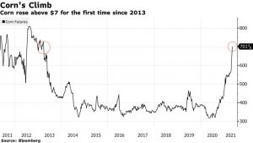
Bloomberg writers Breanna T Bradham, Kim Chipman, and Fabiana Batista reported on Tuesday that, "Corn futures surged above $7 a bushel for the first time in more than eight years as lack of rainfall in Brazil added to supply concerns."
|
|
Scooped by
CIHEAM News
May 11, 2021 7:36 AM
|
La pandémie nous a fait prendre conscience d’une dépendance forte aux échanges, à la production des autres pays. Nous avons manqué de masques, de vaccins, nous avons eu peur de manquer d’alimentation. Pour autant, cette prise de conscience n’a pas révolutionné les politiques agricoles. La constitution de stocks reste un tabou, la relocalisation de l’alimentation n’est vue qu’au travers de l’engouement pour les circuits courts, qui ne concerne pourtant qu’une très petite part de l’alimentation française, et qui reste éphémère. La note de conjoncture Agreste de février 2021, que nous reproduisons ci-dessous, montre également qu’en 2020, les importations de produits agro-alimentaires sont restées au niveau de 2019. Alors qu’on pouvait s’attendre à une réduction des importations en lien avec la fermeture d’une grande partie de la restauration hors domicile, souvent accusée de ne servir que des viandes d’origine extérieure, on ne constate qu’une très légère diminution des importations de viande et de l’ensemble des produits transformés, et une légère augmentation de fruits, de légumes et d’oléoprotéagineux et du total des produits bruts… La pandémie ne semble pas avoir pas changé nos habitudes de fond.
|
|
Scooped by
CIHEAM News
May 11, 2021 5:19 AM
|
SINGAPORE — Asian feed manufacturers are switching to wheat in animal rations as multi-year high corn prices constrict demand for the yellow grain widely used to to fatten hogs and chickens. Some of the world’s top corn buyers such as China, South Korea and Vietnam are buying more wheat from Australia and the Black Sea region in the months ahead as the landed cost of corn has climbed to a rare premium to wheat, said two Singapore-based grains traders. Combined, those three countries are forecast to buy 26.4% of global corn imports this year, according to the U.S. Department of Agriculture, so any substitution for wheat could have a large impact on global grain trade flows.
|
|
Scooped by
CIHEAM News
May 11, 2021 5:11 AM
|
Agustín Tejeda Rodriguez, economista jefe destacó el buen escenario de precios para el nuevo ciclo agrícola, en el cual la cebada ha mostrado aún mayores incrementos de competitividad.
Con este panorama, expresó que las estimaciones de área para el ciclo 2021/22 se mantienen en 6,5 MHa para trigo y ascienden a 1,15 MHa para cebada (900 kHa de la 20/21). En términos de producción, se esperan 19 MTn para trigo, igualando el récord logrado durante la campaña 18/19 y superando las 17 MTn del ciclo previo frente a la expectativa de mejor clima; y 4,6 MTn en cebada, superando las 4,1 del ciclo anterior. En conjunto, se expanden tanto la superficie como la producción de cultivos. Seguidamente, como resultado de los incrementos esperados en la producción, Agustín subrayó que las exportaciones podrían alcanzar las 12 Mt en trigo y las 3 Mt en cebada.
Bajo un escenario de buenos precios y cantidades crecientes, Tejeda Rodriguez destacó que las cadenas del trigo y la cebada harían una contribución récord a la economía del 2022, después de un gran aporte en 2021.
|
|
Scooped by
CIHEAM News
May 11, 2021 4:55 AM
|
Argentina is expected in 2021-22 to harvest 19 Mt of wheat, the same as its record-setting harvest in 2018-19, Reuters reported, citing the Buenos Aires Grains Exchange (BAGE). Sowing of wheat will start in the next few weeks with harvest typically ending in January. The 2020-21 wheat crop was 17 million tonnes. Argentina is now a major wheat exporter with most of it heading to Brazil, Reuters said. The exchange said in April that it expected a 2021-22 wheat planting area of 6.5 million hectares. Good soil moisture and high international grain prices will support the crop, the exchange said.
|
|
Scooped by
CIHEAM News
May 11, 2021 4:41 AM
|
International food commodity prices rose for the 11th consecutive month in April, with sugar leading the increase and cereals resuming their upward trend, the Food and Agriculture Organization of the United Nations (FAO) reported today. The FAO Food Price Index averaged 120.9 points in April, 1.7 percent higher than March and 30.8 percent higher than its level in the same month last year. The index, which tracks monthly changes in the international prices of commonly-traded food commodities, reached its highest level since May 2014, and in nominal terms is 12 percent below its all-time peak in February 2011.
|
|
Scooped by
CIHEAM News
May 11, 2021 4:26 AM
|
Pandemic lockdowns have altered food consumption patterns around the world. Stockpiling of staples and more home-cooking have given a big boost to one wheat-based product in particular — pasta — and to the durum wheat needed to make Italy’s extruded contribution to global cuisine. Leading durum and pasta exporting countries have experienced surging demand. Italy, which exports 60% of its pasta output, saw international sales increase by 30% during the first half of 2020, as reported by the Economist in November 2020, with multinational industry . . .
|









https://unctad.org/system/files/official-document/dtlstict2021d1_en.pdf