


The Brexiters’ absurd customs plan would cost around £350m a week. I don’t remember seeing that on any big red buses, says Richard Reed, co-founder of Innocent Drinks

 Your new post is loading...
 Scoop.it! The Brexiters’ absurd customs plan would cost around £350m a week. I don’t remember seeing that on any big red buses, says Richard Reed, co-founder of Innocent Drinks No comment yet.
Sign up to comment
Scoop.it!

Biggest sales jump in 18 months as shoppers return to the high street, but underlying trend still weak
Graham Watson's insight:
The short-term fascination with data is illustrated here with the push me - pull me nature of the economy illustrated by the graph accompanying this Guardian article. Last month's retail sales are up, but the trend is going in the opposite direction .
Scoop.it!

The duchess wants to champion female empowerment. Letting women participate fully in the workforce would be a good start, says the Guardian’s economics editor, Larry Elliott
Graham Watson's insight:
Even the Guardian's gone Royal Wedding mad - although Larry Elliott does make some valid points about how genuine gender equality might be a way to boost productivity across the global economy, not least in the UK.
Scoop.it!

Price pressures could return over the next few months even though the long term trend is likely to be down
Graham Watson's insight:
Kamal Ahmed casts his eye over the latest inflation data and suggests that, although inflation seems to be on the way down, there are doubts about whether it will stay low, if only as a result of the latest rises in petrol prices.
Scoop.it!

The technology-based system could cost more than the UK contributes as an EU member, MPs are told.
Graham Watson's insight:
More good news regarding Brexit: the cost of new customs arrangements is estimated to by up to £20bn. Good news, eh!
Presumably that doesn't apply to those people flying about Europe in private jets - and possibly doesn't include other opportunity costs, such as the cost of employing more customs officials and so on.
Brexit's a story that keeps giving: you might also be amused to note that the first day after our scheduled withdrawal from the EU is? 1 April. I kid you not.
Scoop.it!

The Chancellor pledges full-fibre connections for most homes and businesses by 2025.
Graham Watson's insight:
Fairly standard supply-side stuff - faster broadband equals higher productivity, right.
Or more watching of cat videos on YouTube, perhaps
Scoop.it!

The cost of fuel is now at its highest level for three-and-a-half years.
Graham Watson's insight:
The latest macroeconomic news: bad news for real incomes as the upwards move of petrol prices once again squeezes real incomes, just at that moment when they had started rising again. Fuel is now at its most expensive in the past three-and-a-half years, and this will also put upwards pressure on inflation.
Scoop.it!

Regular pay is up by 2.9% on a year ago, which could make an interest rate rise more likely
Graham Watson's insight:
If a week is a long time in politics, then it's appears to be equally long in Economics. Larry Elliott seems to have partially changed tack on interest rates, in the light of today's unemployment data.
Scoop.it!

Governor Mark Carney tells us time and time again that interest rates will rise, but will anyone believe him in the future?
Graham Watson's insight:
Yesterday's Observer business leader is worth a read: three interesting stories covered.
Scoop.it!

Decision seemingly based on data showing economy faltering in first few months of 2018
Graham Watson's insight:
The Guardian reflects on the latest interest rate decision.
Scoop.it!

The Bank of England says the economy is going through a "temporary soft patch" as it keeps rates on hold.
Graham Watson's insight:
The latest MPC interest rate decision doesn't come as a surprise, and the latest growth forecast has been revised downwards, although the Bank seem to believe that the weather has played a large part in this. I'm not convinced this ties in with other people's narratives.
Scoop.it!
BT is to axe about 13,000 jobs, most of which will be back-office and middle management roles.
Graham Watson's insight:
Wowsers! Significant negative multiplier effects - or an indicator of a lack of confidence in the UK economy?
Scoop.it!

A slowdown in economic growth seems set to delay any interest rate rise until at least August.
Graham Watson's insight:
A big day for interest rates, with the latest decision of the Monetary Policy Committee. For much of the recent past, the talk had seemed to indicate rates increasing, but the data of the past month has suggested that they might be put on hold.
It will be interesting to see what happens: will the latest data see the Bank stay its hand, or will the desperation to maintain 'credibilty' - or simple bloody mindedness - see rates rise. |
Scoop.it!

Meltdown Monday saw Northern cancel more than 300 services: just ‘Meltdown Monday’ saw Northern cancel more than 300 services, reflecting the absolute dire level of investment, says Phil McDuff, who writes on economics and social policy
Graham Watson's insight:
Phil McDuff's article is ostensibly about the state of Britain's railways but, in many regards, it's more about regional inequality, and the different levels of infrastructure investment across the country. It makes for sobering reading, and confirms what most people outside the Home Counties think about the nature of both transport investment and media coverage.
Scoop.it!

Higher taxation is only way to address demands on buckling health service, thinktanks say
Graham Watson's insight:
Today's big story - Microeconomics/Macroeconomics. Both.
In brief, the latest research by the IFS and Health Foundation suggests that simply to maintain the current level of NHS services will cost substantial sums of money. Irrespective of the economics, the NHS is probably the toughest political issue for the major parties, and any prospective of 'cuts' is considered political suicide.
This story comes at around the time that the government is considering a long-term funding plan for the health service.
Scoop.it!

Lower airfares helped bring down consumer price index to 2.4% in April, says ONS
Graham Watson's insight:
The Guardian on the latest inflation data - down - with lower airfares helping, albeit temporarily. It's likely to rise as fuel prices pick up, but most think that the overall trend id downwards, and as a result, it's unlikely that interest rates are going to rise in the near future.
Scoop.it!

Pace of growth slows but the average UK property now costs £224,00 - £9,000 more than March 2017.
Graham Watson's insight:
The latest on the housing market isn't indicative of an economy that's full of confidence, in my view. It strikes me that the UK economy is wondering 'where next'.
Scoop.it!

Retailer, which has already axed 22 outlets, reveals 14 more that will shut in the next year
Graham Watson's insight:
The retreat from the high street continues, with Marks & Spencet planning to close 100-plus stores. Not even the patron saint of underpants can save them. Saint Michael, obviously.
Scoop.it!

The Brexit vote has lowered growth by up to 2%, Bank of England Governor Mark Carney says.
Graham Watson's insight:
"Hector, I have a good news and a bad news for you".
Only fans of Sinhala teledrama of the 1990s might get that reference (i.e. no-one) but that is effectively what today has revealed. The Governor of the Bank of England has revealed that Bank research suggests that Brexit might have, temporarily, cost the economy nearly 2% of growth, but on the plus side, the high level of employment has improved the public finances faster than expected.
And there's also a bit of Boris Johnson sounding off - more heat than light, unsurprisingly.
Scoop.it!

Collapse is mirrored by tumble in direct foreign investment into Britain of 90%
Graham Watson's insight:
No sense of glee here, then. No sir!
The Guardian looks at what's happened to the number of European businesses registered in the UK, and the level of inward FDI. It seems to like what it sees, even if it seems to mean bad macroeconomic news...
Scoop.it!

Wages are rising faster than inflation for the first time in more than a year, official figures show.
Graham Watson's insight:
The latest ONS data on the labour market has been released. Unemployment continues to fall to record lows and, for the first time in the recent past, pay is rising more rapidly that inflation. In short, real wages are rising.
That said, we've had a decade-long pay squeeze and this news is unlikely to translate into higher levels of consumer spending, and by definition, growth, in the immediate term.
Scoop.it!
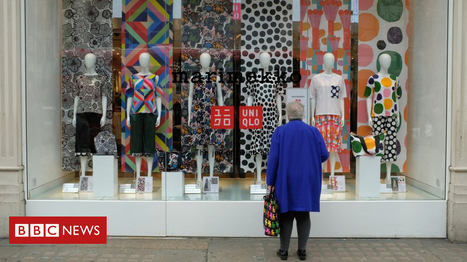
Number of shoppers falls 4.8% across March and April - worse than in the depths of the last recession.
Graham Watson's insight:
The extent of the slowdown in retailing is apparent in the declining footfall on Britain's high streets. This BBC article highlights the alarming extent of the decline.
Scoop.it!
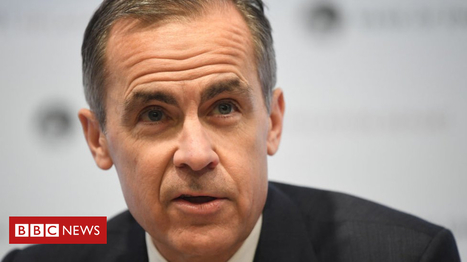
Bank of England steps away from an interest rate rise - and that sends a big signal about the economy.
Graham Watson's insight:
Kamal Ahmed reflects on the decision to leave interest rates unchanged arguing that Britain is a "temporary flat spot' and that the move was appropriate for now, but that rates are on the way up.
The headline refers to the fact that, until recently, a lot of the messages coming from the Bank were supportive of rates rises, and as a result some are worried that the Bank has lost a modicum of credibility.
Scoop.it!

Lords committee suggests businesses could go bust and year-round supplies be at risk
Graham Watson's insight:
More insights into the likely effects of Brexit, food prices are likely to rise - and food security is likely to be compromised.
Scoop.it!

From
www

What exactly is the Bank of England interest rate? Well, for one thing, it could make your mortgage more expensive.
Graham Watson's insight:
I hope you know... |






More Brexit good news. Or not.