




GDP growth fell to 0.1% in the first quarter of 2018 driven by a sharp fall in construction.

 Your new post is loading...
 Scoop.it! GDP growth fell to 0.1% in the first quarter of 2018 driven by a sharp fall in construction. No comment yet.
Sign up to comment
Scoop.it!

Two former members of Bank of England’s interest rate-setting committee discuss a potential rise
Graham Watson's insight:
Seconds out - Round 11. Andrew Sentence and David Blanchflower have opposing views on where interest rates should be heading in the light of the latest economic data.
Scoop.it!

Hopes of recovery from ‘beast from the east’ dashed after fifth consecutive month of weak sales
Graham Watson's insight:
Apart from, of course, retail sales, which have continued to disappoint. It is difficult to see where growth is coming from, unless, of course, the pick up in real income sparks economic activity.
Scoop.it!

The collapse in car sales in Britain has been thrown into sharp relief by Europe-wide data showing demand for new vehicles at a near 20-year high.
Graham Watson's insight:
There's definitely an International Baccalaureate extended essay in press coverage of the economy. This is a lovely example: the Telegraph are attributing growing car sales in Europe and falling car sales in the UK to confusion over the future of diesel cars.
Not only is this a lovely example of the difference between causation and correlation but the data is far from comprehensive - the market share for diesel in Europe is down too, and fails to consider other factors like the fact the Eurozone growth is currently stronger than UK growth.
Scoop.it!

Production fell by 13.3% in March, with sharp falls in shipments to the UK and overseas.
Graham Watson's insight:
Leading indicator? Lagged indicator? Or increasingly unrelated to growth?
Either way, car production in the UK has fallen dramatically, worrying the Society of Motor Manufacturing and Traders (SMMT), who attribute some of the decline to bad weather.
Scoop.it!

Government borrowing fell by more than expected to £42.6bn for the past financial year.
Graham Watson's insight:
An article with many uses - it would be a good way of distinguishing between deficit and debt, for example. Government borrowing, and thus the size of the budget deficit has fallen to its lowest level for 11 years, but "total public debt as a percentage of GDP edged up to 86.3%, up from 85.3% the year before. In cash terms it stands at £1.798 trillion."
However, this is not the unequivocally good news that you might have thought - some attribute the pick-up in the public finances to falling spending rather than a marked improvement in the nation's economic health.
Scoop.it!

Will the new royal baby encourage people to loosen their purse strings?
Graham Watson's insight:
Personally, I'm with Simon McCoy...
Scoop.it!

The experiment in paying a basic income to 2,000 jobless Finns will not be expanded.
Graham Watson's insight:
One of the trendiest current economic ideas is that of a universal basic income. Advocates of it argue that it provides a more effective social safety net than existing benefits and this might encourage greater labour market flexibility.
However, this people are going to be disappointed by the news that a Finnish experiment which paid 2,000 unemployed Finns a universal basic income will not be expanded. The government has concluded that it hasn't worked, in line with the OECD view that a system of Universal Credit, such as that in the UK is better.
Scoop.it!

The government is set for a £300bn spending black hole over the next six years if it decides to ease austerity, The Telegraph can reveal.
Graham Watson's insight:
A report from the IFS suggests that were the government to abandon austerity there could be adverse implications for the public finances. In fact, it could cost the government up to £300bn, not an insubstantial sum.
The figure reflects an ageing population, historic rates of spending and implies future tax increases. Of course, neoclassical economists might imply that we already aware of these future tax increases.
Scoop.it!

The Dutch state railway is under serious fire for leasing its trains in low-tax Ireland. And it’s not the only operator to do so
Graham Watson's insight:
It's difficult to summarise this Observer Business leader: all of the articles here are worth a read - on tax avoidance, the UK high street and the conduct of monetary policy.
Worth a read.
Scoop.it!

Sales have slumped in the scandal’s wake and left manufacturers gasping for a breath of fresh air
Graham Watson's insight:
The Guardian is trying to put across the view that the UK car industry is in real trouble, buffeted by the twin forces of 'dieselgate' and Brexit. It highlights the recent layoffs at Nissan and Jaguar Land Rover, suggesting that the former is having a significant adverse effect on this key sector.
Scoop.it!

Michael Saunders, a member of monetary policy committee, says rates should move up from 0.5%
Graham Watson's insight:
Reading the runes, the news management coming from the Bank of England is telling me that, on balance, there has been little change in the view of the Monetary Policy Committee (MPC) regarding interest rate changes.
First Mark Carney says that they are aware of Breixt uncertainty and then Michael Saunders says that 'The Beast From the East' hasn't really affected the UK economy.
Make of that what you will, but it's an indication that managing the news has an increasingly important role in policymaking. But should it?
Scoop.it!

Bank rate rise could cost average homebuyer an extra £138 each month on £175,00 mortgage
Graham Watson's insight:
A look forward to what the implications of an interest rate rise to 2% might be. Mortgage costs would rise, and as a result, this would have a an adverse effect upon the ability of those repaying mortgages, like me, to consume. |
Scoop.it!

The number of new house starts fell sharply, adding to fears overall growth will be hit by bad weather.
Graham Watson's insight:
Construction down - attributed to the winter weather - and you should be aware of the implications of this for the wider economy.
Scoop.it!

‘The beast from the east’ blew the UK economy off course, further complicating an already complex picture
Graham Watson's insight:
More for the IA about the coverage of the economy - I'm not as certain as the Guardian that all is doom and gloom to the extent that they claim. Even their own figures don't suggest that the economy has been blown far off course.
Scoop.it!

Each month we look at key indicators to see what effect the Brexit process has on growth, prosperity and trade in the UK
Graham Watson's insight:
The monthly Guardian update on the impact of Breixt and the subsequent negotiatiions on the state of the UK economy - surprisingly, given the doom and gloom around, much of the data is slightly improved from the previous month.
Scoop.it!
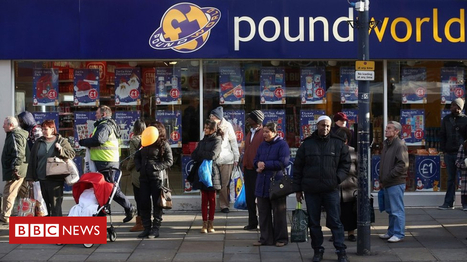
The discount retailer is mulling a number of options, including a company voluntary arrangement.
Graham Watson's insight:
Interesting High Street news that Poundland is thinking of closing stores. Is this bad news, because of the negative multiplier effects likely to occur, or good news because YED figures would suggest that they sell inferior goods and consumers might be shopping elsewhere?
Scoop.it!

As the deficit eases, the Treasury is facing a significant fork in the road.
Graham Watson's insight:
Kamal Ahmed's follow-up to the news that the public finances have improved - arguing that it now gives the Chancellor a different set of problems to solve, with some arguing for an end to austerity and increase in spending.
The Chancellor is in a cleft stick: committed to eliminate the deficit by the middle of the next decade and also having indicated increased funding for the NHS.
It will be interesting to see how he negotiates his way out of this particular bind.
Scoop.it!
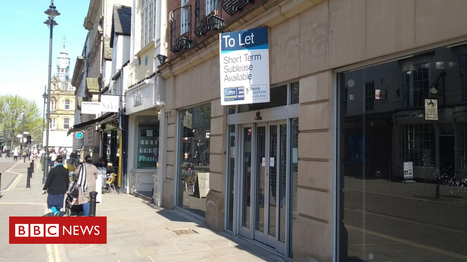
Almost 650 shops and restaurants have shut their doors since the start of the year, BBC analysis reveals.
Graham Watson's insight:
One of the current hot themes...the state of the high street.
Scoop.it!
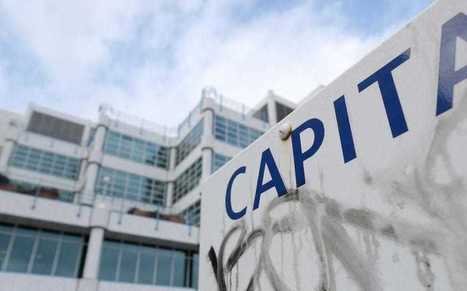
Capita has launched a plan to raise at least £1bn as part of an ambitious new strategy to turn the business around after its latest results showed that it made a £513m loss last year.
Graham Watson's insight:
Is Capita the next Carillion? Discuss.
Scoop.it!

Thinktank warns of a ‘car crash’ as low interest rates mean further cuts to stimulate demand would not be an option
Graham Watson's insight:
The Institute for Public Policy Research (IPPR) have reported that the Bank of England is ill-prepared for any future recession, suggesting that previous recession have seen interest rates cut by 4.5 - 5%, whereas in the current environment, with interest rates currently 0.%, there's simply not the room for manoeuvre that the Bank, or the government would want.
Scoop.it!
The EY Item Club predicts two rises this year and two next year, despite sluggish economic growth.
Graham Watson's insight:
The Ernst & Young ITEM club forecasts interest rate rises: news, apparently.
Scoop.it!

Trump’s rejection of multilateralism is risky but our 70-year-old rule-based system is far from perfect
Graham Watson's insight:
Larry Elliott with a counter-intuitive perspective on President Trump's ongoing trade policy. Instead of seeing it as a catastrophe, capable of taking us back to the protectionist past, he argues that it might force a rethink of the current imperfect multilateral trade system, and, result in a more efficient, better functioning global order.
Scoop.it!

Free trade with the EU post-Brexit is "crucial" for UK food and drink firms, says a committee of MPs.
Graham Watson's insight:
Brexit is a threat to the UK's food and drink firms. Who on earth could have predicted that?
Scoop.it!
Chancellor gives upbeat assessment of state of UK economy at IMF meeting
Graham Watson's insight:
Good Brexit news - the transition deal has apparently meant that the prospect of the exodus of City jobs to the continent isn't going to happen.
Deep joy! But, I guess it averts a potential negative multiplier effect.... |






Already filed under the "Not Good News" category, the latest growth figures must be a cause for concern, if only because the ONS have suggested that the bad winter weather is only responsible for a tiny part of this.
However, it will be interested to see what happens when subsequent revisions occur. Many people think that there's likely to be an upwards revision, but even then, it's not expected to be significant.
The bigger worry is going to be the extent to which weaker construction data might presage sluggish future growth.