JavaScript for Line of Business Applications
606.5K views | +6 today
JavaScript for Line of Business Applications
Keeping track of current JavaScript Frameworks that help design your clientside Business Logic Layers.
Curated by Jan Hesse
Beam to my Inbox:
Your new post is loading...

Popular Tags - Filter using the Funnel

Scoop.it!

The Future of AngularJS

The Future of AngularJS | JavaScript for Line of Business Applications | Scoop.it

With AngularJS 1.3, AngularJS dropped support for IE8. AngularJS 2.0 looks to continue this trend, with the focus on faster, modern browsers (IE10/11, Chrome, Firefox, Opera & Safari) on the desktop, and Chrome on Android, iOS6+, Windows Phone 8+ & Firefox mobile. This allows the AngularJS codebase to be short and succinct (without needing hacks for older browsers), and also allows AngularJS to support the latest and greatest features without worrying about backward compatibility and polyfills. The expectation is that by the time AngularJS 2.0 rolls out, most of these browsers will be the standards and defaults, and developers can focus on building apps specifically for them.


No comment yet.
Scoop.it!

Integrating QUnit with Travis builds

Integrating QUnit with Travis builds | JavaScript for Line of Business Applications | Scoop.it

Under normal circumstances, following the official guide for setting up QUnit would have been enough, but there were a couple of issues we had to overcome:

  1. We’re using the AMD format for our JavaScript modules.
  2. We want our tests to run automatically as part of our Travis builds.
No comment yet.
Scoop.it!

Rails and React II: A real use case

Rails and React II: A real use case | JavaScript for Line of Business Applications | Scoop.it

Before continuing, I will like to share a very simple application I have created as the result of what we are going to achieve after finishing this post. It consists of:

  • A Person model.
  • A HomeController with just one index action, the root route of the application and where the React components render and are in charge of creating search requests and displaying the results to the user.
  • A PeopleController which just renders the JSON result of the requested searches.
Jan Hesse's insight:

http://rails-and-react-ii.herokuapp.com/

No comment yet.
Scoop.it!

Software Development AntiPatterns

Software Development AntiPatterns | JavaScript for Line of Business Applications | Scoop.it
Good software structure is essential for system extension and maintenance. Software development is a chaotic activity, therefore the implemented structure of systems tends to stray from the planned structure as determined by architecture, analysis, and design. Software refactoring is an effective approach for improving software structure. The resulting structure does not have to resemble the original planned structure.
No comment yet.
Scoop.it!

Database of React Components

Database of React Components | JavaScript for Line of Business Applications | Scoop.it
Searchable repository of React-components
No comment yet.
Scoop.it!

Using ReactJS with Browserify and Gulp

Using ReactJS with Browserify and Gulp | JavaScript for Line of Business Applications | Scoop.it

ReactJS uses a special syntax called JSX, not the normal JS one. Usually, when you want to work with ReactJS JSX files, you need to transform it to a normal JS file and then operate on that file. However, with the help of Reactify, a transform for Browserify, you won’t need to compile jsx to js files anymore, just use it directly from your code.

No comment yet.
Scoop.it!

An Introduction to Static Apps

An Introduction to Static Apps | JavaScript for Line of Business Applications | Scoop.it

Static applications and websites render in the user’s browser without the need for server side processing, this means that all the rendering of HTML, CSS, and JavaScript is done on the client side, rather then relying on server side technologies. Whilst traditionally managing static websites and applications may seem like hard work, the medium has come on leaps and bounds over the past few years to the extent that it’s now perfectly feasible to run heavy content, rich media websites, and applications entirely in the browser – Good times!

So grabbing and rendering UI elements doesn’t need roundtrips to your server, instead relying on the browser, which actually saves a heck of time for the user.

Jan Hesse's insight:

Also: http://www.staticgen.com/

No comment yet.
Scoop.it!

The conventions Ember.js provides to make you happy and productive

The conventions Ember.js provides to make you happy and productive, presented by Stefan Penner at Midwest JS 2014
No comment yet.
Scoop.it!

Beginning to understand the Ember.js Container

Beginning to understand the Ember.js Container | JavaScript for Line of Business Applications | Scoop.it

Ember will do a lot of auto-generation of things in your App. Where should it place these newly created objects? How are other objects within the system meant to be able to find these new objects? The the first part of the answer is, you guessed it, the Container! The second part of the answer is: a consistent namespacing scheme.

Think about the Container as a Condo building. A very special Condo building. Controllers live in the Penthouse. Other things live in the Condo, but lets focus on Controllers for now.

No comment yet.
Scoop.it!

Single Page Application with .NET MVC and AngularJS

Single Page Application with .NET MVC and AngularJS | JavaScript for Line of Business Applications | Scoop.it

This project is a code using AngularJs and .net MVC framework. Main function is displaying Phone List and Phone Detials.
This fuction is from tutorial of phoneCat on AngularJs home page. And I added user management module with AngularJS. Usually, AngularJS is used for single page application, but there's lots of adventages if we use MVC together. For example, we can reduce the effort on user authentification and authorization module in AngularJS.
We can move user auth modules on Server side, and it make pretty easy to manage Security, Menu management, etc.

No comment yet.
Scoop.it!

Building a Single Page Application with ASP.NET, WebAPI, SignalR and AngularJS

You'll learn how to get started building web applications with AngularJS, how to leverage HTML5 features like local storage and pushState, providing efficient server resources via HTTP and web sockets (sing SignalR), important routing configuration concerns, testing and deployment.

No comment yet.
Scoop.it!

Integrating Javascript unit tests with Visual Studio build

Integrating Javascript unit tests with Visual Studio build | JavaScript for Line of Business Applications | Scoop.it

The first step was getting hold of QUnit, a Javascript unit test suite capable of executing our tests; in fact, QUnit is apparently used to unit test not only itself, but also JQueryUI, JQuery and JQuery mobile.

So that’s all great and groovy, but requires a manual step of launching the document in a browser in order to execute the javascript.

Enter Chutzpah, a command-line javascript test runner. It uses PhantomJS to execute javascript in a headless (read:no window) Webkit browser and also allows us to execute it from the command line.

No comment yet.
Scoop.it!

From AngularJS to React: the isomorphic way

From AngularJS to React: the isomorphic way | JavaScript for Line of Business Applications | Scoop.it

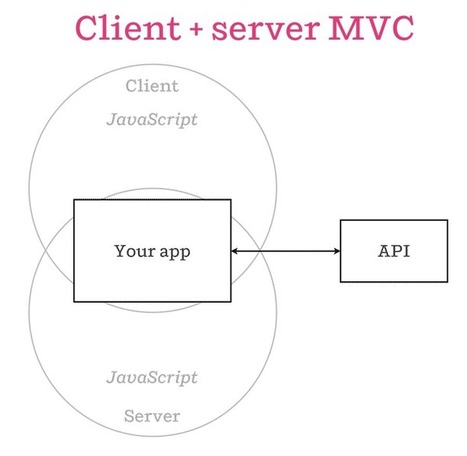
We wanted to have something that renders our content on the server-side at the first load, but provides the experience of the SPA applications after that. 
We needed something that can render both on the client and server side and share the application state between the two sides. So the client should continue from the point where the server finished its job. 
To implement this kind of architecture the code base has to be common on the server and client side (Browserify/Webpack) and the application also has to be able to render on both sides.

No comment yet.
Scoop.it!

How to Develop Safely in HTML5 & JavaScript Environment

How to Develop Safely in HTML5 & JavaScript Environment | JavaScript for Line of Business Applications | Scoop.it

It’s important to emphasize security precautions and implications when it comes to these two programming languages, they’re what most new programmers are suggested to learn (because of the immense documentations available), and we shouldn’t let them fall under the progression trap – by which I mean, everyone should acknowledge security – just because there is no one pointing out the basics.

I highly recommend this HTML5 Security Cheatsheet by OWASP security group. They’ve taken the time to discuss some of the most critical HTML5 features, and how to cope with them. If you’re a serious HTML5 developer, that page should be bookmarked until you know it from the back of your head!

No comment yet.
Scoop.it!

Tips for writing third-party JavaScript

Tips for writing third-party JavaScript | JavaScript for Line of Business Applications | Scoop.it

The unique challenges faced in writing third-party JavaScript revolve around the same-origin policy. Because the JavaScript file is based on a different domain to its host, inbuilt browser security places restrictions on cookie use and client-side/server communication. 

By using jQuery for prototyping, you will be deferring full browser support issues until a little later in the project timeline, but by then you should have gained a better understanding of the unique problems inherent when writing third-party JavaScript.

No comment yet.
Scoop.it!

Polyfills as a service

Polyfills as a service | JavaScript for Line of Business Applications | Scoop.it

When you use reusable components (whether through convention, a framework like Fruit Machine or React, or directly using the emerging Web Components standard), you might find that components ship with polyfills. Your page may end up containing multiple polyfills for the same feature. You might also find that these polyfills all use slightly different implementations, and it’s not immediately obvious which is a faithful emulation of the missing feature. Even the packaging format and file structure is likely to vary between polyfills and make each one a special case.

This is far from ideal. We need some way of polyfilling browsers that avoids this duplication.

No comment yet.
Scoop.it!

Web Components - Getting started

Web Components - Getting started | JavaScript for Line of Business Applications | Scoop.it
In this post we will show you how you can start writing your own custom elements and your Web Components-based applications right away. We will introduce some of the existing polyfills and two of the major libraries available.
Jan Hesse's insight:

Also: http://blogs.nuxeo.com/development/2014/08/web-components-great-standard-platform-approach/

No comment yet.
Scoop.it!

React Components: reusable components by Khan Academy

React Components: reusable components by Khan Academy | JavaScript for Line of Business Applications | Scoop.it

This is a collection of some of the most reusable React components built at Khan Academy. In the jQuery ecosystem there's a large collection of plugins that can be used for anything from modals to translation. We're trying to make it just as easy to jumpstart React applications with a well-tested, thoughtful, and beautiful library of components.

Most of our components are bespoke, so if you're already invested in a UI framework like Bootstrap, Topcoat, or KendoUI, you should check to see if there's an existing React wrapper for your framework.

No comment yet.
Scoop.it!

Real-time Web Applications with Kendo UI and Firebase

Real-time Web Applications with Kendo UI and Firebase | JavaScript for Line of Business Applications | Scoop.it

As a fan of both Firebase and Kendo UI, I was compelled to build my peanut butter and chocolate scenario; two great tastes together as one. The end result was kendo-fire, a set of bindings for building applications that utilize Kendo UI and Firebase at the same time.

The Q1 2014 release of Kendo UI added support for real-time data through the introduction of a set of push callbacks to the kendo.data.RemoteTransport. Currently, Kendo UI supports WebSockets and SignalR out-of-the-box. However, this functionality can easily be extended to other protocols and providers, like Firebase, through a custom RemoteTransport.

No comment yet.
Scoop.it!

Web Components 101

Web Components 101 | JavaScript for Line of Business Applications | Scoop.it
Read more about how web components such as Templates, Decorators, Custom Elements, Shadow DOM, and Imports made possible high-level semantic HTML coding!
No comment yet.
Scoop.it!

Ember Data mastering async relationships

Ember Data mastering async relationships | JavaScript for Line of Business Applications | Scoop.it

I have to confess that Ember Data’s (ED) async relationships gave me a hard time. It was worth the pain though, as soon as you understand how those relationships work it will get a lot easier to achieve almost anything (model-related) with a better granularity.

This post will cover the bootstrapping of the application and the first interaction (read) with an async relationship. The next post will be about modifying (write) an async relationship and syncing it with the server.

No comment yet.
Scoop.it!

RequireJS.NET

RequireJS.NET | JavaScript for Line of Business Applications | Scoop.it
RequireJS for .NET brings asynchronous JavaScript loading and flexible js bundling configuration to ASP.NET MVC. You can now have all the benefits of RequireJS and more in a way that is easy to use and fully integrated with ASP.NET
No comment yet.
Scoop.it!

QUnit Advanced Concepts: Modules and Configuration

QUnit Advanced Concepts: Modules and Configuration | JavaScript for Line of Business Applications | Scoop.it

In this article I’ll discuss how you can organize your test code in modules, and how you can tweak QUnit to better fit your needs using the configuration properties exposed by the framework.

No comment yet.
Scoop.it!

Build a Markdown editor with Node Webkit and Ember

Build a Markdown editor with Node Webkit and Ember | JavaScript for Line of Business Applications | Scoop.it

In my infinite free time I've been playing with Node Webkit and it is pretty awesome. So let's build a markdown editor using it.

No comment yet.
Scoop.it!

Node.js vs Play Framework

Here's the showdown you've been waiting for: Node.js vs Play Framework. Both are popular open source web frameworks that are built for developer productivity, asynchronous I/O, and the real time web. But which one is easier to learn, test, deploy, debug, and scale? Should you pick Javascript or Scala? The Google v8 engine or the JVM? NPM or Ivy? Grunt or SBT? Two frameworks enter, one framework leaves. 

No comment yet.