JavaScript for Line of Business Applications
606.5K views | +2 today
JavaScript for Line of Business Applications
Keeping track of current JavaScript Frameworks that help design your clientside Business Logic Layers.
Curated by Jan Hesse
Beam to my Inbox:
Your new post is loading...

Popular Tags - Filter using the Funnel

Scoop.it!

Introduction to the React JavaScript Framework

Introduction to the React JavaScript Framework | JavaScript for Line of Business Applications | Scoop.it
Aurelio de Rosa shows the basics of what the React front-end JavaScript framework is, how it's different and how to build a simple example application.

2015 is lining up to be the year of React. Lately, it has garnered a lot of attention, for front-end, mobile and server side JavaScript development. React seemed to pick up steam last year but its popularity is growing day after day, in part thanks to the success of the React.js Conf that took place in January. If all the buzz has made you curious about React, this article give you an overview of the library. We’ll also discuss its strengths and why you might want to learn more about it.

No comment yet.
Scoop.it!

Iterables and iterators in ECMAScript 6

Iterables and iterators in ECMAScript 6 | JavaScript for Line of Business Applications | Scoop.it

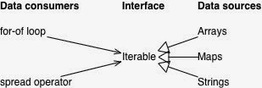
ECMAScript 6 introduces a new interface for iteration, Iterable. This blog post explains how it works, which language constructs consume data via it (e.g., the new for-of loop) and which sources provide data via it (e.g., arrays).

No comment yet.
Scoop.it!

Facebook Flux Architecture with AngularJS

An overview of the Flux application architecture - an exciting new twist on a staid old approach to managing complexity in large GUI applications. We’ll then...
No comment yet.
Scoop.it!

The World is a Functional Program

Intro What if the world was, in its entirety, a functional program? Through the discovery of mathematics and pure functions, we can derived the …
No comment yet.
Scoop.it!

Type checking state in React components with Flow

Type checking state in React components with Flow | JavaScript for Line of Business Applications | Scoop.it
Flow is a static analysis tool for JavaScript. It lets you gradually add type annotations, and will check that you adher…
No comment yet.
Scoop.it!

Exploring Isomorphic JavaScript

Exploring Isomorphic JavaScript | JavaScript for Line of Business Applications | Scoop.it
Nicolas Hery is a freelance web developer based in Paris, France. He has a background in applied mathematics, works as a full-stack developer mostly in JavaScript and Node.js, as well as Python for scientific computing.
No comment yet.
Scoop.it!

AngularJS - Best Practices

AngularJS - Best Practices | JavaScript for Line of Business Applications | Scoop.it

This is the eleventh in a series of posts on AngularJS where we are using Chemistry data from the periodic table to help us understand the framework. 

This blog series on AngularJS has been going on for a while, since October 2013 to be exact. In that time, AngularJS has changed and best practices have emerged. I thought it would be worth taking a look at the current state of best practices and refactoring some of the code we have been working on to reflect that.

Contents:

AngularJS - Introduction
AngularJS - Introducing AngularJS Controllers
AngularJS - Introducing NG-Repeat
AngularJS - More with NG-Repeat
AngularJS - Image Binding
AngularJS - Introducing Templates
AngularJS - Introducing Routing
AngularJS - Introduction to Services
AngularJS - Introduction to Directives
AngularJS - Further with Directives
AngularJS - Best Practices

No comment yet.
Scoop.it!

Mongol - The Insanely Useful Meteor Development Package

Mongol - The Insanely Useful Meteor Development Package | JavaScript for Line of Business Applications | Scoop.it

If you're spending almost as much time in the console as you are in your text editor, something is wrong. I've created this package as a solution to a productivity bottleneck I've experienced myself, and saw other's experience. With Mongol, you have a clear view of your application's data and you can tweak it in seconds. 

No comment yet.
Scoop.it!

An Unconventional Review of AngularJS

An Unconventional Review of AngularJS | JavaScript for Line of Business Applications | Scoop.it

AngularJS is everything I expect from a framework. That’s not a good thing.

In November, December, and January, I reviewed AngularJS for Let’s Code JavaScript’s “front-end frameworks” series. All together, I spent forty hours researching, coding, and problem-solving. As usual, my goal was to explore and critique AngularJS by creating a real application.

No comment yet.
Scoop.it!

Handle asynchronous non-blocking IO in JavaScript

Handle asynchronous non-blocking IO in JavaScript | JavaScript for Line of Business Applications | Scoop.it

One of the big “WTF” hurdles for apprentice JavaScript developers, that come from languages that mostly embrace synchronous and blocking IO APIs like Java or PHP is to get into thinking asynchronously about everything IO related in JavaScript with its event loop construct.

It is actually one of the cool things about JavaScript and why NodeJS on the server got so much attention in the beginning, so it is something anyone at least half serious about learning JS should learn about.

No comment yet.
Scoop.it!

Classes in ECMAScript 6 (final semantics)

Classes in ECMAScript 6 (final semantics) | JavaScript for Line of Business Applications | Scoop.it
Jan Hesse's insight:

Recently, TC39 decided on the final semantics of classes in ECMAScript 6. This blog post explains how their final incarnation works. The most significant recent changes were related to how subclassing is handled.

Contents:

  • Overview
  • The essentials
  • The details of classes
  • The details of subclassing
  • Constructor calls explained via JavaScript code
  • The species pattern
  • Conclusion
  • Further reading


No comment yet.
Scoop.it!

My Way into Clojure: Building a Card Game with Om - Part 1

My Way into Clojure: Building a Card Game with Om - Part 1 | JavaScript for Line of Business Applications | Scoop.it
In order to gain hands-on experiences with functional programming, I wrote an HTML5 card game with Om, a “JavaScript MVC” written in ClojureScript.
This first post starts our journey travelling down the Clojure rabbit hole. I'll share my experiences getting started with Clojure, introduce the language's features and explain why its LISP syntax is a logical consequence of its deep infatuation with simplicity.
Jan Hesse's insight:

http://paulwittmann.github.io/cgnjs-om/

No comment yet.
Scoop.it!

Stapes.js - the little Javascript framework that does just enough

Stapes.js - the little Javascript framework that does just enough | JavaScript for Line of Business Applications | Scoop.it

Class creation, custom events, and data methods. That's all it does. Even a lightweight framework like Backbonehas more than 75 methods, Stapes has just 20.

No comment yet.
Scoop.it!

Advanced Two Way Binding for React

Advanced Two Way Binding for React | JavaScript for Line of Business Applications | Scoop.it

React is a great library for many reasons. However, the first thing that anyone coming from Angular sees is the lack of two way binding by default. This is one of the reason why many developers don’t want to try it.

Even though two way binding is a cool feature, it is not actually needed by most applications. Yet, there are cases when it can be very useful.

Today, I will show you one such real life application which I use almost daily. Without two way binding this app will be a nightmare to develop.

No comment yet.
Scoop.it!

Building a REST and real-time API with Express, Feathers and MongoDB

Building a REST and real-time API with Express, Feathers and MongoDB | JavaScript for Line of Business Applications | Scoop.it
Lets build a REST and real-time API and a todo application that renders on the server and keeps the list real-time with …
No comment yet.
Scoop.it!

How to write a Promise/A+ compatible library

How to write a Promise/A+ compatible library | JavaScript for Line of Business Applications | Scoop.it
I decided to write Adehun after the series of promise posts. Adehun means 'Promise' in Yoruba, the language of my West African tribe. After a lot of rewrites, I can say Alhamdulillaah, Adehun pass...
No comment yet.
Scoop.it!

Utility Classes Have Nothing to Do With Functional Programming

Utility Classes Have Nothing to Do With Functional Programming | JavaScript for Line of Business Applications | Scoop.it
Utility classes, even though they look like collections of functions, have nothing to do with functional programming, mostly because they are bags of procedures
No comment yet.
Scoop.it!

Introduction to Facebook's Flux architecture

Introduction to Facebook's Flux architecture | JavaScript for Line of Business Applications | Scoop.it
No comment yet.
Scoop.it!

What is Isomorphic JavaScript and When Should it Be Used?

What is Isomorphic JavaScript and When Should it Be Used? | JavaScript for Line of Business Applications | Scoop.it

he combination of client and server rendering is known as Isomorphic JavaScript. Isomorphic JavaScript is one of those fancy sounding computer science terms. Isomorphic means the application uses the same rendering engine on the client and the server, thus making it easier for developers to maintain markup templates.

Modern web application development is about building rich user experiences utilizing the new APIs and performance offered by today's modern browsers. Traditional web sites are rendered on the server, binding data with markup to produce a finished product. The finished product is shipped to the browser, which then renders the page as it loads CSS, images and any other asset designated in the markup and CSS.

No comment yet.
Scoop.it!

Animating A Single Item Using ngRepeat And ngAnimate In AngularJS

Animating A Single Item Using ngRepeat And ngAnimate In AngularJS | JavaScript for Line of Business Applications | Scoop.it
Ben Nadel looks at using the ngRepeat directive, in AngularJS, to animate changes in a single item outside the context of a typical collection.
No comment yet.
Scoop.it!

Getting the most out of JavaScript Stacktraces

JavaScript applications keep getting bigger, more complex, and harder to debug. Without stacktraces, how are we expected to find, decipher, and fix our bugs?

Getting the Stacktrace is on us. Only we can design the code to capture stacktraces effectively. Let's explore some popular libraries like stacktrace.js and tracekit, some techniques for catching exceptions without mess try/catches everywhere, and what's coming next with expanded error objects.

Let's talk about finding and fixing our errors and stop this proliferation of a broken JavaScript web.

No comment yet.
Scoop.it!

A Promise on a Scrap of Paper

A Promise on a Scrap of Paper | JavaScript for Line of Business Applications | Scoop.it

Promises allow us to control commands that are executing at the same time or spontaneously. This control is codified and formatted in a way that humans can better read and understand. However, you probably still think of promises as a list of commands, but they're actually pieces of data representing an action. I'll show you how using a real world use of JavaScript promises that takes a list of resolutions I would like to screenshot and transform them into promised actions.

No comment yet.
Scoop.it!

Automating JavaScript tests with QUnit, PhantomJS and Grunt

Automating JavaScript tests with QUnit, PhantomJS and Grunt | JavaScript for Line of Business Applications | Scoop.it
QUnit’s setup is fairly simple and is easy to use. To get started, I will be using a simple boilerplate webpage. Notice that the two files required for QUnit (qunit-x.js and qunit-x.css) are included in the page source. Additionally, I have some inline JavaScript for which QUnit tests will be written. home.html Within tests.js, I …
No comment yet.
Scoop.it!

Introduction to Web Components

Introduction to Web Components | JavaScript for Line of Business Applications | Scoop.it

In recent years there has been a focused concept to make the web more modular. This forces for developers to write more efficient code and not write sites and applications where every piece of code depends on other pieces. The idea of small independent chunks of code and functionality has been working quite well for back-end systems and client side dynamic scripts, so naturally some developers started creating small pieces of modular code for HTML elements. AngularJS was an early adopter of the component paradigm with directives, and other libraries like KnockoutJS make creating and using web components a breeze.

No comment yet.
Scoop.it!

From angular.js to om: a walk-through

From angular.js to om: a walk-through | JavaScript for Line of Business Applications | Scoop.it

While very happy with om so far, most of the introductory material out there focuses on complex apps and features, and when starting out, we fell like simple introductions were missing. Hopefully the following can help bridge that gap, assuming a familiarity with the clojure language.

Compared to angular, om does not provide any standard way to structure apps. This is in part due to the fact that om is fairly recent, but also to the fact that the clojure community puts a bigger emphasis on libraries than framework, which do not impose as much on their consumers.

No comment yet.