JavaScript for Line of Business Applications
606.5K views | +9 today
JavaScript for Line of Business Applications
Keeping track of current JavaScript Frameworks that help design your clientside Business Logic Layers.
Curated by Jan Hesse
Beam to my Inbox:
Your new post is loading...
Popular Tags - Filter using the Funnel

Scoop.it!

Aura JS Component Framework

Aura JS Component Framework | JavaScript for Line of Business Applications | Scoop.it

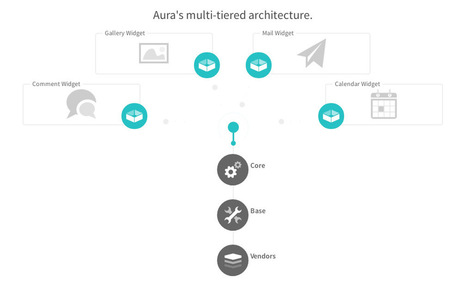
Aura is an event-driven architecture for developing scalable applications using reusable widgets. It works great with Backbone.js, but is framework-agnostic, adapts many best-practice patterns for developing maintainable apps and has first-class support for modern tools like Bower, Grunt and Yeoman.

Aura uses libraries like RequireJS under the covers, but as solutions like ES6 modules and Polymer become stable and usable, the project will move towards using them.

Jan Hesse's insight:

An Addy Osmani baby...

No comment yet.
Scoop.it!

Javascript loading and parsing performance in Cordova - a benchmark

Working with Cordova, we have been wondering how Javascript loading and parsing influences the startup time and overall performance of Cordova apps, so we got our hands dirty.

here’s a lot of confusion about performance best practices for Javascript in Cordova apps – is minification and concatenation worth the time, is asynchronous loading improving the startup time?

No comment yet.
Scoop.it!

Riding the Edge with Ember.js

Ember.js brings some new and interesting conventions to the table for designing single page applications. In this talk, I'll be covering the key pieces of Ember
No comment yet.
Scoop.it!

Developing with AngularJS - Part II: Dialogs and Data

Developing with AngularJS - Part II: Dialogs and Data | JavaScript for Line of Business Applications | Scoop.it

A couple of days ago, I wrote an article on how I started developing with AngularJS. I used AngularJS for several months to develop a "My Dashboard" feature for a client's product and learned a whole bunch of stuff along the way.

This article provides an overview of how I changed some of My Dashboard's features to use Angular instead of jQuery. After finishing the prototype work in January, we started moving bits and pieces into the main application. We kept the same file names for our Angular-related files and copied them into the project.

No comment yet.
Scoop.it!

Contact Manager – written in AngularJS, Express and MongoDB – Episode 1

Contact Manager – written in AngularJS, Express and MongoDB – Episode 1 | JavaScript for Line of Business Applications | Scoop.it

I thought the easiest way to learn more about AngularJS, Express and MongoDB would be to create a contact manager, where you can list/search/query your contacts and view more information about them.

There will be two parts to this article, part one is where I’m going to discuss the backend bit – that is the part which produces the JSON data from MongoDB, and the second part will discuss the frontend elements, running an Express server with AngularJS. Let’s start by discussing the database portion.

No comment yet.
Scoop.it!

Developing with AngularJS - Part III: Services

Developing with AngularJS - Part III: Services | JavaScript for Line of Business Applications | Scoop.it

Angular offers several ways to interact with data from the server. The easiest way is to use the$resource factory, which lets you interact with RESTful server-side data sources. When we started the My Dashboard project, we were hoping to interact with a REST API, but soon found out that it didn't have all the data we needed. Rather than loading the page and then making another request to get its data, we decided to embed the JSON in the page. For communication back to the server, we used our tried-and-true Ajax solution:DWR.

No comment yet.
Scoop.it!

Building an iOS weather app with Angular and ClojureScript

Building an iOS weather app with Angular and ClojureScript | JavaScript for Line of Business Applications | Scoop.it

The Weathertron is written in ClojureScript with Angular.js, backed by a weather forecast and almanac server written in Clojure on the JVM. This post outlines the motivation, benefits, and tradeoffs of this tech stack.


WHY NOT PLAIN CLOJURESCRIPT?

The early iterations of our first weather app, WeatherTable, were written in ClojureScript with the C2d ata visualization library to handle all view rendering. C2 (like its namesake, D3.js) uses pure functions to map data to the DOM...

No comment yet.
Scoop.it!

Building Modular Web Applications with Backbone.js and RequireJS — Sample App

Building Modular Web Applications with Backbone.js and RequireJS — Sample App | JavaScript for Line of Business Applications | Scoop.it

In recent months, I have been sharing different versions of the Employee Directory sample application built with different technology stacks, different frameworks, and different back-end (REST services) implementations.

A number of you have asked for a modular version of the application built using RequireJS. So here it is.

No comment yet.
Scoop.it!

Building a Web App From Scratch in AngularJS

Building a Web App From Scratch in AngularJS | JavaScript for Line of Business Applications | Scoop.it

In a previous AngularJS tutorial I covered all the basics of how to get up and running with Angular in around 30 minutes. This tutorial will expand on what was covered there by creating a simple real world web application.


This simple web application will allow its users to view, search and filter TV Show Premieres for the next 30 days. As a keen series viewer, I am always looking for something new to watch when my favorite shows are off air, so I thought I would create an app to help me find what I am looking for.

No comment yet.
Scoop.it!

Real-Time Web Communications In Action

Real-Time Web Communications In Action | JavaScript for Line of Business Applications | Scoop.it

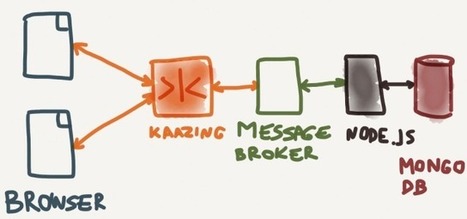
In this example, we look at how real-time Web communications can work well with a non-blocking JavaScript back-end server and a NoSQL database. Our demo is a simple drawing app.

If all you use is WebSocket with simple pub-sub messaging, you can already achieve pretty amazing things with drawing. For example, you can share a drawing board among multiple browser clients and while viewing each other’s drawings in real time.

No comment yet.
Scoop.it!

Build Desktop Apps With HTML Using Brackets Shell

Build Desktop Apps With HTML Using Brackets Shell | JavaScript for Line of Business Applications | Scoop.it

I want to go more in-depth into what brackets is and why we chose it as our solution. This will be the first of a series of posts dedicated to brackets-shell and customizing it for your native HTML desktop applications.

Brackets is an open-source code editor created by Adobe. What makes brackets so cool, though, is that the entire editor is written in HTML and JavaScript.

No comment yet.
Scoop.it!

AngularJS on Rails 4 - Part 1

AngularJS on Rails 4 - Part 1 | JavaScript for Line of Business Applications | Scoop.it

Here I want to create a useful Rails application using Angular. The goal is to have a single-page application which allows us to select a screencast link on the left and view it on the right. An example of this would be found at http://ember101.com.

No comment yet.
Scoop.it!

An AutoSave Pattern for Ember and Ember Data

An AutoSave Pattern for Ember and Ember Data | JavaScript for Line of Business Applications | Scoop.it

Requiring users to click a submit or save button in a web application is great for developers but can be a burden on users in some situations. Sometimes it is nice to automatically save the user’s data as they fill out forms.

Automatically saving models in Ember can be a little tricky. A first pass might look like this:

No comment yet.
Scoop.it!

Native JavaScript Equivalents of jQuery Methods

Native JavaScript Equivalents of jQuery Methods | JavaScript for Line of Business Applications | Scoop.it

Are you using jQuery because to have to? Is raw JavaScript more convoluted or difficult to use?

Part 1: the DOM and Forms

Part 2: CSS and Animation

Part 3: Events, Ajax and Utilities

No comment yet.
Scoop.it!

Why I Chose AngularJS over EmberJS

Why I Chose AngularJS over EmberJS | JavaScript for Line of Business Applications | Scoop.it

I chose AngularJS because it seemed closer to what I know. More like Backbone. Data-binding is touted as Angular’s killer feature over Backbone, but there’s a lot more to Angular. I also chose Angular because everybody else here in the shop was learning Ember. What is wrong with me?

No comment yet.
Scoop.it!

Writing a real time single page application - client side

In this two parts guide I will explain how to use backbone.js, node.js and socket.io (and many others libraries) to write a single page/real time application.
The guide's goal is to explain a system and I will not dive into details of every component, for this reason I suggest you to follow the links to get more informations.
The topic is quite hot, so let's get started !

No comment yet.
Scoop.it!

A directive to manage file upload in an AngularJS application

A directive to manage file upload in an AngularJS application | JavaScript for Line of Business Applications | Scoop.it

his week I was in the need to add the functionality of file upload to an AngularJS web application, on which I’m working for a personal project. Since my project also uses jQuery, I found that the better solution to build an asynchronous file uploader was to rely on the well known (and wonderful) jQuery plugin jquery.form, created by M. Alsup.

At the end I wrote an AngularJS directive to have a component, that I can reuse in my next projects. I will share it in this post.
Before digging into the code you can take a look at the live demo.

No comment yet.
Scoop.it!

Create your Own Single Page App from Scratch

In this video, I show how to take KnockoutJS, SammyJS, and RequireJS and put them together into a framework for single page applications. Note however, the purpose of this video is to show just how difficult and tedious this is, and why frameworks like DurandalJS and AngularJS should be used instead.

No comment yet.
Scoop.it!

Improving frontend web performance using RequireJS optimiser

Improving frontend web performance using RequireJS optimiser | JavaScript for Line of Business Applications | Scoop.it
A technical analysis of how to use the RequireJS optimiser to improve and optimise frontend web performance for Javascript and Backbone.js.
No comment yet.
Scoop.it!

Node.js and MongoDB Turn JavaScript into a Full-Stack Language

Node.js and MongoDB Turn JavaScript into a Full-Stack Language | JavaScript for Line of Business Applications | Scoop.it
New software packages that apply JavaScript in unusual contexts are starting to allow the use of a single language at all project stages.

For all its warts and headaches, JavaScript has emerged as the lingua franca of the modern Web, arguably second in adoption only to HTML itself, which obviously is just a markup standard rather than a full-fledged programming language. It’s effectively impossible to launch a sophisticated Web project without making extensive use of JavaScript and AJAX dynamic loading.

No comment yet.
Scoop.it!

How to Work with Lists and Collections of Knockout ?

How to Work with Lists and Collections of Knockout ? | JavaScript for Line of Business Applications | Scoop.it

Very often, you'll want to generate repeating blocks of UI elements, especially when displaying lists where the user can add and remove elements

Knockout lets you do that easily, using observable Arrays and the foreach binding

No comment yet.
Scoop.it!

Jasmine: A JavaScript Testing Framework

Jasmine: A JavaScript Testing Framework | JavaScript for Line of Business Applications | Scoop.it

I have been experimenting more with JavaScript frameworks lately. Being fond of the Test Driven Development methodology, I came across Jasmine. Here is how the site defines it: Jasmine is a behavior-driven development framework for testing JavaScript code. It does not depend on any other JavaScript frameworks. It does not require a DOM. And it has a clean, obvious syntax so that you can easily write tests.

No comment yet.
Scoop.it!

A Rubyist perspective on SockJS, Socket.IO & BDD in Node.js with websockets

A Rubyist perspective on SockJS, Socket.IO & BDD in Node.js with websockets | JavaScript for Line of Business Applications | Scoop.it
An example app in Sockjs (sockjs-node) which emulates the bash terminal on the web. BDD blues in Nodejs when the app uses websockets & how to counter them.
No comment yet.
Scoop.it!

Learning Advanced JavaScript via the Backbone.js source code

When I started learning Backbone.js, I hadn't done advanced JavaScript programming before. I took this opportunity to explore advanced JavaScript concepts in the context of the Backbone.js source code.

In this post, I will share some of these concepts which helped me understand both Backbone.js and JavaScript on a deeper level.

No comment yet.
Scoop.it!

What should I test when I write software?

What should I test when I write software? | JavaScript for Line of Business Applications | Scoop.it

Testing is really important when you write software. That is a fact. But the real question is what you should test. The simple answer is "everything possible."

A more fleshed out answer is that you should also avoid testing the same things multiple times.

For example, if you are testing your server-side API on the server, it would be redundant to test the entire API with client-side ajax calls as well.

Here are some of the basic places where tests are most important during the application life-cycle.

No comment yet.