Your new post is loading...

|
Scooped by
Kim Zinke (aka Gimli Goose)
April 19, 2016 1:10 AM
|
"If the content for your website, newsletter, landing pages or email campaigns isn't producing the results you want, consider shifting some of the marketing team's power to employees in other departments." Read the full article to find out more about these 10 ways to get employees involved and share their insights and stories: - Ask for and share compelling client or customer stories.
- Show employees what's in it for them.
- Include content creation in job descriptions.
- Accept different forms of content.
- Make the submission process easy.
- Support and encourage personal brands.
- Track and analyze and share results.
- Reward conversions.
- Add key employees to your social media team.
- Provide ongoing education and training.
|
|
Scooped by
Kim Zinke (aka Gimli Goose)
April 16, 2016 5:09 PM
|
"With a staff of around 385 of which a third were not office based, our previous intranet, the Source, was not fit-for-purpose. Navigation was poor, content out-of-date and the search no longer worked. Employee engagement was therefore very low and compounded by the fact that staff had experienced a range of other IT systems including CRM, HR and internal communications systems that had failed because they had been implemented without sufficient staff involvement." Read the full article to find out how one company re-launched their intranet creating excitement and engaging staff following these 7 steps: - Launch strategy to increase engagement
- Getting people involved with a naming competition
- Building engagement with the brand
- Spreading engagement with a teaser campaign
- Capturing all employees with a launch video
- Creating a buzz
- Using analytics to sustain engagement
|
|
Scooped by
Kim Zinke (aka Gimli Goose)
April 7, 2016 5:21 PM
|
"Kathleen Wolf, Sr Manager of Corporate Reputation & Interactive Media at Whirlpool Corporation, recently joined us on a webinar to discuss how they’ve transformed internal communications. With over 100,000 employees and more than 70 manufacturing and technology research centers throughout the world, Whirlpool was struggling to communicate with their workforce. They previously invested in an intranet, but saw low adoption rates. Once they realized they had reached the maximum capacity of their intranet and weren’t successfully maximizing employees’ potential to tell the brand’s story, they began researching new internal communications platforms." Read the full article to find out why Whirlpool chose a mobile program and: - 3 tips for getting started
- 2 places content comes from
- access to the webinar recording
|
|
Scooped by
Kim Zinke (aka Gimli Goose)
April 5, 2016 9:26 PM
|
"It’s important to realize that most problems in business today lie in the absence of real communication, and to understand the need to facilitate dialogue and “manage” conversation with employees and teams. As a result, you’re able to create shared meaning and move people to action." Read the full article to find out more about these four situations that often trigger the need for communication: - business changes
- driving behaviors and actions
- celebration
- the big "oops"
|
|
Scooped by
Kim Zinke (aka Gimli Goose)
March 22, 2016 12:45 PM
|
"Annual reports don’t have to be boring! There are plenty of ways to sweeten them up, add some fizz and bring those figures to life. The annual report is all about showcasing achievements, sharing developments, highlighting positive initiatives, reinforcing your brand and communicating about business performance. These are all opportunities to create vibrant, visual pages that demonstrate the value you place in your company and the pride you hold in your people." Read the full article to view the infographic and find out more about these 12 ways to jazz up your annual report: - produce a visual delight
- appeal to your audience
- go interactive
- easy to swallow
- share employee quotes
- bring out a human element
- delicious infographics
- tell a story
- candy coat key figures
- feature your finest people
- stay snackable
- be consistent
|
|
Scooped by
Kim Zinke (aka Gimli Goose)
February 16, 2016 3:10 PM
|
"The employee communications department is at risk of becoming irrelevant. There already are voices calling for companies to do away with them, arguing that a function focusing on one discrete audience is anachronistic given everybody’s ability to see what everybody else is saying.
Most internal communication departments spend most of their time creating and distributing content. Much of that is done through email and intranets, which have become the replacement for newsletters and magazines (and something called a “magapaper”).
It remains vitally important for a dedicated internal comms function to report news and other information employees need to know. While they may read the same reports other stakeholders read (like customers, shareholders, and local communities) and have access to sites like Glassdoor.com, where employees praise or condemn their organizations with granular detail, employees have special contextual needs those channels don’t serve.
Reporting alone, however, is not enough to sustain employee communications’ relevance. Everything about business and work is changing; so is the way people get, share, and use information outside the workplace (and even inside, since it’s easy for employees to bypass official channels). Employee communications departments need to recognize the realities of the modern workplace and reinvent themselves in response."
Read the full article to find out more about these roles a modern internal comms department needs to fill: - Facilitating employee-to-employee communication
- Message Mission Control
- Channel management
- Inspiring and sharing employee-generated content
- Data analysis
- Coordination with other communication functions
- Change and culture communication
- Leader communications
- Communicating for engagement
- Supervisor communications
- Employee advocacy
- Measure, measure, measure
- Call to action: Go forth and communicate
|
|
Scooped by
Kim Zinke (aka Gimli Goose)
February 12, 2016 7:27 PM
|
"Our smileguide on The Changing Role of Internal Communication is now available as a free download is available to all our registered readers. If you are not registered just sign up (it takes less than a minute and is completely free).
It is clear that the arrival of social media and digital communications has changed the role of the IC professional forever. As I started investigating social networks in the enterprise I quickly saw that we are just at the beginning of an evolution that is going to transform forever the practices of this industry. Indeed, all the indications seem to suggest that the speed of technology will continue to occur faster and faster."
Read the full article to access this free 23 page smileguide which identifies the key trends in the marketplace and what practitioners can do to develop themselves, covering the need for internal communicators to: be digital experts with a background in both internal and external communications have journalistic skills think like a marketer be relevant in the new era of social business also have experience in public affairs, marketing, and media relations
|
|
Scooped by
Kim Zinke (aka Gimli Goose)
February 2, 2016 6:57 PM
|
"We love a good conference here at Synergy, and last year we attended more than our fair share of seminars and speaker sessions. Read on to discover our favourite inspirational stories from 2015."
Read the full article to obtain the links to the following eight case studies and discover the gist of and why each of them are loved: - HSBC’s Shut Up and Listen Programme tells senior leaders to put a sock in it
- Purpose is everything for global carpet tile company Interface
- Odeon & UCI Cinemas invests in employer brand
- Adidas proves that it’s okay to fail
- Barclays Digital Eagles goes from zero to hero
- Virgin Trains trade intranet for Yammer
- Clarks showcases the power of video to bring people together
- Touchstone puts diversity first
|
|
Scooped by
Kim Zinke (aka Gimli Goose)
January 14, 2016 2:10 AM
|
"Internal and external audiences are converging according to some communications professionals or people involved in implementing and managing digital workplaces. However the majority of internal- and external-facing channels are still considered separately, due to the different needs, characteristics and intended calls to actions for the audiences.
Audiences are fundamentally different in many respects, but that doesn’t mean considering these audiences in isolation when designing internal and external digital offerings and producing related content."
Read the full article to find out more about: - the consequences of separating audiences
- taking the holistic view
- identify the common ground
|
|
Scooped by
Kim Zinke (aka Gimli Goose)
December 9, 2015 2:47 AM
|
"What if you’ve been given the job of creating an internal communications strategy for an organisation, but the organisation hasn’t actually articulated what it wants to achieve?
There’s no business strategy, no business plan, no articulation of its
strategic direction at all."
Read the full article to find out more about how to use these two tips of information to start things moving: - find out where the money is being spent, and why
- align your employee communications to the objectives of that investment.
|
|
Scooped by
Kim Zinke (aka Gimli Goose)
December 1, 2015 1:10 AM
|
Internal communication is surrounded by plenty of myths, it appears.
Read the full article to see a number of myths communicators face on a regular basis and what the reality is behind them.
|
|
Scooped by
Kim Zinke (aka Gimli Goose)
November 23, 2015 11:03 PM
|
"Social technologies are extremely powerful tools for connecting people, enabling organisation-wide collaboration and addressing the need to become more responsive but if not implemented with transparency and a clear purpose, success could be out for the count.
We’ve gathered some of the pros and cons, tips, tricks and best practice together in this infographic to help you get a hold on the facts."
Read the full article to view the infographic and find out more about these tips to help you get started: - Pros and cons.
- Be clear about why you want to use it and what you want to achieve.
- Create a fun activation and communication plan.
- Create community advocates.
|
|
Scooped by
Kim Zinke (aka Gimli Goose)
November 19, 2015 9:15 PM
|
"At this time of year thoughts begin to turn to Christmas and if they haven’t already, plans start being made as to how to mark it within organisations.
People inevitably look to internal comms departments to pave the way through the festive season, and this article will help you do just that."
Read the full article to find out more about Rachel's tips on how to survive the festive season that touch on: - plan & plan some more
- ask questions
- collaborate
- repurpose
- employee generated
- consider all audiences
- freebies
- creative
- measure
|
|
|
Scooped by
Kim Zinke (aka Gimli Goose)
April 17, 2016 10:31 PM
|
"As a leader, you know that engaging employees and helping connect them to your business goals can directly impact the bottom line. Your internal communication plan can include two-way communication vehicles like feedback channels and listening sessions to help accomplish this. But when it comes down to it, interactions with leaders are what make or break an employee’s connection with the organization. Every time you are in front of an employee, whether one-on-one or in a group, you have an opportunity to increase that engagement through dialogue." Unlike questions that give people limited options for response, open-ended questions encourage them to express their opinions and ideas. Read the full article to find 11 common open-ended questions that will help start interesting conversations.
|
|
Scooped by
Kim Zinke (aka Gimli Goose)
April 8, 2016 4:29 PM
|
"It was last summer that I read an article about a company who declared "Snapchat Day." As a way to force employees to learn more about the app, they could only communicate to other employees through Snapchat. No emails. No phone calls. No messaging. Just Snapchat. The company learned a lot about the app and employee dynamics during the day, but it seeded a thought in my head about whether or not Snapchat could be an effective internal communications channel." Read the full article to find out more about these four reasons that Snapchat could be effective employee communication channel: - Visual
- Mobile
- Employee advocacy
- Storytelling
|
|
Scooped by
Kim Zinke (aka Gimli Goose)
April 6, 2016 7:12 PM
|
"Too often, businesses fall into the trap of treating their employees like a captive audience. Because the recipients of their internal messages are on the payroll, they assume their personnel are motivated to read, absorb, and act upon every ponderous Intranet update and boring e-mail that comes their way. The reality isn’t that simple. “Employees are as important as any audience, if not the most important,” said Janet Miller of New Jersey-based Cox Stationers and Printers, which frequently sponsors employee contests and boasts a rooftop beehive at which it holds an annual company-wide honey harvest. “Finding new ways to keep employees interested and engaged is a constant challenge, but a rewarding one.”" Read more to find out why it matters and discover a few ways companies have used creativity to create interesting and effective internal communication campaigns.
|
|
Scooped by
Kim Zinke (aka Gimli Goose)
April 5, 2016 1:22 AM
|
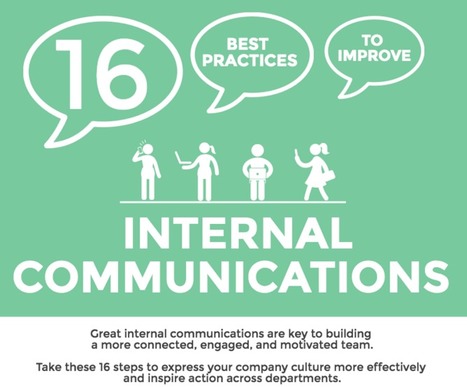
"How well a message is communicated is as important as the message itself. When it comes to internal communications, this certainly holds true. Company culture can give your organization a major strategic advantage in these changing times. What your culture consists of – goals, values, and practices – must be effectively transmitted for employees to understand and act upon it. Therefore, it’s essential to focus not just on what you’re communicating but also how you’re communicating it." Read the full article to view the infographic and find the link to the detailed guide explaining these 16 best practices for internal communications: - Envision, strategize & plan first
- Use the right tools
- Be visual
- Make it entertaining
- Include metrics whenever possible
- Don’t lose sight of the big picture
- Provide channels for feedback and ideas
- Encourage cross-departmental communication and collaboration
- Avoid communication overload
- Don’t just inform – inspire action
- Open the lines of communication
- Maintain transparency
- Encourage company-related use of social media
- Share industry news, trends and insights
- Use internal communications to recognize and praise success
- Create a customer-centric team with personas
|
|
Scooped by
Kim Zinke (aka Gimli Goose)
March 2, 2016 5:01 PM
|
Beyond learning the basics and intricacies of the industry, there are crucial first steps to help first-timers gain their footing. Read the full article to find out more about these 10 tips to help you to settle into the company and your new role: - Change your LinkedIn presence.
- Study the company structure, and start learning names.
- Make sure you are set up with a company email signature and business cards.
- Set up your Chrome bookmarks.
- Sign up for relevant industry resources.
- Sit with people at lunch.
- Gain access to analytics accounts.
- Ask for website CMS training.
- Write a blog about your first week.
- Go for a Friday drink with the team.
|
|
Scooped by
Kim Zinke (aka Gimli Goose)
February 15, 2016 12:20 AM
|
"Higher levels of trust lead to higher individual, team and company performance. It means more people working together, better problem solving, a more positive work climate and higher employee engagement. But how can internal communicators work to build employee trust inside their organisations?
As a follow-up to the report we launched last year, a group of global business leaders, senior in-house communicators and independent experts were asked about trust and the actions they felt were key to building and sustaining trust in their leadership team.
Read the full article to find out about the insight gleaned and these top 10 tips for IC professionals to build trust in their leadership team and business: - Benchmark trust and measure progress
- Be consistent
- Encourage feedback – and listen to it
- Keep colleagues informed
- Communicate face to face
- Dare to be different
- Love your line managers
- Apply context
- Be committed
- Be a trusted advisor
|
|
Scooped by
Kim Zinke (aka Gimli Goose)
February 4, 2016 2:00 AM
|
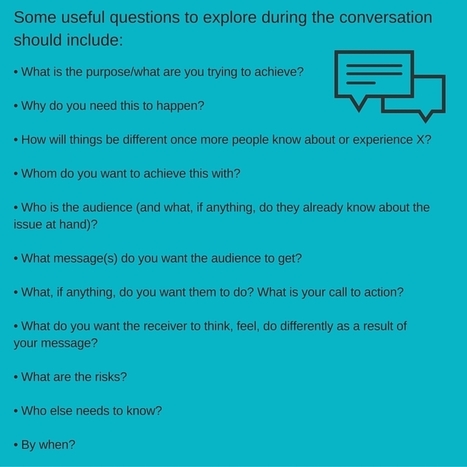
"As an internal communicator a crucial part of your role is likely to be supporting and guiding a colleague through a comms challenge. They want your insight and expertise. That’s why they’ve asked for your input, isn’t it?
So when someone approaches you, how do you guide them through the ever-evolving world of comms? What do you get them to think about? And what is the opportunity for you personally and the comms team?"
Read the full article to find out more about these tips grouped by: - Shaping how comms can help
- Input from our network
- Other useful thoughts/tips/best practice ideas
|
|
Scooped by
Kim Zinke (aka Gimli Goose)
February 1, 2016 1:19 AM
|
|
|
Scooped by
Kim Zinke (aka Gimli Goose)
December 16, 2015 2:21 AM
|
"You're doing a disservice to your organization if you don't allow water cooler chat. Focused water cooler chat can help grow your business and build employee relationships. You should encourage it. When you allow employees to interact and converse about non-work-related topics, everyone benefits."
Read the full article to find out more about these 10 reasons to encourage water cooler chat: - It Helps to Build the Company Culture
- It Helps to Bring People Out of Their Shells
- It Provides Casual Facetime with Management
- Water Cooler Chat Leads to Improved Collaboration
- Water Cooler Chat Improves Productivity
- It Promotes a Healthier Staff
- It Creates Great Ideas and Solutions
- It Brings Remote Employees Together
- Water Cooler Chat Works Against Employee Disengagement
- Relaxed Water Cooler Chat Policies Lead to Increased Respect for Management
And also find out more about water cooler etiquette, why it matters, and 8 do's & don'ts to help get you started: - Do discuss interests
- Don't get in the way
- Do ask questions
- Don't create company drama
- Do leave your personal problems at home
- Don't bring up heavy topics
- Do think about ways to improve the workday
- Don't discuss salary or promotions
|
|
Scooped by
Kim Zinke (aka Gimli Goose)
December 7, 2015 12:32 AM
|
"We're looking to define the building blocks of IC and create an interactive resource for comms pros to jump start discussions and plans, helping to spark ideas and create compelling communications."
Access this page to download the internal communications periodic table created by Chuck Gose and Alive with Ideas. The elements are presented across seven separate sections: - Strategy
- Objectives
- Themes
- Audiences
- Formats
- Channels
- Metrics
|
|
Scooped by
Kim Zinke (aka Gimli Goose)
November 29, 2015 10:04 PM
|
"Reality: you wear a lot of hats. One day you’re the Communications Director; the next you’re knee deep in HR issues. In one moment you’re researching blog topics; in the next you’re on the phone with a journalist.
It’s not easy. Internal communications can be a nightmare—especially if you’re dealing with the four situations below. The good news is, you can overcome them if you know what you’re doing."
Read the full article to find how to overcome the following four internal communication nightmares: - Nobody reads your emails
- People have insanely short memories
- Resource management
- Your information is out of date
|
|
Scooped by
Kim Zinke (aka Gimli Goose)
November 20, 2015 9:00 PM
|
"This workbook is a response to your need to understand how to strategically incorporate gamification into your learning strategy, in order to drive real business results. It's designed to be printed, written in and used as a guide."
Access this link to download a free copy of this gamification workbook which covers: What is Gamification? Gaming vs. Gamification Key Elements of Gamification Aligning Gamification with Corporate Goals and Learning Strategies 5 Step Gamification Work-plan Making a Case For Gamification Gamification Requirements Gathering
|