Your new post is loading...

|
Scooped by
Kim Zinke (aka Gimli Goose)
January 25, 2013 2:43 AM
|
What does good Internal Communications look like? How can you measure whether or not your Communications are effective? Internal Communications is often an intangible business function. Whilst most leaders understand its value add; it is often difficult to provide data on where and how the function directly influences a business.
The following five metrics are a good starting point for defining “What good Internal Communications looks like”. Read the full article to find out more. 1. Engagement 2. Attrition 3. Channels 4. Feedback 5. Relationships
|
|
Scooped by
Kim Zinke (aka Gimli Goose)
January 21, 2013 2:59 AM
|
An increasing number of employees over the age of 65 are deferring retirement. At the same time, a new generation of workers in their early 20s is just coming of age at the office. This duality means it’s not uncommon in today’s workplaces for employees 60 and older to be working alongside 20-somethings.
Not counting work done on family farms, this is the first time in history that four generations have worked side-by-side. But, unlike life on the farm, members of today’s multi-generational workforce don’t share a last name or common background. In fact, they likely view the world quite differently. Having four separate generations working hand-in-hand creates a few challenges. But it also creates opportunities. The key is to understand each generation’s communication preferences, and then tailor communications appropriately. Read the full article to find out more about these 4 groups and the communication implications: - traditionalists - baby boomers - generation X - millennials
|
|
Scooped by
Kim Zinke (aka Gimli Goose)
January 11, 2013 2:56 PM
|
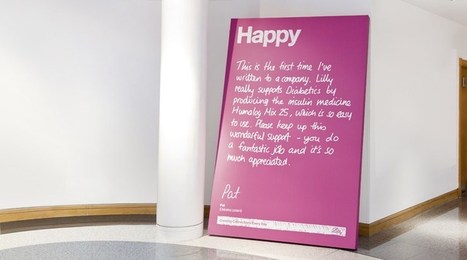
The aim of the campaign was to raise the bar on the current internal communications, get people talking and sharing experiences and engage them with Lilly UK as a whole - looking beyond their own team. We started by conducting internal research and then developed a campaign idea as well as an internal communication look and feel and toolkit. The central theme was "creating connections every day". The toolkit is easy to use and following staff training sessions, employees at Lilly are now able to use the tools for themselves. We wanted to create something that would get people talking and so launched the campaign with genuine thank you letters from the MD, customers and patients that focused on the positive effects Lilly employees have on their customers and end patients. These letters were re-produced as giant canvasses and placed around Lilly House as well as being emailed to field staff.
update: this site no longer seems active, it was redirected to a different website with a condensed article http://mslgroup.co.uk/blog/case-studies/lilly.aspx
|
|
Scooped by
Kim Zinke (aka Gimli Goose)
January 9, 2013 12:59 AM
|
What really matters most with the conversations you're facilitating with your employees are the answers to three simple questions: 1) What do you want your employees to know? 2) What do you want your employees to feel? 3) What do you want your employees to do?
|
|
Scooped by
Kim Zinke (aka Gimli Goose)
December 27, 2012 11:04 PM
|
Want to know the problem with internal communications? It’s boring. This is the problem. It is boring because communicators make it boring, and because top management only pay lip service to it at worse, or at best do not commit the right resources in terms of people and budget to make internal communications truly effective. But the potential for internal communications is exciting. Internal communications is about engaging the imagination of employees and showing them where they fit within the corporate story. The art is to make the company story their story, and vice-versa. If internal communications is going to change, then leadership and communicators together must realize the following: 1. It is first and foremost about people 2. It is about imagination 3. It is about why people are inspired and productive
|
|
Scooped by
Kim Zinke (aka Gimli Goose)
December 22, 2012 12:09 AM
|
Internal communications have changed a fair bit over the years. It wasn’t that long ago when they were seen as a one-way stand alone form of communication, where messages were pushed down from the boardroom to the employees, often in the form of a simple memo.
They then rightly developed into a two-way form of communication, with employees encouraged to engage in dialogue with the organisation.
We’re now in the era of internal communications developing even further. With user generated content widely discussed as the next step.
|
|
Scooped by
Kim Zinke (aka Gimli Goose)
December 19, 2012 12:34 AM
|
You can harness the potential of social media to change the engagement with (and between) your people by creating an open and encouraging usage policy.
However, using social media channels to genuinely engage staff needs more thought than simply opening a Facebook Page and letting them loose.
Read the full article to find out more about these five simple tips to help you build a better approach to social networking and create internal networks that will add to the value of your organisation:
- Trust your own people.
- Ask your team what they want.
- Use internal communications to start the ball rolling.
- Social Networks are not just about words.
- Curate, don't just create content.
|
|
Scooped by
Kim Zinke (aka Gimli Goose)
December 17, 2012 1:50 AM
|
While social media is often focused on connecting brands to their external audiences, there are opportunities for companies to use online groups to communicate with employees.
We’ve successfully launched several private LinkedIn groups for our clients. Based on our experiences with the network, here are five tips for starting – and managing – an internal network for your brand.
- Identify a need
- Make it secure
- Plan topics
- Get people on board
- Ask for feedback
Read the full article for more details.
|
|
Scooped by
Kim Zinke (aka Gimli Goose)
December 17, 2012 1:20 AM
|
People like stories. It's how we record history and entertain audiences. So why is storytelling often left out of internal communications? Usually there's one simple answer. Not enough time.
If you do make enough time, the seven elements of digital storytellling, as created by the Center of Digital Storytelling, are fitting given the trend of employee communication to be more digital.
Read the full article to find out more about the seven elements of digital storytelling:
- Point of View
- A Dramatic Question
- Emotional Content
- The Gift of Your Voice
- The Power of the Soundtrack
- Economy
- Pacing
|
|
Scooped by
Kim Zinke (aka Gimli Goose)
December 16, 2012 2:02 AM
|
Kevin Ruck reviews the book "Internal Communications: Insights, Practices and Models" by Aniisu K. Verghese. The book which covers among other topics internal communications basics, measurement, career management tips, team building, internal social media integration, message creation and leadership communication. The author has written the book with the intent to change the perception of IC in India. It provides a valuable contribution to the growing list of resources available to new internal communication practitioners, whatever region in the world they work. The models, tips and examples provide plenty of practical tools to use. For more information on the book and where to purchase it, see http://intraskope.wordpress.com/2012/10/18/internal-communications-insights-practices-and-models-launched/
|
|
|
Scooped by
Kim Zinke (aka Gimli Goose)
January 25, 2013 2:39 AM
|
“Come on – who really wants to hear this?” The voices in our head, while annoying, are often quite perceptive. You have information you need to communication, but in reality, does anyone truly care? How can you get your employees to actually listen and pay attention? After all, boring or not, it is important. It’s not what you want to say it’s what your audience wants to hear.
Read the full article for more on these solutions: 1. The Golden Rule of Content Development. 2. Identify your audience. 3. Don’t automatically assume a “mass audience”. 4. Multiple content approaches. 5. Choose the appropriate distribution channel. 6. Make it interesting or informative to them, not you.
|
|
Scooped by
Kim Zinke (aka Gimli Goose)
January 16, 2013 12:48 AM
|
"Our clients come to Copperfox Marketing for communications services. Often, they are trying to inform, persuade or energize an audience on a particular initiative, program or other corporate directive. In our new age of social media, it’s harder than ever to reach an audience because we are flooded with messages as both workers and consumers. Our clients collect as many details of the “story” that they can assemble and then start putting that information together for a video, PowerPoint, email or Word document. But many times, the end result just doesn’t feel compelling. Doesn’t seem to connect. Read the full article to find out more about our 5 tips to help get your communications services on the right track. - memorable KISS - three is the best number - show, don't tell - why, not how - follow the hero's journey"
|
|
Scooped by
Kim Zinke (aka Gimli Goose)
January 11, 2013 2:36 PM
|
An area of great potential for internal communications is augmented reality (AR). Granted, awareness and therefore uptake of AR in the consumer world is still low, largely due to the fragmented landscape of providers and the steps users have to go through to use AR.
However, technology is ever evolving in this space, so it won’t be long until it is more accessible and thus adoption levels will increase (Google glasses could be the game changer!). How could it be used for internal communications? - any form of printed literature - static materials such as posters or wall art - objects made into interactive spaces - demonstrations
|
|
Scooped by
Kim Zinke (aka Gimli Goose)
December 31, 2012 8:11 PM
|
The longer I work as an editor and writing coach, the more I seem to focus on internal communications before external ones. The reason? The inner workings of a company have to be in order before a cohesive and united message can be shared externally. A vision has to be set. The players need to know what their roles are in transmitting the message. Everyone has to be on board with that message, and being on board with the message starts with being on board with the vision and culture of the company.
Read the full article to discover the authors top 10 warning signs.
|
|
Scooped by
Kim Zinke (aka Gimli Goose)
December 23, 2012 2:23 AM
|
We’ve gathered a great selection of corporate communication tips, resources and best practices for your information. You’ll find articles and links on PR planning, change communication, corporate positioning, corporate social responsibility and reputation management. Everything for the corporate communicator.
|
|
Scooped by
Kim Zinke (aka Gimli Goose)
December 21, 2012 2:54 AM
|
According to Elaine Dixon, Communications Expert, “A good communication plan should serve as a road map, guiding your work toward specific outcomes—nothing more and nothing less,” she explains in an online article. “But as simple as that may sound, it’s critical to your effectiveness. A good plan ensures you’re doing the right work, pursuing the right goals, and doing it the best way when there are always other ways to use your limited resources.”
Corporate Communication Planning (CCP): Eight Steps 1. Conduct a Situation Analysis
2. Identify Key Communications Objectives 3. Specify Core Target Audiences
4. Create key messages
5. Identify Communications Strategies & Tactics
6. Create a Budget
7. Determine the Evaluation Methods
8. Create an Action Plan Managers can use the same eight steps to develop an annual, CCP to support the achievement of several key organizational goals and objectives or, to develop a stand-alone Communication Plan for a specific project.
Read the full article to find out detailed information to help you get started.
|
|
Scooped by
Kim Zinke (aka Gimli Goose)
December 18, 2012 1:36 AM
|
When annual reports live online they can take advantage of dynamic, interactive media to tell a more engaging and complete brand story.
Here are the top five ways to make your online annual report more interactive and engaging with dynamic content and rich media:
1. Video integration
2. Interactive images and animations
3. QR codes
4. App version of the annual report
5. Investor relations website app
Read the full article to find out more and see examples.
|
|
Scooped by
Kim Zinke (aka Gimli Goose)
December 17, 2012 1:45 AM
|
A communication plan looks very much like a strategic plan or a marketing plan.
To be called strategic, it must share some of the same elements and methodology of accepted planning formats. Read the full article to find out more about this model for a strategic communication plan, containing the following sections:
- Executive summary
- The communication process
- Background
- Situation analysis
- Strategic summary
- Schedule
- Budget
- Monitoring and evaluation
In the reality of day-to-day use, you will probably use many of these steps in combination, without using the complete model step for step.
|
|
Scooped by
Kim Zinke (aka Gimli Goose)
December 16, 2012 7:26 PM
|
Many companies find great success utilizing digital signage to communicate with their guests and customers, but they don’t realize the potential of using this same medium to reach their employees.
Way you could use digital signage to communicate with your employees:
- HR can announce changes to insurance or company policy, display current position openings, present the company mission, and highlight community involvement or charitable sponsorship initiatives.
- Encourage teambuilding and connect with employees by displaying birthday wishes, celebrating recent employee promotions or milestones reached, and announcing the annual company picnic.
- Promote employee safety by warning employees of health hazards, posting safety information and tips, or displaying the running total of days safe.
|
|
Scooped by
Kim Zinke (aka Gimli Goose)
December 16, 2012 1:41 AM
|
Adoption of tablet devices within organisations has exploded during 2012. Research conducted by Click Software reveals that enterprise tablet adoption is expected to grow by almost 50% per year. As a consequence many organisations are now looking to publish content as applications for tablet devices.
Read the full article to find out more about the benefits of digital publishing; for the employee and the employer.
|