Your new post is loading...

|
Scooped by
Elizabeth E Charles
January 24, 2022 2:49 PM
|
Public libraries are beginning to catch up with the technological need for education. Several public libraries across the country can be used as models for honing in on local public libraries’ digital literacy instruction.
By using these models, these libraries will be able to help narrow the digital literacy gap that is created by generational differences. Not only can this digital literacy gap be created by that age difference but from education and cultural considerations as well.
|
|
Scooped by
Elizabeth E Charles
January 21, 2022 1:56 PM
|
Plagiarism is concerning for colleges and universities (Curtis & Vardanega, 2016). Students begin higher education with varying degrees of knowledge on the topic of plagiarism; sometimes students have a limited understanding of the behaviors that constitute plagiarism. Gourlay and Deane (2012) suggest “a proportion of plagiarism is committed via confusion over how to integrate and reference source materials into academic writing” (p. 19). Moreover, some students might be unfamiliar regarding when they can claim an opinion as their own and when they need to use a citation (Ballantine & McCourt Larres, 2010). Being unfamiliar with the behaviors that constitute plagiarism might be a reason why students engage in this type of academic misconduct (Insley, 2011).
It may seem like digital literacy is pretty straightforward, but there are so many levels that educators need to know about this topic. We thought we would gather together a few things we believe are vital for teachers to understand digital literacy.
Via EDTECH@UTRGV
The Internet and the immense connectivity it provides is a powerful tool that many educators have yet to take advantage of. Computer technology allows teachers to easily organize their work and provides plenty of functionality available for use in even the most mundane tasks. Sorting, categorizing, and cataloging your work has never been easier, and it is high time more educators make use of the technology at their disposal.
Via EDTECH@UTRGV
Thousands of universities all over the world use open-source software to support learning, teaching, and research. There are plenty of advantages that this specific type of software delivers – for example, it costs less to use and provides educational institutions with more flexibility.
This article will discuss precisely what open-source software is and how universities can use it. We will also mention how it reduces institutional costs and improves flexibility.
Via EDTECH@UTRGV
With the disastrous conditions of 2020’s pandemic, we as a society have had to adapt to accomplish still what we need to. This meant we had to move to virtual offices to work from home and adopt social distancing strategies in public. Part of these strategies for many schools was in moving to online virtual classrooms to teach remotely.
Via EDTECH@UTRGV
|
|
Scooped by
Elizabeth E Charles
December 31, 2021 4:23 PM
|
While these emerging technologies may offer many benefits for students and professors, institutions will need to address ethical and safety concerns.
|
|
Scooped by
Elizabeth E Charles
December 31, 2021 4:07 PM
|
PowerPoint isn't the flashiest ed tech tool on the block and it certainly isn't the newest. In fact, you might have read "PowerPoint" and thought "old." But as old as it is (34 years) there are new things added to it and hidden gems within it that keep it going strong. If it has been a while since you looked at PowerPoint, here are some features you might not be aware of that can be helpful to you and your students.
We all know that education is changing at a rapid pace. The combination of Covid-19 forcing our hand and the advances of EdTech has really made the difference. We, however, must be sure that we don’t forget about pedagogy when chasing technology!
Via EDTECH@UTRGV
|
|
Scooped by
Elizabeth E Charles
December 16, 2021 4:43 PM
|
|
|
Scooped by
Elizabeth E Charles
December 16, 2021 4:34 PM
|
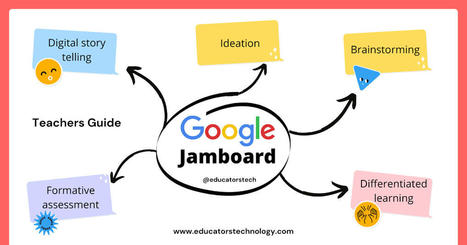
Google Jamboard is a collaborative whiteboard platform with huge educational potential. Since its introduction a few years ago, more and more teachers and educators are using it within educational contexts to augment teaching and learning. Google Jamboard leverages the power of collaborative whiteboarding in education making it super easy for individuals and teams to brainstorm, collaborate, and share ideas in real-time.
|
|
Scooped by
Elizabeth E Charles
December 16, 2021 4:26 PM
|
I’ve been in a number of conversations recently where we’ve been talking about how we talk about Open Scholarship outside of our communities. If I talk to someone else who identifies as an open scholar, there’s no problem, I can just talk about my practice. But what if I’m in a tenure and promotion context? What if I’m trying to talk to someone who is considering open scholarship but they are concerned that the time spent will not be recognized.
|
|
Rescooped by
Elizabeth E Charles
from Learning & Technology News
December 16, 2021 4:15 PM
|
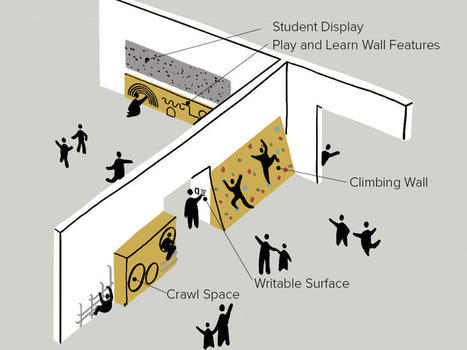
Walls can be used as a dynamic learning asset to promote movement, active learning and student agency -- are your walls designed to do that? Randy Fielding explores in his latest post.
Via Nik Peachey
|
|
|
Scooped by
Elizabeth E Charles
January 22, 2022 2:27 PM
|
The role of digital technologies in our lives, society and world is a topic of huge scrutiny, debate, controversy and opinion. Sometimes this noise can be as loud in education as anywhere else, and over the years much has been written and spoken about, in addition to much research in this area.
Digital literacy is a skill that is a fundamental need for most institutions, especially with the amount of technology used in the world. Unfortunately, many companies and institutions are not investing enough time or money to cultivate this skill.
One way this could be addressed is by conducting what some people call digital literacy assessments. These are tests and surveys that measure an individual’s digital literacy level.
By understanding where these individuals stand, the institutions and companies will be able to craft and plan for learning programs to heighten this skill. There are a few tips to conducting these assessments that can help them go smoother and be more efficient, and below we will look at some of these.
Via EDTECH@UTRGV
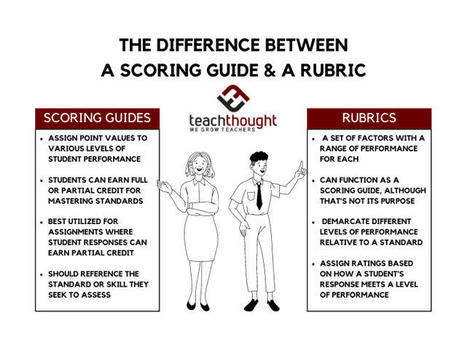
"What’s the difference between a scoring guide and a rubric? After all, there’s a lot they share in common. Both scoring guides and rubrics: - Show students how their assignments are being assessed by defining criteria and/or benchmarks in specific terms
- Can be used to help students self-assess the quality of their work and give useful peer feedback
- Have potential to reduce the amount of time teachers spend grading student work
- Purport to value objectivity over subjectivity
While the ‘what’ is similar, the ‘how’ is where the difference between a scoring guide and rubric is most evident."
Via EDTECH@UTRGV
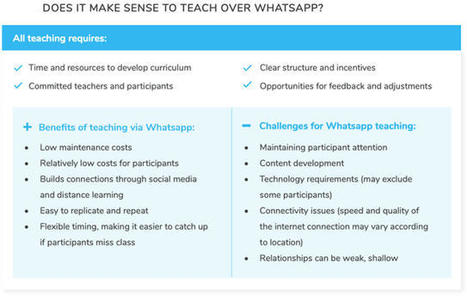
Learn how to design and deliver an interactive training course through an app-based messaging platform for adult leaders in rural communities
Via Nik Peachey
"Digital learning is a type of instructional practice learning that utilizes technology to strengthen the student’s learning experience. This learning form provides professional learning opportunities for teachers as well as a personalized learning experience for students. While many studies are focused on methodology and pedagogy, these five digital learning models and theories utilize the benefits of technology and enhance students’ learning experience."
Via EDTECH@UTRGV
|
|
Scooped by
Elizabeth E Charles
December 31, 2021 4:30 PM
|
As teachers and educators, we are in a constant state of flux. Traditional ways of teaching are taking backstage while new emerging methodologies are thrusted to the forefront. In fact, the educational landscape is changing so fast that it is hard to predict what our classrooms will be like in the near future.
|
|
Scooped by
Elizabeth E Charles
December 31, 2021 4:12 PM
|
As we leave behind 2021 and move to 2022, here are some articles on transition:
|
|
Rescooped by
Elizabeth E Charles
from Learning & Technology News
December 31, 2021 3:05 PM
|
Instead of simply swapping analogue for digital, or imagining the two running in parallel, educators can think about how to make the best use of all the various media and modalities available to them – and technology can become an enabler of creativity, and agency in the service of enhancing pedagogy.
Via Nik Peachey
|
|
Scooped by
Elizabeth E Charles
December 16, 2021 4:54 PM
|
In the academic imagination, depth and attention are the highest of virtues. But in pushing students to apply high-attention strategies to all incoming information, we risk creating a new and dangerous shallowness.
|
|
Scooped by
Elizabeth E Charles
December 16, 2021 4:40 PM
|
Yesterday morning I published The Easiest Way to Add Narration to Google Slides. In that blog post I featured a Chrome extension called Mote. Mote, as I've mentioned in the past, can be used for adding audio to a bunch of Google Workspace tools
|
|
Scooped by
Elizabeth E Charles
December 16, 2021 4:30 PM
|
Wakelet is a digital curation tool that allows you to save, organize, and share digital resources. Wakelet's collaborative features makes it a tool with huge educational potential for teachers and students.
Higher levels of education are expensive. The books that are used are not cheap, either. However, open education resources (OERs) are starting to take hold. They are benefiting students, educationally and financially.
Via EDTECH@UTRGV
|