RT @GMcKBlogs: MOOCs and Librarianship > Google Group http://t.co/Z7W5wOSIMJ #MOOCs #mooclib

 Your new post is loading...
 Your new post is loading...
Your new post is loading...
 Scoop.it!
RT @GMcKBlogs: MOOCs and Librarianship > Google Group http://t.co/Z7W5wOSIMJ #MOOCs #mooclib No comment yet.
Sign up to comment
Scoop.it!

African-Caribbean boys are being held back by a "hustle culture" in which educational success is not seen as masculine, a teachers' leader says.
Scoop.it!
Scoop.it!

Discover the technologies that the New Media Consortium are saying will impact higher education in the coming years. Via Society for College and University Planning (SCUP)
Scoop.it!

It's time to tackle the digital deficit and give children the literacy they need to create their own technologies and keep Britain at the forefront (Digital literacy is essential for our kids!
Scoop.it!
The Pedagogy wheel http://t.co/Q1MrbApHRN #edtech #ictev #education #HigherEd #teaching
Elizabeth E Charles's insight:
Padagogy wheel for iPad
Scoop.it!

Asking the right questions at the start of a project can save time, money and reduce the amount of re-work on e-learning projects.
Scoop.it!

Excellent Google Books Tips for Teachers http://t.co/dNGMVA1MyE
Scoop.it!

The NMC Horizon Project will choose six technologies that could be adopted over the next five years.
Scoop.it!
Network technology, disruptive innovation and the future from Mark Smithers This is the invited presentation that I gave at the launch of the SAFFIRE Via Mark Smithers
Scoop.it!
From
ht

Christensen and Horn: MOOCs disrupting higher education - leading to just-in-time mini-courses http://t.co/YAFIkDizfS #edtech #elearning
Scoop.it!
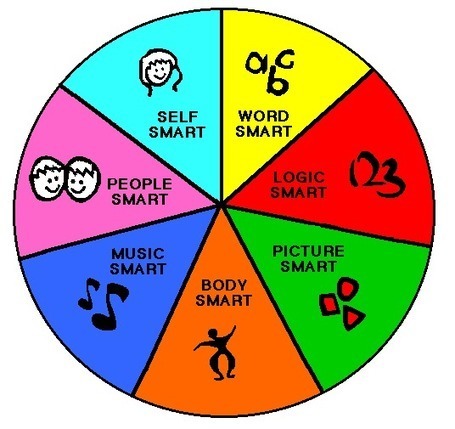
RT @tomwhitby: 3 Awesome Posters on Multiple Intelligences for Teachers http://t.co/vFJCFs9P59 #Edchat #MACUL13 |
Scoop.it!

There's more to educational video than YouTube. It's a terrific resource but you should know about the best alternatives to youtube available now.
Scoop.it!

More than 600 professionals from across the globe met in Austin, TX during the third annual SXSWEdu confer (RT @EdelmanDigital: SXSWEdu- The Future of Education and Technology - http://t.co/kW0HUGO66I)...
Scoop.it!

As I have traveled around this country participating in education conferences I have made several observations in regard to the effects of the Internet and social media on various levels of educati...
Scoop.it!

Digital literacy is the ability to find, evaluate, utilize, share, and create content using information technologies and the Internet. As a Cornell student, activities including writing papers, creating multimedia presentations, and posting information about yourself or others online are all a part of your day-to-day life, and all of these activities require varying degrees of digital literacy. Is simply knowing how to do these things enough? No—there’s more to it than that.
Scoop.it!

All things elearning and mlearning. (#elearning Technologies and Information by @LandMark_Learn on @scoopit http://t.co/WTLvujrhKm)
Elizabeth E Charles's insight:
Good source for monitoring news, resources, etc for eLearning technologies.
Scoop.it!

In advance of its May 2013 concert series, Carnegie Hall has created a Massive Open Online Course (MOOC) that will teach students how to listen to orchestras.
Scoop.it!
5 Great Tutorials on How to Build your Personal Learning Network http://t.co/BjWyE2wkxh
Scoop.it!
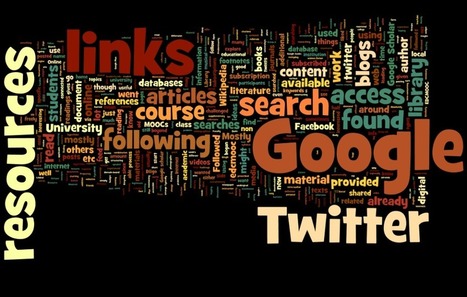
Following one of the previous posts explaining the plethora of research questions born during the e-learning and digital Cultures MOOC (#edcmooc), I set up a survey to explore how my peers explored...
Scoop.it!
Have you gotten your free developers toolkit yet? http://t.co/SuU9ZqHim7 #elearning #mlearning #edchat
Scoop.it!
Also check out http://t.co/bAuMW7jlxG, a free experimental web education platform. I'm taking a Harvard philosophy course!
Scoop.it!
As the value employers place on digital literacy continues to grow, Jisc’s Helen Beetham underlines the importance of developing these skills in young people...
Elizabeth E Charles's insight:
Good summary of the importance of digital literacy in a digital world.
Scoop.it!

What will classrooms look like in the year 2040? What will be the biggest and most popular teaching tools? A dazzling (but potentially controversial) visualization maps out what's coming to education in the future.
Elizabeth E Charles's insight:
Possible roadmap for the furture of classrooms/education. |