 Your new post is loading...
In today’s heavily technologized world, pedagogy and technology go hand in hand. The Covid-19 pandemic has urged educators worldwide to embrace technology as many of their classes shifted to a fully remote or hybrid environment.
Naturally, this posed some challenges for many teachers, especially those who weren’t used to using edtech tools such as a learning management system (LMS) or a video conferencing platform to deliver educational content. The need to swiftly incorporate technology in the classroom might have partially overshadowed another essential aspect of teaching — pedagogy, especially among less tech-savvy teachers who needed more time for this.
Via EDTECH@UTRGV

|
Scooped by
Elizabeth E Charles
February 10, 2022 3:18 PM
|
Slidesgo is a platform that offers a wide variety of free Google Slides and PowerPoint templates. The way it works is simple: search the library, save the ones you like to your Google Slides or PowerPoint, open the saved version to customize and edit them the way you want.
|
|
Scooped by
Elizabeth E Charles
February 10, 2022 3:02 PM
|
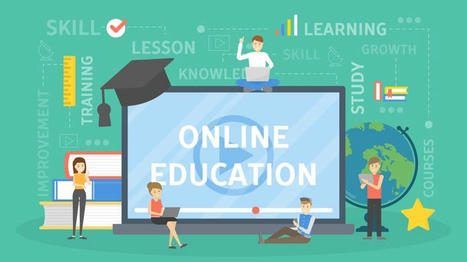
Due to the difficult epidemiological situation, the dominant part of universities, colleges, and schools have switched to distance learning. It’s a common practice around the world and is helping to reduce the incidence of Covid-19. It’s quite easy for humanitarian universities to switch to online education using modern technologies, while it’s a challenge for technical ones to do without full-time laboratory work. Furthermore, primary school students and their parents faced difficulties as well. Learning remotely turned out to be challenging.
|
|
Scooped by
Elizabeth E Charles
February 10, 2022 2:48 PM
|
Digital literacy is one of the main skills that every person should have in the 21st century. This is because our communicating, working, studying, and — for some people — living migrates to the digital world. The main audience of the Internet and social media is youth; therefore, there is a point in teaching it some things about digital literacy. So let’s explore what students should know about it.
When technology is implemented thoughtfully and empathetically, the impact can be profound.
Via EDTECH@UTRGV
|
|
Scooped by
Elizabeth E Charles
February 4, 2022 3:36 PM
|
In this 15-minute presentation, MIT’s David Rand summarizes what recent research says about psychological factors related to belief in information, both true and false. Repetition, alignment with prior beliefs, and hearing from trusted sources are factors that correlate with more belief in information, regardless of its truth.
|
|
Scooped by
Elizabeth E Charles
February 3, 2022 4:41 PM
|
Reverse image search, also known as search by image or reverse image lookup, is a search technique that involves using sample images to search for similar images on the web. Instead of using textual keywords and phrases, you upload a photo or paste the URL of a photo in the search box of the search engine of your choice and search for images that are identical or similar to your query image.
|
|
Scooped by
Elizabeth E Charles
February 3, 2022 4:34 PM
|
There's a common misconception that science is inherently neutral and objective, absolving it of any responsibility for racist beliefs and practices. However, many of the scientific advancements we celebrate are rooted in racism and sexism. Numerous medical cures and breakthroughs, including the polio vaccine and recent developments towards an HIV vaccine, required HeLa cells. Notably, these HeLa cells were stolen from Henrietta Lacks, a Black woman, without her consent in 1951. Furthermore, within the vast scope of science history, men have continuously taken credit for women's intellectual work in science, a pervasive phenomenon known as the Matilda Effect.
|
|
Scooped by
Elizabeth E Charles
February 3, 2022 4:19 PM
|
Karl Marx wrote a short summary of every book he read and many scholars and successful people refer to note taking as the secret of their success. I once shared a platform with Richard Branson, where he put his entire business success down to his lifetime habit of taking notes. Apart from being dyslectic, he made the simple point that we forget most of the good ideas we come up with, so taking notes prevents forgetting. He attributed almost all of his business ideas and successes to note taking.
I am also an obsessive note taker and have dozens of black notebooks which have helped me learn and plan over the years. I am often astonished, when speaking to large audiences of learning professionals, how few take notes, when the forgetting curve has been established, since Ebbinghaus in 1885, as one of best known and researched pieces of learning science.
Educational technology isn’t new, but meaningfully integrating tech in a modern learning environment can be a significant challenge for educators today.
Via EDTECH@UTRGV
In this article, we will talk about the different groups related to eLearning as course creators, and we will cover a handy guide to creating an online course from scratch.
Via EDTECH@UTRGV
|
|
Scooped by
Elizabeth E Charles
January 26, 2022 3:58 PM
|
There may be times when you see content coming up in your feed that you are just not interested in and given the choice you’d prefer not to see! It could be that your timeline is suddenly full of tweets because there is a football cup final going on, it’s Eurovision time or because a new Wordle game gets popular and people like to share their daily results. We all have different interests and that’s fine, but it doesn’t mean you have to see these tweets! If this is happening to you then muting could be the answer!
|
|
Scooped by
Elizabeth E Charles
January 26, 2022 3:34 PM
|
As the University of California San Diego’s inaugural chief privacy officer, I’m responsible for ensuring that the university handles all personal data — whether student, employee or research data — responsibly and ethically. We live in a new world where Big Data and data-driven and data-informed decisions influence everything, and our data practices have a significant impact on privacy in ways they didn’t just 10 years ago.
|
|
|
Scooped by
Elizabeth E Charles
February 10, 2022 3:33 PM
|
The ACRL Framework for Information Literacy for Higher Education: Sociology was approved by the ACRL Board of Directors on 27 January 2022, as a Companion Document to the ACRL IL Framework. "Developed by the ACRL Anthropology and Sociology Section’s Instruction and Information Literacy Committee, the companion document defines Sociological Information Literacy as an understanding of how information and scholarship are created, published, disseminated, and used by individuals and organizations. The document describes connections between the ACRL Framework for Information Literacy and the Sociological Literacy Framework (SLF) developed by sociology professors Susan Ferguson and William Carbonaro.
|
|
Scooped by
Elizabeth E Charles
February 10, 2022 3:09 PM
|
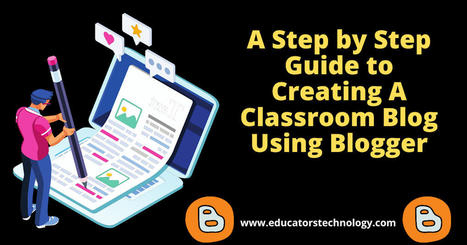
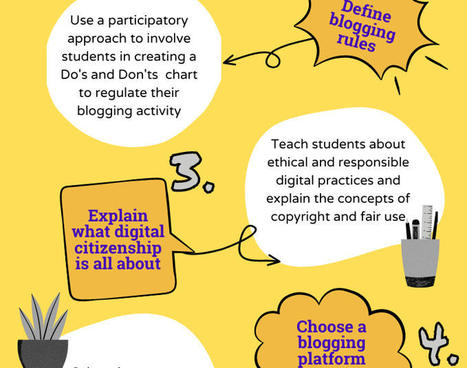
Blogging is a digital activity with immense educational potential. You can easily integrate blogging into your teaching to both transform your professional practice and to open up new learning possibilities for your students. There are various ways to use educational blogging in your instruction including to showcase students learning, to share extracurricular resources, to create a virtual hub for interacting with students remotely, to connect with parents and school community, to extend learning beyond classroom walls, to share assignments and important dates/events, among others.
|
|
Scooped by
Elizabeth E Charles
February 10, 2022 2:59 PM
|
The options for teachers looking to incorporate technology into the classroom are endless. Every new program and gadget has the potential to be a great tool, but it’s easy to get overwhelmed. So how do you know what’s really worth it? This article is here to help. We’ll cover the benefits of incorporating tech tools in the classroom, where to start, and some of the best resources.
|
|
Scooped by
Elizabeth E Charles
February 7, 2022 3:31 PM
|
One student wanted to know why so many nurses were spreading vaccine misinformation.
Other participants drew parallels to popular crime-fighting myths found in shows like “Criminal Minds.”
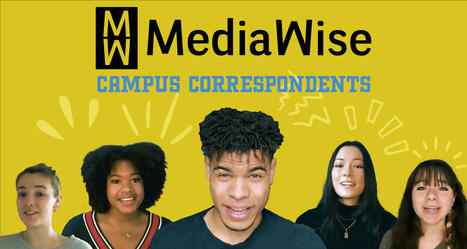
But most of the college students who participated in a fact-checking workshop from MediaWise, the social-first digital media literacy initiative of the nonprofit Poynter Institute, were simply happy to report feeling more digitally savvy after the hour they spent learning to spot fact from fiction online.
MediaWise and its Campus Correspondents have been working since 2020 to slow the spread of online misinformation. In 2022, the goal is to train at 100 diverse colleges and universities, and availability is now opening up for another 25 workshops.
Most people know the benefits that come with furthering your education: you become more qualified, you can make more money, you have an edge over other job applicants, you become more knowledgeable in a certain field, and you expand your social and professional network. However, when most people choose to continue their education, they do so in person. The COVID-19 pandemic has forced many people into distance learning. Two years later, more people are going back to school in person, but should you consider online learning over in-person learning?
Via EDTECH@UTRGV
|
|
Scooped by
Elizabeth E Charles
February 3, 2022 4:45 PM
|
Mybib is a free bibliography and citation generator. It allows you to generate formatted bibliographies, citations, and works cited from various sources including websites, books, journals, videos, blog posts, book chapters, conference papers, reports, journal articles, images, theses, ebooks, encyclopedia entries, movies, personal communications, maps, dictionary entries, and many more. Mybib supports hundreds of citation styles including APA 6 and 7, Chicago, Harvard and Harvard (Australia), MLA 8, MLA 9., among others.
|
|
Scooped by
Elizabeth E Charles
February 3, 2022 4:39 PM
|
Blogging is a digital activity with immense pedagogical benefits for students. Besides developing a number of key multimedia literacy skills essential for thriving in the 21st century classroom, blogging also empowers students voice and helps them communicate more effectively.
|
|
Scooped by
Elizabeth E Charles
February 3, 2022 4:26 PM
|
Here’s my New Year’s resolution for higher education: extend the reach of research to the people.
Recently, universities and academics have begun to talk about open science (i.e., research practices used to enhance transparency from design to dissemination). There is a robust agenda for academia’s future, including code sharing, registered reports and accessibility.
It’s part of a growing recognition that research really belongs to the people. Even as the postsecondary industry opened its doors to become a more-accessible system for students, it locked up the research conducted by its faculty and staff. But it’s often individuals from outside of academia who construct topical questions of interest for scholars, serve as study participants, and fund organizations producing such work.
Instead of seeing edtech as a silver bullet that simply drives learning outcomes, it is more useful to think of it as technology that mediates learning relations and processes: what relationships do we value as important for students and when is technology helpful and unhelpful in establishing those?
Via EDTECH@UTRGV
"Digital workflows save time and money–and they also create better experiences for students, faculty, and staff. And if COVID has proven anything, it’s that digital processes are a must-have when in-person workflows aren’t possible."
Via EDTECH@UTRGV
|
|
Scooped by
Elizabeth E Charles
January 26, 2022 4:03 PM
|
In order for a group project to succeed you need to be organised. It’s important to know what stages make up the workflow that will ensure you complete the project, and who is responsible for what. One approach which has been used by many over the years is KanBan boards. Typically a white board or wall space is used along with some coloured tape to divide the space into columns (progress) and rows or ‘swim lanes’ to seperate individual or teams sharing the same board. Post-its were then used to write individual tasks. These could be moved along as the task progresses.
|
|
Scooped by
Elizabeth E Charles
January 26, 2022 3:39 PM
|
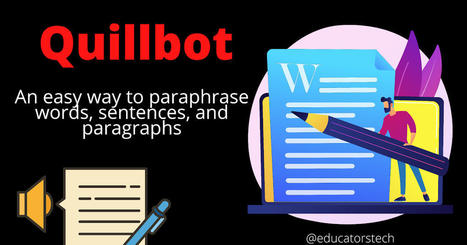
An online paraphrasing tool (a reword generator) is a tool that allows you to find better ways to reword or paraphrase your content. Students can use paraphrasing tools to help them enhance the quality of their writing and be able to communicate textual content in clear and meaningful ways.
|
































Pedagogía y Tecnología deben ir juntas de la mano en la transformación educativa del milenio.
Pedagogía y Tecnología deben ir juntas de la mano en la transformación educativa del milenio.