Your new post is loading...

|
Scooped by
Gilbert C FAURE
March 6, 2017 4:54 AM
|
Overcoming the first line of the innate immune system is a general hallmark of pathogenic microbes to avoid recognition and to enter the human host. In particular, spirochetes belonging to the Borrelia burgdorferi sensu lato-complex have developed various means to counter the immune response and to successfully survive in diverse host environments for a prolonged period of time. In regard to complement resistance, Borrelia utilize a plethora of immune evasion strategies involves capturing of host-derived complement regulators, terminating complement activation as well as shedding of cell-destroying complement complexes to manipulate and to expeditiously inhibit human complement. Owing to their mode of action, the interacting surface-exposed proteins identified among B. burgdorferi sensu stricto (s.s.), B. afzelii, B. spielmanii, and B. bavariensis can be classified into at least two major categories, namely molecules that directly interfere with distinct complement components including BBK32, CspA, BGA66, BGA71, and a CD59-like protein or molecules which indirectly counteract complement activation by binding various complement regulators such as Factor H, Factor H-like protein 1 (FHL-1), Factor H-related proteins FHR-1, FHR-2, or C4Bp. The latter group of genetically and structurally unrelated proteins has been collectively referred to as “complement regulator-acquiring surface proteins” and consists of CspA, CspZ, ErpA, ErpC, ErpP, and the as yet unidentified protein p43. This review focuses on the current knowledge of immune evasion mechanisms exhibited by Lyme disease spirochetes and highlights the role of complement-interfering, infection-associated molecules playing an important part in these processes. Deciphering the immune evasion strategies may provide novel avenues for improved diagnostic approaches and therapeutic interventions.
|
|
Scooped by
Gilbert C FAURE
March 6, 2017 3:08 AM
|
If you’ve ever wondered how a vaccine given decades ago can still protect against infection, you have your plasma cells to thank. Plasma cells are long-lived B cells that reside in the bone marrow and churn out antibodies against previously encountered vaccines or pathogens.
|
|
Scooped by
Gilbert C FAURE
March 4, 2017 2:30 AM
|
Sci Immunol. 2016 Jul 14;1(1). pii: AAG0479. doi: 10.1126/sciimmunol.aag0479.
|
|
Scooped by
Gilbert C FAURE
March 2, 2017 9:01 AM
|
The Francis Crick Institute is an interdisciplinary medical research institute.
|
|
Scooped by
Gilbert C FAURE
February 28, 2017 7:03 AM
|
|
|
Scooped by
Gilbert C FAURE
February 27, 2017 1:38 PM
|
Thanks to the innate immune response, humans have an immediately-acting defense mechanism set in place against invading pathogens. The innate response is n
This article further discusses the reproducibility crisis in biomedical science and how poor conduct of commercial antibodies contribute to this. In addition, the way quality data are presented on product sheets by antibody vendors is scrutinized. The article proposes that there is a distinction between testing data and validation data, and special attention is asked for consistency between batches and aliquots. Moreover, the article separates the specifics, such as formulation, antigen and price, from the specifics on performance. Finally, a two-tier approach is discussed, enabling scientists to anticipate how an antibody is likely to perform when repeated purchases are required.
Via Krishan Maggon
|
|
Scooped by
Gilbert C FAURE
February 26, 2017 1:43 PM
|
Macrophages (Mϕs) are key players in the coordination of the lifesaving or detrimental immune response against infections. The mechanistic understanding of the functional modulation of Mϕs by pathogens and pharmaceutical interventions at the signal transduction level is still far from complete. The complexity of pathways and their cross-talk benefits from holistic computational approaches. In the present study, we reconstructed a comprehensive, validated, and annotated map of signal transduction pathways in inflammatory Mϕs based on the current literature. In a second step, we selectively expanded this curated map with database knowledge. We provide both versions to the scientific community via a Web platform that is designed to facilitate exploration and analysis of high-throughput data. The platform comes preloaded with logarithmic fold changes from 44 data sets on Mϕ stimulation. We exploited three of these data sets—human primary Mϕs infected with the common lung pathogens Streptococcus pneumoniae , Legionella pneumophila , or Mycobacterium tuberculosis —in a case study to show how our map can be customized with expression data to pinpoint regulated subnetworks and druggable molecules. From the three infection scenarios, we extracted a regulatory core of 41 factors, including TNF, CCL5, CXCL10, IL-18, and IL-12 p40, and identified 140 drugs targeting 16 of them. Our approach promotes a comprehensive systems biology strategy for the exploitation of high-throughput data in the context of Mϕ signal transduction. In conclusion, we provide a set of tools to help scientists unravel details of Mϕ signaling. The interactive version of our Mϕ signal transduction map is accessible online at <https://vcells.net/macrophage>.
|
|
Scooped by
Gilbert C FAURE
February 24, 2017 1:07 PM
|
T cells of the immune system often fail to target cancer cells because they enter a dysfunctional state known as exhaustion. Molecular analysis of T-cell exhaustion provides insights into the clinical use of these cells.
|
|
Scooped by
Gilbert C FAURE
February 23, 2017 4:19 AM
|
Interleukin (IL)-17 is the founding member of a novel family of inflammatory cytokines. While the proinflammatory properties of IL-17 are key to its host-protective capacity, unrestrained IL-17 signaling is associated with immunopathology, autoimmune disease, and cancer progression. In this review we discuss both the activators and the inhibitors of IL-17 signal transduction, and also the physiological implications of these events. We highlight the surprisingly diverse means by which these regulators control expression of IL-17-dependent inflammatory genes, as well as the major target cells that respond to IL-17 signaling. Trends IL-17-mediated inflammation is crucial for microbial clearance, while unrestrained IL-17 signaling can promote immunopathology. Signaling pathways activated by IL-17 lead to enhanced de novo gene transcription and also control of mRNA stability. To restrict bystander inflammation, IL-17 activates multiple negative regulators of signaling which target transcriptional activators as well as regulators of mRNA stability. IL-17 induces a core set of signature genes common to most tissues, but tissue-specific gene targets are also identified that dictate the biology of this cytokine in different locations. Therapeutics targeting the IL-17 pathway have been approved for treating autoimmunity, and are especially effective in psoriasis. Applicability to other conditions is under investigation.
|
|
Scooped by
Gilbert C FAURE
February 20, 2017 1:48 PM
|
Keystone Symposia, a non-profit organization dedicated to connecting the scientific community for the benefit of the world community
and accelerating life science discovery, conducts scientific conferences on biomedical and life science topics in relaxing environments
that catalyze information exchange and networking. Meetings are designed to encourage scientists to discuss the newest ideas, discoveries, and
technologies with their colleagues in an atmosphere conducive to creative thinking. Symposia locations are usually winter
and mountain retreats selected for relaxed environments that optimize information exchange and promote collaborative relationships.
|
|
Scooped by
Gilbert C FAURE
February 20, 2017 8:55 AM
|
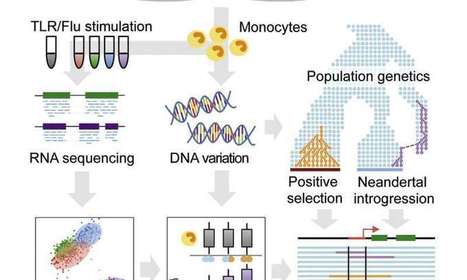
It's long been clear that people from different parts of the world differ in their susceptibility to developing infections as well as chronic inflammatory and autoimmune diseases. Now, two studies reported in Cell on Octobe
|
|
Scooped by
Gilbert C FAURE
February 20, 2017 8:20 AM
|
ABSTRACT: New definitions of sepsis and septic shock were published in early 2016, updating old defi
|
|
|
Scooped by
Gilbert C FAURE
March 6, 2017 4:51 AM
|
The earliest jawed vertebrates (Gnathostomes) would likely have had interferon (IFN) genes, since they are present in extant cartilaginous fish (sharks and rays) and bony fish (lobe-finned and ray-finned fish, the latter consisting of the chondrostei, holostei and teleostei), as well as in tetrapods. They are thought to have evolved from a class II helical cytokine ancestor, along with the interleukin (IL) -10 cytokine family. The two rounds (2R) of whole genome duplication (WGD) that occurred between invertebrates and vertebrates (Nakatani et al., 2007) may have given rise to additional loci, initially containing an IL-10 ancestor and IFN ancestor, that have duplicated further to give rise to the two loci containing the IL-10 family genes, and potentially the IFN type I and IFN type III loci (Siupka et al., 2014). The timing of the divergence of the IFN type II gene from the IL-10 family genes is not clear but was also an early event in vertebrate evolution. Further WGD events at the base of the teleost fish, and in particular teleost lineages (cyprinids, salmonids) have duplicated the loci further, giving rise to additional IFN genes, with tandem gene duplication within a locus a common occurrence. Finally, retrotransposition events have occurred in different vertebrate lineages giving rise to further IFN loci, with large expansions of genes at these loci in some cases. This review will initially explore the likely IFN system present in the earliest Gnathostomes by comparison of the known cartilaginous fish genes with those present in mammals, and will then explore the changes that have occurred in gene number/diversification, gene organisation, and the encoded proteins during vertebrate evolution.
Via Denis Hudrisier
|
|
Scooped by
Gilbert C FAURE
March 3, 2017 11:16 AM
|
Clinical & Translational Immunology focuses on the general functioning of the immune system in its broadest sense, with a particular emphasis on its cell biology. Areas that are covered include but are not limited to: Cellular immunology, Innate and adaptive immunity, Immune responses to pathogens,Tumour immunology,Immunopathology, Immunotherapy, Immunogenetics, Immunological studies in humans and model organisms (including mouse, rat, Drosophila etc)
|
|
Scooped by
Gilbert C FAURE
March 1, 2017 2:26 AM
|
The integrin LFA-1 is essential for efficient activation and for cytotoxicity of NK cells because it initiates the assembly of the immunological synapse and mediates firm adhesion to the target. LFA-1 is also needed to polarize the cytotoxic machinery of the NK cell toward the target cell. The binding affinity and avidity of integrins can be regulated via inside-out signals from other receptors. In this article, we investigate the signals necessary to activate LFA-1 in human NK cells. Our data show that LFA-1 has a low ligand-binding activity in resting human NK cells, but it can be stimulated by triggering activating receptors, such as 2B4 or CD16, or by coactivation of different receptor combinations. Short-term stimulation of freshly isolated NK cells with cytokines, such as IL-15, IL-12, or IL-18, does not activate LFA-1 but increases the responsiveness of the cells to subsequent receptor stimulation. Different NK cell subsets vary in their ability to induce LFA-1 binding activity after activating receptor stimulation. Interestingly, the NK cell subsets that are more mature and possess higher cytotoxic potential also show the highest activation of LFA-1, which correlated with the expression of the small calcium-binding protein S100A4. Our data suggest that regulation of LFA-1 is one reason for the different activity of NK cells during differentiation.
This article is featured in In This Issue , p.[1763][1]
[1]: /lookup/volpage/198/1763
|
|
Scooped by
Gilbert C FAURE
February 28, 2017 2:08 AM
|
Th22 cells are a major source of IL-22 and have been found at sites of infection and in a range of inflammatory diseases. However, their molecular characteristics and functional roles remain largely unknown because of our inability to generate and isolate pure populations. We developed a novel Th22 differentiation assay and generated dual IL-22/IL-17A reporter mice to isolate and compare pure populations of cultured Th22 and Th17 cells. Il17a fate-mapping and transcriptional profiling provide evidence that these Th22 cells have never expressed IL-17A, suggesting that they are potentially a distinct cell lineage from Th17 cells under in vitro culture conditions. Interestingly, Th22 cells also expressed granzymes, IL-13, and increased levels of Tbet. Using transcription factor–deficient cells, we demonstrate that RORγt and Tbet act as positive and negative regulators of Th22 differentiation, respectively. Furthermore, under Th1 culture conditions in vitro, as well as in an IFN-γ–rich inflammatory environment in vivo, Th22 cells displayed marked plasticity toward IFN-γ production. Th22 cells also displayed plasticity under Th2 conditions in vitro by upregulating IL-13 expression. Our work has identified conditions to generate and characterize Th22 cells in vitro. Further, it provides evidence that Th22 cells develop independently of the Th17 lineage, while demonstrating plasticity toward both Th1- and Th2-type cells.
This article is featured in In This Issue , p.[1763][1]
[1]: /lookup/volpage/198/1763
|
|
Scooped by
Gilbert C FAURE
February 27, 2017 12:55 PM
|
During microbial infection, responding CD8+ T lymphocytes differentiate into heterogeneous subsets that together provide immediate and durable protection. To elucidate the dynamic transcriptional changes that underlie this process, we applied a single-cell RNA-sequencing approach and analyzed individual CD8+ T lymphocytes sequentially throughout the course of a viral infection in vivo. Our analyses revealed a striking transcriptional divergence among cells that had undergone their first division and identified previously unknown molecular determinants that controlled the fate specification of CD8+ T lymphocytes. Our findings suggest a model for the differentiation of terminal effector cells initiated by an early burst of transcriptional activity and subsequently refined by epigenetic silencing of transcripts associated with memory lymphocytes, which highlights the power and necessity of single-cell approaches.
|
|
Scooped by
Gilbert C FAURE
February 26, 2017 2:06 PM
|
Boulenouar et al. define different subsets of type 1 innate lymphoid cells (AT1-ILCs)
in human and murine adipose tissues and show that at steady state, AT1-ILCs kill adipose
tissue macrophages (ATMs). In obesity, cytotoxicity is impaired. Interference with
AT1-ILC cytotoxicity impacted ATM homeostasis and systemic metabolism, pointing to
its importance in homeostasis and disease.
|
|
Scooped by
Gilbert C FAURE
February 25, 2017 2:58 PM
|
IL-10 is an immunoregulatory cytokine that has broad effects across the immune system. In Th cell subsets, Th2 cells produce considerable amounts of IL-10. The transcription factors that regulate IL-10 production in Th2 cells are still incompletely described. In this study, we demonstrate that the ETS family transcription factor ETS variant (Etv)5 regulates IL-10 production in Th2 cells. T cell–specific Etv5-deficient and littermate control mice demonstrated that IL-10 production and gene expression were significantly decreased in the absence of Etv5. In an Aspergillus fumigatus extract–induced inflammation model, IL-10–producing CD4+ T cells in bronchoalveolar lavage and lung were significantly decreased in mice that lacked Etv5 in T cells, compared with control mice. We showed that Etv5 directly binds to the Il10 locus conserved noncoding sequence 3 site and that it activates gene expression in a luciferase reporter assay and following retroviral transduction. Etv5 deficiency did not affect the expression of other transcription factors known to be important for expression of IL-10, including Jun family members, GATA3, E4BP4, and IFN regulatory factor 4. However, in the absence of Etv5, binding of these transcription factors to the Il10 locus was dramatically reduced. Ectopic Etv5 expression in Th2 cells that lack Etv5 restored IL-10 production and the binding of IL-10–inducing transcription factors including E4BP4, IFN regulatory factor 4, and GATA3. Taken together, we conclude that Etv5 plays a crucial role in regulating IL-10 production in Th2 cells by facilitating the binding of IL-10–inducing transcription factors at the Il10 locus.
|
|
Scooped by
Gilbert C FAURE
February 24, 2017 12:13 PM
|
High-throughput sequencing data from TCRs and Igs can provide valuable insights into the adaptive immune response, but bioinformatics pipelines for analysis of these data are constrained by the availability of accurate and comprehensive repositories of TCR and Ig alleles. We have created an analytical pipeline to recover immune receptor alleles from genome sequencing data. Applying this pipeline to data from the 1000 Genomes Project we have created Lym1K, a collection of immune receptor alleles that combines known, well-supported alleles with novel alleles found in the 1000 Genomes Project data. We show that Lym1K leads to a significant improvement in the alignment of short read sequences from immune receptors and that the addition of novel alleles discovered from genome sequence data are likely to be particularly significant for comprehensive analysis of populations that are not currently well represented in existing repositories of immune alleles.
This article is featured in In This Issue , p.[1763][1]
[1]: /lookup/volpage/198/1763
|
|
Scooped by
Gilbert C FAURE
February 20, 2017 2:41 PM
|
T cell function declines with age. What does T cell aging look like at the molecular level? By generating genome-wide maps of chromatin accessibility in CD8 T cells from young and elderly individuals, Moskowitz et al . have furthered our understanding of transcriptional programs that regulate T cell differentiation and aging. They report that in naïve CD8 T cells in the elderly, promoters that recruit nuclear respiratory factor 1 (NRF1), a transcription factor that controls expression of mitochondrial proteins, are less accessible and propose that loss of NRF1 binding contributes to lower metabolic activity of aged T cells. The transcriptional circuits uncovered here set the stage for the designing rationales to modulate T cell function in the elderly.
|
|
Scooped by
Gilbert C FAURE
February 20, 2017 12:34 PM
|
Specialised innate and adaptive immune subsets, compartments and the microbiota in health and disease Advances in immune phenotyping and characterisation through a variety of approaches from multi-parameter flow cytometry to RNAseq has led in the past few years to considerable reappraisal in our appreciation of immune subsets, compartments and developmental dependence on microbiota species. This collection of recent papers from Immunology includes articles which shed light on different aspects of tissue-specific immune responses to infection and those involved in inflammation in mucosal, adipose and lymphoid tissues. Regulation of mucosal homeostasis is also covered, including the role of gut microbiota in mucosal immunity. All articles in this collection have been published in issues of Immunology from 2014 to 2016 and are FREE to view online.
|
|
Scooped by
Gilbert C FAURE
February 20, 2017 8:53 AM
|
The molecular process of Antigen Processing and Presentation leads to T lymphocyte activation and function to enable CD4 T cells to potentiate the humoral and cellular immune responses, and CD8 T cel…
|