Immunology
199.2K views | +8 today
Immunology
Teaching and Learning Immunology. Information you never would have searched for!
Your new post is loading...
Scooped by Gilbert C FAURE
August 24, 2025 8:13 AM
Scoop.it!

https://www.cell.com/cell/fulltext/S0092-8674(25)00746-9?fbclid=IwY2xjawMX4QNleHRuA2FlbQIxMABicmlkETBJTGlmTTFOdmF0dVpKUlZ0AR6K3SHaMO903iIKV6xogyPDn1c3ggHHLzy4gbJyViDZDky-DtSaWY60XHur6Q_aem_kzZRJLup...

No comment yet.
Scooped by Gilbert C FAURE
August 16, 2025 1:56 PM
Scoop.it!

Deep learning reveals antibiotics in the archaeal proteome | Nature Microbiology

Deep learning reveals antibiotics in the archaeal proteome | Nature Microbiology | Immunology | Scoop.it
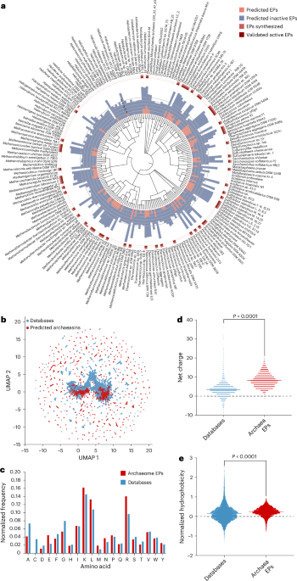
Antimicrobial resistance is one of the greatest threats facing humanity, making the need for new antibiotics more critical than ever. While most antibiotics originate from bacteria and fungi, archaea offer a largely untapped reservoir for antibiotic discovery. In this study, we leveraged deep learning to systematically explore the archaeome, uncovering promising candidates for combating antimicrobial resistance. By mining 233 archaeal proteomes, we identified 12,623 molecules with potential antimicrobial activity. These peptide compounds, termed archaeasins, have unique compositional features that differentiate them from traditional antimicrobial peptides, including a distinct amino acid profile. We synthesized 80 archaeasins, 93% of which showed antimicrobial activity in vitro against Acinetobacter baumannii, Escherichia coli, Klebsiella pneumoniae, Pseudomonas aeruginosa, Staphylococcus aureus and Enterococcus spp. Notably, in vivo validation identified archaeasin-73 as a lead candidate, significantly reducing A. baumannii loads in mouse infection models, with effectiveness comparable to that of established antibiotics such as polymyxin B. Our findings highlight the potential of archaea as a resource for developing next-generation antibiotics. Use of artificial intelligence to mine proteomes of archaea led to the discovery of archaeasins, antimicrobials that kill drug-resistant bacteria in laboratory and animal models, offering a promising source of future antibiotics.
No comment yet.
Scooped by Gilbert C FAURE
August 16, 2025 2:21 AM
Scoop.it!

The immune system offers a window into aging | Nature Aging

The immune system permeates and regulates organs and tissues across the body, and has diverse roles beyond pathogen control, including in development, tissue homeostasis and repair. The reshaping of the immune system that occurs during aging is therefore highly consequential. In this Focus issue, Nature Aging presents a collection of reviews of and opinions on recent advances in research into immune aging.
No comment yet.
Scooped by Gilbert C FAURE
August 13, 2025 3:47 AM
Scoop.it!

Tolerance requires diversity (of antigen presenting cells) | Stéphane Paul

Tolerance requires diversity (of antigen presenting cells) | Stéphane Paul | Immunology | Scoop.it
Tolerance requires diversity (of antigen presenting cells)
No comment yet.
Scooped by Gilbert C FAURE
July 29, 2025 2:54 AM
Scoop.it!

Regulatory T cells in brown adipose tissue safeguard thermogenesis by restraining interferon-γ–producing lymphocytes

No comment yet.
Scooped by Gilbert C FAURE
July 28, 2025 1:19 PM
Scoop.it!

Frontiers | Lymphoid stroma in all its states

Frontiers | Lymphoid stroma in all its states | Immunology | Scoop.it
Stromal cells are found in all tissues of the body. Among them, lymphoid stromal cells (LSCs) correspond to the cell subsets found in secondary and tertiar
No comment yet.
Scooped by Gilbert C FAURE
July 25, 2025 3:12 AM
Scoop.it!

https://www.nature.com/articles/s41586-025-09166-w

No comment yet.
Scooped by Gilbert C FAURE
July 21, 2025 4:37 AM
Scoop.it!

The complement system: Biology, pathology, and therapeutic interventions

The complement system: Biology, pathology, and therapeutic interventions | Immunology | Scoop.it
Targeting the innate immune complement system has long been pursued as a promising strategy for treating a wide spectrum of acute and chronic immune-mediated disorders.Nearly 2 decades since the approval of the first complement inhibitor targeting C5, the field of complement therapeutics has flouri...
Gilbert C FAURE's insight:

Abstract

Targeting the innate immune complement system has long been pursued as a promising strategy for treating a wide spectrum of acute and chronic immune-mediated disorders. Nearly 2 decades since the approval of the first complement inhibitor targeting C5, the field of complement therapeutics has flourished. In just the past 5 years, 8 new complement-targeting drugs have entered the market. Traditionally dominated by monoclonal antibodies, the approved drug arsenal now includes an ever-expanding selection of macrocyclic peptides, low molecular weight compounds, and aptamers. Other novel approaches in clinical development include recombinant proteins, nanobodies, oligonucleotide therapeutics, and gene therapies. Alongside this remarkable diversification of drug modalities, the complement field is advancing toward deciphering and precisely targeting all pathways of the complement network. Although current approved therapies primarily benefit patients with rare diseases, there is a nascent shift towards addressing more prevalent conditions. In line with this unprecedented expansion in the field, we aim to provide a comprehensive overview of the complement system, its activation pathways, key effector mechanisms, and regulation. We discuss the consequences of unchecked complement activation leading to disease pathologies and highlight therapeutic intervention points within the cascade. We review the discovery and molecular pharmacology of clinically approved and late-phase complement therapeutics, bridging to their clinical pharmacokinetics, safety, and regulatory status for clinical indications. We particularly focus on the diversifying modalities of complement-targeting drugs and evaluate the unique opportunities and challenges these new developments present. With this knowledge, we forecast potential short-term and long-term development trends in the field. SIGNIFICANCE STATEMENT: Therapeutic targeting of the complement system has been widely pursued for treating autoimmune and inflammatory disorders, with the field recently seeing an exponential increase in clinical approvals (8 new drugs during 2022-2024). This timely comprehensive review presents an overview of the complement cascade, its effector mechanisms, and the molecular pharmacology and clinical utility of currently approved and late-phase complement-targeting drugs. We thus provide a valuable one-stop guide for existing and upcoming researchers working in the complement field.


further information on

https://www.scoop.it/topic/immunology?q=complement


No comment yet.
Scooped by Gilbert C FAURE
July 17, 2025 12:02 PM
Scoop.it!

Inborn errors of immunity: Manifestation, treatment, and outcome—an ESID registry 1994–2024 report on 30,628 patients

No comment yet.
Scooped by Gilbert C FAURE
July 12, 2025 1:56 AM
Scoop.it!

Multimodal delineation of a layer of effector function among exhausted CD8 T cells in tumors

No comment yet.
Scooped by Gilbert C FAURE
July 7, 2025 3:04 AM
Scoop.it!

https://academic.oup.com/discovimmunology/article/4/1/kyaf006/8117346?login=false

No comment yet.
Scooped by Gilbert C FAURE
June 25, 2025 9:16 AM
Scoop.it!

Muscle samples from... - Journal of Clinical Investigation

Muscle samples from... - Journal of Clinical Investigation | Immunology | Scoop.it
No comment yet.
Scooped by Gilbert C FAURE
June 23, 2025 6:37 AM
Scoop.it!

Les requins disposent d'un organe d'"immunité" pour lutter contre les maladies

Les requins disposent d'un organe d'"immunité" pour lutter contre les maladies | Immunology | Scoop.it
Les requins disposent d’un système immunitaire redoutablement efficace, bien que très différent du nôtre. Une récente découverte révèle qu’un organe inattendu pourrait y jouer un rôle central.
No comment yet.
Scooped by Gilbert C FAURE
August 23, 2025 8:04 AM
Scoop.it!

JCI Insight - Heterogeneity of thymic output in the elderly and its association with sex and smoking

JCI Insight - Heterogeneity of thymic output in the elderly and its association with sex and smoking | Immunology | Scoop.it
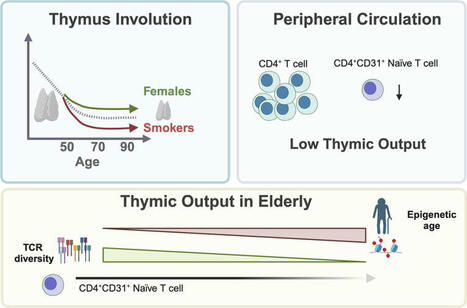
Functional thymic structures are embedded in the mediastinal AT. To effectively evaluate thymic output in aged individuals, we first sought to characterized functional thymic tissue obtained from patients (≥50 years) undergoing common cardiac surgical procedures, where these tissues could be...
No comment yet.
Rescooped by Gilbert C FAURE from Hésitations Vaccinales: Observatoire HESIVAXs
August 16, 2025 2:34 AM
Scoop.it!

Neuro–immune crosstalk: focus on innate lymphoid cells

No comment yet.
Scooped by Gilbert C FAURE
August 14, 2025 4:07 AM
Scoop.it!

A new #ScienceReview offers an overview of recent research that reveals the immune system not only defends the body but also actively shapes and supports various life-sustaining processes through… ...

A new #ScienceReview offers an overview of recent research that reveals the immune system not only defends the body but also actively shapes and supports various life-sustaining processes through… ... | Immunology | Scoop.it
A new #ScienceReview offers an overview of recent research that reveals the immune system not only defends the body but also actively shapes and supports various life-sustaining processes through dynamic, reciprocal interactions with other physiological systems.

Learn more: https://scim.ag/40ZxtQw
No comment yet.
Scooped by Gilbert C FAURE
August 8, 2025 3:23 AM
Scoop.it!

A new special issue of Science explores the immune system at the molecular and cellular level and how it has evolved to govern multiple facets of human health. | Science Magazine

A new special issue of Science explores the immune system at the molecular and cellular level and how it has evolved to govern multiple facets of human health. | Science Magazine | Immunology | Scoop.it
A new special issue of Science explores the immune system at the molecular and cellular level and how it has evolved to govern multiple facets of human health.

Learn more: https://scim.ag/4m6vHWp
Gilbert C FAURE's insight:

Our immune system over the lifespan, sex differences, influence on physiology, and host antiviral defenses

No comment yet.
Scooped by Gilbert C FAURE
July 29, 2025 1:55 AM
Scoop.it!

The impact of genetic immune disorders on infections including COVID-19, inflammatory bowel disease and cancer | Nature Immunology

The impact of genetic immune disorders on infections including COVID-19, inflammatory bowel disease and cancer | Nature Immunology | Immunology | Scoop.it
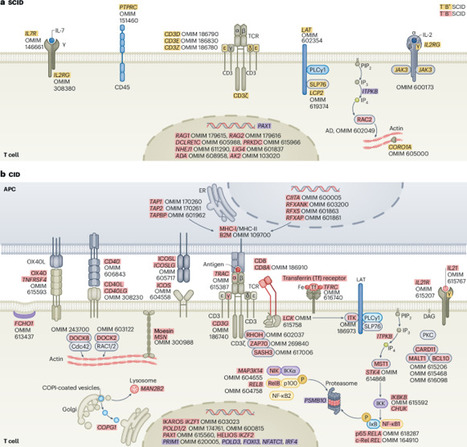
Cui et al. discuss new molecular and cellular insights underlying the pathogenesis of rare human diseases that arise from genetic inborn errors of immunity.
No comment yet.
Scooped by Gilbert C FAURE
July 25, 2025 4:39 AM
Scoop.it!

Tissue origin and virus specificity shape human CD8+ T cell cytotoxicity

No comment yet.
Scooped by Gilbert C FAURE
July 22, 2025 9:45 AM
Scoop.it!

Cortical Thymic Epithelial Cells: Key Developers of the Code of T-Cell Selection and TCR Repertoire Diversity

No comment yet.
Scooped by Gilbert C FAURE
July 21, 2025 4:37 AM
Scoop.it!

Identification of clinical diagnostic and immune cell infiltration characteristics of acute myocardial infarction with machine learning approach | Scientific Reports

Identification of clinical diagnostic and immune cell infiltration characteristics of acute myocardial infarction with machine learning approach | Scientific Reports | Immunology | Scoop.it
Acute myocardial infarction (AMI) is a serious heart disease with high fatality rates. The progress of AMI involves immune cell infiltration. However, suitable clinical diagnostic biomarkers and the roles of immune cells in AMI remain unknown.
No comment yet.
Scooped by Gilbert C FAURE
July 14, 2025 11:21 AM
Scoop.it!

Not all lymphocytes come from the bone marrow: revisiting extramedullar lymphopoiesis ;) | Eric Vivier

Not all lymphocytes come from the bone marrow: revisiting extramedullar lymphopoiesis ;) | Eric Vivier | Immunology | Scoop.it
Not all lymphocytes come from the bone marrow: revisiting extramedullar lymphopoiesis ;)
CIML
No comment yet.
Scooped by Gilbert C FAURE
June 27, 2025 10:33 AM
Scoop.it!

Home - IUIS 2025

Home - IUIS 2025 | Immunology | Scoop.it
CHECK OUR CONFIRMEDKEYNOTE SPEAKERSMORE INFORMATION HERECHECK OUR CONFIRMEDPLENARY SPEAKERSMORE INFORMATION HERECME CREDITS AT IUIS 2025 IUIS is seeking Continuing Medical Education (CME) accreditation for the 19th International Congress of Immunology. Stay tuned for updates on the final accreditation details. Welcome To Vienna Welcome message On behalf of the Austrian Society for Allergology and Immunology (ÖGAI) […]
No comment yet.
Scooped by Gilbert C FAURE
June 24, 2025 8:14 AM
Scoop.it!

Inhibitory pattern recognition receptors: lessons from LAIR1 | Nature Reviews Immunology

Inhibitory pattern recognition receptors: lessons from LAIR1 | Nature Reviews Immunology | Immunology | Scoop.it
Many inhibitory receptors that regulate immune cell function recognize a limited number of specific ligands. However, a subgroup of so-called inhibitory pattern recognition receptors (iPRRs) can bind a much larger array of ligands of structural similarity. Leukocyte-associated immunoglobulin-like receptor 1 (LAIR1) is one such iPRR that is expressed by most immune cells and recognizes a common structural pattern present in collagens and collagen domain-containing proteins. LAIR1 signalling regulates diverse immune cell populations and is currently the focus of multiple clinical trials for the treatment of cancer. We here review the current literature on LAIR1, as a prototypic example of how inhibitory PRRs contribute to immune balance and of how these receptors are regulated. We discuss the function of LAIR1 in homeostasis, infection, inflammation and cancer, and consider the advantages and potential pitfalls of targeting this receptor in human disease. Pattern recognition receptors (PRRs) are typically associated with innate immune activation, but there is an emerging subset of inhibitory pattern recognition receptors (iPRRs) that limit cell activation. This Review from Meyaard and colleagues highlights our growing understanding of iPRR biology, focusing on leukocyte-associated immunoglobulin-like receptor (LAIR1).
No comment yet.