Your new post is loading...

|
Scooped by
Gilbert C FAURE
June 10, 2018 12:18 PM
|
A small number of HIV-infected individuals (<1%) can spontaneously control HIV in the absence of antiretroviral therapy. Because CD4+ and CD8+ T cell responses are thought to contribute to protection, HIV-responsive T cell receptors (TCRs) from these individuals are of considerable interest. Galperin et al . have examined how three public class II–restricted TCRs—F24, F25, and F5—documented in spontaneous controllers are capable of binding a Gag peptide, Gag 293–312, in the context of multiple HLA-DR molecules. By solving the structures of multiple TCR–peptide–HLA-DR complexes, the authors report that the ability of these TCRs to recognize this Gag peptide in the context of multiple HLA-DR allomorphs is shaped by extensive contacts between these TCRs and the peptide itself.

|
Suggested by
LIGHTING
June 7, 2018 3:12 PM
|
In HIV+ individuals receiving antiretroviral therapy, lymphoid tissues (LTs) that CD4+ T cells home to are a key site of HIV persistence. Studying the immune response to HIV in LTs has remained a challenge. By obtaining LTs from HIV+ individuals, Buggert et al. have carried out comprehensive transcriptional and epigenetic analyses on CD8+ T cells in these LTs. They report that CD8+ T cells in LTs of HIV+ individuals have a signature associated with resident memory T cells (TRMs) and that the frequency of these HIV-responsive LT-resident CD8+ T cells was considerably increased in elite controllers. The study brings to the fore the importance of HIV-specific LT-resident TRMs in restraining HIV replication in LTs.
|
|
Scooped by
Gilbert C FAURE
June 4, 2018 12:08 PM
|
|
|
Scooped by
Gilbert C FAURE
June 1, 2018 2:47 PM
|
CD4+Foxp3+ Regulatory T-cells (Tregs) are a unique subset of helper T-cells, which regulate immune response and establish peripheral tolerance. Tregs not only maintain the tone and tenor of an immune response by dominant tolerance, but in recent years have also been identified as key players in resolving tissue inflammation and as mediators of tissue healing. Apart from being diverse in their origin (thymic and peripheral) and location (lymphoid and tissue resident), Tregs are also phenotypically heterogeneous as per the orientation of ongoing immune response. In this review, we discuss the recent advances in the field of Treg biology in general, and non-lymphoid and tissue resident Tregs in particular. We elaborate upon well-known visceral adipose tissue, colon, skin and tumor infiltrating Tregs and newly identified tissue Treg populations as in lungs, skeletal muscle, placenta and other tissues. Our attempt is to differentiate Tregs based on distinctive properties of their location, origin, ligand specificity, chemotaxis and specific suppressive mechanisms. Despite ever expanding roles in maintaining systemic homeostasis, Tregs are employed by large varieties of tumors to dampen anti-tumor immunity. Thus, a comprehensive understanding of Treg biology in the context of inflammation can be instrumental in effectively managing tissue transplantation, autoimmunity and anti-tumor immune responses.
|
|
Scooped by
Gilbert C FAURE
May 30, 2018 2:02 PM
|
The link between human IRF8 mutations and immunodeficiency is poorly understood. Adams
et al. demonstrate that IRF8 is required for NK-cell-mediated antiviral immunity by
promoting proliferation of virus-specific NK cells.
|
|
Scooped by
Gilbert C FAURE
May 30, 2018 1:39 PM
|
|
|
Scooped by
Gilbert C FAURE
May 16, 2018 5:30 AM
|
Zhmurov et al. used 27 relevant crystal structures to computationally reconstruct
the full-atomic models of fibrin oligomers and protofibrils, which correlate with
high-resolution atomic force microscopy images. The structures contain much valuable
information for understanding the early stages of fibrin polymerization.
For the first time, scientists found that antibodies produced by the immune system can target multiple microbes, as opposed to just one type of microbe.Fr...
Via Krishan Maggon
|
|
Scooped by
Gilbert C FAURE
May 12, 2018 1:00 AM
|
|
|
Scooped by
Gilbert C FAURE
May 10, 2018 2:33 AM
|
The prevalence of cardiovascular disease has increased among middle-aged women in the United States, yet has declined in middle-aged men. In experimental stroke, middle-aged females have larger strokes and greater inflammation than age-matched males or younger females. The mechanism underlying this shift from an “ischemia-protected” to an “ischemia-sensitive” phenotype in aging females is unknown. One potential factor is an age-related increase in systemic factors that induce inflammation. Increased abdominal fat deposition is seen in women during middle-age. Adipose tissue plays a key role in obesity-induced systemic inflammation, including increased pro-inflammatory cytokines. We hypothesized that age and sex differences in adipose immune cells promote an augmented pro-inflammatory milieu in middle-aged females driven by a balance shift between pro-inflammatory and anti-inflammatory T cells. Abdominal adipose tissue immune cells from young (3-4 months) and middle-aged (15-16 months) male and female C57BL/6J mice were analyzed by flow cytometry. Plasma triglyceride (TG), high-density lipoprotein (HDL) and low-density lipoprotein (LDL) levels were determined with colorimetric assays. Middle-aged mice had higher adipose tissue mass compared to young mice. Lipid profiling showed no sex differences in TG and LDL, but middle-aged females had lower HDL (0.84±0.07 µg/µl) than middle-aged males (1.35±0.06 µg/µl). Flow cytometry data demonstrated an age-associated increase i
|
|
Scooped by
Gilbert C FAURE
May 9, 2018 11:52 AM
|
Lymph node stromal cells support diverse processes, but bulk assessments obscure their
niche-specific functions. Rodda et al. identify transcriptional profiles for nine
lymph node stromal cell clusters using single-cell RNA sequencing, validate subset
markers in situ, and suggest niche-restricted functions.
|
|
Scooped by
Gilbert C FAURE
May 6, 2018 11:35 AM
|
Invariant NKT (iNKT) cells have been shown to help B cells in a cognate or noncognate manner; however, whether cognate iNKT cell help induces B cell memory responses remains controversial, and the underlying mechanisms are still unclear. In this study, we demonstrated that, in the absence of follicular helper T cells, cognate iNKT cell help could promote B cell memory responses in mice that were dependent on the formation of memory follicular helper iNKT (iNKTFH) cells and their interactions with memory B cells in recall responses. Generation of memory iNKTFH cells required lipid Ag presentation by dendritic cells but not by B cells. Upon rechallenge, memory iNKTFH cells recognized lipid Ags presented by memory B cells, which recalled iNKTFH effector cells and elicited B cell memory responses. However, LPS, which promoted the synthesis of self-lipids, failed to elicit recall responses in the absence of exogenous lipid Ags.
|
|
Scooped by
Gilbert C FAURE
May 4, 2018 1:15 PM
|
Study links gray hair with immune system activity, viral infection
|
|
|
Scooped by
Gilbert C FAURE
June 10, 2018 12:13 PM
|
Staphylococcus aureus causes a wide range of diseases that together embody a significant public health burden. Aided by metabolic flexibility and a large virulence repertoire, S. aureus has the remarkable ability to hematogenously disseminate and infect various tissues, including skin, lung, heart, and bone, among others. The hallmark lesions of invasive staphylococcal infections, abscesses, simultaneously denote the powerful innate immune responses to tissue invasion as well as the ability of staphylococci to persist within these lesions. In this article, we review the innate immune responses to S. aureus during infection of skin and bone, which serve as paradigms for soft tissue and bone disease, respectively.
|
|
Scooped by
Gilbert C FAURE
June 6, 2018 6:18 AM
|
Studies of thymus development typically lack single-cell resolution, use indirect
readouts, or target narrow cell subsets. Using single-cell RNA sequencing during thymus
organogenesis, Kernfeld and Genga et al. reveal cellular heterogeneity, interrogate
developmental dynamics by direct observation, and pinpoint cell-specific expression
patterns in stromal and blood populations.
|
|
Scooped by
Gilbert C FAURE
June 2, 2018 12:36 PM
|
|
|
Scooped by
Gilbert C FAURE
May 31, 2018 11:38 AM
|
Despite the essential role of thymic epithelial cells (TEC) in T cell development, the signals regulating TEC differentiation and homeostasis remain incompletely understood. In this study, we show a key in vivo role for the vitamin A metabolite, retinoic acid (RA), in TEC homeostasis. In the absence of RA signaling in TEC, cortical TEC (cTEC) and CD80loMHC class IIlo medullary TEC displayed subset-specific alterations in gene expression, which in cTEC included genes involved in epithelial proliferation, development, and differentiation. Mice whose TEC were unable to respond to RA showed increased cTEC proliferation, an accumulation of stem cell Ag-1hi cTEC, and, in early life, a decrease in medullary TEC numbers. These alterations resulted in reduced thymic cellularity in early life, a reduction in CD4 single-positive and CD8 single-positive numbers in both young and adult mice, and enhanced peripheral CD8+ T cell survival upon TCR stimulation. Collectively, our results identify RA as a regulator of TEC homeostasis that is essential for TEC function and normal thymopoiesis.
|
|
Scooped by
Gilbert C FAURE
May 30, 2018 1:49 PM
|
|
|
Scooped by
Gilbert C FAURE
May 22, 2018 11:55 AM
|
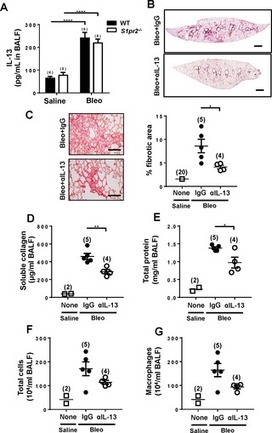
Idiopathic pulmonary fibrosis is a devastating disease with poor prognosis. The pathogenic role of the lysophospholipid mediator sphingosine-1-phosphate and its receptor S1PR2 in lung fibrosis is unknown.
|
|
Scooped by
Gilbert C FAURE
May 15, 2018 11:42 AM
|
Numerous attempts to produce antiviral vaccines by harnessing memory CD8 T cells have failed. A barrier to progress is that we do not know what makes an Ag a viable target of protective CD8 T cell memory. We found that in mice susceptible to lethal mousepox (the mouse homolog of human smallpox), a dendritic cell vaccine that induced memory CD8 T cells fully protected mice when the infecting virus produced Ag in large quantities and with rapid kinetics. Protection did not occur when the Ag was produced in low amounts, even with rapid kinetics, and protection was only partial when the Ag was produced in large quantities but with slow kinetics. Hence, the amount and timing of Ag expression appear to be key determinants of memory CD8 T cell antiviral protective immunity. These findings may have important implications for vaccine design.
|
|
Scooped by
Gilbert C FAURE
May 14, 2018 8:54 AM
|
Highlights- •
Pre-macrophages share a core program established by lineage-determining transcription factors. - •
Signal-dependent transcription factors adapt the core program. - •
Niche signals instruct pre-macrophages to perform tissue-specific functions. - •
One organ may contain multiple niches and different organs may contain similar niches.
|
|
Scooped by
Gilbert C FAURE
May 10, 2018 4:14 AM
|
Recent investigations reveal memory-like adaptive responses of the innate immune system
to sequential pathogen challenge. Of note, opposing effects that include both sensitization
(‘training’) and desensitization (‘tolerance’) have been reported.
|
|
Scooped by
Gilbert C FAURE
May 9, 2018 11:53 AM
|
Using high-resolution mass spectrometry and transcriptomics, Cuadrado et al. provide
a molecular characterization of regulatory and conventional CD4+ T cell subsets, yielding
markers to distinguish cells with different properties and insights into mechanisms
that prevent regulatory T cells from exhibiting undesirable functional activities
of the related but functionally antithetical conventional T cells.
|
|
Scooped by
Gilbert C FAURE
May 7, 2018 2:01 PM
|
Chair: Wayne M. Yokoyama, Washington Univ. Sch. of Med., AAI President Speakers: David H. Raulet, Univ. of California, Berkeley, NK cell activation and inactivation in the tumor microenvironment Katharine C. Hsu, Mem. Sloan Kettering Cancer Ctr., NK cells in the oncology clinic Gabrielle T. Belz, Walter and Eliza Hall Inst. of Med. Res., Australia, Teasing... Read More
|
|
Scooped by
Gilbert C FAURE
May 5, 2018 4:09 AM
|
|