Your new post is loading...

|
Scooped by
Gilbert C FAURE
February 25, 2019 11:47 AM
|
|
|
Scooped by
Gilbert C FAURE
February 19, 2019 9:35 AM
|
Objective: To present the genetic causes of patients with primary immune deficiencies (PIDs) in Kuwait between 2004 and 2017.Methods: The data was obtained from the Kuwait National Primary Immunodeficiency Disorders Registry. Genomic DNA from patients with clinical and immunological features of PID was sequenced using Sanger sequencing (SS), next generation sequencing (NGS) of targeted genes, whole exome sequencing (WES), and/or whole genome sequencing (WGS). Functional assays were utilized to assess the biologic effect of identified variants. Fluorescence in situ hybridization (FISH) for 22q11.2 deletion and genomic hybridizations arrays were performed when thymic defects were suspected.Results: A total of 264 patients were registered during the study period with predominance of patients affected with immunodeficiencies affecting cellular and humoral immunity (35.2%), followed by combined immunodeficiencies with associated syndromic features (24%). Parental consanguinity and family history suggestive of PID were reported in 213 (81%) and 145 patients (55%), respectively. 206 patients underwent genetic testing with a diagnostic yield of 70%. Mutations were identified in 46 different genes and more than 90% of the reported genetic defects were transmitted by AR pattern. The majority of the mutations were missense mutations (57%) followed by frame shift mutations. Five novel disease-causing genes were discovered.Conclusions: Genetic testing should be an integral part i
|
|
Scooped by
Gilbert C FAURE
February 18, 2019 2:13 PM
|
Signals relayed through the TCR/CD3 complex are critical to determining whether immature T cells in the thymus undergo positive selection, enabling their survival and subsequent export to the periphery, or negative selection leading to death. Neier et al . developed a proteomics-based approach to profile proteins bound to the TCR/CD3 complex that enabled a comparison of differences between signaling associated with thymocyte survival versus death. They observed that the full range of cellular outcomes after thymic selection can be attributed to quantitative differences in a shared core set of biochemical signals. These findings indicate that differences in the affinity of TCRs for peptide-MHC complexes are transduced into downstream signals that are quantitatively variable but qualitatively similar.
During αβ T cell development, T cell antigen receptor (TCR) engagement transduces biochemical signals through a protein-protein interaction (PPI) network that dictates dichotomous cell fate decisions. It remains unclear how signal specificity is communicated, instructing either positive selection to advance cell differentiation or death by negative selection. Early signal discrimination might occur by PPI signatures differing qualitatively (customized, unique PPI combinations for each signal), quantitatively (graded amounts of a single PPI series), or kinetically (speed of PPI pathway progression). Using a novel PPI network analysis, we found that early TCR-proximal signals distinguishing positive from negative selection appeared to be primarily quantitative in nature. Furthermore, the signal intensity of this PPI network was used to find an antigen dose that caused a classic negative selection ligand to induce positive selection of conventional αβ T cells, suggesting that the quantity of TCR triggering was sufficient to program selection outcome. Because previous work had suggested that positive selection might involve a qualitatively unique signal through CD3δ, we reexamined the block in positive selection observed in CD3δ mice. We found that CD3δ thymocytes were inhibited but capable of signaling positive selection, generating low numbers of MHC-dependent αβ T cells that expressed diverse TCR repertoires and participated in immune responses against infection. We conclude that the major role for CD3δ in positive selection is to quantitatively boost the signal for maximal generation of αβ T cells. Together, these data indicate that a quantitative network signaling mechanism through the early proximal TCR signalosome determines thymic selection outcome.
|
|
Scooped by
Gilbert C FAURE
February 18, 2019 8:11 AM
|
Double-strand breaks in DNA generated during the normal assembly and diversification of lymphocyte antigen receptor genes or by genotoxic agents during infection activate DNA damage responses. Besides repairing damaged DNA, these responses trigger important signalling events that regulate immune cell development and function.
|
|
Scooped by
Gilbert C FAURE
February 17, 2019 5:28 AM
|
A new MDC study may resolve a decades-old debate in immunology. A team led by Professor Klaus Rajewsky reports in Science that distinct progenitor cells are not required for the development of B1 cells.

|
Suggested by
LIGHTING
February 15, 2019 12:51 PM
|
Cell biologists from the University of Konstanz have shed light on a recent evolutionary process in the human immune system. Facilitated by public genome data, this work provides evidence that genetic alterations in the receptor ...

|
Suggested by
Société Francaise d'Immunologie
February 15, 2019 12:50 PM
|
SIRPa is most commonly known as a phagocytosis inhibitory receptor expressed by myeloid cells. Here the authors show SIRPa is expressed on a subset of CD8+ T cells with higher proliferative and effector activity during the chronic phase of the immune response to viral infection.
|
|
Scooped by
Gilbert C FAURE
February 13, 2019 4:49 AM
|
|
|
Scooped by
Gilbert C FAURE
February 12, 2019 1:48 PM
|
![Figure][1]
Efficient T cell responses require the firm adhesion of T cells to their targets, e.g., virus-infected cells, which depends on T cell receptor (TCR)–mediated activation of β2-integrins. Gαs-coupled receptor agonists are known to have immunosuppressive effects, but their impact on TCR-mediated integrin activation is unknown. Using multimers of peptide major histocompatibility complex molecules (pMHC) and of ICAM-1—the ligand of β2-integrins—we show that the Gαs-coupled receptor agonists isoproterenol, epinephrine, norepinephrine, prostaglandin (PG) E2, PGD2, and adenosine strongly inhibit integrin activation on human CMV- and EBV-specific CD8+ T cells in a dose-dependent manner. In contrast, sleep, a natural condition of low levels of Gαs-coupled receptor agonists, up-regulates integrin activation compared with nocturnal wakefulness, a mechanism possibly underlying some of the immune-supportive effects of sleep. The findings are also relevant for several pathologies associated with increased levels of Gαs-coupled receptor agonists (e.g., tumor growth, malaria, hypoxia, stress, and sleep disturbances).
[1]: pending:yes
|
|
Scooped by
Gilbert C FAURE
February 12, 2019 1:24 PM
|
Unlike evaluating antibody responses to infections, studying T cell responses has always been more complicated. A significant hurdle here continues to be the development of reagents to identify and characterize pathogen-specific T cells. Here, Cheng et al. have generated a comprehensive panel of peptide class I major histocompatibility complex tetramers to study CD8+ T cells that recognize hepatitis B virus (HBV). Using HBV-specific tetramers in conjunction with mass cytometry, they have documented functional states of HBV-specific CD8+ T cells in individuals with chronic HBV infection. The tetramer panels generated here to study HBV-specific T cells should be of broad utility to the HBV research community.
Associations between chronic antigen stimulation, T cell dysfunction, and the expression of various inhibitory receptors are well characterized in several mouse and human systems. During chronic hepatitis B virus (HBV) infection (CHB), T cell responses are blunted with low frequencies of virus-specific T cells observed, making these parameters difficult to study. Here, using mass cytometry and a highly multiplexed combinatorial peptide–major histocompatibility complex (pMHC) tetramer strategy that allows for the detection of rare antigen-specific T cells, we simultaneously probed 484 unique HLA-A*1101–restricted epitopes spanning the entire HBV genome on T cells from patients at various stages of CHB. Numerous HBV-specific T cell populations were detected, validated, and profiled. T cells specific for two epitopes (HBVpol387 and HBVcore169) displayed differing and complex heterogeneities that were associated with the disease progression, and the expression of inhibitory receptors on these cells was not linearly related with their extent of T cell dysfunction. For HBVcore169-specific CD8+ T cells, we found cellular markers associated with long-term memory, polyfunctionality, and the presence of several previously unidentified public TCR clones that correlated with viral control. Using high-dimensional trajectory analysis of these cellular phenotypes, a pseudo-time metric was constructed that fit with the status of viral infection in corresponding patients. This was validated in a longitudinal cohort of patients undergoing antiviral therapy. Our study uncovers complex relationships of inhibitory receptors between the profiles of antigen-specific T cells and the status of CHB with implications for new strategies of therapeutic intervention.
|
|
Suggested by
Société Francaise d'Immunologie
February 12, 2019 2:50 AM
|
Involvement of autophagy in cellular functions of monocytes, macrophages and dendritic cells.
|
|
Suggested by
Société Francaise d'Immunologie
February 10, 2019 3:36 AM
|
|
|
Suggested by
Société Francaise d'Immunologie
February 7, 2019 2:08 PM
|
Evotec and IntelliCyt describe how primary-cell-based screening can generate multivariate activity profiles for potential immunotherapeutic agents.
|
|
|
Scooped by
Gilbert C FAURE
February 21, 2019 9:18 AM
|
Guanylate-binding proteins (GBPs) have recently emerged as central orchestrators of immunity to infection, inflammation, and neoplastic diseases. Within numerous host cell types, these IFN-induced GTPases assemble into large nanomachines that execute distinct host defense activities against a wide variety of microbial pathogens. In addition, GBPs customize inflammasome responses to bacterial infection and sepsis, where they act as critical rheostats to amplify innate immunity and regulate tissue damage. Similar functions are becoming evident for metabolic inflammatory syndromes and cancer, further underscoring the importance of GBPs within infectious as well as altered homeostatic settings. A better understanding of the basic biology of these IFN-induced GTPases could thus benefit clinical approaches to a wide spectrum of important human diseases.
|
|
Suggested by
Société Francaise d'Immunologie
February 19, 2019 4:00 AM
|
It is well accepted that antigen-induced B cell differentiation often results in the generation of exceptionally long-lived plasma cells. Much of the work supporting this viewpoint stems from studies focused on germinal center-derived plasma cells secreting ...
|
|
Scooped by
Gilbert C FAURE
February 18, 2019 8:29 AM
|
Chronic viral infections are widespread among humans, with ∼8–12 chronic viral infections per individual, and there is epidemiological proof that these impair heterologous immunity. We studied the impact of chronic LCMV infection on the phenotype and function of memory bystander CD8+ T cells. Active chronic LCMV infection had a profound effect on total numbers, phenotype, and function of memory bystander T cells in mice. The phenotypic changes included up-regulation of markers commonly associated with effector and exhausted cells and were induced by IL-6 in a STAT1-dependent manner in the context of chronic virus infection. Furthermore, bystander CD8 T cell functions were reduced with respect to their ability to produce inflammatory cytokines and to undergo secondary expansion upon cognate antigen challenge with major cell-extrinsic contributions responsible for the diminished memory potential of bystander CD8+ T cells. These findings open new perspectives for immunity and vaccination during chronic viral infections.
|
|
Suggested by
Société Francaise d'Immunologie
February 17, 2019 1:39 PM
|
An inflammatory environment threatens the stability of Foxp3+ Treg cells. Garg et al. show that by expressing the transcriptional regulator Blimp1, Treg cells resist the IL-6-driven loss of Foxp3 in inflamed tissues.
|
|
Suggested by
LIGHTING
February 15, 2019 12:52 PM
|
|
|
Suggested by
Société Francaise d'Immunologie
February 15, 2019 12:50 PM
|
Recent advances in systems immunology are beginning to elucidate the quantitative rules that govern cytokine-mediated cell-to-cell communication. This Review describes how combining theoretical analysis with experimental validation can lead to a better understanding of cytokine-mediated...
|
|
Scooped by
Gilbert C FAURE
February 13, 2019 2:42 PM
|
J Biol Chem. 2018 Jul 13;293(28):11033-11045. doi: 10.1074/jbc.RA118.002752. Epub 2018 May 16. Research Support, N.I.H., Extramural; Research Support, Non-U.S. Gov't
|
|
Scooped by
Gilbert C FAURE
February 12, 2019 1:49 PM
|
The Western diet (WD) is high in fats and sucrose and low in fiber and is the most prevalent diet in westernized countries. We find that in our model of sepsis, mice fed WD had increased sepsis severity and poorer outcomes. WD-fed mice had higher baseline inflammation, increased sepsis-associated immunoparalysis, and altered neutrophil populations in the blood. The WD-dependent increase in sepsis severity and mortality was independent of the diet-associated microbiome, suggesting that diet may be directly regulating innate immunity. We used our identified disease factors and found WD-fed mice occupy a unique path in sepsis disease progression. Our data provide insight into diet-dependent reprogramming of the immune response and will be important in treating and diagnosing a WD-fed population.
Sepsis is a deleterious immune response to infection that leads to organ failure and is the 11th most common cause of death worldwide. Despite plaguing humanity for thousands of years, the host factors that regulate this immunological response and subsequent sepsis severity and outcome are not fully understood. Here we describe how the Western diet (WD), a diet high in fat and sucrose and low in fiber, found rampant in industrialized countries, leads to worse disease and poorer outcomes in an LPS-driven sepsis model in WD-fed mice compared with mice fed standard fiber-rich chow (SC). We find that WD-fed mice have higher baseline inflammation (metaflammation) and signs of sepsis-associated immunoparalysis compared with SC-fed mice. WD mice also have an increased frequency of neutrophils, some with an “aged” phenotype, in the blood during sepsis compared with SC mice. Importantly, we found that the WD-dependent increase in sepsis severity and higher mortality is independent of the microbiome, suggesting that the diet may be directly regulating the innate immune system through an unknown mechanism. Strikingly, we could predict LPS-driven sepsis outcome by tracking specific WD-dependent disease factors (e.g., hypothermia and frequency of neutrophils in the blood) during disease progression and recovery. We conclude that the WD is reprogramming the basal immune status and acute response to LPS-driven sepsis and that this correlates with alternative disease paths that lead to more severe disease and poorer outcomes.
|
|
Scooped by
Gilbert C FAURE
February 12, 2019 1:40 PM
|
Harvard researchers found that interaction between immune factors triggers cancer-promoting chronic inflammation, setting the stage for the development of skin cancer associated with chronic dermatitis and colorectal cancer in patients with colitis.
|
|
Scooped by
Gilbert C FAURE
February 12, 2019 4:14 AM
|
Facteurs pro et anti-geroniques
|
|
Scooped by
Gilbert C FAURE
February 10, 2019 12:44 PM
|
Innate T cells (ITC) contain many subsets and are poised to promptly respond to antigens and pathogens, but how this poised state is maintained is still unclear. Here the authors perform single-cell RNA-seq to align the various ITC subsets along an ‘innateness gradient’ that is associated with...
|
|
Suggested by
Société Francaise d'Immunologie
February 8, 2019 3:15 PM
|
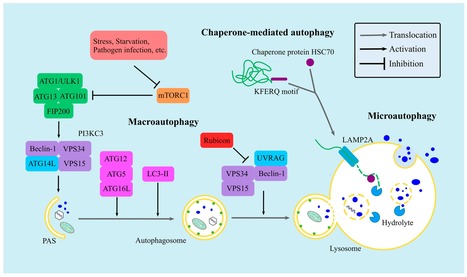
Autophagy exhibits dual effects during viral infections, promoting the clearance of viral components and activating the immune system to produce antiviral cytokines. However, some viruses impair immune defenses by collaborating with autophagy.
|


 Scoop.it!