


Chagas disease is a severe illness, which can lead to death if the patients are not promptly treated. The disease is caused by the protozoan parasite Trypanosoma cruzi, which is mostly transmitted by a triatomine insect vector.

 Your new post is loading...
 Scoop.it! Chagas disease is a severe illness, which can lead to death if the patients are not promptly treated. The disease is caused by the protozoan parasite Trypanosoma cruzi, which is mostly transmitted by a triatomine insect vector. 
No comment yet.
Sign up to comment
Scoop.it!
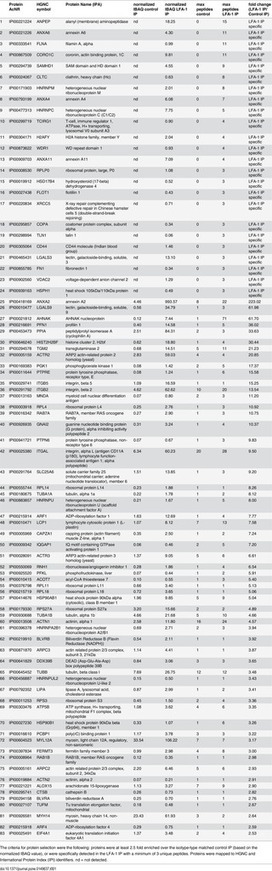
The ?2-integrin lymphocyte function-associated antigen 1 (LFA-1) plays an important role in the migration, adhesion and intercellular communication of dendritic cells (DCs).
Gilbert C FAURE's insight:
The β2-integrin lymphocyte function-associated antigen 1 (LFA-1) plays an important role in the migration, adhesion and intercellular communication of dendritic cells (DCs). During the differentiation of human DCs from monocyte precursors, LFA-1 ligand binding capacity is completely lost, even though its expression levels were remained constant. Yet LFA-1-mediated adhesive capacity on DCs can be regained by exposing DCs to the chemokine CCL21, suggesting a high degree of regulation of LFA-1 activity during the course of DC differentiation. The molecular mechanisms underlying this regulation of LFA-1 function in DCs, however, remain elusive. To get more insight we attempted to identify specific LFA-1 binding partners that may play a role in regulating LFA-1 activity in DCs. We used highly sensitive label free quantitative mass-spectrometry to identify proteins co-immunoprecipitated (co-IP) with LFA-1 from ex vivo generated DCs. Among the potential binding partners we identified not only established components of integrin signalling pathways and cytoskeletal proteins, but also several novel LFA-1 binding partners including CD13, galectin-3, thrombospondin-1 and CD44. Further comparison to the LFA-1 interaction partners in monocytes indicated that DC differentiation was accompanied by an overall increase in LFA-1 associated proteins, in particular cytoskeletal, signalling and plasma membrane (PM) proteins. The here presented LFA-1 interactome composed of 78 proteins thus represents a valuable resource of potential regulators of LFA-1 function during the DC lifecycle.
Scoop.it!
The anaphylatoxin receptor C5aR is one of the two major G-protein coupled receptors (GPCRs) identified in the human genome that interact with the complement component fragment 5a (hC5a), the most potent proinflammatory polypeptide of the...
Scoop.it!

Have you ever wondered how our immune system generates the dizzying array of antibodies needed to recognize foreign invaders? They do so in part by using an
Scoop.it!

Regulatory T cells (Treg) are essential for T cell homeostasis and maintenance of peripheral tolerance. They prevent activation of auto-reactive T effector cells (Teff) in the context of autoimmunity and allergy.
Scoop.it!
Michel DuPage& Jeffrey A. BluestoneAffiliationsCorresponding authorNature Reviews Immunology (2016) doi:10.1038/nri.2015.18Published online 15 February 2016
Gilbert C FAURE's insight:
CD4+ T cells differentiate and acquire distinct functions to combat specific pathogens but can also adapt their functions in response to changing circumstances. Although this phenotypic plasticity can be potentially deleterious, driving immune pathology, it also provides important benefits that have led to its evolutionary preservation. Here, we review CD4+ T cell plasticity by examining the molecular mechanisms that regulate it — from the extracellular cues that initiate and drive cells towards varying phenotypes, to the cytosolic signalling cascades that decipher these cues and transmit them into the cell and to the nucleus, where these signals imprint specific gene expression programmes. By understanding how this functional flexibility is achieved, we may open doors to new therapeutic approaches that harness this property of T cells.
Scoop.it!

Treg derived IL-35 limits anti-tumor T cell immunity
Gilbert C FAURE's insight:
In summary, this study indicate the following scenario: certain tumors recruit Tregs. These Tregs secrete IL-35 and inhibit recruitment of effector T cells and/or contributes to their exhaustion. Blocking of IL-35 could provide immunotherapeutic benefit (interestingly, it appears that IL-35 does not synergize with anti-PD1 treatment in tumor models discussed in this paper).
Scoop.it!

Conclusions
Scoop.it!

The International Day of Immunology (29th April) is an exciting, global annual event that, in Victoria, showcases this state’s contribution […]
Scoop.it!

Lastest from current issue of @ImmunityCP #STEM #Immunology Interleukin-35 Limits Anti-Tumor Immunity https://t.co/FMgKmOB3Dx
Scoop.it!

Germinal centers (GC) are the main sites where antigen-activated B-cell clones expand and undergo immunoglobulin gene hypermutation and selection.
Scoop.it!

The systemic inflammatory response is a challenge in the management of paediatric patients undergoing cardiac surgery. Although multi-factorial, a contribution by the lectin pathway of complement activation has been postulated.
Gilbert C FAURE's insight:
Summary
The systemic inflammatory response is a challenge in the management of paediatric patients undergoing cardiac surgery. Although multi-factorial, a contribution by the lectin pathway of complement activation has been postulated. We therefore investigated the changes in serum levels of mannose binding lectin (MBL) and activities of MBL–MBL-associated serine protease (MASP)-1 and MBL–MASP-2 complexes immediately before and during surgery, throughout the first postoperative day and at discharge from the hospital. These changes were analysed in relation to postoperative complications. Blood samples were obtained from 185 children with congenital heart disease undergoing surgical correction with the use of cardiopulmonary bypass: preoperatively (MBL-1), 15 min after initiation of cardiopulmonary bypass (CPB) (MBL-E), 30 min (MBL-2), 4 h (MBL-3), 12 h (MBL-4) and 24 h (MBL-5) post-CPB and at discharge from hospital (MBL-K). Alterations in serum MBL levels were calculated as a ratio of its serum level at subsequent time-points (MBL-2, -3, -4, -5) to the preoperative (MBL-1) value. Decreases in MBL and MBL–MASP complexes were observed in all samples, correlating with a decrease in C4 and increase in C4a, confirming activation of the lectin pathway. Changes in MBL levels between children with an uncomplicated postoperative course and those suffering from infection or low cardiac output syndrome did not differ significantly, but significant differences were observed between the SIRS and non-SIRS groups. Paediatric cardiac surgery with the use of cardiopulmonary bypass activates the complement system via the lectin pathway and the latter contributes to the development of the post-bypass systemic inflammatory response.
Scoop.it!
Gilbert C FAURE's insight:
Evidence has recently emerged that butyrophilins, which are members of the extended B7 family of co-stimulatory molecules, have diverse functions in the immune system. We found that the human and mouse genes encoding butyrophilin-2A2 (BTN2A2) are regulated by the class II trans-activator and regulatory factor X, two transcription factors dedicated to major histocompatibility complex class II expression, suggesting a role in T cell immunity. To address this, we generated Btn2a2-deficient mice. Btn2a2−/− mice exhibited enhanced effector CD4+ and CD8+ T cell responses, impaired CD4+ regulatory T cell induction, potentiated antitumor responses, and exacerbated experimental autoimmune encephalomyelitis. Altered immune responses were attributed to Btn2a2deficiency in antigen-presenting cells rather than T cells or nonhematopoietic cells. These results provide the first genetic evidence that BTN2A2 is a co-inhibitory molecule that modulates T cell–mediated immunity. butyrophilin is back
|
Scoop.it!

Innate immunity in vertebrates: an overview Riera Romo Immunology Wi....
Scoop.it!
To combat the rapid increase of antibiotic resistant bacteria scientists have turned to antimicrobial peptides. Antimicrobial peptides (AMPs) are small proteins within the innate immune system with the ability to kill bacteria, fungi and viruses.
Scoop.it!
Gilbert C FAURE's insight:
content sharing initiative Full text for how lonG
Scoop.it!

The IgH 3’ regulatory region contains an evolutionarily conserved palindromic sequence flanking important enhancer elements. Here the authors show that the palindrome is required for generating antibody diversity.
Scoop.it!

Sci. Signal. Vol 9, Issue 415 16 February 2016
Relieving NK cell suppression The immunosuppressive cytokine transforming growth factor–β (TGF-β) has beneficial effects when it resolves inflammation and prevents autoimmunity, but not when it inhibits antitumor immune responses. Viel et al. found that TGF-β signaling in mouse and human natural killer (NK) cells, cytotoxic cells that target tumor cells, inhibited the activation of the kinase mTOR, a central regulator of cellular metabolism and cytotoxic function. NK cells deficient in a TGF-β receptor subunit showed enhanced antitumor activity in mouse models of metastasis, suggesting that enhancing metabolism in NK cells may provide a therapeutic strategy to kill cancer cells. Via Krishan Maggon

Krishan Maggon 's curator insight,
February 17, 2016 5:47 AM
Sci. Signal. 16 Feb 2016:
Scoop.it!
T lymphocyte activation is a pivotal step of the adaptive immune response.
Gilbert C FAURE's insight:
T lymphocyte activation is a pivotal step of the adaptive immune response. It requires the recognition by T-cell receptors (TCR) of peptides presented in the context of major histocompatibility complex molecules (pMHC) present at the surface of antigen-presenting cells (APCs). T lymphocyte activation also involves engagement of costimulatory receptors and adhesion molecules recognizing ligands on the APC. Integration of these different signals requires the formation of a specialized dynamic structure: the immune synapse. While the biochemical and molecular aspects of this cell–cell communication have been extensively studied, its mechanical features have only recently been addressed. Yet, the immune synapse is also the place of exchange of mechanical signals. Receptors engaged on the T lymphocyte surface are submitted to many tensile and traction forces. These forces are generated by various phenomena: membrane undulation/protrusion/retraction, cell mobility or spreading, and dynamic remodeling of the actomyosin cytoskeleton inside the T lymphocyte. Moreover, the TCR can both induce force development, following triggering, and sense and convert forces into biochemical signals, as a bona fide mechanotransducer. Other costimulatory molecules, such as LFA-1, engaged during immune synapse formation, also display these features. Moreover, T lymphocytes themselves are mechanosensitive, since substrate stiffness can modulate their response.
Scoop.it!

Facing problems of inconsistent, time-consuming, and costly antibody production, some researchers are turning to alternatives to target specific proteins of interest, in the lab and in the clinic.
Scoop.it!

Obesity, which affects 600 million adults worldwide, is a major risk factor for type 2 diabetes (T2D) and insulin resistance.
Scoop.it!

Toll-like receptors (TLRs) are innate immune receptors that sense a variety of pathogen-associated molecular patterns (PAMPs) by interacting with them and subsequently initiating signal transduction cascades that elicit immune responses.
Gilbert C FAURE's insight:
innate immunity
Scoop.it!
Nature Reviews Microbiology (2016) doi:10.1038/nrmicro.2015.21Published online 08 February 2016
Gilbert C FAURE's insight:
The surveillance and elimination of fungal pathogens rely heavily on the sentinel behaviour of phagocytic cells of the innate immune system, especially macrophages and neutrophils. The efficiency by which these cells recognize, uptake and kill fungal pathogens depends on the size, shape and composition of the fungal cells and the success or failure of various fungal mechanisms of immune evasion. In this Review, we describe how fungi, particularly Candida albicans, interact with phagocytic cells and discuss the many factors that contribute to fungal immune evasion and prevent host elimination of these pathogenic microorganisms.
a nice figure of sizes of fungi and cells
Scoop.it!

Myeloid-derived suppressor cells (MDSC) are one of the major components of the tumor microenvironment. The main feature of these cells is their potent immune suppressive activity. MDSC are generated in the bone marrow and, in tumor-bearing hosts, migrate to peripheral lymphoid organs and the tumor to contribute to the formation of the tumor microenvironment. Recent findings have revealed differences in the function and fate of MDSC in the tumor and peripheral lymphoid organs. We review these findings here and, in this context, we discuss the current understanding as to the nature of these differences, the underlying mechanisms, and their potential impact on the regulation of tumor progression. Via Krishan Maggon
Gilbert C FAURE's insight:
Trends
In tumor-bearing hosts, MDSC are generated in the bone marrow and migrate to peripheral lymphoid organs and tumor tissues. This process is controlled by a set of defined chemokines, many of which are upregulated in cancer. In peripheral lymphoid organs, M-MDSC differentiate to macrophages and dendritic cells. By contrast, in the tumor site, M-MDSC have an altered differentiation pattern, rapidly differentiating to tumor-associated macrophages. The nature of tumor MDSC suppression is different from that of MDSC in peripheral lymphoid organs. As a result, both PMN-MDSC and M-MDSC in the tumor site have more potent suppressive activity than their counterparts in peripheral lymphoid organs. In contrast to MDSC in peripheral lymphoid organs, tumor MDSC suppress T cells in an antigen nonspecific manner. Hypoxia appears to have a critical role in the regulation of MDSC differentiation and function in tumors.
Krishan Maggon 's curator insight,
February 8, 2016 4:19 AM
Review The Nature of Myeloid-Derived Suppressor Cells in the Tumor Microenvironment Vinit Kumar2, Sima Patel2, Evgenii Tcyganov2 , Dmitry I. Gabrilovich 2These authors contributed equally to the article Publication stage: In Press Corrected Proof |






Lysophosphatidylcholine (LPC) is the major phospholipid component of oxidized low-density lipoproteins associated with atherosclerosis-related tissue damage. Insect-derived LPC powerfully attracts inflammatory cells to the site of the insect bite, enhances parasite invasion, and inhibits the production of nitric oxide by T. cruzi-stimulated macrophages.