The internationally well-known Gamification Framework Octalysis converts any campaign into actionable steps by breaking down motivation into 8 Core Drives.
This post is a high-level introduction to Octalysis, the Gamification Framework I created after more than 10 years of Gamification research and study. Within a year of publication, Octalysis was organically translated into 9 languages and became required literature in Gamfication instruction worldwide.
Ersilia, outil pédagogique collaboratif et transdisciplinaire destiné aux enseignants du second degré, aux collégiens et lycéens ainsi qu'aux artistes travaillant en milieu scolaire, dans un but de formation aux médias et littératies numériques.
"There is widespread interest among teachers in the use of neuroscientific research findings in educational practice. However, there are also misconceptions and myths that are supposedly based on sound neuroscience that are prevalent in our schools."
Après avoir décortiqué le design thinking en tant que processus, cette vidéo a pour objectif de présenter les techniques d'animation permettant de pleinement déployer la créativité d'une équipe.
Le Medef en partenariat avec Pôle emploi lance sa déclinaison locale de "Beau Travail". Lancé en 2014 au niveau national, il permet de mettre en lumière les métiers qui recrutent et qui peinent à trouver des candidats.
Fad-fle.net s’adresse aux appenants de niveau B1/B2 (début d’autonomie en français), de tous âges et professions, qui évoluent dans un environnement non francophone et souhaitent améliorer leur compétence orale. L'ensemble des ressources en ligne sont libres et gratuites.
Knowledge is everywhere. In a mobile phone, a fitness tracker and our brains. Not a science fiction film but the learning theory of connectivism. Recently over a coffee
Teach your students about the "9 Key Ps" of digital citizenship as you help them acquire both proactive and experiential knowledge of the online world.
DitoGear keeps innovating and looking for ways to improve your filmmaking – tho I’ll admit this is likely to be a niche product and maybe not for all of our reader – but when you make time to watch the video, I’m thinking it will start your mind clicking and you might imagine some... http://blog.planet5d.com/2017/03/introducing-ditogear-animator-cube/
Via planetMitch, Brad Tollefson
You’re a pretty rational person, or so you think: You’re often good at thinking logically and keeping your feelings out of it, right?
Wrong. (Sorry!) It wasn’t long ago that people believed emotions and logic were two completely separate things, operating independently of one another. But breakthroughs in brain science have made it clear that that’s far from true. It turns out that our brains are incapable of making fully unemotional decisions. That’s not necessarily a bad thing, though. In fact, you can use that cognitive reality in your favor to build relationships, network, and gain influence.
I agree that at times, we need to angle our argument that targets one’s emotional capacity so as to strengthen the message we are trying to convey and be more persuasive. Although logic is an important factor in allowing people to understand what you are trying to say, simply informing them and convincing them are two separate matters. In essence, using positive emotions to encourage people to believe in you is the right way to go. Once they feel that they have established the connection with you, they will naturally be more inclined to believe whatever it is you are trying to say.
Earlier this year I featured 30hands Storyteller a video creation tool students can use inside and outside of the classroom. Educators across the country use 30hands Storyteller as both an instructional tool to share information with students and as a creation tool to empower students. As viewers of videos students can watch a tutorial or explanation to dive deeper into content. Students can move beyond a passive observer to active creators as they start to document their own learning by making videos.
The Power of Video in Learning As a viewer, video can support students by:
Introducing a Topic: Video lessons can be a great way to introduce a topic in the classroom. It helps students focus on something new, kickstart exploration into the new topic, and inspire discussion. Demonstrating a Concept: To illustrate a concept or experiment that can’t fit into class time, a video lesson can be very effective. For example, you could illustrate how photosynthesis works using photos and drawings and students can review after school. Changing Up the Lesson Dynamic: In addition to modelling science concepts, video lessons can be used across subject areas. You might be halfway through a play or a novel in class and create a video that reviews events in the story, revisits character traits or explains the theme of the book.
As a creator, video can support students by:
Giving them time to make: The process of creating a video to explain something engages the student creator in the process, so they will experience the material in different ways. Creating your own digital story: Getting creative and hands on with your learning helps engagement and retention. By creating digital stories students can both visualize and vocalize their learning. This not only personalizes the experience, it also means that students have gone through the process of planning, developing and editing their video themselves. 30hands makes it easy to storyboard the content and make edits when they are reviewing and improving it. If you are creating videos for students to view, or supporting them as they make their own, it’s important to remember to make your videos concise and to the point. The search tool in 30hands is powered by Pixabay which are all public domain images.
Learn more about 30hands by visiting their website!
I received compensation in exchange for sharing this product. Although this post is sponsored, all opinions are my own :) Learn more
Le polissage terminé à peine deux heures avant l’inauguration, les escape rooms ont accueilli, ce 22 février, leurs premiers joueurs après les mots de présentation du projet et les remerciements de l’équipe SAPIENS et d’Amodsen Chotia pour le CRI. Quatre groupes de cinq participants, tirés au sort parmi les invités, se sont succédé pour rentrer…
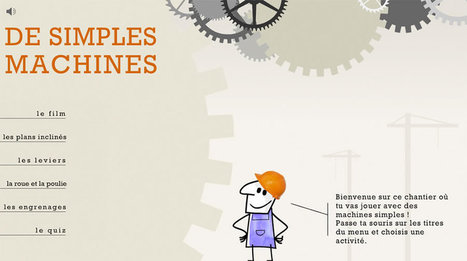
Produit par la Cité des sciences, ce site en Flash qui a pour univers un chantier burlesque, propose des jeux éducatifs en physique pour les enfants de 8 à 12 ans, sur le thème des machines simples : plans inclinés, leviers, roue, poulies, engrenages. Pour l'éveil scientifique des petits et de leurs parents !
To get content containing either thought or leadership enter:
To get content containing both thought and leadership enter:
To get content containing the expression thought leadership enter:
You can enter several keywords and you can refine them whenever you want. Our suggestion engine uses more signals but entering a few keywords here will rapidly give you great content to curate.


 Your new post is loading...