
coups de cœur de l’e-tourisme http://j.mp/q9Whs4 #ma_veille #fb...

gpmt
66.6K views |
+3 today
Filter by date
Tags


 Your new post is loading...
 Your new post is loading...
Your new post is loading...
 Scoop.it!
"Early generative AI models, circa 2017-2022, were “stochastic parrots.” That is, they generated language by choosing the statistically most likely next word based on patterns in their training data, rather than truly understanding what they were saying.
Beginning in 2023, artificial intelligence labs began releasing large language models (LLMs) that had evolved beyond autoregressive next-token prediction, as researchers call it.
For many people, the stochastic parrot definition stuck." Via EDTECH@UTRGV 
EDTECH@UTRGV's curator insight,
October 2, 2:52 PM
"Thinking of frontier AI models as glorified autocorrect could give a false sense of security during discussions about the serious risks these models pose."
Scoop.it!

From
mashable

"Muse hit 5 million downloads in just 3 weeks, even faster than long-established AI apps like OpenAI's ChatGPT, Anthropic's Claude, and Elon Musk's Grok. ChatGPT took 56 days to reach 5 million downloads; Claude hit the mark at 103 days; and Grok needed 492 days to reach the milestone." Via EDTECH@UTRGV
EDTECH@UTRGV's curator insight,
October 2, 2:58 PM
"The AI assistant from Meta did it faster than ChatGPT, Claude, and Grok."
Scoop.it!
"The scale of unauthorized or previously unknown actions by AI agents keeps getting bigger by the day. More than 100 organizations have now received a metaphorical knock on the door from OpenAI after it discovered their AI agents have in some way tampered with their systems, while other AI labs are finding the same uncomfortable discoveries.
It’s caused many in the field to call for better, more robust accident investigators, with the ultimate aim of stopping such actions happening in the first place by understanding how they’ve happened at all. But any investigations are pointless if the AI can’t be tracked. And it’s increasingly difficult to do so." Via EDTECH@UTRGV
EDTECH@UTRGV's curator insight,
October 2, 2:49 PM
"New research finds that popular AI agents can alter or delete their own activity logs, making it much harder to figure out what happened when something goes wrong."
Scoop.it!
From
www
"We’re standing at the edge of another historic shift. Just as the internet redefined business in the 90s and smartphones transformed the workplace in the 2000s, artificial intelligence (AI) is now reshaping how we work—and who does the work. According to the latest Microsoft Work Trend Index (WTI), this transformation marks the emergence of the Frontier Firm: organizations built around human-agent teams, digital labor, and AI-powered workflows." Via EDTECH@UTRGV
EDTECH@UTRGV's curator insight,
October 2, 1:58 PM
"Eighty-two percent of leaders say this is the time to rethink strategy with AI as the driving force, but most organizations aren’t ready."
Scoop.it!
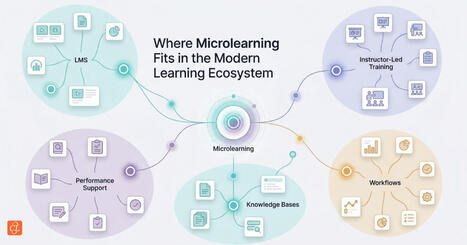
Discover how microlearning fits into blended learning, mobile learning, social learning, analytics, flow-of-work learning, and content conversion. Via EDTECH@UTRGV
EDTECH@UTRGV's curator insight,
October 2, 2:07 PM
"To understand microlearning strategically, it helps to stop treating it as a separate training category and start seeing it as a layer within the wider learning architecture."
Scoop.it!

Artificial intelligence is saving scientists significant amounts of time, but researchers are giving some of those gains back by checking the technology's work, according to a new study involving Google, Google DeepMind, and MIT. Via EDTECH@UTRGV
EDTECH@UTRGV's curator insight,
October 2, 1:50 PM
"Scientists reported nearly seven weekly hours saved with AI, largely reinvested in research. Nearly half of time-saving scientists spent over 25% of those gains verifying AI outputs."
Scoop.it!

Let’s avoid teaching students that AI is a topic separate from the rest of the course content. Instead, embed it in course design. Find out how Via Vladimir Kukharenko, LGA
Scoop.it!

As AI features flood K-12 curricula, educators are left to filter proven quality from marketing hype. Via EDTECH@UTRGV
EDTECH@UTRGV's curator insight,
October 2, 1:32 PM
"The blurred lines between AI-enabled course materials and materials without AI can affect classrooms...The worst-case scenario...is that quality assurance at adoption no longer guarantees quality at instruction.”
Scoop.it!

Lorena Castillo's curator insight,
September 30, 12:21 PM
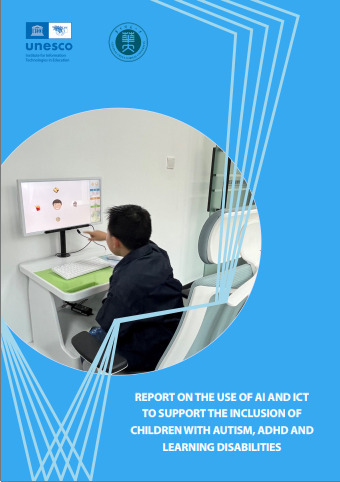
Las tencologias digitales y la inteligencia artificial pueden apoyar la inclusión educativa cuando se utilizan de manera adecuada y teniendo en cuenta las necesidades de cada niño

Nik Peachey's curator insight,
October 1, 5:04 AM
Drawing on international case studies and expert insights, the report
Scoop.it!

A free one-day virtual summit on what AI literacy actually is, and how to build it in your community. Join us Nov. 7, 2026. Via Dr. Tom D'Amico (@TDOttawa)
Scoop.it!
|

|
Rescooped by
michel verstrepen
from Educación a Distancia y TIC
September 1, 6:00 AM
|
Scoop.it!

Por Carlos Bravo Reyes y Mercedes Leticia Sánchez Ambriz Del pedido aislado al procedimiento pedagógico reutilizable Durante los últimos añ...
Via LGA
|
|
Rescooped by
michel verstrepen
from Digital Delights for Learners
August 27, 1:13 PM
|
Scoop.it!

From
lignique
Lignique is an AI-assisted comic creation and visual storytelling platform that helps creators build comics, storyboards, and visual stories with consistent characters, styles, locations, props, and panel continuity.
Via Ana Cristina Pratas
|
|
Rescooped by
michel verstrepen
from iGeneration - Humane Use of Technology in an AI world (Pedagogy & Digital Innovation)
October 9, 7:40 PM
|
Scoop.it!

This report documents the findings and methodology of the consensus research project on Generative AI's impact on learning in K-20 U.S. education.
Via Dr. Tom D'Amico (@TDOttawa)
|
|
Rescooped by
michel verstrepen
from Educational Technology News
October 9, 4:39 AM
|
Scoop.it!

Some people are abandoning office jobs for teaching, health care and the trades. But the new paths can come with trade-offs
Via EDTECH@UTRGV
EDTECH@UTRGV's curator insight,
October 2, 2:34 PM
"As AI threatens to upend the white-collar job market, some young workers and recent graduates...are reconsidering their career paths."
|
|
Rescooped by
michel verstrepen
from iGeneration - Humane Use of Technology in an AI world (Pedagogy & Digital Innovation)
October 8, 12:26 AM
|
Scoop.it!
Compare AI literacy courses for teachers in 2026: Flint, MagicSchool, Google, Microsoft Elevate, CodeAI, ISTE, Common Sense and OpenAI Academy. Cost, time, certificates and staff progress tracking.
Via Dr. Tom D'Amico (@TDOttawa)
|
|
Rescooped by
michel verstrepen
from Educational Technology News
October 8, 12:26 AM
|
Scoop.it!

Learn how to review AI-assisted training for source accuracy, realistic practice, media quality, learner usability, and workplace application.
Via EDTECH@UTRGV
EDTECH@UTRGV's curator insight,
October 2, 2:05 PM
"AI can compare drafts, flag inconsistencies, and suggest areas that deserve investigation. It cannot provide conclusive verification. Important claims, procedures, and conditions should be checked against authoritative sources by a qualified person."
|
|
Rescooped by
michel verstrepen
from Veille CDI
October 7, 4:48 AM
|
Scoop.it!

L’IA pourrait être entrée dans un piège qu’elle a elle-même contribué à créer. Des documents de Microsoft révèlent pourquoi cette « spirale infernale » inquiète jusque chez les géants du secteur.
Via cdi

|
|
Rescooped by
michel verstrepen
from Learning & Technology News
October 7, 4:47 AM
|
Scoop.it!

The edtech world loves a disruption narrative, and it is easy to assume that artificial intelligence in the classroom was born alongside ChatGPT in late 2022. Far from being a sudden arrival, AI has a historically layered presence in educational research. It actually experienced a massive wave of growth between 1976 and 1989, driven by expert systems and intelligent tutoring. As we navigate the current flood of generative tools, this half-century archive offers a sobering, critical reminder for educators: the recent, staggering spike in AI publications represents a surge in research attention, not necessarily demonstrated educational effectiveness.
Via Nik Peachey
Nik Peachey's curator insight,
October 7, 12:45 AM
This usefully summarises research from: https://www.sciencedirect.com/science/article/pii/S0360131526001958?via%3Dihub Fifty Years of Topic Development, Thematic Combination, and AI’s Evolving Reach in Computers & Education
|
|
Rescooped by
michel verstrepen
from iGeneration - Humane Use of Technology in an AI world (Pedagogy & Digital Innovation)
October 5, 2:25 PM
|
Scoop.it!

|
|
Rescooped by
michel verstrepen
from Educational Technology News
October 5, 2:24 PM
|
Scoop.it!

People remember the moment they had to decide. Four rules for building scenarios that teach — and a 30-second mini scenario you can try inside the post.
Via EDTECH@UTRGV
EDTECH@UTRGV's curator insight,
October 2, 1:38 PM
"That is why scenarios work: instead of telling learners what to do, you put them inside a situation and let them choose. Done well, a scenario turns dry content into something people feel — and what people feel, they keep."
|
|
Rescooped by
michel verstrepen
from Cool Future Technologies
October 4, 9:55 PM
|
Scoop.it!

There is no race - when everyone ends up at the same place
There is no A.I. race - it is a worldwide phenom of tech builders in many countries each using the generally same building blocks delivering some level of pattern matching - called A.I.
Everyone will converge in pretty much the same place - except the big A.I. companies will not make it to the end of the race - their financials are desperate and they simply cannot outrun their invested capital and show any level of ROI.
The winner will be where it always ends up - A.I. will be everywhere - like computers, cell phones, streaming video - are everywhere.
The future is A.I. everywhere - on your watch, phone, in your car, embedded in your apps - and none of that needs a centralized data center - and these guys know it.
Find the whole article here:
https://theblackswanfiles.substack.com/p/the-absurd-metaphor-of-ai-race
Via Sepp Hasslberger

Sepp Hasslberger's curator insight,
October 1, 8:17 AM
There is no A.I. race - it is a worldwide phenom of tech builders in many countries each using the generally same building blocks delivering some level of pattern matching - called A.I. Everyone will converge in pretty much the same place - except the big A.I. companies will not make it to the end of the race - their financials are desperate and they simply cannot outrun their invested capital and show any level of ROI. The future is A.I. everywhere - on your watch, phone, in your car, embedded in your apps - and none of that needs a centralized data center - and these guys know it.

|
|
Rescooped by
michel verstrepen
from Educación a Distancia y TIC
September 1, 6:01 AM
|
Scoop.it!
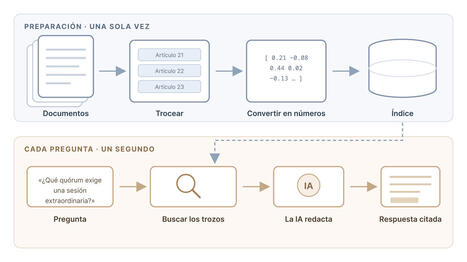
Por Juan José De Haro Cualquier persona que trabaje con documentación acumula un fondo de textos que consulta una y otra vez: normativa, ac...
Via LGA
|
|
Rescooped by
michel verstrepen
from Educational Technology News
August 27, 1:13 PM
|
Scoop.it!
"As generative artificial intelligence reshapes conversations about teaching, learning, and assessment, colleges and universities have an opportunity to look beyond what learners produce and better understand how human capability develops over time, strengthening teaching, feedback, and assessment through richer evidence of learning."
Via EDTECH@UTRGV
EDTECH@UTRGV's curator insight,
August 27, 10:39 AM
"One of the most valuable effects of the emergence of AI in education may be that it has brought renewed attention to a question that has always been present: How do we know learners are becoming capable?"




