


This simple routine can help make everyday tasks easier — and you can do it while sitting at your desk.
Via Peter Mellow


|
Rescooped by
Dennis Swender
from Physical and Mental Health - Exercise, Fitness and Activity
onto Global Health, Fitness and Medical Issues October 7, 2025 10:26 AM
|
 Scoop.it!
This simple routine can help make everyday tasks easier — and you can do it while sitting at your desk.


 Your new post is loading...
 Your new post is loading...
Your new post is loading...
Scoop.it!
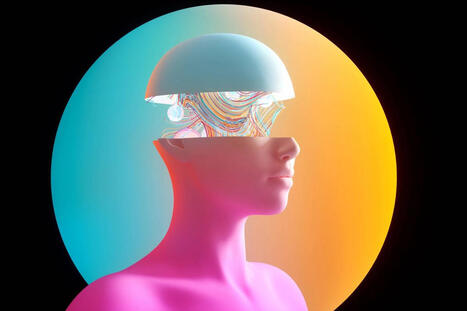
It’s far less gross than it sounds (we promise) and could have major implications for how we understand anatomy and disease Via Peter Mellow
Scoop.it!

The shingles vaccine, recommended for people 50 and older to fight the painful viral infection, might also decrease the chances of developing dementia, according to data presented at a medical conference Tuesday. The study, which looked at the health records of hundreds of thousands of people across the United States, shows that those who received the shingles vaccine were 20 percent less likely to be diagnosed with dementia in the five years following vaccination compared with a control group of people who received a vaccine for a different illness. Pharmaceutical giant GSK, which makes the Shingrix vaccine, funded and performed the research, and presented it at the Alzheimer’s Association International Conference in Philadelphia. Vaccine experts who were not involved in the research said that more definitive studies still need to be done, but they noted the study adds to growing recognition that infectious agents may play a role in the development of some types of dementia.
Study published in Nat. Medicine: Via Juan Lama, BOURGEOIS Léa

BOURGEOIS Léa's curator insight,
January 5, 7:35 AM
L’étude compare deux vaccins contre le zona afin de déterminer si le vaccin recombinant est associé à un risque plus faible de démence.
Dans l'étude, il est mentionnée que les personnes ayant reçu le vaccin recombinant avaient une probabilité plus faible de développer une démence dans les six ans suivant la vaccination, avec ≈17 % de temps de vie sans diagnostic de démence en plus que celles qui avaient reçu l’ancien vaccin. * Les points positifs de l'étude : - Bonne taille d’échantillon et données réelles : >100 000 personnes dans chaque groupe, avec un suivi sur plusieurs années. - Contrôle des variables : appariement par score de propension et analyses de sensibilité multiples. - Comparaisons avec d’autres vaccins : pour montrer que l’effet n’est pas général à toute vaccination. - Robustesse des résultats : analyses secondaires cohérentes (fenêtres temporelles, méthode d’appariement...). * Ce qu’on pourrait améliorer dans l'étude : - Pas de preuve de causalité stricte → Amélioration : réaliser un essai randomisé contrôlé pour confirmer le résultat. - Diagnostic de démence basé sur les codes administratifs des dossiers de santé, avec risque de retard ou d’erreur. → Amélioration : utiliser des évaluations cliniques standardisées ou vérifier les diagnostics avec des experts. - Peu d’informations sur le mode de vie, le statut socio-économique .... → Amélioration : inclure des données socio-comportementales pour mieux contrôler les confusions. - Pas d’analyse des effets de doses multiples ou de la durée d’immunité. → Amélioration : examiner l’impact de plusieurs doses et de la réponse immunitaire durable sur le risque de démence.
Scoop.it!

Advancements in the nursing profession by 2025. Stay ahead with our guide to advancements and learn how Davis & Elkins College prepares you for the future. Via Dr. Russ Conrath
Scoop.it!
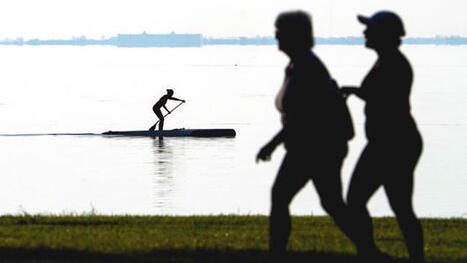
From a brisk 15-minute walk, to getting regular sleep – doing these things in your 30s could help you stay fit well into your 70s. Via Peter Mellow
Scoop.it!

Learn how to manage your prerace anxiety with the same tips pro Emily Venters is using to cope ahead of her marathon debut. Via Peter Mellow
Scoop.it!

Overall, there’s not much evidence to suggest quadrobics is better for you than mainstream forms of exercise. While crawling and leaping can build stability and flexibility, scientific studies haven’t yet tested its long-term benefits or risks. At best, it is a supplement to established training.
If you want to try quadrobics, your muscles and joints will need time to adapt to the load being placed upon them. This is particularly important for your hands, wrists, elbow, and shoulders, which might not be used to being used in this way. This means you should start very slow, and monitor how you feel after each session. Via Peter Mellow
Scoop.it!

"And how you can use psychology to help you break out of the habits you want to lose ..." Via Leona Ungerer
Scoop.it!
These are just a few of the ways Microsoft is building AI to empower people and solve real-world problems – with humans at the center.
Scoop.it!

Background: Large language models (LLMs) are increasingly integrated into medical education, with transformative potential for learning and assessment. However, their performance across diverse medical exams globally has remained underexplored. Via Gilbert C FAURE, juandoming
Scoop.it!

Ex-soldier Ashley Mitchard is running 26 marathons in 26 weeks to raise awareness about mental health. Via Peter Mellow
Scoop.it!

You shouldn’t have to choose between losing weight and losing hair but if you’ve embraced intermittent fasting, that might be precisely the situation you’re in. That, at least, is the conclusion of a paper published this week in the journal Cell. And while the scientists researching this did plenty of work with mice to explore this phenomenon Via Online Marketing
Scoop.it!

The epidemic of processed foods, particularly ultra-processed foods, poses a significant threat to American health and well-being.
Scoop.it!
Join us for a conversation with Fazlur Rahman, a hematology-oncology physician and author of Our Connected Lives. In this episode, we explore how Fazlur's journey from physician to patient transformed his understanding of empathy.
He reflects on the importance of personal connection in medicine, the impact of a lack of empathy on both doctors and patients, and the need for medical education to include the humanities to foster compassionate care. This episode dives deep into the role empathy plays in improving patient outcomes and doctor-patient relationships. Via Edwin Rutsch
|
Scoop.it!
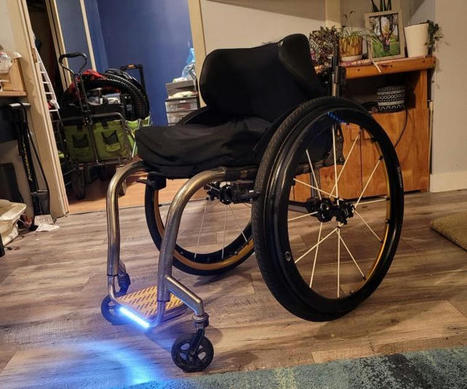
Introducing the Harmanie light! This project was inspired by my best friend Harmanie, thus the name. We were walking down a sidewalk in Vancouver at night and I saw that in the spaces between street lights the sidewalk was occasionally very dark and made it hard for us to see obstacles. It occurred to me that she could really benefit from a flashlight that would always be with her chair. Harmanie is a disabled dance artist who dances in her chair so the light needed to be sleek and nearly hidden so she wouldn't have to remove it for performances. She also had an open footplate design so I decided I could hide a battery between the tubes, put led's along the bottom, and also give her a solid surface for her feet. And Harmanie loves gold. Via THE OFFICIAL ANDREASCY
Scoop.it!

Explore the latest nursing trends for 2025, including AI integration, telehealth expansion, and workforce diversity. Stay informed on the future of nursing. Via Dr. Russ Conrath
Scoop.it!

The demand for healthcare workers is universal, and addressing the global shortage is an intricate challenge. Here's how international schools might help reduce the gap. Via Dr. Russ Conrath
Scoop.it!

People who did a lot of physical activity between 45 and 64 had much lower odds of developing dementia – even when they carried a genetic risk factor. Via Peter Mellow
Scoop.it!
This simple routine can help make everyday tasks easier — and you can do it while sitting at your desk. Via Peter Mellow
Scoop.it!
Scoop.it!

Falls are a common cause of disability and loss of independence in older age. But many falls are preventable. Via Peter Mellow
Scoop.it!

Many people struggle to do the recommended amount of exercise each week. But research suggests even a small amount has powerful effects. Via Peter Mellow
Scoop.it!
Studying medicine is not an identity – and self-care should be considered a matter of medical ethics rather than an indulgence Via Peter Mellow
Scoop.it!

For Elizabeth Leonard, time spent together as a family marked the beginning of a long road to accepting that there might be something wrong. Via Peter Mellow
Scoop.it!
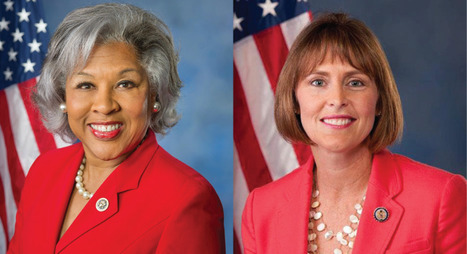
Wanted you to be aware that a U.S. House of Representatives Resolution Recognizing the importance of Diversity, Equity, and Inclusion efforts in Medical Education was introduced on April 30, 2024 by Congresswoman […]
Scoop.it!

Regular exercise can delay dementia onset by 18 months, says study in British Journal of Sports Medicine Via Peter Mellow
|






