


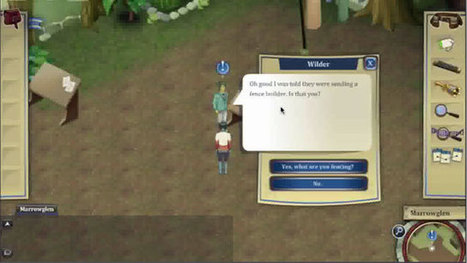
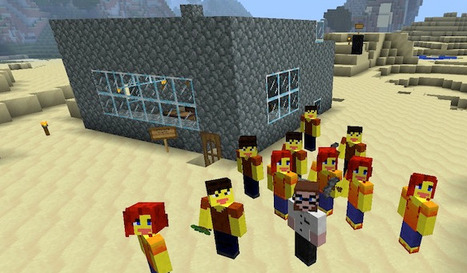
A group of researchers in MIT’s Education Arcade are trying to harness the power of MMO games to teach high school students to think like scientists and mathematicians.

 Your new post is loading...
 Your new post is loading...
Your new post is loading...
 Scoop.it!
A group of researchers in MIT’s Education Arcade are trying to harness the power of MMO games to teach high school students to think like scientists and mathematicians. 
No comment yet.
Sign up to comment
Scoop.it!
by Sarah Sweeney, Marketing Assistant at Aurion Learning. Many HR and L&D professionals face the problem of ensuring that their training and learning programmes maintain learner engagement and ... Via Mark Smithers

Mike Mackay's curator insight,
August 20, 2013 10:08 PM
A great primer on gamification in education - thanks Sarah and your team.
Scoop.it!

From
taccle2

This is a great idea from primary school teacher Ian Addison. He used with 7 to 8 year olds but it could easily be adapted for older children. I have mentioned Ian in a few other posts – he writes an excellent blog full of ...
Scoop.it!
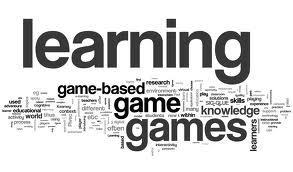
This visual takes a look at how game-based learning activities are designed, why they work, and how well they work in classrooms. Keep reading to learn more.
Jacqui Kelly's insight:
A nice visual that shows some of the facts relating to game based learning
Scoop.it!

QBL, gamification, badges & more!
Registration is not necessary and it is FREE to attend! Check out the sessions on July 31st - Aug 1st, found on our Guild Event Calendar below. Directions on how to participate are found within the event descriptions.
Scoop.it!

A little poster I made for the Innovatie Markt comparing the utility of gamification strategies against that of serious games in relation to different purposes, according to their own characteristics. I would like to add that of course serious games and gamification are not so clearly cut out, and in many classifications of serious games it is possible to find games that facilitate a task or gamification systems that offer some kind of immersion, but in the current discussion about the difference between serious games and gamification it seems useful to start from something. In this case the “rhetoric/simulation against facilitation” frame seems to provide a quick classification tool to distinguish between the two systems, in addiction to current classifications that (very roughly) identify gamification with game design elements and serious games with immersion (Deterding, S. Khaled R., Nacke L., Dixon D. Gamification: toward a definition, Gamification Workshop CHI 2011).
Scoop.it!
By Larry Greenemeier
"Smart phones, tablets and video game systems are often seen as distractions to school children in developed countries, which tend to adhere to a strict teacher-student educational model. At Technology Review‘s Emerging Technologies (EmTech) conference here on October 25, a panel of technologists and educators posited that it’s time to embrace students’ use of such technologies and rethink learning in both developed and developing countries.
“The issue isn’t education or schools—it’s learning,” panelist Nicholas Negroponte, founder and chairman emeritus of M.I.T.’s Media Lab and the chairman of the One Laptop Per Child (OLPC) foundation, said. “The fork in the road is the difference between knowing and understanding. We test people on what they know, but they might not understand a thing.” Via J Way, Jim Lerman
Scoop.it!
From Nordic Larp Talks Copenhagen 2011. http://www.nordiclarptalks.org
"The Nordic Larp Discourse" - collection of materials on story- and emotion-driven larps
Kim Flintoff's insight:
An often overlooked dimension of higher education - AFFECTIVE learning. Where does empathy and understanding enter into learning when preparing to enter a profession? This talk suggests some possible considerations.
Scoop.it!

The role of video games in teaching and learning is a source of debate among many educators, researchers and in the popular press. Detractors and advocates have been discussing the influences and the potentials of video games for quite some time, and we feel that sound evidence and informed advice on these topics is still very much needed. Against this background, Futurelab at NFER felt that it was timely to provide practitioners, industry and researchers with an up-to-date account of what the evidence tells us about game-based learning and its potential impact on learning and teaching. The review aims to bridge academic and non academic domains, to provide insights that will be of interest to educators, educational researchers, industry and others seeking to engage in a more thoughtful debate about the types of educational values that can be attached to gaming. In particular, we provide accessible advice for practitioners, in the belief that innovation in education is always underpinned by informed and critical teaching.
We carried out a rapid review of key literature to identify relevant theoretical contributions and evidence. This involved systematic searching and a consistent, best evidence, approach to the selection of the literature. We focused on a range of sources, including empirical, practice-based evidence and more speculative literature, published from 2006 onward.
The main findings are as follows: The literature was split on the extent to which video games can impact upon overall academic performance. The studies consistently found that video games can impact positively on problem solving skills, motivation and engagement. However, it was unclear whether this impact could be sustained over time. Despite some promising results, the current literature does not evidence adequately the presumed link between motivation, attitude to learning and learning outcomes. Overall, the strength of the evidence was often affected by the research design or lack of information about the research design.
Scoop.it!

Imagine if earning a living, or getting an education, or developing talents of any sort was just a game. Imagine if every smooth move, every good choice, and every new relationship you developed earned you a virtual (or real) reward. Imagine if work had a payoff as well as a paycheque. Well, imagine no longer. Through a computer, mobile device, or interactive television, you will soon find your work and life being gamified. Read on to find out how you will soon be levelling up the gamification way.
Scoop.it!
Jacqui Kelly's insight:
"ClassBadges is a free online tool where teachers can award badges to students for accomplishments or academic mastery. Through your teacher account, you can award badges customized for your classroom or school. Badges can easily be aligned to academic goals or associated with existing school awards."
Scoop.it!

edugameshub is a community, news and resources site for people who make educational games and educational technology Share best practice and raise standards among educational games makersGrow a supportive community of educational games and educational software makersProvide useful resources and run useful events for community membersProvide a voice for small and startup edutech and edugames companies
Scoop.it!

This is the blog of the Gamification Lab at the Centre for Digital Cultures at Leuphana University (see About page). It is inheriting some the posts of the Art and Civic Media project, so you’ll see some posts before this one. From now on this space will be used to discuss about different ways of ‘rethinking’ gamification. Through different examples and case studies we will discuss the political and social implications of the emergence of gamification. Also, in the following weeks you’ll see papers, audio and video files from the workshop we had in May at the Centre for Digital Cultures and also a new call for papers and works of art.
|
Scoop.it!
Game interest is definitely on the upswing in K-12 and higher education. It seems almost cyclical: every several years, almost in sync with the acceptance of new technologies (such as multimedia CD-ROM, then online, then mobile), there’s a surge of activity with games in education.
Scoop.it!

Beth Dichter's curator insight,
August 14, 2013 10:23 PM
Submrge is a website that has the tag line “Deeper Thinking About Games and Education.” It is divided into a number of sections including Games, Activities and Links. What makes this site unique is the information it provides on each game. “Each game page includes important information for teachers, like benefits of play, educational issues for discussion, easily accessible game information, and activities related to the game on Submrge.” In addition to this information there is also a page for each game that includes “important information on the level and subject, but also the activity’s relationship to Bloom’s Taxonomy, Common Core Standards, 21st Century Skills, and the H.E.A.T. Framework. If you are wondering what HEAT Framework stands for think of Higher Order Thinking, Engaged Learning, Authentic Connections and Technology Use. This page also provides a list of learning styles and the games I checked included an Essential Question, The Links section has resources in the following areas: * More on Games as Text * Advice on Games in the Classroom * General Games Collections (many content-specific) If you use games in your classroom, or are considering doing so, this website will provide additional resources that may provide you with new ideas.
Scoop.it!

Games mock realities that, at their best, can make players feel an emotion more powerfully than any other medium. You are the on-screen actor, and you control the game's plot through your actions. Having control means you're responsible, within obvious bounds, for what happens in the game, so achievements, failures, consequences and the emotions those come with, belong to you. Via Nik Peachey

Nik Peachey's curator insight,
August 13, 2013 1:51 PM
Good article on connecting video and computer games to developing journalists awareness of stories. there are also quite a few links and insights which could be useful for language learning too. 
Joe Pereira's curator insight,
August 15, 2013 7:45 AM
It's good to see at least a mention of Twine for creating CYOA games -although not mentioning Inform 7 or Quest 5 for creating parser-based IF is a huge oversight IMHO. Professor Denniz Jerz has been using Interactive Fiction/Inform 7 to teach Journalsim for many years 
Alexandra Guité's curator insight,
August 17, 2013 12:26 PM
"Tell me and I'll forget; show me and I may remember; involve me and I'll understand.”
Scoop.it!

Higher ed gaming labs like Rochester Institute of Technology’s MAGIC center are expanding gamification’s possibilities.
"Games are really good at representing complex systems, so educational experiences that are framed on learning those systems work really well for games."
Scoop.it!
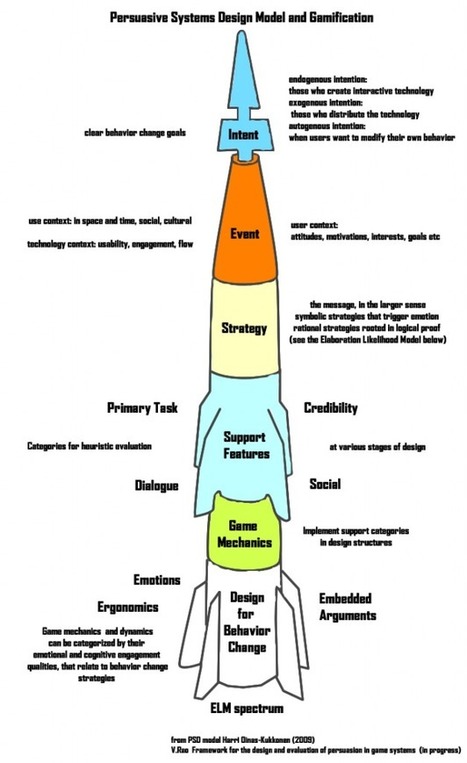
In the last weeks I have been working on some papers about Oinas Kukkonen’s Persuasive Systems Design model, and I have been working on the relation between game mechanics and the persuasive support elements listed by Oinas Kukkonen, this is my model now (yoo-hoo, I have a model now), as you can see it is like the stages of a rocket ship, more to see as soon as the paper is published.
Scoop.it!

Gamification is one of the new buzzwords in social media circles. It's the idea that by making non-gaming applications more game-like -- by adding points,
Scoop.it!
Game‐Based Learning Twitter:@kkapp By Karl M. Kapp Bloomsburg University July 21, 2013 Via JackieGerstein Ed.D.
Scoop.it!
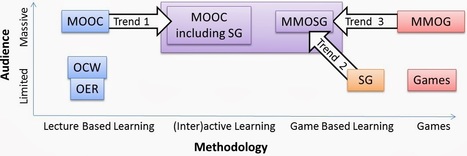
The use of a Game Based Learning (GBL) approach in the MOOCs could help to overcome the lecture-based approaches adopted in the main MOOC platforms, where the text, audio and video lectures are combined with automatic quizzes. GBL, and the use of SG, could promote the development of more practical and applied competencies and knowledge. MOOCs integrating SGs could allow the participants learning by doing in a safe environment and respond to the large-scale needs of education such the development of entrepreneurship (Bellotti et al., 2013), but also to other 21st century competencies allowing our societies to better cope with the current massive educational challenges.
Scoop.it!

Matt Ewens, information officer at Jisc’s Regional Support Centre (RSC) South West, talks to Jisc Inform about games-based apps and how learning providers can develop their own to enhance the learning experience.
Scoop.it!

How do you motivate students who don't care about grades? You take a turn with badges in education and see how different results can come about.
Jacqui Kelly's insight:
A quick overview of ways to incorporate the use of badges in HE
Scoop.it!

Call for Participation : Roleplaying Game Studies Handbook – A Workshop @ DiGRA 2013
The study of roleplaying games has remained a small and somewhat separate tradition within game studies writ large. Yet roleplaying games arguably defined and influenced many design elements of today’s digital games, and constitute a formational experience for many influential digital game designers. More importantly, the peculiarities of non-digital roleplaying games as a socially shared effort of imagination, storytelling, simulation, and gaming have generated insights that have much to offer to the wider field of game studies.
Scoop.it!

Kaplan University's School of Information Technology is expanding its gamification and badging efforts following positive results from a recently conducted pilot program.
|








Probably wouldn't go amiss in higher education either...