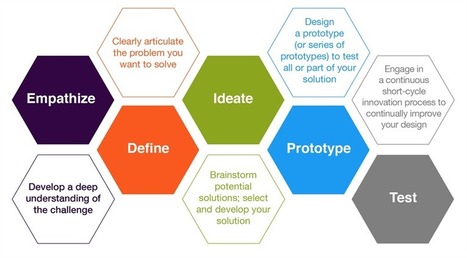
In the past few decades, a well-defined problem-solving method from the world of design has made significant inroads in higher education. For those using it on our campus, adopting the methods of Design Thinking has revealed distinct advantages for learners.
The method’s reliance on a multi-disciplinary team approach develops valuable teamwork skills, and its formal problem-solving model encourages understanding and empathy for those most impacted by any problem being explored.
Empathy is the foundation of the whole Design Thinking process. Putting ourselves in someone else’s shoes enhances our ability to receive and process information, which helps us understand how other people experience the world.
As a product designer, I know that empathy helps me to recognise the difficulties that people face, alongside their needs and desires, and that I can then use that knowledge to design the best solution for their challenges.
Being a product designer is exciting. I get to solve important problems and make people’s lives easier but, unfortunately, sometimes I get distracted – and so do most of us.
Empathy is nearing played-out-buzzword status: overused and overhyped and caricatured to the point where any real nuance or subtlety is hard to come by. Use of the word empathy these days is almost as likely to generate a round of eyerolls as it is to inspire compassion. Has it joined the ranks of ideas like “disruption” and “innovation”? Perhaps.
But, as with these kinds of terms, even if the concept of empathy is beginning to feel a little worn, that doesn’t mean its original significance is gone or irrelevant. Like a comfortable pair of jeans, we should celebrate that a concept such as empathy is beginning to feel familiar and worn in, rather than dismissing it as worn out and worthless.
Empathy is a critical component of, but not the complete center of, the design universe. It’s necessary but not sufficient. It’s a means, not an end. And it may not even be a means for all types of design. For instance, in human-centered design, it’s completely necessary as a contrast to considering only one’s own personal experiences, or extrapolating from a single perspective while designing for other humans with other experiences and perspectives.
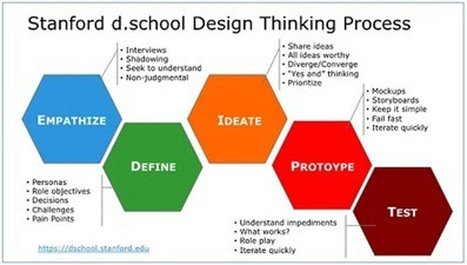
During our most recent professional development day, my superstar NTIP mentor Jennifer King introduced us to the concept of design thinking and how it can be implemented and assessed in the classroom. Design thinking allows students to make an impact with design, and is rooted in empathy as we use design to create meaningful change for the user (Stanford d.school, 2017).
While there are many visual frameworks that could be used to explain the design thinking process, this process is by its very nature a fluid and dynamic process with no “one-size-fits-all” model to follow. The example below is from the Stanford d.school and provides a good overview of the elements of the process. However, Jennifer did mention that, based on her experience in the classroom, she would add a “reflection” element that is woven throughout the process.
Design thinking isn't just a problem-solving process, it is a human-centered problem-solving process, where empathy is the key ingredient. To build authentic connections and apply design thinking principles to the content they are learning, students must first learn how to see problems with an empathetic lens. Sharing stories, talking to outsiders, and honing the habit of observation will help you cultivate empathy among your students.
Why Choose Empathy Maps? Empathy maps serve for better understanding and sharing the vision of the users (or personas) and their instant needs among the members of the team. They may play the role of a highly productive start for the designing process.
The creation of empathy maps is worth including in your agenda for numerous reasons:
to understand better individual traits of a user (or a persona). With an empathy map, you can keep crucial information concerning them in one place. In such a way you can categorize it quicker, find some gaps and fill them instantly.
You can also join empathy maps of certain users into a cluster, thus creating an aggregated ones.
to share everything you know about the user to others. In this case, an empathy map serves as a kind of illustration of user emotional attitudes, actions, and behavior. Therefore it acts as a truth source for the whole team while working on the project (but don’t forget to refresh the data there!)
Andrew Wicklin, a student in the Food Science program at ACES, talks about his experience with the technical challenge in his Product Development course, and explains what he learned about the role of empathy in designing a food product for people who are unable to swallow and chew normally.
It is time for business leaders to understand the power of design and design thinking; specifically how Design Thinking will help them transform their businesses and make them future-proof
Walk a mile in my boots Empathise, empathise and empathise some more! This is the foundation design thinking is built on. We need to “walk” in our customers’ shoes to be able to fully experience the world from their perspective. Without true empathy, we won’t be able to identify the “real” problem and in turn deliver game-changing outcomes.
We need to know why – why is a certain product more popular than the other? Why do people choose a particular cab service over the other? With each answer, we need to dig further until we know the real reason why! Only when we can see, think and feel the way our customers do, will we be able to determine what would be game changing for them.
Empathy is the bedrock of meaningful and memorable products, services and experiences.
The key to user-centred design, on the other hand, is that you are always, in some form, attempting to create a product that is going to provide value for whatever specific group of users you are trying to attract as customers.
3 Techniques for Being More Empathetic
1. Be more observant We live in such a frenetic, complex world that we tend to spend most of our days in a constant state of distraction & high alert. Add the complexities of everyday, big city life & we find ourselves constantly worried about the future or reflecting on the past.
A recent Harvard study estimated that we spend 47% of our waking life lost in thought. That’s half of your day. Every day. And half of your waking life.
2. Get to know your users better
1. Use an empathy map to really delve into a user’s wants, thoughts & needs
2. Conduct user interviews
3. Hang out with your users informally to get to know them in their natural environment
Yet at this time when we are surrounded by an increasingly fragmented society of ‘us versus them,’ I continue to firmly believe that museums have the potential to be powerful catalysts for empathy and human connection. As museums respond to issues affecting our communities, both locally and globally, there is a clear shift toward focusing on human connection and the role museums play as catalysts for empathy and cohesion in a society rife with intolerance, discrimination, inequality, social isolation, and self-segregation.
In their essay included in the recently published volume entitled Fostering Empathy Through Museums (2017), a team of leaders and changemakers (past and present) from the Levine Museum of the New South powerfully reflect on their decade-long commitment to dialogue and civic engagement:
“With shared empathy, individuals can move from isolation to belonging, from division to connection, from suspicion to trust, and come together to begin the hard work of creating a cohesive diverse community that values and gives opportunity to all its residents” (235)
Listen, care deeply, and be open to making connections with people — whether existing customers, a potential customer, neighbors, friends, and family — everyonefits into this category.
Seek out new advisors, refresh my mentors, travel someplace new and different, and read a lot more. Tip: ask your peers and community for a diverse set of authors and books — women, minorities, under-represented voices — and not just from the same type of author, or same subject.
Use the products that you make daily to understand your customers’ point of view, the pain points, the dead ends, and any broken flow.
Practice de-biasing activities with people you encounter, and those you work with. Don’t assume what you see on the surface is representative of their entire person and life experience.
Ask active questions and approach everything with an open mind.
Empathic Design Key to Engagement Appian: Another topic that you've touched on in your research is the "voice of the customer." Now that we're in the age of digital transformation, is the voice of the customer concept still relevant?
DL: It depends on what you mean by "voice of the customer." Innovators still need to learn what customers need and want. But for decades, I've emphasized in my writings that customers often have no idea what their vendors and suppliers can do.
So, I don't see that voice of the customer has become less relevant. But I would also mention-as I do when I talk about the concept of "empathic design"-that customers don't know what to ask for, in part, because they don't know what you can provide them. And I think that's becoming increasingly true.
Appian: That's a good segue to the topic of empathic design, a concept you and co-author Jeffrey Rayport introduced back in 1997.
You recently published an article in Harvard Business Review called: 5 Ways to Design Products Customers Love. It talks about empathic design. Break it down for our readers. What's the big idea behind empathic design, and why should companies care about it?
#1: Design thinking is a chance to build empathy. The term “build empathy” might be a little misleading here. Teachers are, on the whole, incredibly empathetic. They know what their students are experiencing and they feel it on a profound level.
However, it’s easy to get into a “program mindset,” where you think about ideal systems and you forget about the actual experience of students. Just recently, I ran into this problem with my cohort. Although I had used design thinking for the overall course creation (and UX Design for the systems and structures), I started planning specific lessons without bothering to ask, “What will this experience look like for my students.” In the process, I forgot about the thoughts, emotions, and fears of a pre-service teacher learning how to deconstruct standards for the first time. And, as a result, we had an evening when the lesson tanked.
Empathize You can’t solve for what you don’t know. Therefore, the first stage of the design thinking process is to gain deep empathy of the people you are trying to solve problems for with your product or service. This often includes ethnographic user research, such as interviews and observation, to understand the behaviors and mindset of these intended users, as well as the real world context and environmental factors that impact them.
By getting out of the building and talking to real people, product teams can stop making assumptions based on their personal taste or experience. Insights into what people are actually thinking, feeling, and doing when using or considering a product leads to customer-centric design solutions that are better able to influence habits and behaviors.
What is design thinking and why should you care? History and background plus a quick overview and visualization of 6 phases of the design thinking process.
Empathize: Conduct research in order to develop knowledge about what your users do, say, think, and feel.
Imagine your goal is to improve an onboarding experience for new users. In this phase, you talk to a range of actual users. Directly observe what they do, how they think, and what they want, asking yourself things like ‘what motivates or discourages users?’ or ‘where do they experience frustration?’ The goal is to gather enough observations that you can truly begin to empathize with your users and their perspectives.
Design thinking isn't just a problem-solving process, it is a human-centered problem-solving process, where empathy is the key ingredient. To build authentic connections and apply design thinking principles to the content they are learning, students must first learn how to see problems with an empathetic lens. Sharing stories, talking to outsiders, and honing the habit of observation will help you cultivate empathy among your students.
The design process should always start with empathy. This means trying to gain insight and perspective of your target audience. For learning practitioners, this might mean the learners who attend your instructor led training courses, virtual trainings, or watching your eLearning videos. This stage is similar to your traditional audience analysis. Whoever your audience is, try to gain a deeper understanding of their world by putting yourself in their shoes. The best way to gain empathy is to connect with learners directly. You can do this by performing user research in the form of interviews, observations, creating user personas or empathy maps.
Princeton University Lecture - October 9, 2014 - The Keller Center welcomed Michael Ventura, Founder and CEO of strategy-led design and innovation practice, Sub Rosa, to the Princeton University campus on October 9. The event was part of the Creative Mind & Leadership: Innovation, Design, and Entrepreneurship Lecture Series, with co-sponsorship by the Keller Center's Venture Sponsors Program.
What makes a great product? What makes a great business? And how can your work follow the path of the most successful predecessors in this arena? The answer begins with empathy. This lecture will explore the role of empathy in design and how to build communications tools and businesses that strive to put the customer's experience at the forefront of their vision.
At SAP, we practice this type of work every day. It is one of our foundational pillars and it underpins who we are as a company. While the sports fan in me likes to refer to it as game planning, the business leader in me calls it design thinking. Similar to how a coach prepares strategies for his or her team to overcome unforeseen challenges in a sporting event, design thinkers actively reimagine business models, business processes, and the way companies work to outperform digital disruption.
“Design thinking empowers us to redefine business problems through empathy and creativity”
Design thinking is essentially a human-centered and empathetic approach to innovation that integrates the needs of people, the possibilities of technology, and the requirements for business success. It breaks boundaries for businesses by rethinking current problems and developing entirely new capabilities.
In this article, I’ll define what empathy maps are and share 10 practical tips to help you develop better empathy maps.
What is empathy? Empathy is the ability to identify and understand another person’s situation and feelings. We often hear the word “empathy” used as a synonym to “walking in someone else’s shoes.” Empathy is a core skill for designers because it allows them to identify with users and adopt their perspectives.
What is an empathy map? An empathy map is a visualization tool used to articulate what a product team knows about a user. This tool helps product teams build a broader understanding of the ‘why’ behind user needs and wants. This tool forces product teams to shift focus from the product they want to build, to the people who will use this product. As a team identifies what they know about the user and places this information on a chart, they gain a more holistic view of the user’s world and his or her problems, or opportunity space.
Growing up I was constantly labeled the “good listener.” Being a highly-sensitive person gave me the gift of being able to sense other people’s emotions, often without them saying a word. Over the years I’ve come to realize what a powerful strength empathy can be. Now as a coach and licensed social worker, it’s part of my job description.
What is empathy, really?
In a world where life is busy, complex, and filled with stress, empathy is the glue that holds relationships together. It’s the ability to detect other’s emotions and understand their perspective. When we feel accepted and validated, it builds trust, heals, and leads to greater happiness.
Empathy isn’t reserved exclusively for our personal lives, either. It’s what you need to comfort a grieving co-worker, get people on board with your ideas, or diffuse tension with your boss, for example.
A set of techniques we call empathic design can help resolve those dilemmas. At its foundation is observation—watching consumers use products or services. But unlike in focus groups, usability laboratories, and other contexts of traditional market research, such observation is conducted in the customer’s own environment—in the course of normal, everyday routines. In such a context, researchers can gain access to a host of information that is not accessible through other observation-oriented research methods.
The techniques of empathic design—gathering, analyzing, and applying information gleaned from observation in the field—are familiar to top engineering/design companies and to a few forward-thinking manufacturers, but they are not common practice. Nor are they taught in marketing courses, being more akin to anthropology than marketing science. In fact, few companies are set up to employ empathic design; the techniques require unusual collaborative skills that many organizations have not developed. Market researchers generally use text or numbers to spark ideas for new products, but empathic designers use visual information as well. Traditional researchers are generally trained to gather data in relative isolation from other disciplines; empathic design demands creative interactions among members of an interdisciplinary team.
This story exemplifies one type of empathic design, namely by a user-designer who combines deep knowledge of product use with the ability to foresee new possibilities for it. Another well-documented way to achieve the same outcome is through ethnographic research — surveying and studying the behavior of potential or actual users — which design companies such as IDEO have used to great effect in projects as various as coasting bicycles to redesigning patient experience at Kaiser Permanente.
However, in a recent study of a number of architectural firms, I found that there are three additional ways, employed less often, of achieving empathic design.
What all five of these modes of empathic design have in common is:
An emphasis on seeking out unarticulated needs and desires so as to get the job done — whatever that job may be — creatively
Looking at the world through the eyes of the customer. Of course, there are often different sets of users, whose priorities differ and must be negotiated into some overall compromise.
An emotional connection between design and its users. By definition, empathy includes emotion — a connection beyond satisfaction with the operational.
To get content containing either thought or leadership enter:
To get content containing both thought and leadership enter:
To get content containing the expression thought leadership enter:
You can enter several keywords and you can refine them whenever you want. Our suggestion engine uses more signals but entering a few keywords here will rapidly give you great content to curate.


 Your new post is loading...