At Artefact, increasing the sense of empathy between people is an outcome we always strive towards as designers. It is a key part of our pursuit of 21st Century design because we believe that more empathy in the world is good-ness.
It leads to a greater sense of understanding between people, better collaboration and more meaningful products overall. (For a more detailed discussion of empathy, see our paper).
==========================
But, as with any big idea, the questions remain:
How do we design for empathy in practice?
==============
Is there a process that can help us stay focused on empathy as one of our design goals?
For the past ten months, we’ve been investigating this at Artefact.
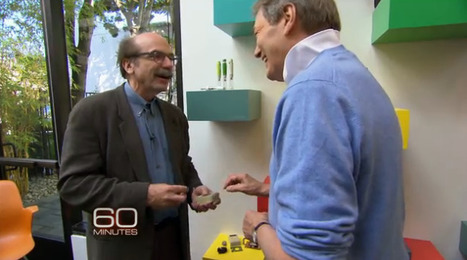
Global firm IDEO incorporates human behavior into product design -- an innovative approach being taught at Stanford
David Kelley: You got it. You got it. That's the hard part is the cultural thing of having a diverse group of people and having them be good at building on each other's ideas.
They encourage wild ideas and visualize solutions by making actual prototypes. But the main tenet is empathy for the consumer, figuring out what humans really want by watching them.
=======================
But the main tenet is empathy for the consumer,
figuring out what humans really want
by watching them.
==========
David Kelley: If you want to improve a piece of software, all's you have to do is watch people using it and see where they grimace and then correlate that to where they are in the software. And you could fix that, right? And so the thing is to really build empathy, try to understand people through observing them.
Charlie Rose: In other words, their experience will communicate what you need to focus on.
Empathy is a really big word in design, specifically in the practice of “Design Thinking.” However, this article examines a different role for empathy in design, one that is very frequently overlooked.
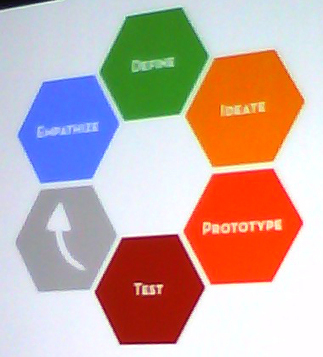
In Design Thinking, empathy is what kicks off a project – it is the first step in understanding what the end user might need by being able to get hands-on experience understanding their problems and “pain points.”
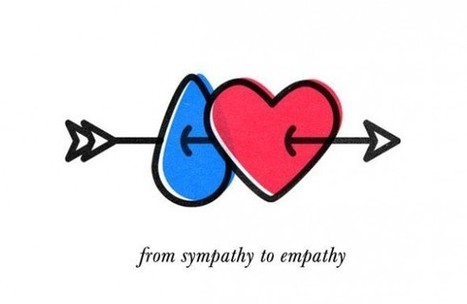
The space in which empathy is quite absent from design, however, is in communication materials, a medium that is historically sympathetic. Sympathy, as opposed to empathy, does not foster a deep understanding or emotional connection. Empathy, as opposed to sympathy, is a way for us to develop our understanding by sharing an experience.
==========================
In Design Thinking, empathy is what kicks off a project – it is the first step in understanding what the end user
Here is a great presentation from Braden Kowitz on optimizing the design process. Lot of insights around empathy and the importance of testing often and early.
Empathy and Collaboration = Design thinking; Integrative Thinking: Designers harmonize seemingly conflicting ideas into a useful hole; - Experimentalism - questions about usefulness; Collaboration - variety of interdisciplinary ideas; Empathy - imagine the use by customers through a true understanding of how the customer interacts with their environment
Collaboration with target audience is key - hands on experience - managing the opinions of a focus group - meaningful insights into the benefits and flaws of current designs -- Self-Reflective -- feedback
Oracle's first annual Customer Experience Summit featured plenty of advice like when to hire a chief customer officer and how to create empathy with customers.
It's Hard to Talk People into the Idea of CXM as being Important This is where the idea of empathy comes into play. It's easier for people to understand their customers if they can see things from the customer's point of view. It turns out many businesses see customer interactions simply as pain points, and that simply is not always how customers see things.
==========================
This is where the idea of empathy comes into play. It's easier for people to understand their customers if they can see things from the customer's point of view. =========
The importance of developing deep connections with the people you serve.
A few years ago, my publisher asked me to write a book about innovation. They’d read some of the articles I’ve written on the subject over the years, and they wanted more. And although I was flattered, I had to tell them no. The world didn’t need another book on innovation — there are too many as it is. I instead made them a counter-offer: Maybe what the world needed was a book about empathy.
... That’s why I ended up writing Wired to Care, which shows how great companies around the world, from Nike to IBM, benefit from building a culture of widespread empathy for the people they serve.
By Dev Patnaik, Founder and Principal, Jump Associate
Empathy is more than knowing what someone needs or understanding how they feel. It’s more than being sympathetic. Empathy is being able to genuinely experience their emotional state, their desires and expectations and frustrations.
When you have an idea—one that’s truly a breakthrough—you’re going to be a little ahead of everyone else almost by definition (or you’re not being very innovative). Sometimes folks can quickly connect the dots and catch up, but often they can’t.
You’re several steps ahead and they’re struggling to understand how you got there—and it’s not their fault that they’re struggling. On the contrary, you’re the one that found a new path, one that they’re not on yet.
Twitter's Biz Stone on Monday encouraged entrepreneurs to embrace a business model that incorporates empathy and a willingness to fail as much as a desire for revenue and market dominance....
There also needs to be a level of empathy; your business endeavors can't be completely selfish and cut-throat. In working with Twitter, "it has been revealed to me that people are basically good and if you give them a simple way to help others, they will prove this to you every single day."
I wish I could design stuff like David Kelley. It’s not hard to see why.
He’s the founder of IDEO and the Hasso Plattner Institute of Design at Stanford. Smart doesn’t begin to describe this guy. As a designer and innovator, he’s on par with the likes of a Steve Jobs, with one crucial difference -- he’s not a raving jerk to his employees. Empathetic is actually the term he uses in an interview with Fast Company:
“The main tenet of design thinking is empathy for the people you're trying to design for...
David Kelley is the founder of IDEO, a design focused company that aims to aid organisations with innovation and growth. He is also the founder of Hasso Plattner Institute of Design at Stanford.
David believes that the key to a successful relationship between employees and employers is empathy. In an interview with Fast Company, David discusses the importance of understanding and being a good coach when leading.
How has the design thinking model influenced your approach to leading people?
The main tenet of design thinking is empathy for the people you’re trying to design for. Leadership is exactly the same thing, building empathy for the people that you’re entrusted to help...
In a lunchtime talk at the Stanford Graduate School of Business this year, Bill Drayton asserted that empathy is the single most important skill necessary for changing the world.
“Those who don’t master applied empathy will be marginalized,” he said, calling for a “revolution” to ensure empathy skills are taught in early childhood alongside reading and math.
In the four years I worked at IDEO as a project leader and mechanical engineer, I learned firsthand how empathy lies at the root of a powerful process for generating innovative solutions to challenging social and business problems.
Now an intern this summer with Acumen Fund’s Knowledge and Post-Investment Management teams, I am working with Acumen to envision how an empathy-based process can be employed, not only with customers in the field, but internally to create a global learning organization.
I've been designing computer interfaces for almost 15 years, and I've had the great fortune to work with some great designers and some well-meaning, but terrible ones.
The difference, I've come to understand, isn't technical skill or training - it's empathy.
The two keys to great design. 1. Know your user. 2. Know what they're trying to do.
Reaching this vision takes a little time, planning and empathy is at the center of the task. The most successful organizations engage a broad spectrum of constituents.
Reaching this vision takes a little time, planning and empathy is at the center of the task. The most successful organizations engage a broad spectrum of constituents. It’s important to think about all of the potential “users” of a healthcare facility. Not only are the administrators and clinical staff important, but also patients, family members and support staff. The next step is to bring these groups together. Firsthand knowledge sharing is powerful.
One of the principles of design thinking is that it requires empathy for users to inspire ideas. Normally we think about getting that from ethnographic style research.
Diving deep into the lives of a relatively small number of people, understanding the environment they live in, their social networks, seeing things first hand. We have lots of evidence that this works but I sometimes wonder if we aren’t also missing something. The problem with looking deeply at a few people is that you miss the opportunity for insights that might come connecting more broadly across cultures.
The new RSA animate video, The Power of Outrospection is quite thought provoking and has gotten me thinking about all kinds of links between empathy and creativity.
In the video, philosopher Roman Krznaric explores the idea that we live in a time that demands more empathic adventurers in all aspects of life. Empathy not just so we act better towards others, but also because it helps us create better innovations, services and quality of life.
Empathy not just so we act better towards others, but also because it helps us create better innovations, services and quality of life.
Avi: So Needfinding is a way of locking onto the critical problems because there are so many problems to solve.
David: You're absolutely right. The way to do it is to go out and figure out what humans actually value. Having 'empathy' for people was so exciting. You don't usually think of engineers as people people, so to speak, but my experience has been that when engineers really feel that something would be important to people, would have meaning in people's lives, that's highly motivating and it makes them work really hard.......
Avi: What are the characteristics of a designer?
David: The characteristics of a designer that I appreciate the most are this thing about having 'empathy' for people, that you expect to get your big ideas from talking to people and your own experiences, that you have a bias towards action, that you're not going to sit around and noodle strategy details for a long time, you're going to actually go out and build something and show it to people and iterate the feedback....
At some point by observing these people and building empathy for them you start to have insights about them. "Oh, they really do value this. It's not obvious at first that that's what they really value.
The greatest thing we can do and offer is to be great listeners and have to have empathy for your culture to understand what is the truth.” — John Jay, global executive creative director at W+K
However, there’s a dark side to empathy that is rarely discussed. UX Booth’s own Andrew Maier explains in his article about reducing noise, that “although office environments are designed to encourage creativity, their inhabitants can occasionally hinder it”.
“Sometimes we can become overwhelmed by empathy at work,” adds Judith Orloff, MD, an assistant clinical professor of psychiatry at UCLA and author of “Emotional Freedom: Liberate Yourself from Negative Emotions and Transform Your Life.”
What does empathy have to do with innovation and technology? According to Rhode Island based designer Seung Chan Lim, plenty and not enough.
SP: The corporate environment seems like the perfect place for more empathy.
SCL: Yes! I think so, too. When you get down to it, you realize that corporations are filled with really smart and capable people but the organizational structure doesn’t allow them to utilize their talents in ways that is conducive to doing great work.
I’m also trying to raise funds for the next phase, which is to prototype a new kind of human-computer interaction paradigm for making software.
Whenever we talk about the subject of user-experience, one word pulls itself to the front of every discussion.
Empathic Methodology
Understanding your visitors requires a general mixture of decision making and investigation, which can sometimes be quite hard if you feel disconnected from your audience (or take them for granted) which is justification enough to become more involved in the cultivation of your audience.
The first thing you will need to put the empathy you have for your visitors to good use is to simply find out what they want. There are a number of ways you can go about this task, and they’re all really useful.
Empathy can play a valued role in the workplace with colleagues and with customers. When employees have the emotional ability to put themselves in others’ places, they may deal with sensitive issues sensitively.
Empathy is a foundation for productive communication and relationship building. Team building can guide employees toward examining and identifying their emotions and those of their teammates.
In 20-25 hours we can have a child who has never grasped the skill of empathy and they will grasp it. We know how to have them practice it at recess, in the classroom, we know how to work with parents.
So when brother hits sister it’s not just: you’ve broken the rules, and I’m now going to enforce them, it’s how do you think your sister felt when you did that? Any parent can do that, but they’ve got to know why and they’ve got to learn those skills.
we have hundreds of leading social entrepreneurs working together to make sure that five years from now 80 percent of the elementary school principals know that they’re failing if they’ve got one second grader who has not grasped empathy.
To get content containing either thought or leadership enter:
To get content containing both thought and leadership enter:
To get content containing the expression thought leadership enter:
You can enter several keywords and you can refine them whenever you want. Our suggestion engine uses more signals but entering a few keywords here will rapidly give you great content to curate.


 Your new post is loading...